The track makers
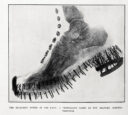
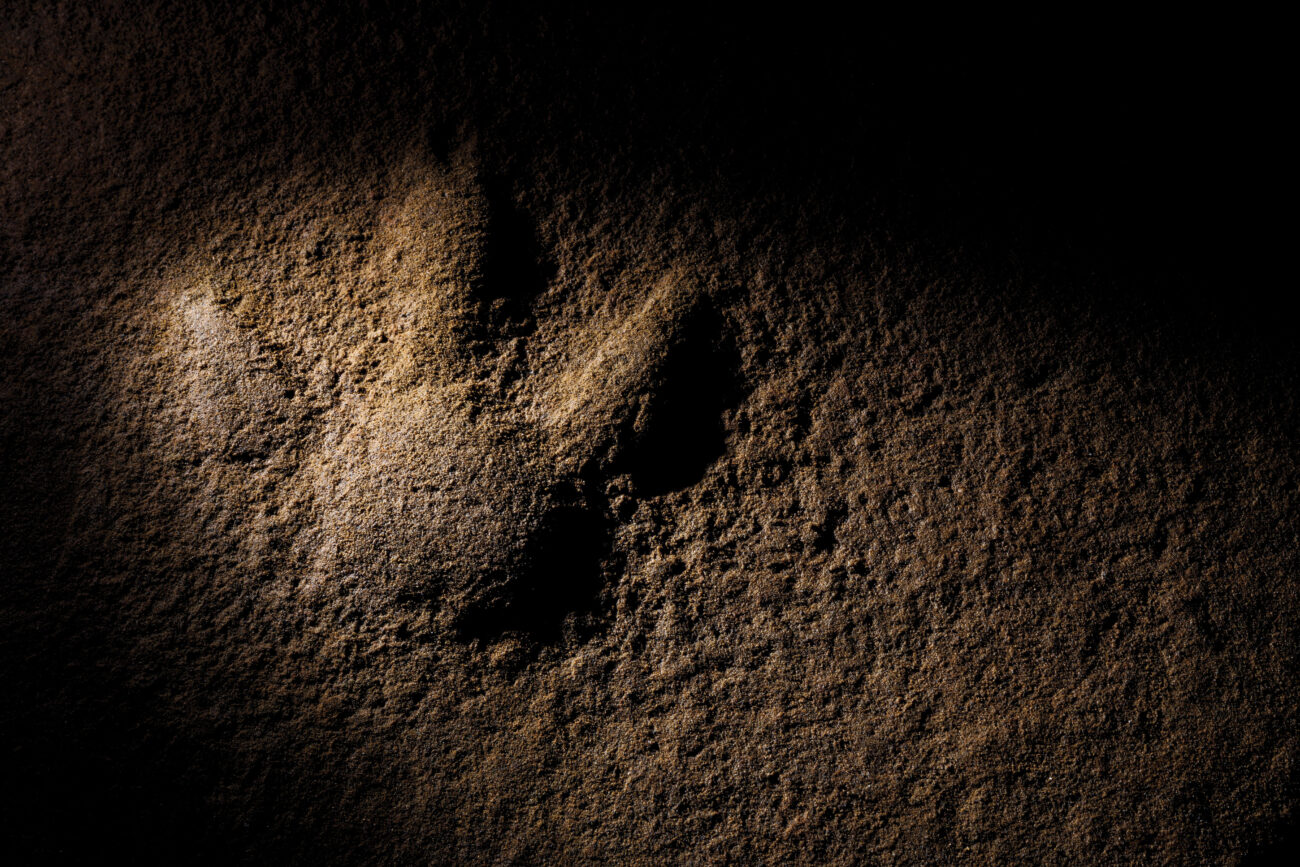
Moa once walked all over Aotearoa, pressing heavy feet into mud and sand. Eons later, finding just one of these footprints intact is a small miracle—a fossil that speaks to a movement, a moment in time.


Moa once walked all over Aotearoa, pressing heavy feet into mud and sand. Eons later, finding just one of these footprints intact is a small miracle—a fossil that speaks to a movement, a moment in time.
Like last year, we are presented with a stark set of choices: survive, grow, or die.
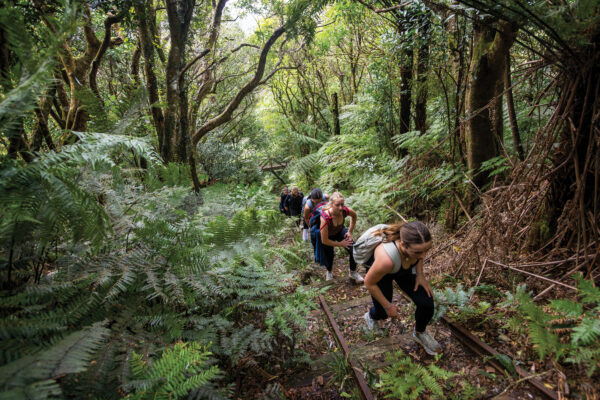
Outdoor education is at a crossroads.
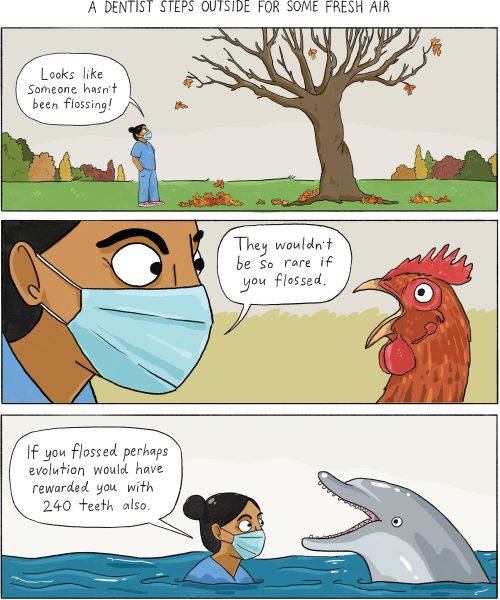
Teeth are extreme: they evolved at roughly the same time as bones, and they’re the hardest thing in the human body. So why are our choppers so sensitive—and expensive?
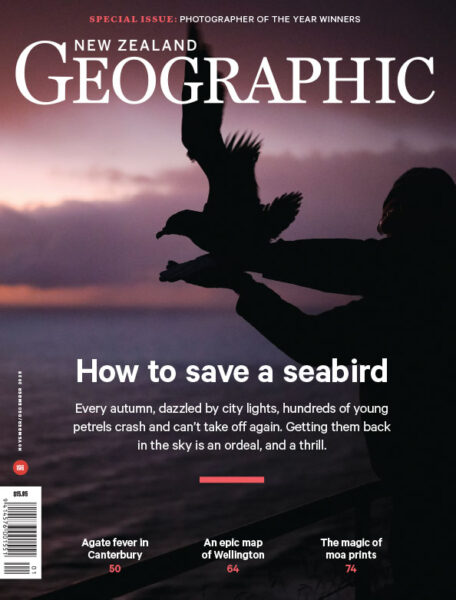
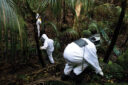
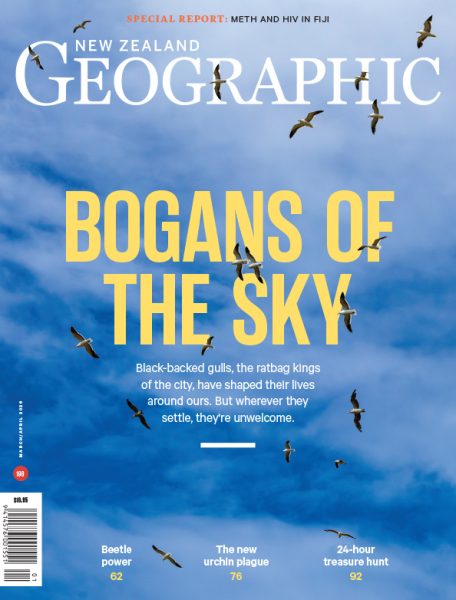
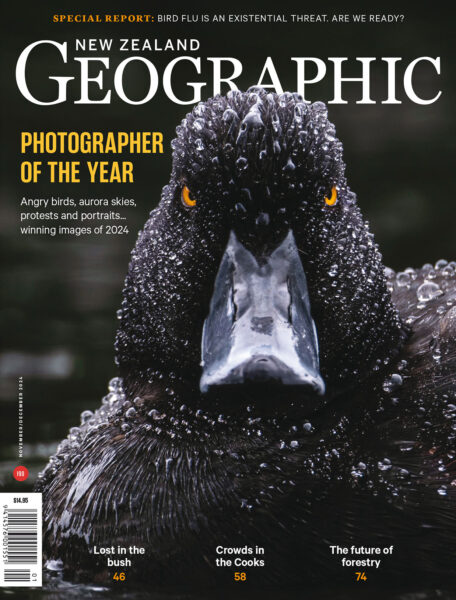
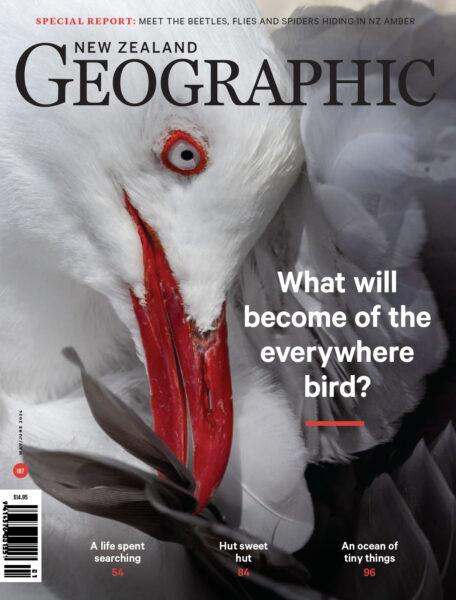
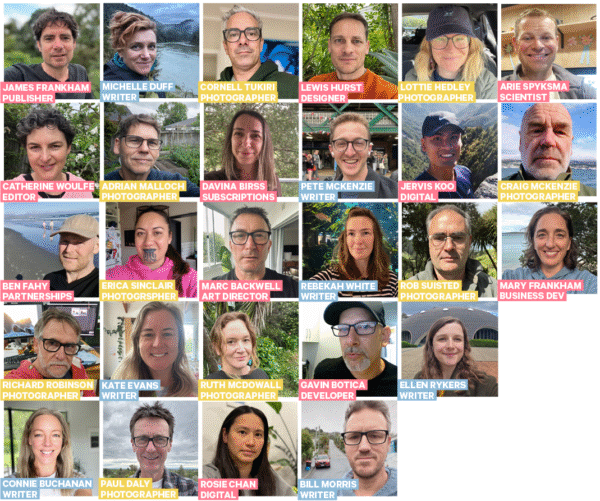
Some of the most powerful moments in this job are when I open up a new gallery a photographer has sent in. It’s a story on screen, right in your face—gorgeous, gutting, often both at once. See: everything shot by Lottie Hedley, especially her warm, disciplined set on marching teams, published in Issue 193, and her work documenting the heartbreaking cyclone clean-up in Hawke’s Bay, in Issue 186. See: everything shot by Richard Robinson, most recently the feature about Tokelau, or chasing hāpuku in Fiordland. It is deeply unreasonable, as I told him recently, to point a photographer at a few muddy footprints and expect them to come back with magic. But check out the feature he shot on moa prints. The value of photojournalists extends far beyond the page. At this magazine, photographers drive our stories just as much as the writers do: often it’s the photographer who finds the angle that sings, or the people who turn out to be vibrant main characters. Occasionally, a photographer just turns up with a complete set of images so terrific they demand words to go with—that’s how our cover story, on lightstruck seabirds, happened this time. (See page 36—and thank you, Simon Runting.) It is a gift, for a writer tackling a big story, to have a photographer invested in the nuance, too. When I was a cub reporter at the Hawke’s Bay Today and Herald on Sunday, it was the photographers who taught me how to tell stories. Every job I was sent out on—a fatal car crash, a golden wedding anniversary, an A&P show—the photographer beside me had been shooting a version of it for decades. He’d know the cops and the backroads and every base that needed covering; he’d pep talk me on the way, deploy chirpy chit-chat during awkward interviews, help me figure out the best angle on the drive back to the newsroom. (I am saying “he” because they were almost all men.) On the roughest jobs I’d be shaking before knocking on a door; photographers are made out to be a callous breed but I suspect as a collective they’ve been the shoulder to cry on for every journalist in the country. The best ones know to keep tissues and biscuits in the glovebox. All of this was normal. It was just how writers got good. The number of times I have been saved by a photographer jumping in and asking the obvious question! (This does not run both ways. Only recently, two decades into this work, have I felt that I know enough about pictures to be able to nudge the photographer and say, ‘Hey, would that make a good photo?’) The past 10 years have been devastating for press photography. All over the world photojournalists have been cut from newspapers, their images replaced by stock photos, reporters’ snapshots and free tat from social media. Flicking through newspapers and websites now, I register these pictures as absences—an opportunity for better storytelling, lost. It’s not just the images that have been ditched, but the teaching, the nous, the institutional knowledge. One of the big pulls of New Zealand Geographic was the opportunity to work closely with photographers again, both in the field and in putting stories together. Some of those who showed me the ropes now shoot for this magazine; others are regularly named finalists in our Photographer of the Year competition. I’m always chuffed to see their names come up—glad that at least some are still in the job, still documenting those moments that need more than words. I have never worked with Iain McGregor, the career photojournalist who took the top prize this time, but we could not look away from his images. In these days of chaos and conflict, of so many meaningful stories waiting to happen, long live the photojournalist.
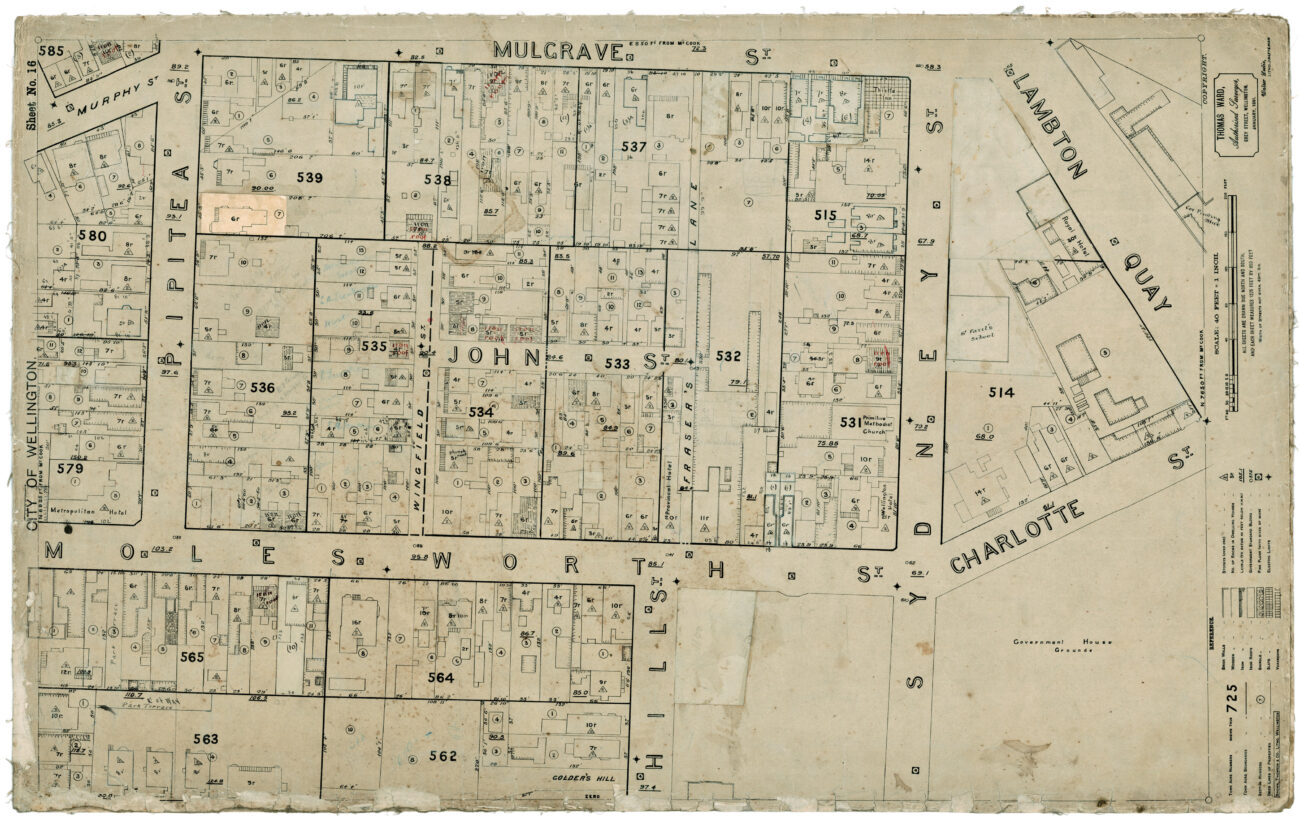
In 1889, Thomas Ward proposed something unique for the capital city: a really, really, really good map.
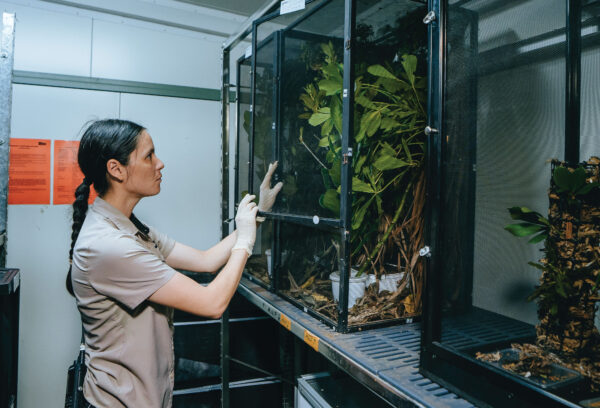
An Auckland Zoo programme is saving the Hauturu-o-toi/Little Barrier Island wētāpunga.
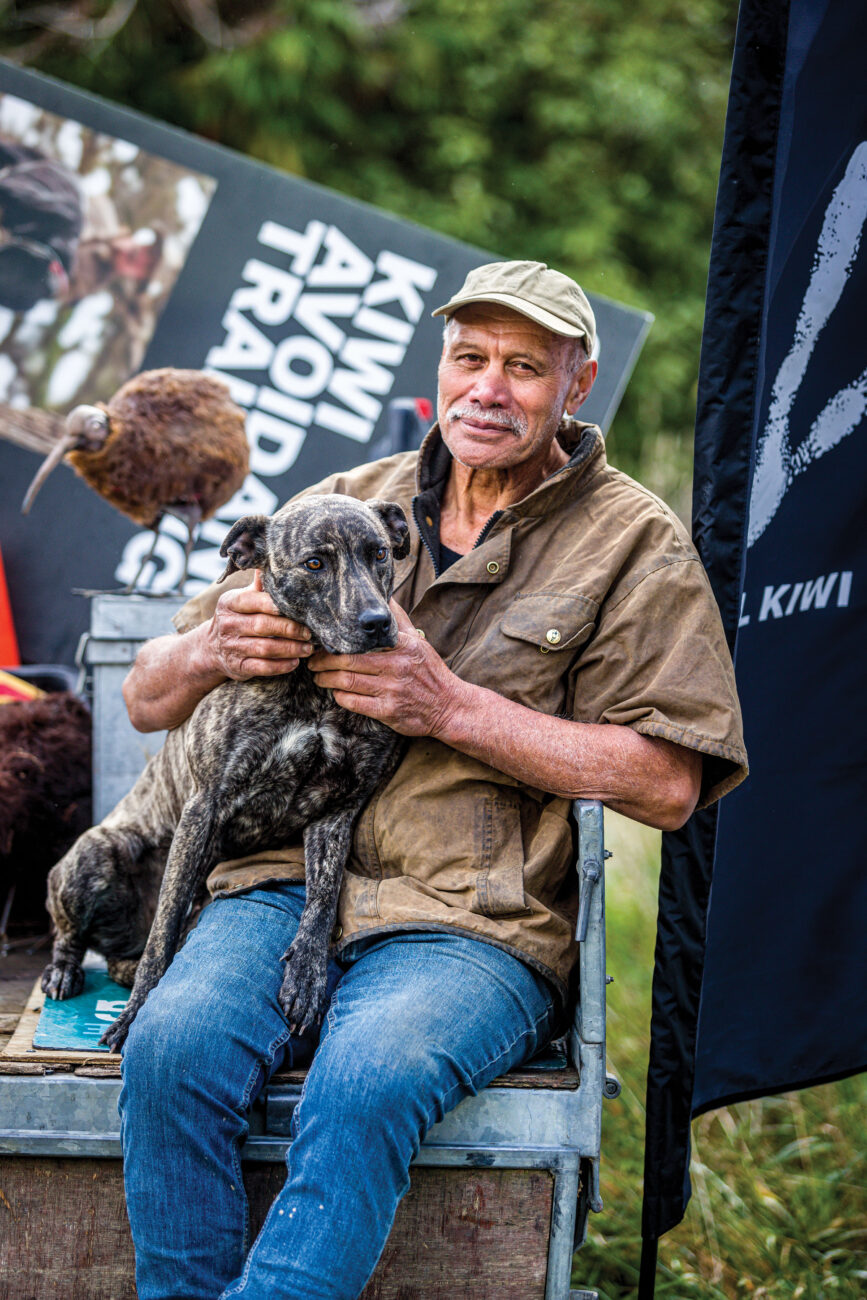
Because of Willy Marsh, hundreds of dogs are choosing not to chase kiwi and penguins.
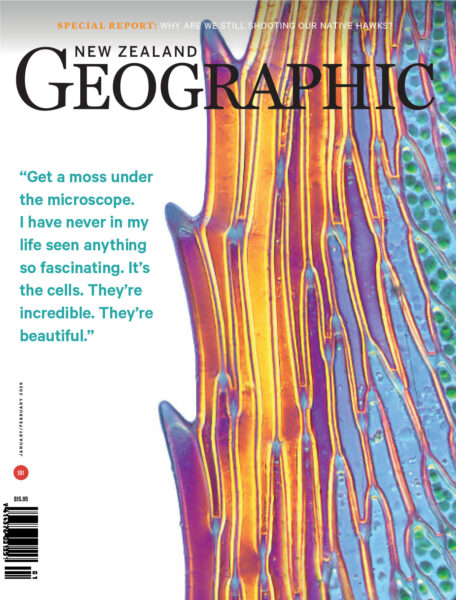
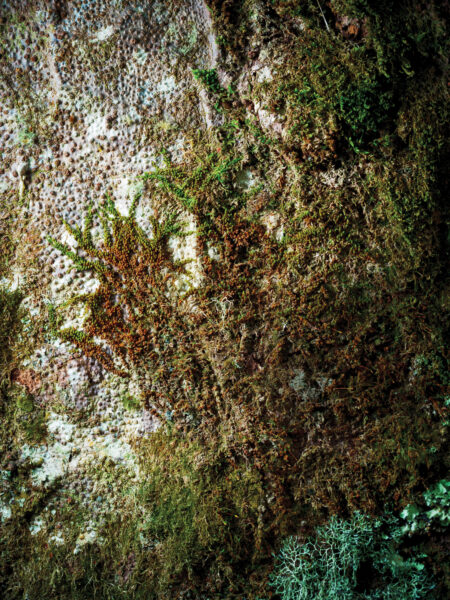
A new assessment of Aotearoa’s mosses shows about a third of our 560-odd species are classified as at risk or threatened, with 16 deemed “nationally critical”. One of the most precarious is Lindbergia maritima, thought to live in only one spot: particular rocks at Auckland’s Piha Beach. Pictured here is a moss spotted just up the road in the Waitākare Ranges. From the thriving family Macromitrium, it’s stitching itself across a section of kauri trunk that’s been exposed by falling bark—and pushing up scarlet sporophytes, to seed the next generation.
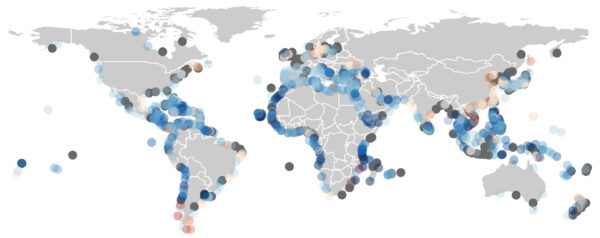
While most of the world’s new settlements are slowly shifting inland, in New Zealand we’re largely staying put—or edging closer to the sea, according to research published in Nature. The work tracks artificial light between 1992 and 2019 and finds that globally, settling close to the coast is more common in areas with very low income, presumably where people don’t have much choice. The authors note that Waikato, Northland and Marlborough buck this trend—they’re relatively high income, yet still building ever closer to the water. Overdeveloping coastal areas, the authors warn, might be due to an overconfidence in our ability to protect and adapt these settlements—and increase damage done during extreme climate events.
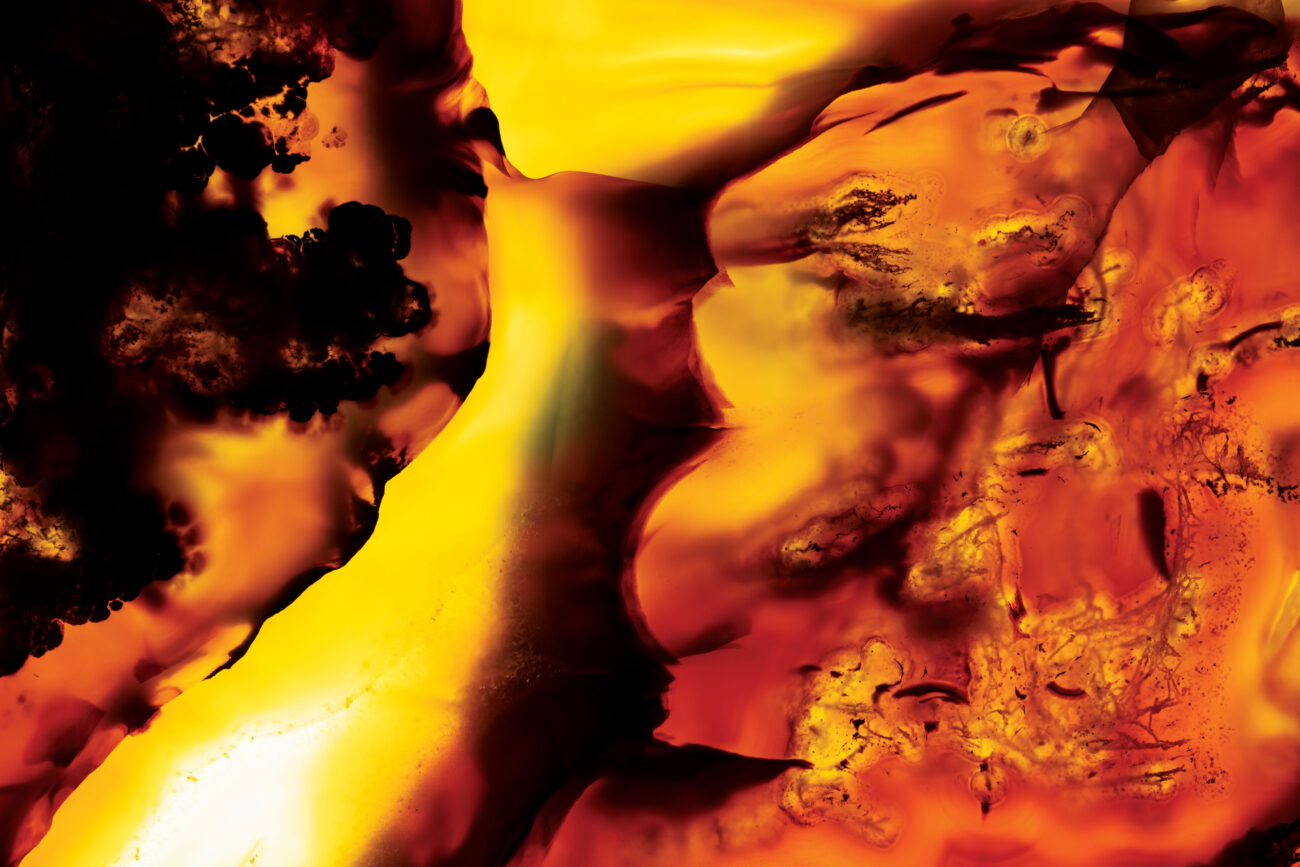
Split open a chunk of agate and a broiling world of ancient colour emerges. Collecting the stuff is addictive. But with the old rockhounds fading, what will become of the last great hoards?
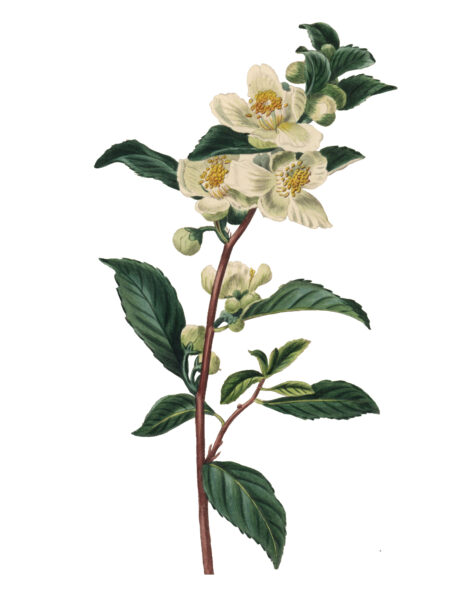
Pollen can survive millions of years in certain conditions. That’s because each tiny grain is protected by a hard shell of sporopollenin, a UV-absorbing substance that can handle high temperatures as well as a wild pH range. Scientists from Nanyang Technological University in Singapore have found those qualities also make for excellent sunscreen. They’ve created a microgel from sporopollenin of Camellia sinensis, the plant farmed to make tea, and found it has an SPF of about 30. Remarkably, the golden gel also cools the surface of the skin by about 5°C, an effect that lasts at least half an hour. Camellia sinensis pollen is widely available, sustainable and unlikely to trigger allergies, the scientists point out. (Processed into a gel, allergic reactions are even less likely.) Importantly, their research also indicates the gel is reef-safe. The team hope the findings will spark a “paradigm shift”. “We are currently manufacturing the prototype facility,” says co-author Nam-Joon Cho. “This is not just science but translation.”
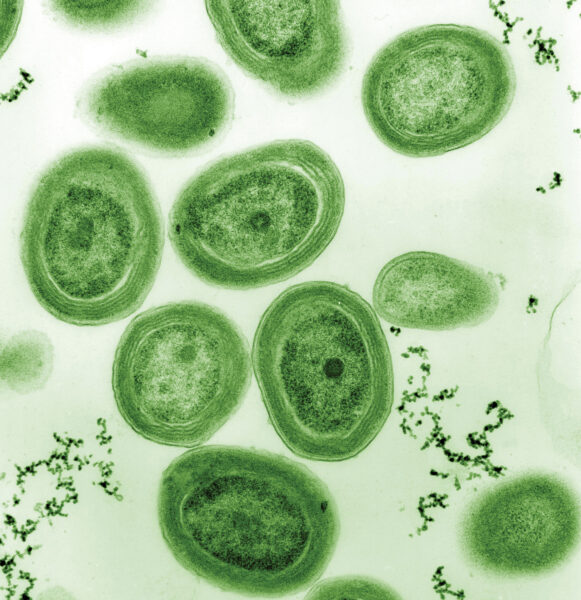
Of all the lifeforms that photosynthesise—turning light into energy, and pumping out oxygen—Prochlorococcus is the smallest and most abundant. A drop of seawater might contain 100,000 of the bright-green cyanobacteria; they cover three-quarters of the ocean surface, underpin marine food webs—and produce at least 10 per cent of the planet’s oxygen. A US study published in Nature warns this “keystone” plankton is not nearly as heat-tolerant as was hoped. As the seas warm, Prochlorococcus is expected to thrive and become even more dominant—until the surface water hits 28°C. Then, the study predicts, it will struggle to reproduce. In the warmest waters, Prochlorococcus could collapse completely. Globally, its population is predicted to abruptly drop by 10 to 37 per cent, depending on how the climate crisis plays out. This scenario is just decades away: by 2100, tropical and subtropical oceans are projected to be regularly topping 30°C. “It is crossing a threshold that could flip entire ocean regions into a fundamentally different state,” says lead author François Ribalet, of the University of Washington. “When you remove the foundation of any ecosystem, everything built on top of it shifts… The fish species, the timing of reproduction, the efficiency of energy transfer through the food web—all of this may change when you shake the base of the pyramid.” Ribalet notes the phytoplankton are also “tiny carbon pumps, constantly pulling CO2 from the atmosphere and converting it into organic matter”. That vital cycle, too, could be disrupted. The findings were gleaned from seawater samples taken over a decade, during more than 100 research trips across the warming Pacific; Ribalet told the Associated Press the team counted more Prochlorococcus than there are stars in the Milky Way. He adds that the modelling is conservative, and looks only at sea-surface temperature, not other threats such as ocean acidification or plastic pollution. “In reality, things may be worse.”
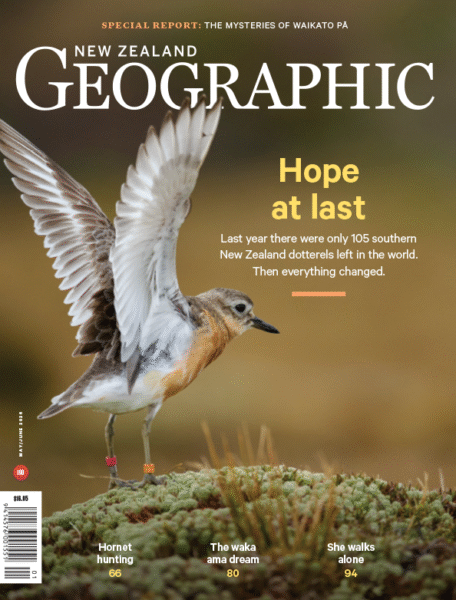
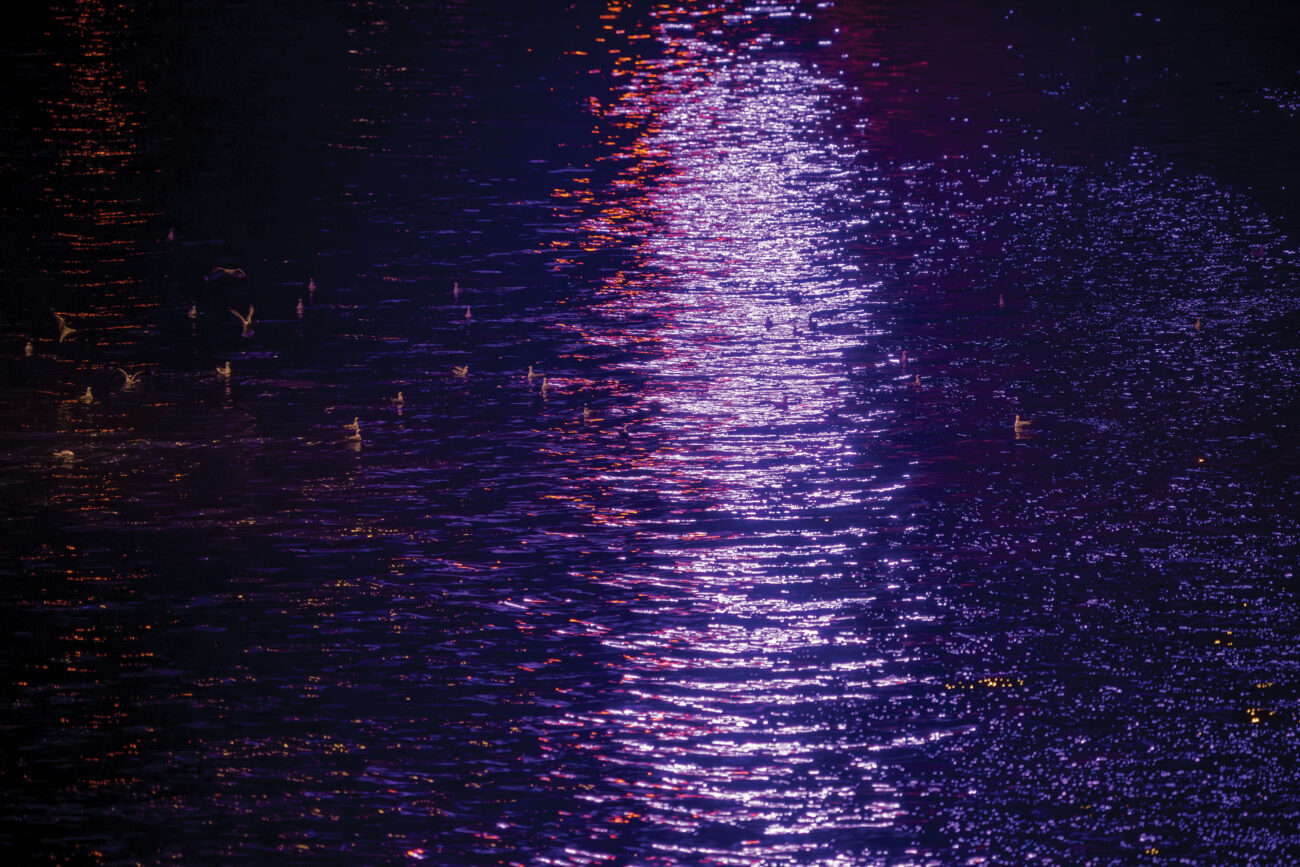
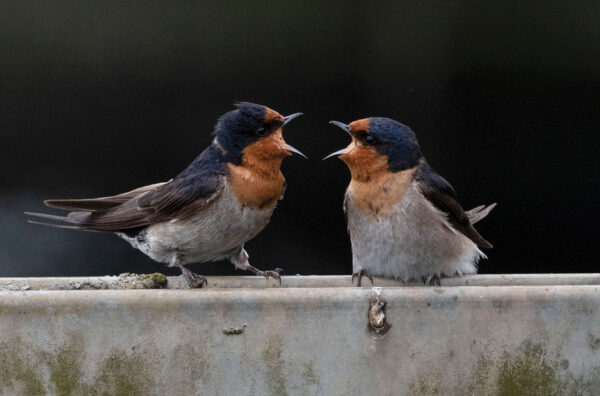
Every autumn, hundreds of newly fledged Cook’s petrel chicks emerge from their burrows in the dark of the Hauraki Gulf and launch into their first big flight—a night trip across Auckland, heading to the rich feeding grounds of the Tasman. The tiny birds fly for 50 kilometres, 60, 70. Then they hit the city lights.
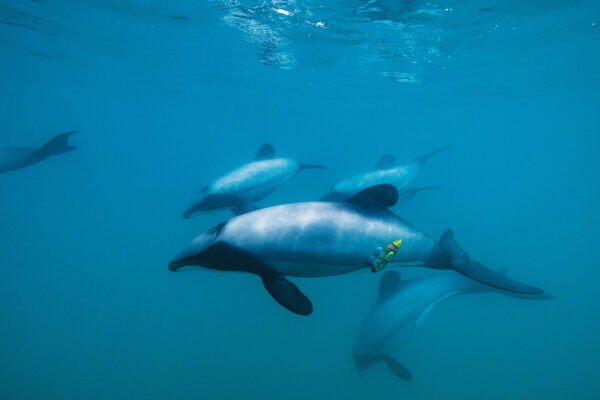
What do our smallest dolphins get up to underwater? Until now, researchers have been limited to watching from boats, or listening to recordings of the dolphins’ echolocation clicks and buzzes. In February 2023, as part of a cover story on the species, New Zealand Geographic documented scientists attaching innovative suction tags to Hector’s dolphins in Te Koko-o-Kupe/Cloudy Bay. The team tagged 11 dolphins and most of the tags stayed on for about four hours, logging pressure, acceleration, GPS locations and audio recordings. The data from those tags is “incredible”, says Rochelle Constantine, a University of Auckland professor who specialises in marine mammals. Six of the chubby little dolphins were recorded hooning around outside of the protected areas, with one heading 15 kilometres offshore. They were all very busy: together, across 83 hours of data, the dolphins dived almost 2000 times and executed “crazy” barrel-rolls along the sea floor. Most thrilling, she says, was watching the two dolphins whose tags kept functioning at night. These two sped down past the 100-metre mark and spent long stretches swimming purposefully, upside-down, about a metre above the bottom. Constantine suspects this let the dolphins aim their echolocation “beam” down, rather than up, startling bottom-dwelling fish. One caught six fish in just 70 seconds using this strategy; when it surfaced, says Constantine, you could hear it breathing, “but it’s not super puffed”. Given the endangered dolphins were so quick to swim out of the areas where bottom-trawling and set netting are banned, Constantine says the obvious reaction would be to push to expand those zones. “I would argue strongly against that,” she says—she’s hoping instead to secure funding to build on this pilot project, to help inform nuanced, mature fisheries regulations.
Across the world, light pollution such as streetlights, signage and lit-up windows is prompting hundreds of species of birds to sing for longer—on average, each bird is putting in an extra 50 minutes per day. US ecologists analysed a year’s worth of data from an app called BirdWeather, which maps birdsong picked up all over the planet. Some of the songs in this “living library” are caught on special audio recorders in reserves and forests—including a handful in New Zealand—but many others are logged by phones, or YouTube cams set up to watch nests and feeders, such as those at Castlepoint and Taiaroa Head. (It’s a fascinating website to poke around on. In the space of 30 seconds it flagged noisy starlings in Christchurch, a sparrow in Whanganui, and pīwakawaka just out of Hamilton.) The research, published in Science, lines the songs up with satellite data documenting light pollution, and finds that birds in lit-up areas start singing on average 18 minutes early, and sing 32 minutes later each evening. The analysis covers almost 600 species; those most reactive to light tend to be migratory birds, species with big eyes, and those that make open nests. The researchers are not sure what effect all that extra singing might be having.
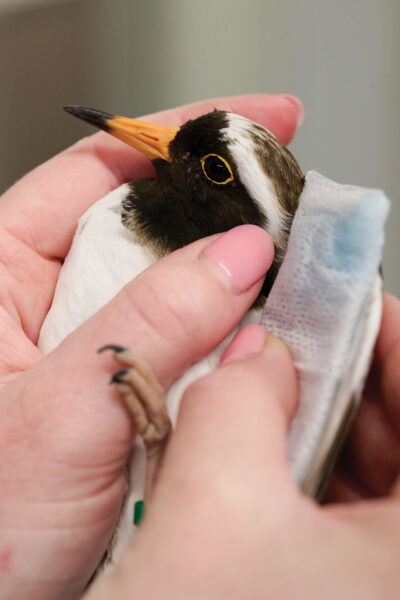
A year ago, we reported on preparations for the arrival of the highly pathogenic avian flu that has ripped through poultry, sea birds, mammals and a host of other species overseas (see ‘Skyfall’, Issue 190). At that time, the Department of Conservation was trialling vaccinations in five of our most endangered birds: kākāpō, kākāriki, takahē, kakī, or black stilts, and tūturuatu, shore plovers. All five species had strong responses to the vaccine, DOC now reports, although kakī’s immunity seemed to wane more quickly. We won’t be able to use these vaccines in wild birds—they’re too hard to catch—but it does give captive populations a layer of protection. This spring, migrating seabirds will be arriving from the Southern Ocean, where the virus is rampant, so it’s a high-risk time. Early detection will be crucial to helping our native species endure; if you see a group of three or more sick or dead birds, sea mammals or other wildlife, don’t touch them. Call the MPI hotline on 0800 80 99 66.
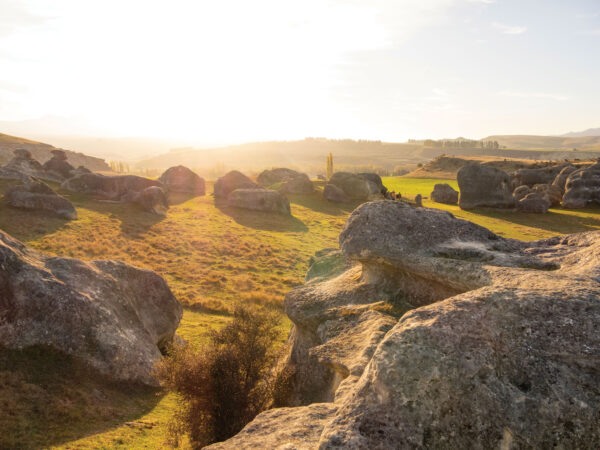
From fossils to boulders, heritage precincts to glacial moraines, the Waitaki Whitestone Geopark rocks.
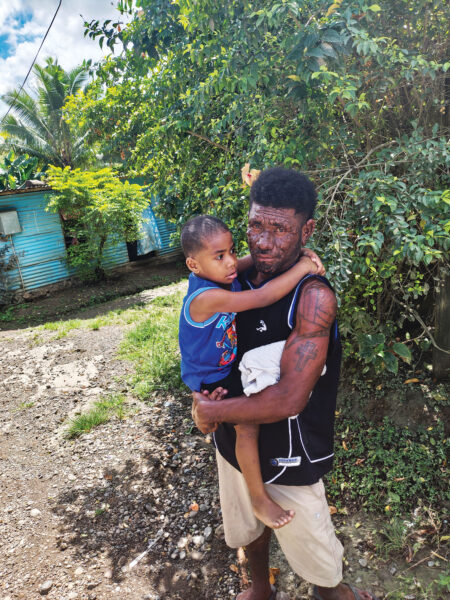
How the Pacific Leprosy Foundation is helping a Fijian father overcome the stigma of a debilitating disease.
Edited by Lynley Edmeades, Otago University Press, $35, October 16

3
$1 trial for two weeks, thereafter $8.50 every two months, cancel any time
Already a subscriber? Sign in
Signed in as . Sign out

Ask your librarian to subscribe to this service next year. Alternatively, use a home network and buy a digital subscription—just $1/week...

Subscribe to our free newsletter for news and prizes