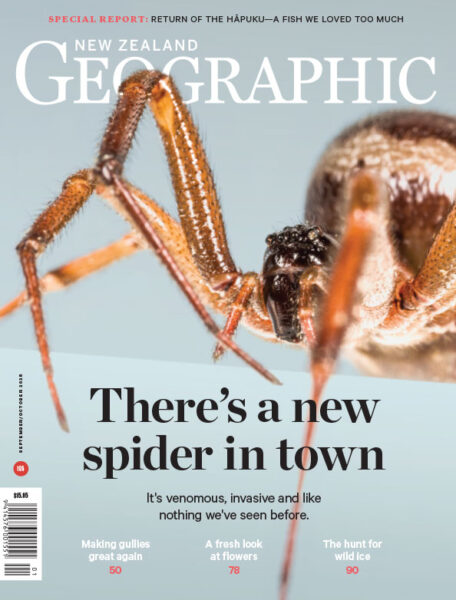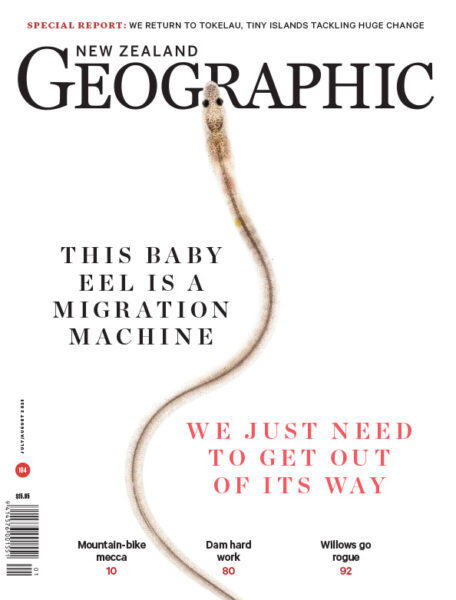
Fly, Fly
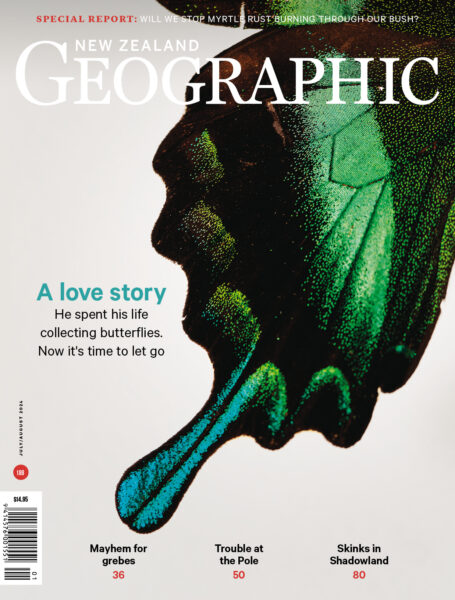
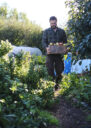
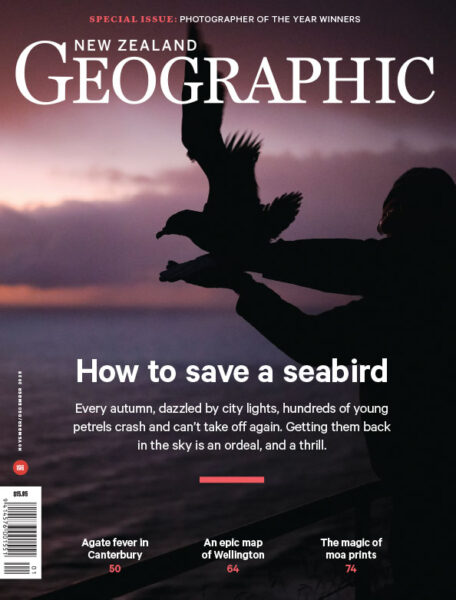
How do you say goodbye to a life’s work?


How do you say goodbye to a life’s work?
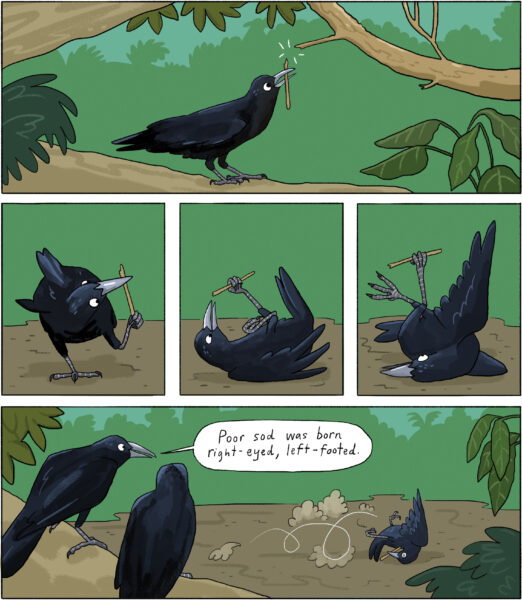
Bees and cockatoos, walruses, spider monkeys, pūkeko—throughout the animal kingdom, individuals often favour a certain hand (or eye, or antenna). But how did so many humans end up right-handed? And why, historically, did we give lefties the side-eye?
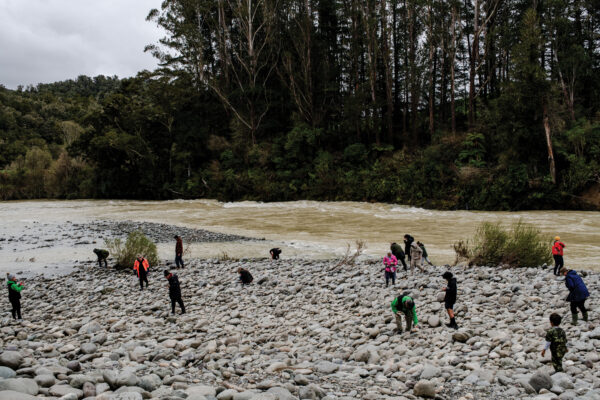
Ngāti Kuia once relied on what they call pakohe, a type of argillite found only in their rohe, for the tools that kept them alive. Now, the iwi are revitalising traditional methods of working the precious stone. Tatsiana Chypsanava photographed a recent wānanga.
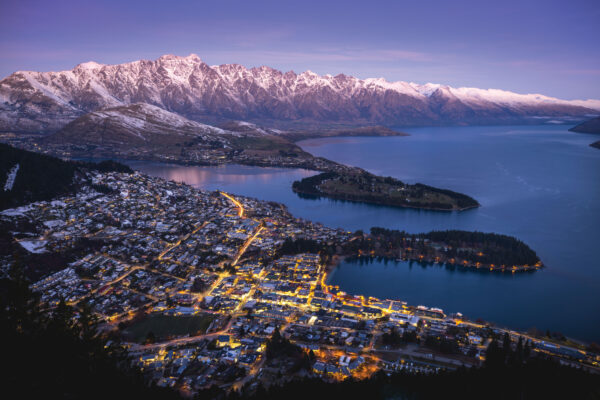
Queenstown, Wānaka and the surrounding region have set an audacious goal of becoming carbon zero and creating a regenerative visitor economy by 2030. Right now it might look impossible, but the district remains determined.
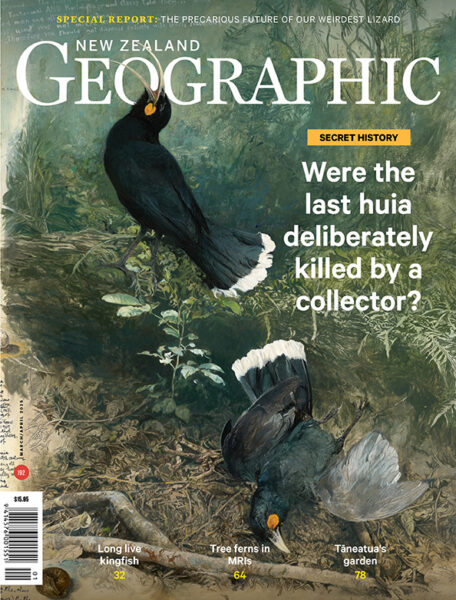
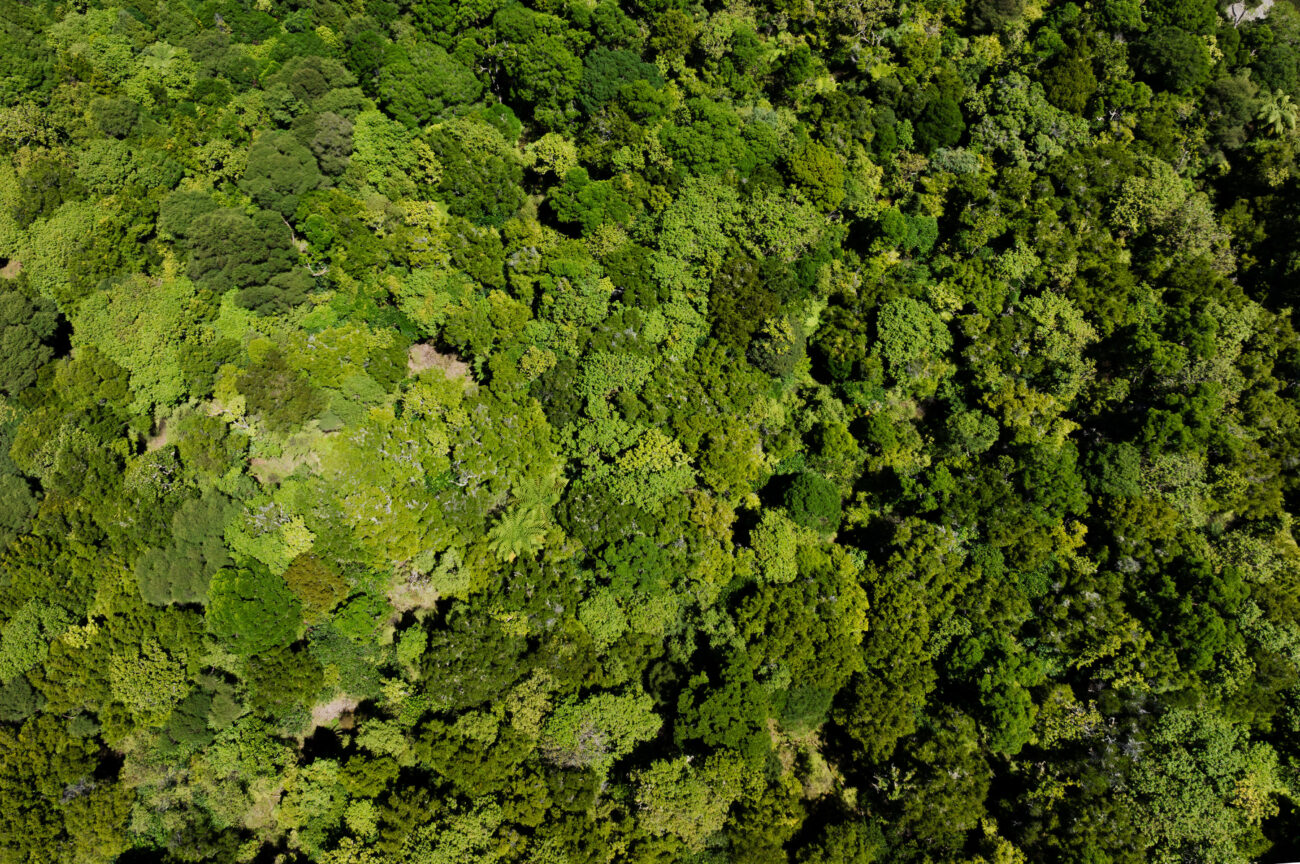
The pōhutukawa boomed last summer. Thousands of trees blooming their hearts out, ridiculous masses of flowers, a red wave cloaking the battered coastlines, playgrounds, suburbs. It was the first pōhutukawa mast in 20 years. But something uglier was flourishing in those old-man branches, too: myrtle rust, a fungal disease that blew in seven years ago and spread rapidly. The long, wet summer, heralded by all that red, left pōhutukawa choked with spores. It’ll be a few years before the really big trees start to topple, scientists expect, but the rust is working on it. Can you imagine the North Island without pōhutukawa? Rangitoto, stripped back to hot black rock? Pōhutukawa shaded my first date with my husband, our wedding, and our first little house together. It was the first tree my son climbed, with a branch slung so low he could simply toddle up. Travelling home over the Auckland Harbour Bridge, other bus passengers swivel to check out the sea. I turn to the land and the receiving line of giants at Northcote Point, inspecting the damage from last summer’s storms, clocking whether any more trees have slipped or been cut back. From the office window we can see a pōhutukawa on Stanley Point that’s been in the act of falling off a cliff ever since Gabrielle. Hanging in there, as if by its toes. To the extent that myrtle rust has had media attention, pōhutukawa has, unsurprisingly, been the poster child. But other species are going under, too. And with them go the ecosystems they support. “Inside three years, hundreds of thousands of ramarama have vanished,” says Ngāti Porou kaitiaki Graeme Atkins, in a 2021 documentary that functions as a requiem for the species in his rohe, Tairāwhiti. Ramarama, he points out, fruits in the winter—without it, the birds and bats that depend on that foodsource will likely starve. When an unassuming understorey sort of plant like ramarama blinks out, what fills the ecological niche? Privet? As I read Ellen Rykers’ feature story on the rust and our truncated response to it, I started to wish that the trees would become sentient, that they’d rise up like Tolkien’s Ents, rip their feet from the ground and march on Parliament. Much of the journalism resource of New Zealand Geographic now goes into documenting environmental catastrophes. We try to get in early enough to make a difference, but repeated and unnecessary official failings loom large. For me, the decision not to renew funding to fight myrtle rust and safeguard precious genetic material from species in its sights sits near the top of that list. Importantly, the ngahere does have an army on its side: teams of scientists and kaitiaki have been working with urgency to understand myrtle rust—and combat it. They’ve come up with promising weapons, too: fungi and insects with a taste for myrtle rust; seed-banking and resistance-testing programmes; antifungal spraying; and a high-tech new spray from Aussie that (in the lab, at least) not only protects plants, but also cleans up rust in plants already struggling. All of this innovation is about to hit the wall. Funding for the optimistically named umbrella programme “Beyond Myrtle Rust” ends this month. Likewise, the Jobs for Nature teams that spent years monitoring the rust and developing ways to fight it are about to be left in the financial wilderness. And so we are left with a pressing choice. Move on, push the rust from our minds, picnic under the pōhutukawa before those big swooping branches start crashing down. Or consider that blazing red summer a call for help.
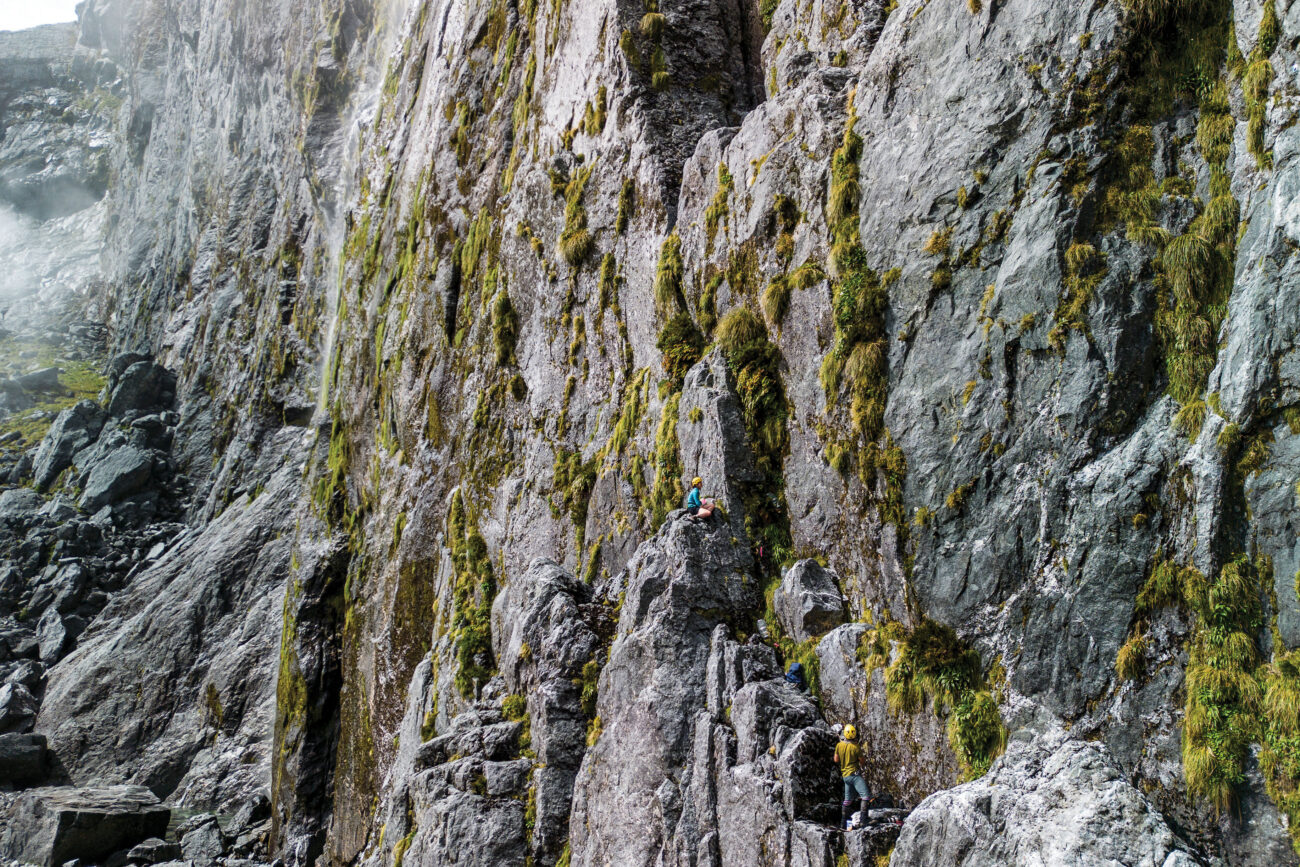
For a long time it was a good place to be an endangered skink—a vertical sheet of rock at the head of Milford Sound/Piopiotahi, too snowy and steep for mice to bother with. But as the climate warms, the mice are moving in. For the skinks, it’s now a race to evacuate.
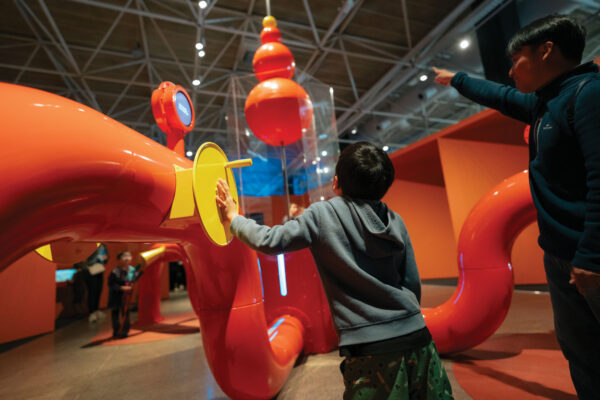
Scientists build a 2000sqm high-tech playground. Kids go berserk.
When Jennifer Bannister was growing up, girls were secretaries, or teachers, or nurses. She persevered.
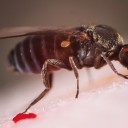
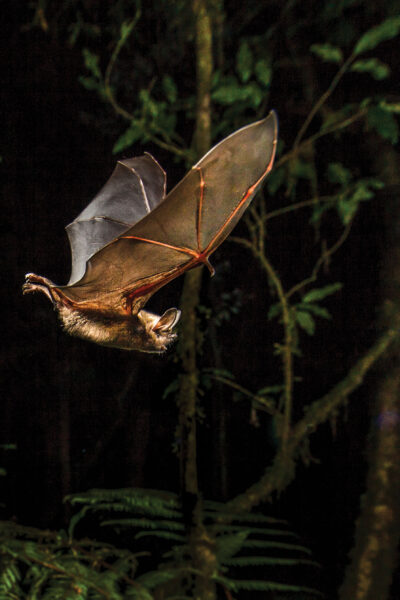
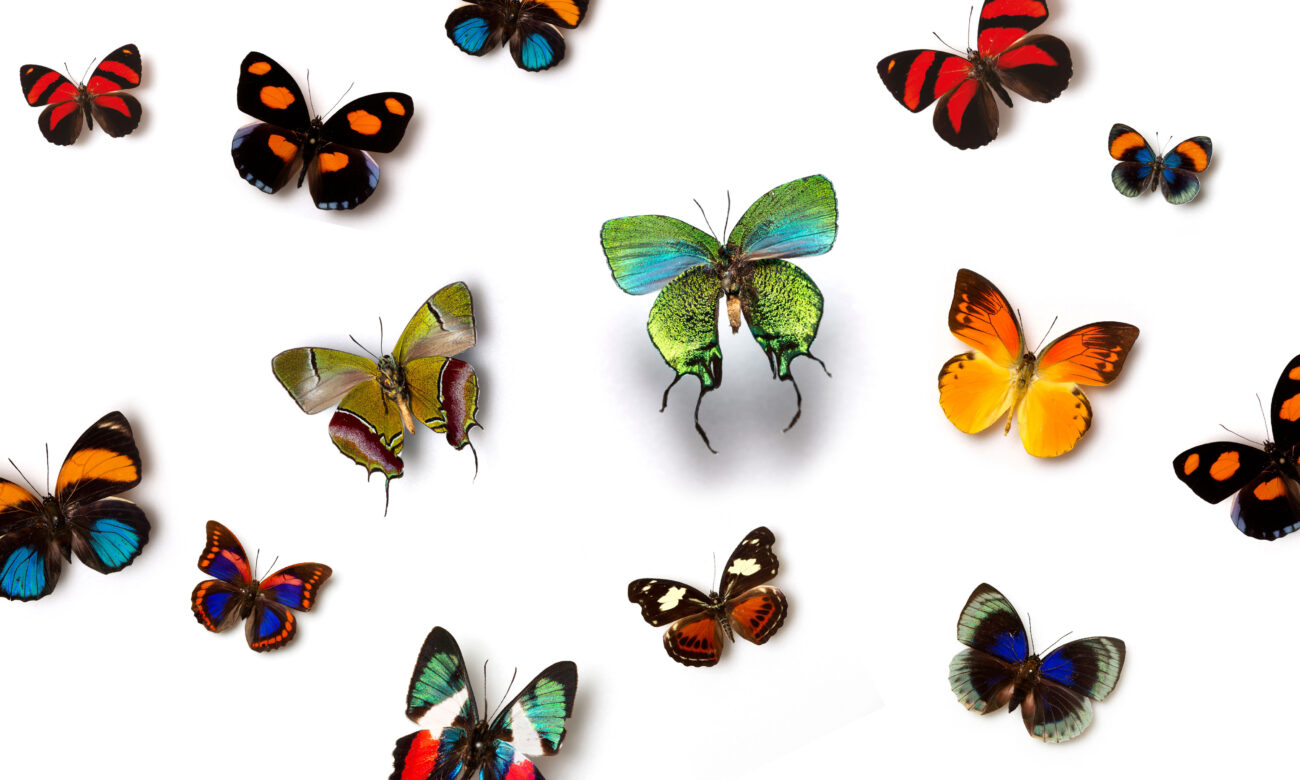
An invisible mathematical thread connects most creatures that fly, Danish physicists have found—and even those that “fly” underwater. The group from Roskilde University hit on a universal equation that predicts how fast a creature has to flap its wings in order to lift off. (It’s proportional to the square root of body mass divided by wing area.) The formula, presented in open-access journal PLOS ONE, works for all 414 flying creatures they tried: bats, mozzies, dragonflies and beetles, moths, bees, and many, many birds (even a robotic one). It also holds for penguins and several species of whale—creatures that must swim to stay submerged. And people? “If you don’t build yourself some wings and rely only on your arms,” says lead author Jens Højgaard Jensen, “you would have to flap your arms at a ridiculous frequency to generate enough lift.” He’s talking hummingbird-ridiculous—given a body mass of 80 kilograms, and estimated “wing” area of 0.2 square metres: 44 times per second. Okay, but what if you did build wings, boosting your wing area to two square metres? You’re still looking at 4.4 wingbeats per second. “You would need huge chest muscles to push them through the air so fast,” Jensen says. “I think the conclusion is that we are not really built for winged flight.”
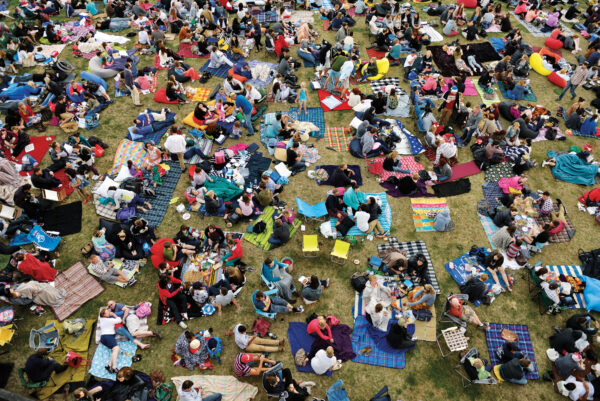
A new experiment suggests the human perception of time is influenced by what we’re looking at. To test this, scientists from George Mason University in the US state of Virginia sorted dozens of images into various categories—a full pantry was “high clutter”, for example, while shots of clouds or empty rooms were “low clutter”. Some images were also categorised as “memorable”—like a close-up of a child laughing. The team flashed the images at participants, asking each to report whether the picture was up for a long or short time, or to hold down a button for the same length of time the image had been up. Over four experiments, the cluttered pictures seemed to zoom past, while the more memorable seemed to linger. Likewise, “larger” images—a stadium, or a pulled-back landscape—dilated the experience of time. One theory presented in the scientists’ paper, published in Nature Human Behaviour, is that this is because our brains are instinctively plotting the body’s movement through space: perhaps a larger image just takes longer to mentally “walk through”. But why would a cluttered picture, like this aerial shot of moviegoers at Auckland’s Silo Park, seem to pass by at warp speed? Perhaps, says one of the authors, cognitive neuroscientist Martin Wiener, this is because our brains simply struggle to process clutter—we skip over it to some degree. (He notes, too, that in the real world these results may differ, depending on what a person is doing and the nature of what they’re looking at.) More importantly: If clutter compresses time, does that mean that your messy co-worker experiences a shorter workday than you, with your immaculate desk? “Ha!” laughs Wiener, “I have no idea.” Stopping to think about it, though, he suggests you would each be accustomed to your respective setups—so each day would feel pretty standard. However: “If you had to work at their desk for a day, then perhaps you’d feel like the day went by quicker—or that you didn’t get enough done.”
A vicious strain of myrtle rust is burning through our bush. Dozens of native species—and the ecosystems they support—are at risk. Scientists think we have three, maybe four years before the biggest pōhutukawa start to fall. They’re racing to find a way to stop the rust—and to save seeds from plants we stand to lose forever.
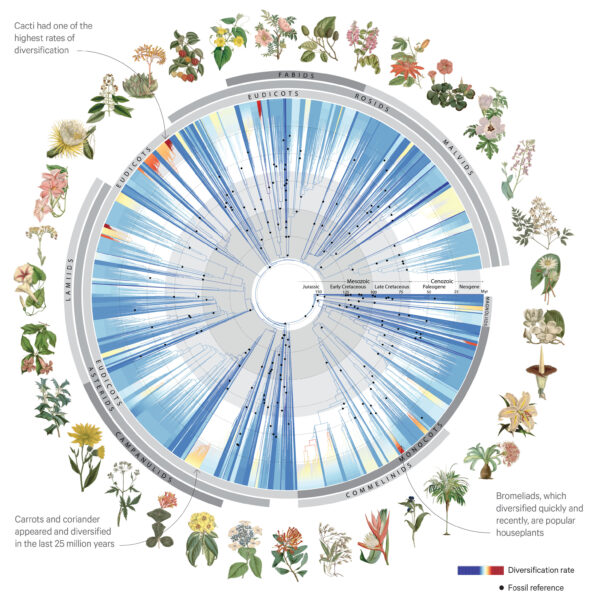
Behold the evolution of flowering plants, painstakingly put together by gene sequencing thousands of species, including some 200 from New Zealand. Scientists published the “tree of life” in Nature and say it can be used as a sort of periodic table for plants, or a roadmap for researchers working on conservation or new medicines, for example. “It’s like peering through a window across 150 million years of history,” says Kew Gardens’ William Baker, an evolutionary biologist who led the international project. “A kind of ‘family photo’ across the ages, made possible by the amazing molecular fossil record.” The scientists note a burst of “explosive diversification” early in the Mesozoic Era. Reptiles were on the rise and so were flowering plants, becoming drivers of large-scale planetary cycles such as climate and water. A second surge, in the Cenozoic, was possibly caused by a drop in global temperature, or by feedback loops between plants and insects, which were also diversifying rapidly. Even with close to 200 scientists working on this project, including all 330,000 species was out of reach. So the team plucked one per genus, leaving a bouquet of “only” 13,600 to work with. After eight years they’re about two-thirds of the way through.
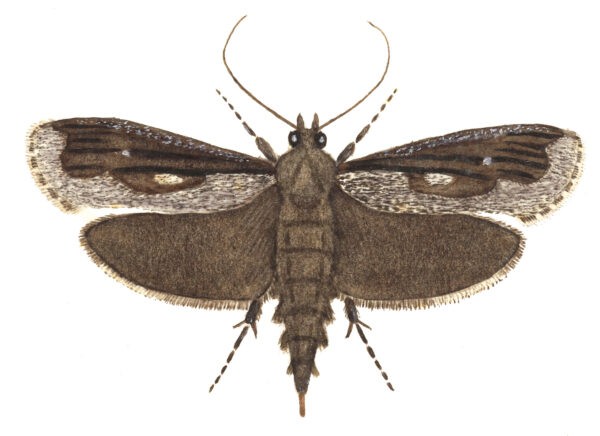
A magnificent moth, unseen for 65 years, has popped up on Stewart Island/Rakiura. Entomologist Robert Hoare, writing about the “sensational rediscovery” for the Entomological Society Newsletter, calls the frosted phoenix the “Holy Grail of New Zealand moths”. The phoenix staged its dramatic reappearance on iNaturalist—a Swedish tourist, Pav Johnsson, had put an LED light on the balcony of the South Sea Hotel in Oban, photographed the various moths that turned up, and posted the pics online. Two weeks later, Auckland palaeontologist and moth buff Neville Hudson declared one of the photos showed Titanomis sisyrota. “Neville was right, as usual,” Hoare reported. “The photograph created an amazing furore of excitement, never before seen in the Lepidoptera world of New Zealand!”
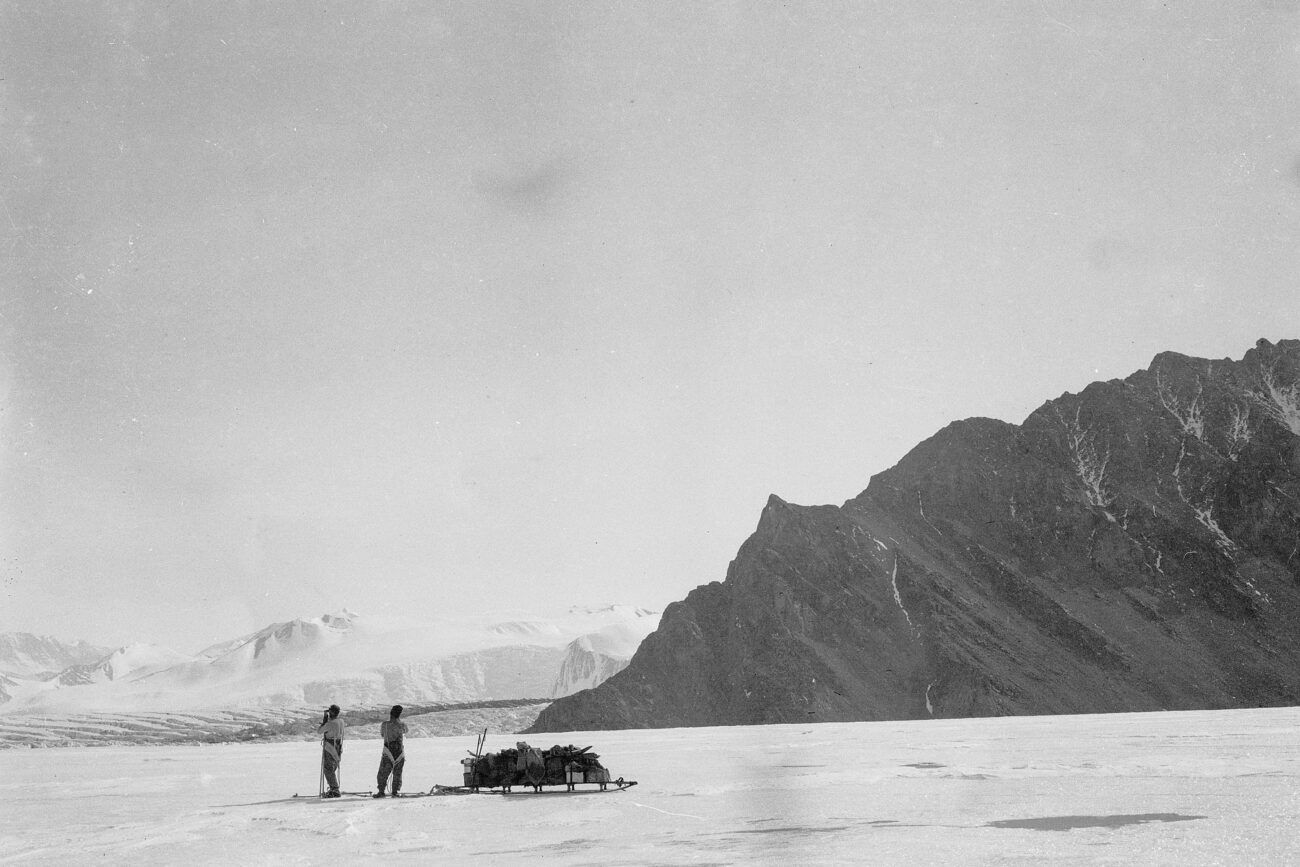
A story of bitterness and betrayal at the South Pole.
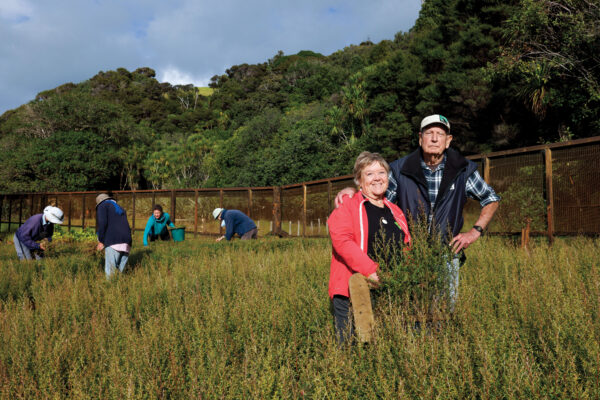
Ray Blackburn and Maggie Cornish have volunteered at the Tāwharanui Open Sanctuary north of Auckland since they retired 15 years ago. They kill rats, collect seeds, plant trees. The work gets them outside, keeps them physically and mentally fit—and has become a big part of their social life, leading to dinners, parties, camping and birding trips outside of the project. “You’re working together, chatting away about your life and your family. You really can’t help but adopt these people, or be adopted,” says Blackburn. Volunteers keep coming back, Cornish says, because they enjoy each other’s company, and feel valued and respected. Massey University researchers found exactly that in a new study based on interviews and surveys of more than 100 conservation volunteers in Manawatū. The researchers investigated what makes such volunteers commit for the long haul, and found that adequate time for socialising was a key motivating factor. So was the desire to make a meaningful contribution to the environment and their local community. “I could achieve the same thing by playing golf or bowls,” says Blackburn, “but when you finally fall off the perch, what use is your golf handicap to the rest of the world?”
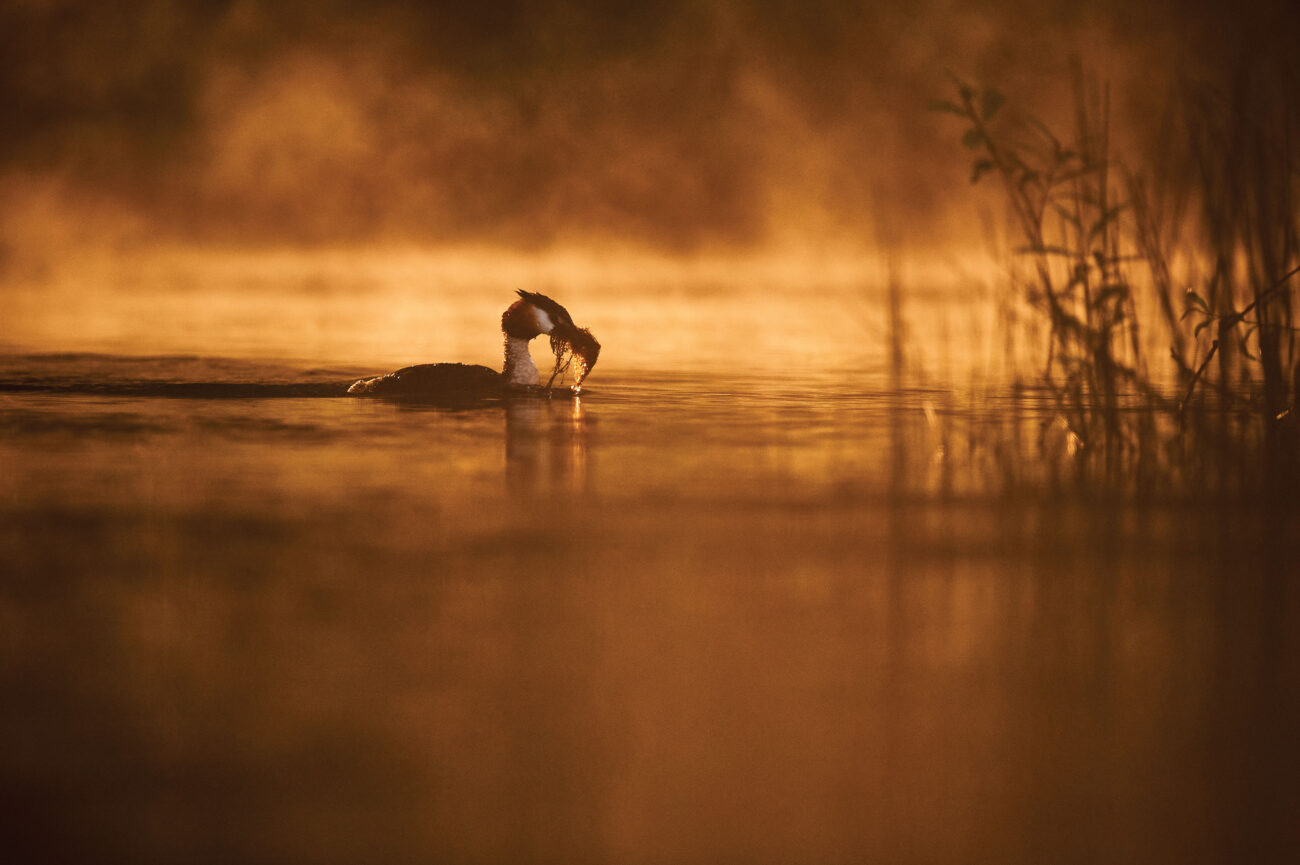
In Lake Wānaka the Australasian crested grebe reigns supreme from a flotilla of nesting platforms strung close to shore. The birds love the platforms. The locals love the birds. But the man who started it all worries the project could be doing more harm than good.
Will Cockrell, Simon & Schuster, $39.99
Glenn Busch, Te Papa Press, $75
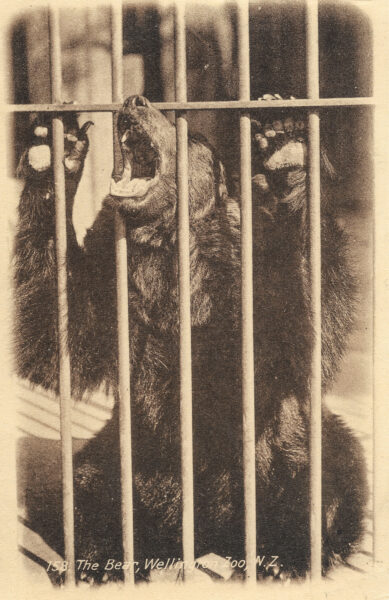
We put bears in zoos and the bears bit back.
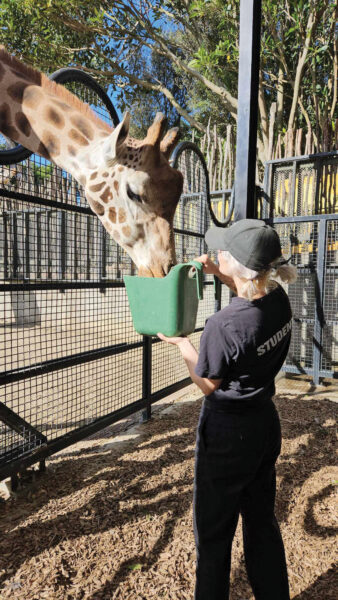
Asia Martusia King’s first piece for this magazine is a History column about bears going stir crazy in New Zealand zoos. The Wellington science communicator is training as a zookeeper, a dream job that grew from a childhood spent chasing bugs in the garden and, later, “a fierce Pokémon obsession”. Sounds silly, she says, but she was surprised by how big giraffes are. “As a visitor, you’re usually viewing them from a platform. It’s so different gawking up at this six-metre-tall alien creature you’re feeding, with giraffe drool and beetroot pulp dribbling down your shirt. Their poo is surprisingly tiny, though.”

3
$1 trial for two weeks, thereafter $8.50 every two months, cancel any time
Already a subscriber? Sign in
Signed in as . Sign out

Ask your librarian to subscribe to this service next year. Alternatively, use a home network and buy a digital subscription—just $1/week...

Subscribe to our free newsletter for news and prizes