Off the wall
For a long time it was a good place to be an endangered skink—a vertical sheet of rock at the head of Milford Sound/Piopiotahi, too snowy and steep for mice to bother with. But as the climate warms, the mice are moving in. For the skinks, it’s now a race to evacuate.
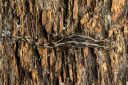
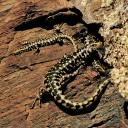
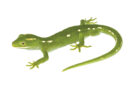
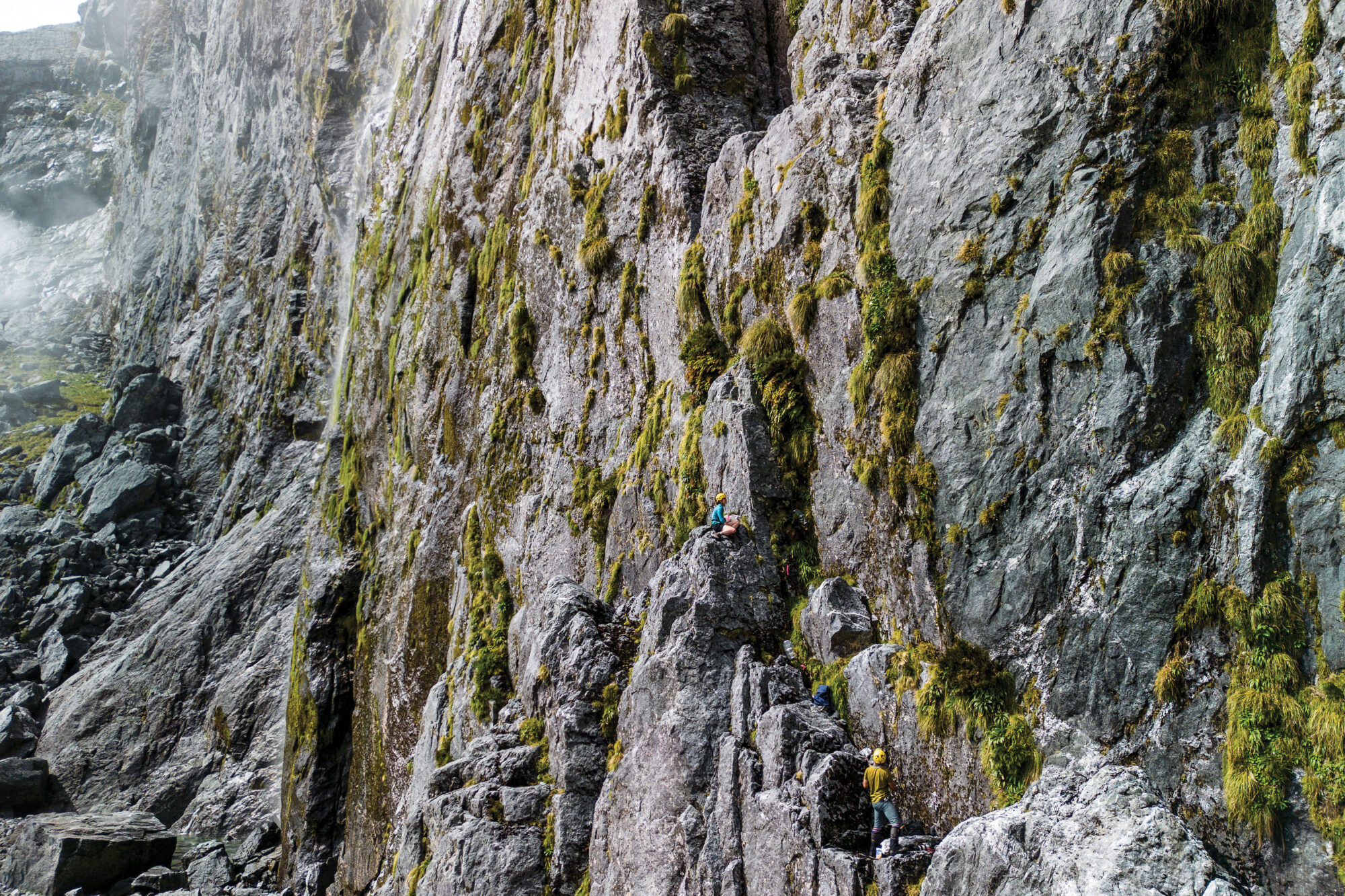
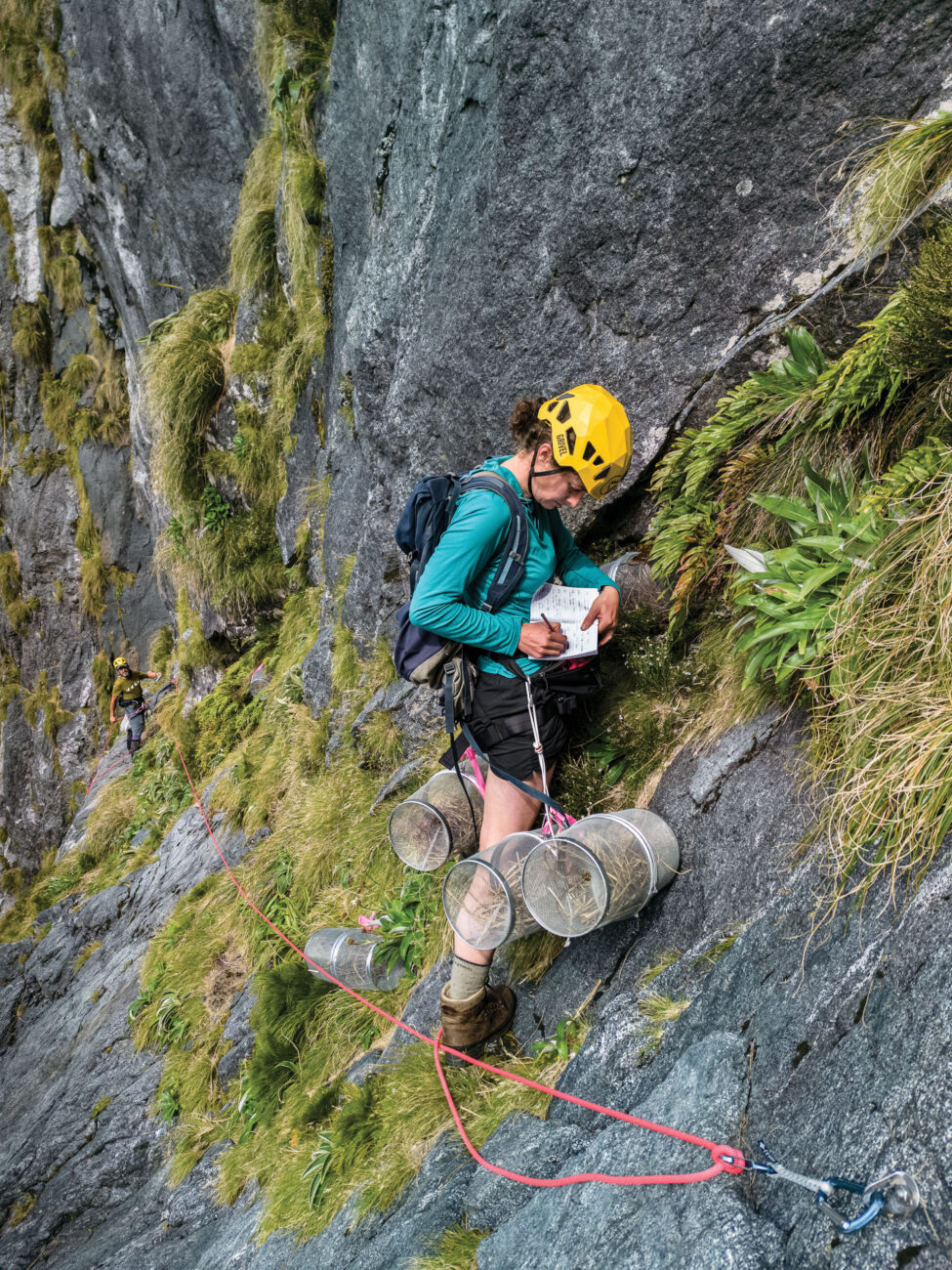
I’m 10 metres up a cliff in Sinbad Gully, Fiordland, panting, making my way along a sloping, tussock-covered ledge. I’m here to help catch skinks, and I crouch down beside a minnow trap—a 60-centimetre-long wire-mesh tunnel designed to catch fish—that we set earlier in the day. The trap gives a small bounce; there’s the thump of something large moving inside. My heart gives a corresponding thump. I haven’t done this on my own before, but I’ve been taught what to do, so I open the trap, slip my hand quickly inside, encircle the skink with my fingers and lift it out. This is a Sinbad skink, about the length of a banana and half as thick, with a black and emerald-green back. The lizard twists in my hands, surprisingly strong, and I catch a glimpse of its rose-coloured belly. Its toes grip my skin.
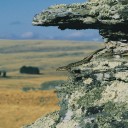
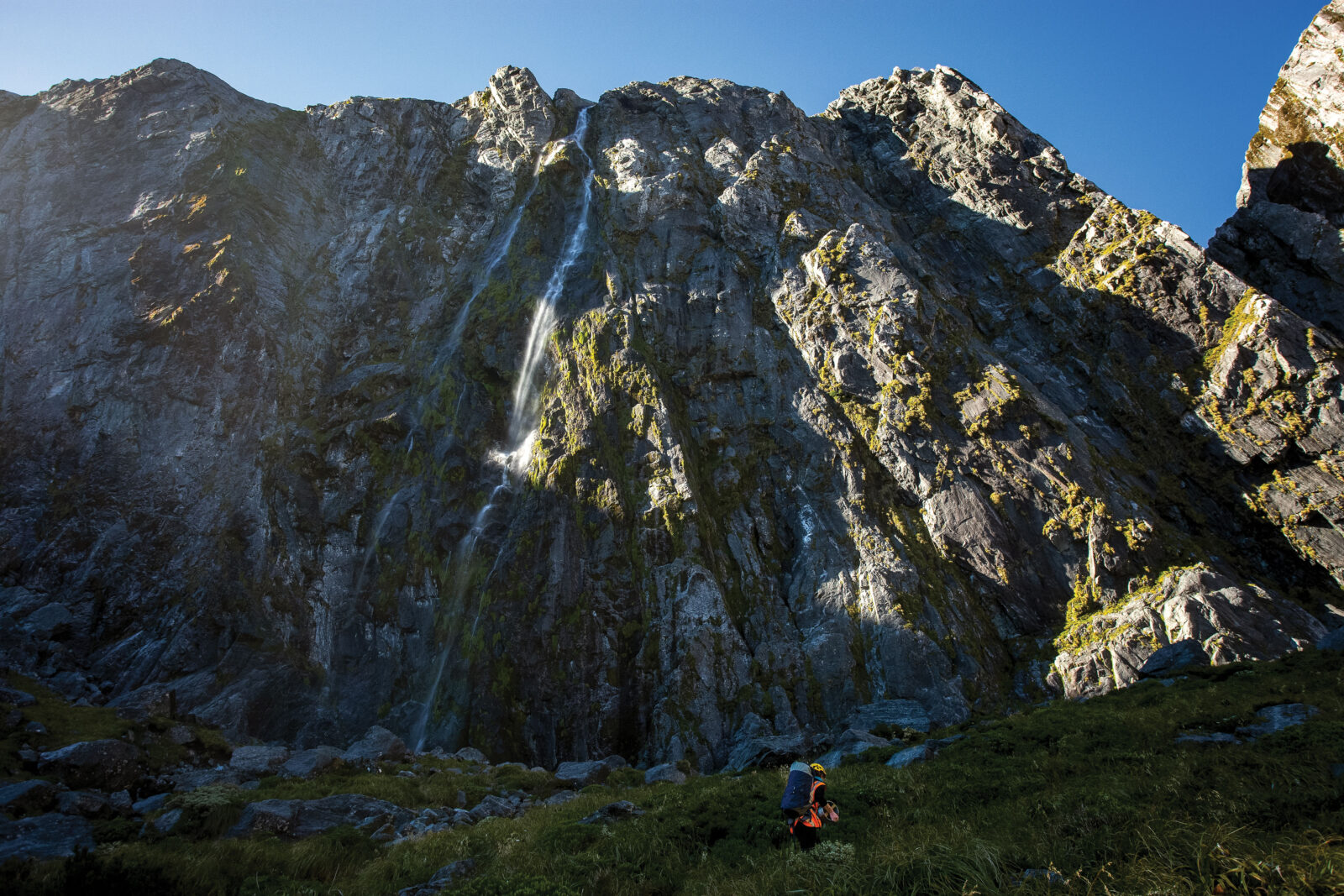
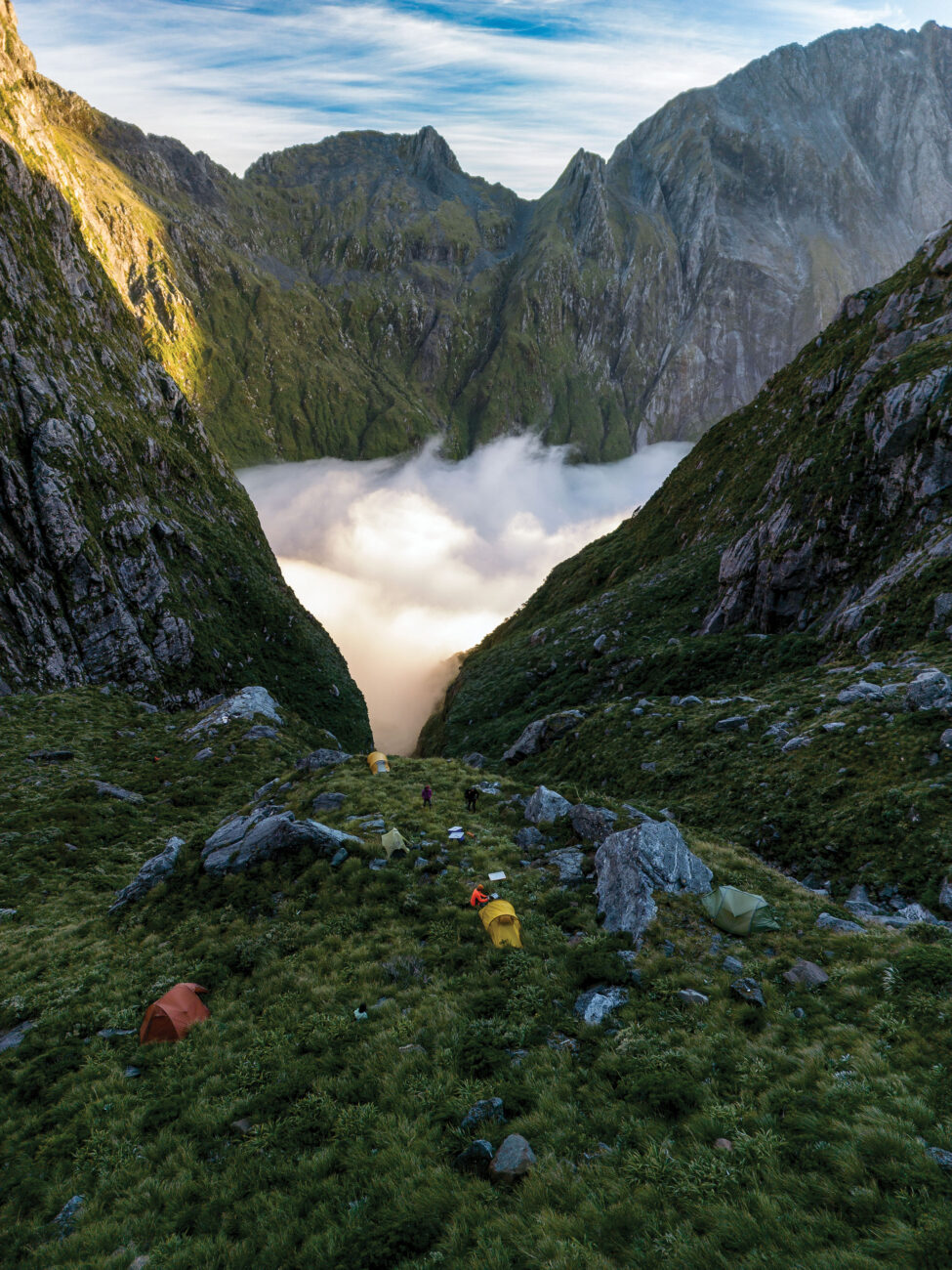
My breath is still coming fast, and I pause for a minute. Above me stretches another 300 metres of rock wall. The cliffs almost completely encircle the subalpine basin below me, a mass of green and gold shrubs in the February sunshine. This valley was famously one of the last strongholds of kākāpō in the 1970s, but also, it now turns out, the site of some captivating lizard drama.
Until recently, no one imagined lizards might be living in these mountains. Herpetologists didn’t give it a second thought: Fiordland, especially alpine Fiordland, with its cold, wild weather, would be a ludicrous place for lizards, since they need the sun’s warmth for their bodies to function.
Then, in 2003, two rock climbers arrived to scout the wall I’m on, looking for a place to film the Hollywood movie Vertical Limit. Reaching for a handhold, the lead climber felt something soft move under his fingertips. The gecko fell, but landed on the shoulder of the belayer below, who managed to snap a blurry photo before the gecko lost its grip and fell again, this time 150 metres onto rock.
In great excitement, herpetologists headed for the gully, finding two new species, the Sinbad skink and the mahogany skink, as well as one they recognised, the Cascade gecko. No other lizards in the world live like this—on alpine rock faces in the Roaring Forties, spending half the year under snow and ice and the rest of the time dodging rock falls, avalanches, gales and torrential rain. We’ve been trying to get here all summer, but our trip was postponed again and again by ugly weather.
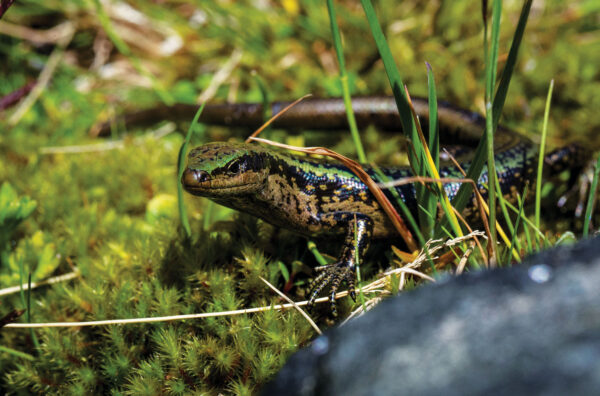
James Reardon, a Department of Conservation herpetologist, doubts the lizards are living here simply because they feel like it. “There’s good lizard habitat all over the place up here, on these sunnier, warmer slopes, yet we only find the lizards on these vertical surfaces,” he says. He has a good idea of why. “The big concerns are mouse plagues, which do occur even at these sorts of altitudes.” Mice sniff out the skinks, follow them into rock cracks, and eat them—especially when the lizards are slow in the winter cold. Reardon thinks the lizards on the wall are in retreat: eaten out of the easier country, they’re now just hanging on in the steepest places, where, with feet he calls “grappling hooks”, they’re quite at home. Fewer mice bother them on the wall—the rock is often slick with ice or melting snow, and doesn’t grow much of the vegetation that mice like to hide in and eat (lizards, for them, are a tasty side dish). But that chilly advantage is evaporating as the climate warms.
Of all the lizards hunkering here, Reardon is particularly concerned about Sinbad skinks, because they don’t appear to live anywhere else. Based on the numbers of skinks on the lower, more accessible part of the wall, DOC experts originally guessed there might be about 500 adults, which means the species is classed as “nationally vulnerable”.
But with predators pushing higher all the time, Reardon wonders: how long before the skinks are eaten out of their last stronghold? Or, another way of putting it: how long do we have to get them off the wall?
[Chapter Break]
Translocations are tricky. Shifting an animal to a place they haven’t chosen to live is risky, and some translocations fail altogether—through the 1960s, we tried and failed nearly 50 times to move North Island weka. Over 30 years, we translocated 1728 pāteke/brown teal, and all of them died. Success rates are increasing, and good-news stories abound, but the public perception that translocations are easy and they always work is certainly not backed up by the evidence. And, as DOC herpetologist Lynn Adams points out, we’ve not had much practice with lizards, and with this species we’re even further into unknown territory. “Most of the skink translocations we’ve done have been secure island to secure island,” Adams says. “With this one it’s quite a different story. It’s in a difficult environment, it’s a species we don’t know much about.”
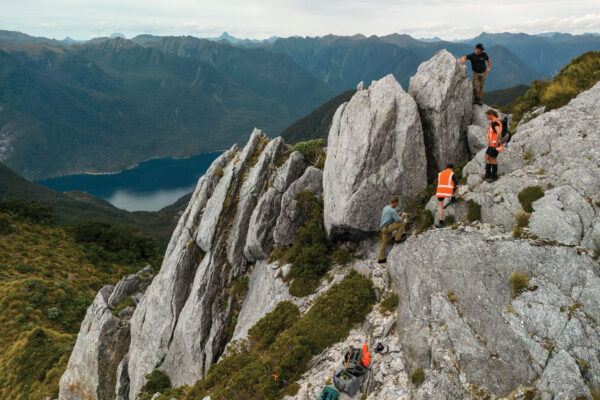
We don’t have a safe place to put these skinks that perfectly matches the climate they live in now. The best contender is Secretary Island. A rough triangle guarding the coast at Doubtful Sound/Patea, the island is rodent-free and covered in beech forest, with some good steep alpine areas and plenty of prime basking rocks. On the other hand, it’s 100 kilometres south of Sinbad Gully—a long way, if you’re a lizard—and it’s home to a boisterous population of weka, which have a taste for lizards.
But climbers are increasingly seeing mice on the wall. And, as Adams notes, we have no toxins, no traps, to counter them in such a spot. For the skinks, time is running out.

DOC calculated that to establish a population on Secretary Island, it needed to capture 80 skinks off the wall. But first, reconnaissance: PhD student Clare Gunton caught 20 weka on the island and fitted them with GPS trackers so she could see how they behaved when the skinks arrived. Sinbad skinks evolved in the presence of weka, so the two species are not incompatible—but a small, newly delivered population of skinks would be easy pickings. And weka, famously curious and formidably equipped in beak and claw, are notorious for gobbling their fellow refugees on sanctuary islands.
One successful lizard translocation, led by Reardon, took place in 2018, when the critically endangered Te Kakahu skink was moved from Chalky Island to Anchor Island, to create a now-thriving second population.
“You have to be prepared to take a few risks to make the gains in these environments,” says Reardon. “We just have to be very careful about how we take those risks.”
Reardon has worked in wildlife conservation most of his life, the past 20 years of it with New Zealand’s lizards. He vividly remembers the event that set him on his path: the construction of a bypass smack through a wetland in his rural Welsh hometown. To eight-year-old Reardon, who loved the ponds and the newts that lived in them, this was an unbearable crime. He is the energy behind this project, and a number of other lizard projects around the country.
In January 2023, the translocation attempt to Secretary Island got underway. The weather was perfect in Sinbad Gully, and the lizards were out, but not the species anyone wanted. Plenty of the finely built, dark-brown mahogany skinks were caught in the traps, but by the end of two days of trapping across the whole 400-metre width of the wall, the team had caught barely a handful of Sinbad skinks. “And that’s really when the panic set in,” says Reardon. It looked like their guess had been wrong. There weren’t 500 Sinbads on the wall. There were potentially half as many.
As Reardon and herpetologist Jo Monks stood at the top of the wall, watching another round of Fiordland weather creep over the peaks, a thought struck both of them at the same time—what if they tested the translocation idea with the mahogany skink instead?
[Chapter Break]
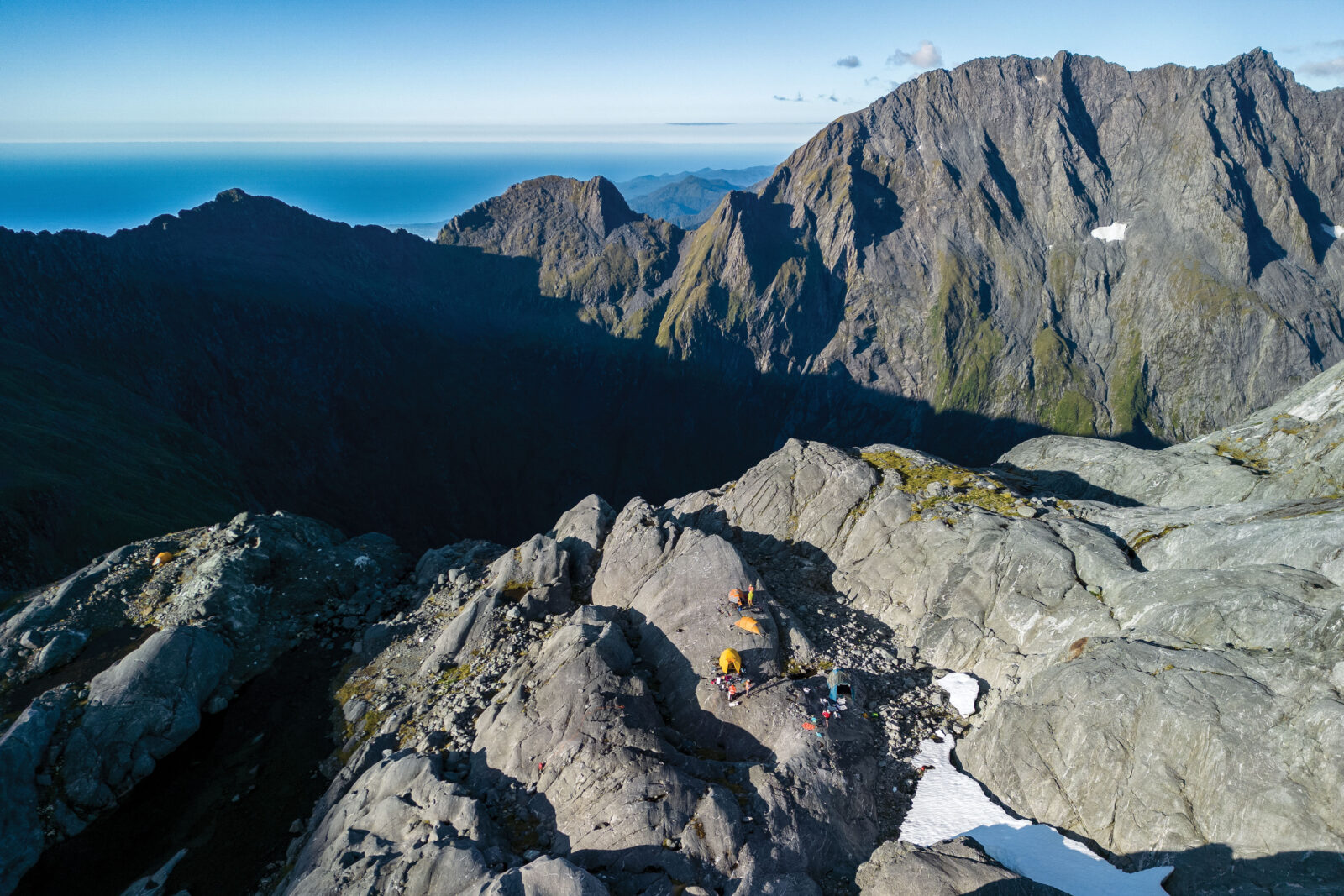
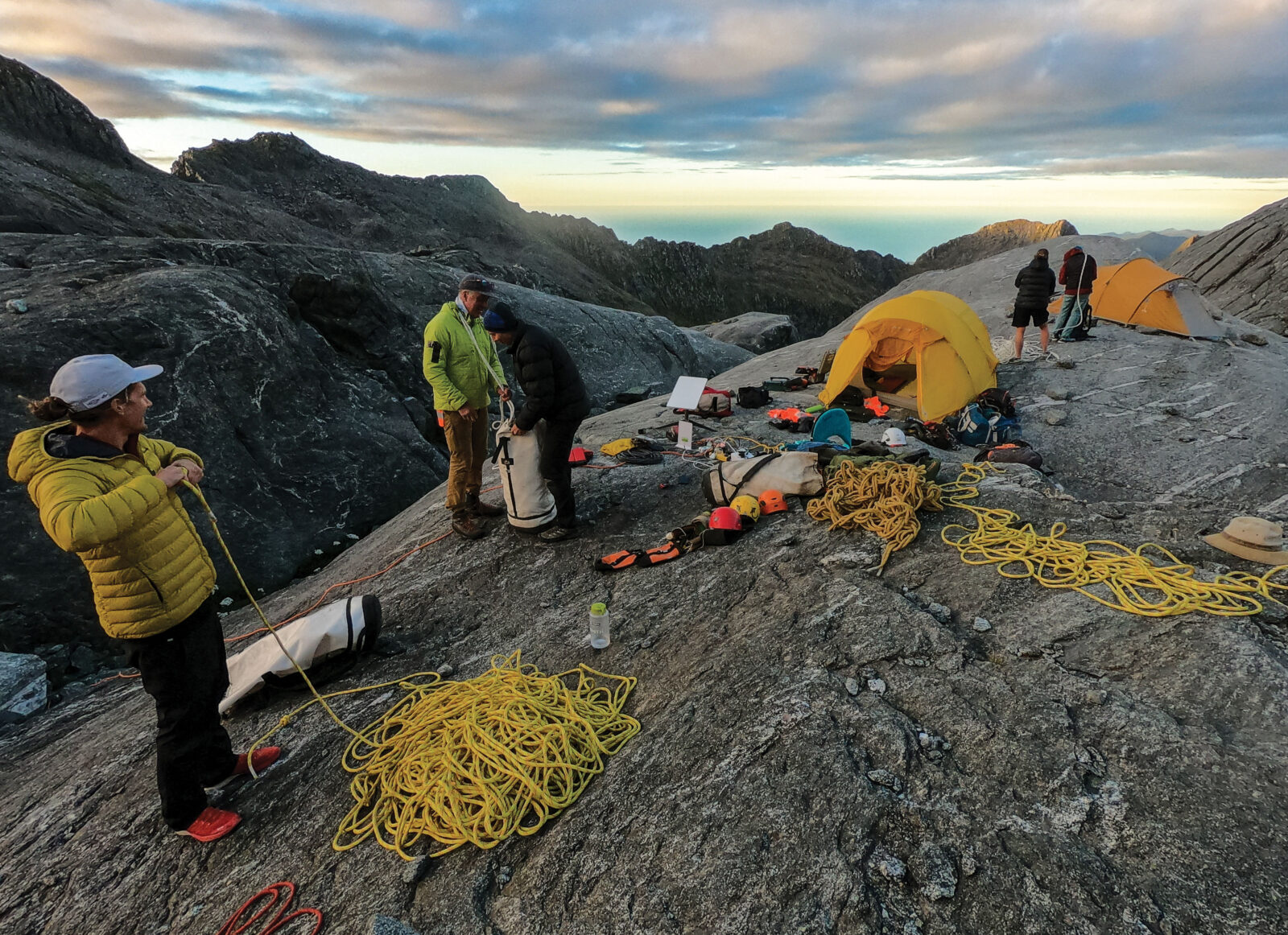
The helicopter drops us at 8am on the one piece of flat ground in the valley: a boulder the size of a small bus. Through the February morning, we lug camping gear, minnow traps, tinned pears and rope. Reardon and Sarah Mockett, a DOC ranger who’s come over from Haast to help, work up on the wall, belaying each other as they shimmy along the ledges, bright blobs of colour on the grey expanse. Snatches of chatter drift down to us.
Working with Adams, I set minnow traps along the base of the rock wall, trying to choose lizardy-looking spots where nicely creviced rock meets vegetation. “You definitely want to give them good shade—it could be hot later on,” Adams says, so we stuff handfuls of tussock and leaves into each trap, along with the pear. We lay flat rocks on top of each trap and tie on a tuft of bright-pink flagging tape.

In the late afternoon, when the waterfall spray glows white in the low sun and the far side of the cirque is in dark-purple shadow, the climbers head back to their ropes, and the ground crew pick their way across the rocks. Time to check the traps. “I’ve got one!” calls Adams from somewhere down the slope, and we whoop in excitement. Up on the wall, wherever a trap yields a lizard, the climbers are recording GPS coordinates, taking photos, and slipping each slender skink into a cloth bag. Overall, the team catches 10 mahoganies.
The second day dawns fine again, and we hope for a big catch. “Let’s bring over the traps that aren’t catching anything, and put a few more up on the wall,” says Reardon. It’s good fun—the rough granite is good for scrambling on. But it’s slow work, hauling loads of traps up the rock, and belaying each other as we set them. We get nothing along the cliff base this time; six mahoganies up on the wall.
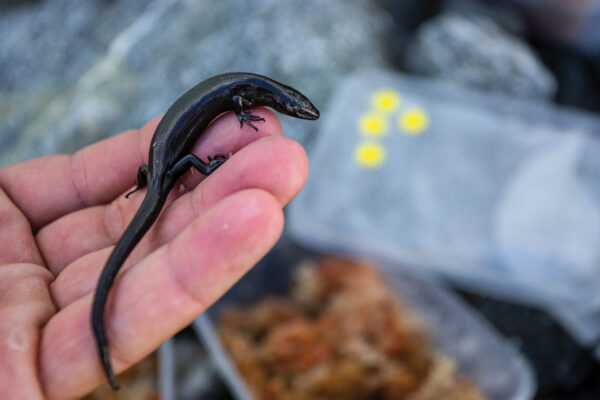
But there are a few Sinbad skinks in the traps, and it’s one of these that I get to hold. From where I sit on the ledge, I can see, far below me on the eastern side of the valley, the place my dad spent a summer studying the last of the mainland kākāpō, following their track-and-bowl systems snaking up the scrub-covered ridges. That was 50 years ago. As kids, we watched his slides projected on the lounge wall. Now I’m here, not with a green parrot, but a green skink.
That evening, Reardon gets a radio call—bad weather is on its way and the chopper pilot wants us out in the morning. No one feels ready to leave. Cradling hot drinks while the moonlight moves down the rock walls, we talk lizards. Reardon and Adams know several colleagues making use of this week’s weather window—one following up a skink discovery in a West Coast swamp, another trying to figure out the length of pregnancy of a mountain-dwelling gecko, which looks like it might be a world record.
[Chapter Break]
Twenty-two mahogany skinks have already been shifted to the island. Gunton visits through the autumn to monitor the weka, and she has trail cameras and tracking tunnels set up where the skinks are released. These will record skink activity—and any attacks on them by weka or stoats. (Despite trapping, there are a few stoats on the island. But stoats can’t squeeze into the lizard-sized cracks and crevasses that mice can.) The weka-tracking last year was promising, but Gunton needs a lot more data. She’s not convinced the weka even noticed the 22 new arrivals. “So we were hoping this summer to be dropping off a bomb of 80 skinks, and then keeping an eye on the weka to see if they clue in and start feasting on them.” The 16 mahogany skinks we’ve caught on this trip aren’t enough, so a team will have another try at the top of the wall soon.
Reardon and Adams are glad they’ve got Gunton to track the translocation, at least for a couple of years while she finishes her PhD. Lizards usually breed more slowly than birds, so it takes longer to get answers. If this proxy translocation is successful, Reardon says, “we’ll swing into action fundraising for a Sinbad skink translocation to the same site”.
[Chapter Break]
In the morning, the helicopter fills the valley with noise again. Stooped against the draught, earplugs in, we pass our gear along a line to the chopper crew. We point at the hand-written signs on the chilly bin—Fragile! Live lizards—as we pass it to the crew member. His eyes widen, he gives a big grin and a thumbs-up. It’s the crew’s first time in the Sinbad cirque, and when we land back at Milford, they gather round, keen to see what we’ve got. “They’re beautiful things,” says Reardon. “Here, have a look.” In navy-and-orange coveralls, earmuffs round their necks, the crew bend over the skinks that Reardon holds, marvelling at the elegant bodies with their long toes and fine tails, perfect for scaling cliffs. For holding on, just a little bit longer.
Few New Zealanders have ever seen our native lizards close up. I think back to holding the Sinbad skink on the wall, its strong body in that wild place, the way its bright eyes looked at me. When I put it back on the rock ledge, it had paused for a moment in the tussock, then it was gone.