Feeling fairly okay about the fuel crisis?
“It won’t sort itself out,” warns energy expert Nathan Surendran.
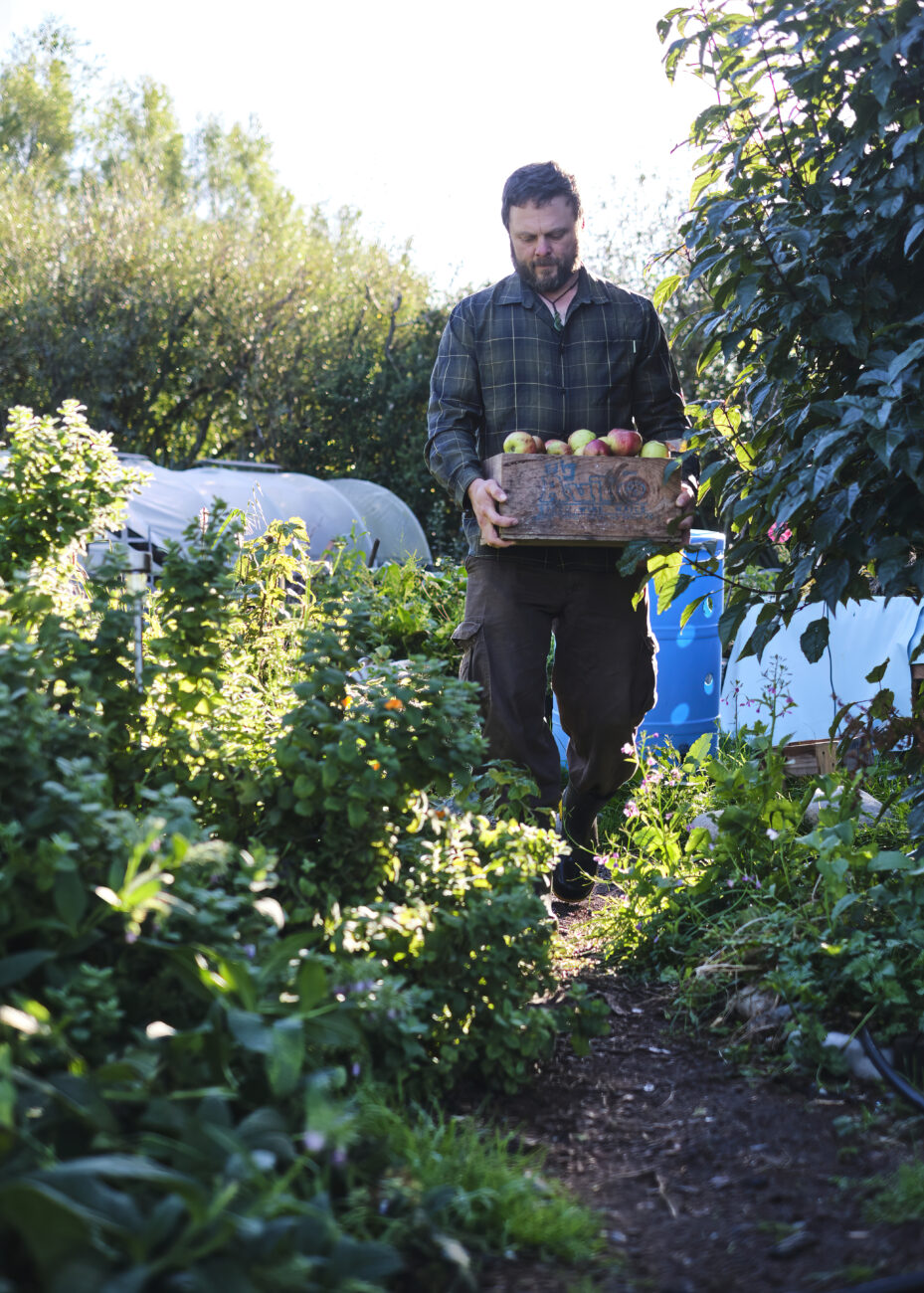
On Sunday, March 1, Nathan Surendran woke up in his Invercargill home, looked at his phone, and saw that the US and Israel had attacked Iran. “Okay,” he thought. “How do I communicate to people how big an impact this is going to have on us?”
In the seven weeks since, he says, he has felt like Wile E. Coyote from the Looney Tunes cartoons. Like he’s just run straight off a cliff and is suspended improbably in space, legs churning, eyes wild.
In this analogy, of course, the rest of New Zealand has run off the cliff with him, and we’re all held in that moment of limbo. Right now, things feel pretty normal. Fuel is wildly expensive but you can still fill up. Supermarkets are stocked. Farmers are fertilising their fields; commercial fishers are out on the high seas; you’re driving to work; you still have a job.
But next, Surendran warns, comes the fall.
Right now, there are around 18 days of diesel on shore—anything at sea can’t be counted on, he says, as other countries can outbid us and divert the ships. (“The reason that the fuel is still flowing in New Zealand is we’re outbidding poorer nations, you know. That’s the reality of it.”) Yet there is no discernible official alarm, beyond chipper ads about how to save a bit of fuel when you drive, and the promise that if things get bad, we’ll start climbing a ladder toward rationing. To his immense frustration we’re still at level one on that ladder, a phase the government calls “watchful”.
Surendran, by contrast, has spent these weeks in a whirl. He’s set aside his usual paid work as an energy efficiency and transition consultant to explain, over and over, the scenario that he considers to be at once worst-case and increasingly likely. (He’d explicitly warned officials about our exposure in June 2025, when the US attacked Iranian nuclear facilities in a preview of this year’s war.) That is: the blockage of the Strait of Hormuz means months to years of shattered international supply chains. New Zealand dangles at the bottom of those, last in line.
We can trundle on reasonably well with scarce, expensive petrol. Diesel is a different story. If (when) that runs low, we will struggle to fuel farm machinery or move anything at scale around the country. Surendran predicts that staple foods will become expensive, and some will run short or simply disappear from shelves. Prices of other goods and services will soar, too, because every industry is tied to those failing supply chains. He expects “a wave of insolvencies and spiking mortgage arrears”. Like many experts around the world, he is bracing for profound, enduring economic shock.
“We aren’t yet seeing the panic in the markets that’s coming,” he says. “We aren’t going back to January 2026.”
There is no big green-energy framework about to gear up and save us in this moment, he warns: the materials needed to scale up renewable tech (aluminium for EVs and solar panels, graphite and lithium for batteries) are snarled in the same geopolitical tangle as everything else.
Five days after the war started, Surendran was urging New Zealand officials to start rationing fuel. On his Substack he’s published articles with titles like ‘When the trucks stop’ and ‘Hoping the ship arrives isn’t a strategy’. “It won’t sort itself out,” he reiterated in a piece published on April 12. He believes most people, decision-makers included, are “energy blind”. “This is so far outside of most people’s understanding of how the world works and what the probable future looks like that they just aren’t processing it yet.”
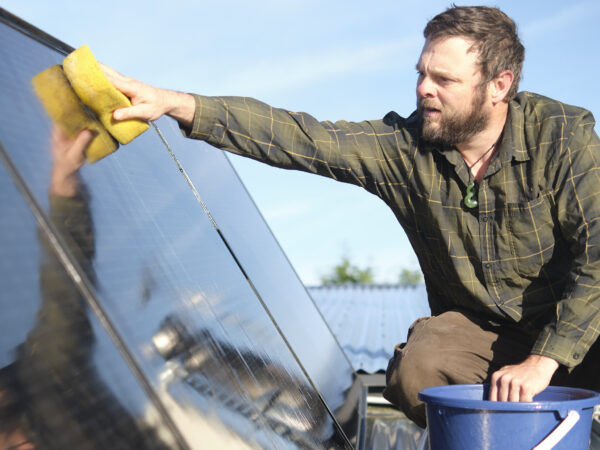
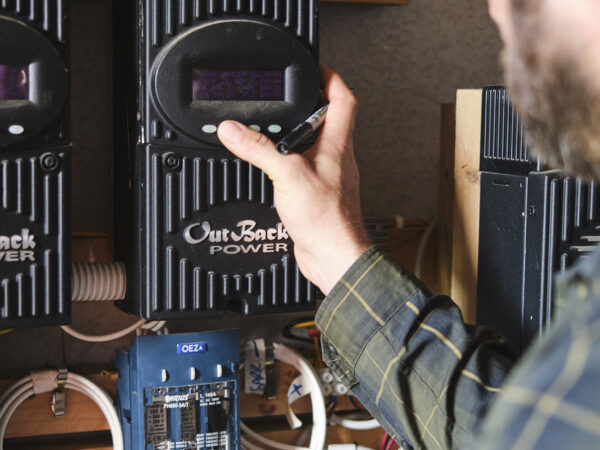
He’s written to his city and regional councils, to the Minister of Resources, Shane Jones, and to the oil security team within the Ministry of Business, Innovation and Employment. He has written a column for Stuff, and given interviews to The Spinoff, NewstalkZB, and RNZ’s Checkpoint and Nine to Noon. He speaks with clarity, calm, and an absence of overt politics. Every crisis needs its commentators. He is, I suggest, poised to be the next Michael Baker, the University of Otago epidemiologist who was suddenly everywhere as COVID got its claws in. He feels impelled to help. He finds it “really quite an uncomfortable place to be”.
[chapter-break]
Surendran grew up in northeast England with a British mother and Malayali father, who he followed into engineering. After spending 10 years putting huge solar arrays and heat pumps into London’s “glass palaces for bankers”, he was made redundant during the global financial crisis. He started reading. Since his early teens he’d felt a pervasive sense of grief. Now he found a focus for it: the gulf between rich and poor countries, between how people were living and what the planet could realistically sustain. He mourned the stable future he had planned for himself and set about planning a different one.
Almost 20 years later, at 48, Surendran lives in Invercargill with his youngest children, aged three and five, and their mother. The section is elevated and sheltered, with sheep, chickens and big veggie gardens. He’s pimped the house with low-energy wins: triple-glazed windows; moisture-absorbent lime plaster; a multi-fuel stove that he sank below the lounge floor, to let heat siphon up through a wetback thermal store and warm the bedrooms. Living in Southland is in itself a matter of cool, long-term risk assessment: the area is predicted to stay temperate as the climate changes, he explains, and is relatively well set up to produce food without the input of fossil fuels.
Despite having family overseas, Surendran decided years ago to avoid international travel, reasoning that actively making that choice would be better than having it eventually forced upon him. Still, a central pillar of his thinking is the power of people, together.
“There’s no such thing as self-sufficiency. The idea that a nuclear family can sustain itself off-grid for extended periods of time with no need for anyone else, it’s just nonsense.”
He chairs the Wise Response Society, a coalition of academics and laypeople concerned about the disconnect between Earth’s hard limits and economic growth. Much of Surendran’s work, and the society’s, this last month or so has focused on what communities can put in place right now to weather this crisis. (Key points: Sit down with neighbours to map your resources, such as EVs, bikes, veggie gardens, expertise, and tools; identify those who might need extra support; set up some form of group communication; start all this now.)
It is much easier, he finds, to write about knocking on the neighbours’ door than to actually go and do it. “You clearly don’t want to come across as crazy,” he says. But it would be equally bad, given the “potential severity of this situation”, to say nothing. To coax himself over such hurdles, he has long been volunteering his engineering nous at music festivals. “I see it as almost like practising,” he says. “We need to relearn how to live in community.”
Cleaving to data, rather than to the ambient social pressure to continue as normal, takes a certain kind of mind, I suggest. “Correct,” he says. His two older sons, teenagers, have both recently received ADHD diagnoses. Surendran is now pursuing his own diagnosis; he suspects both autism and ADHD.
His oldest son is 17. He whizzed through high school ahead of his cohort, then spent the past year away, working in a shearing gang and on regenerative farms. He has recently come home with his girlfriend, fired up. “He’s wanting to build a food forest here, and just kind of push into what resilient living and living in community actually looks like,” Surendran says, sounding slightly startled. He talks with his kids about energy and limits and the upheavals to come, of course. He just didn’t realise they were listening.