Sorry, Batman: Physics says no
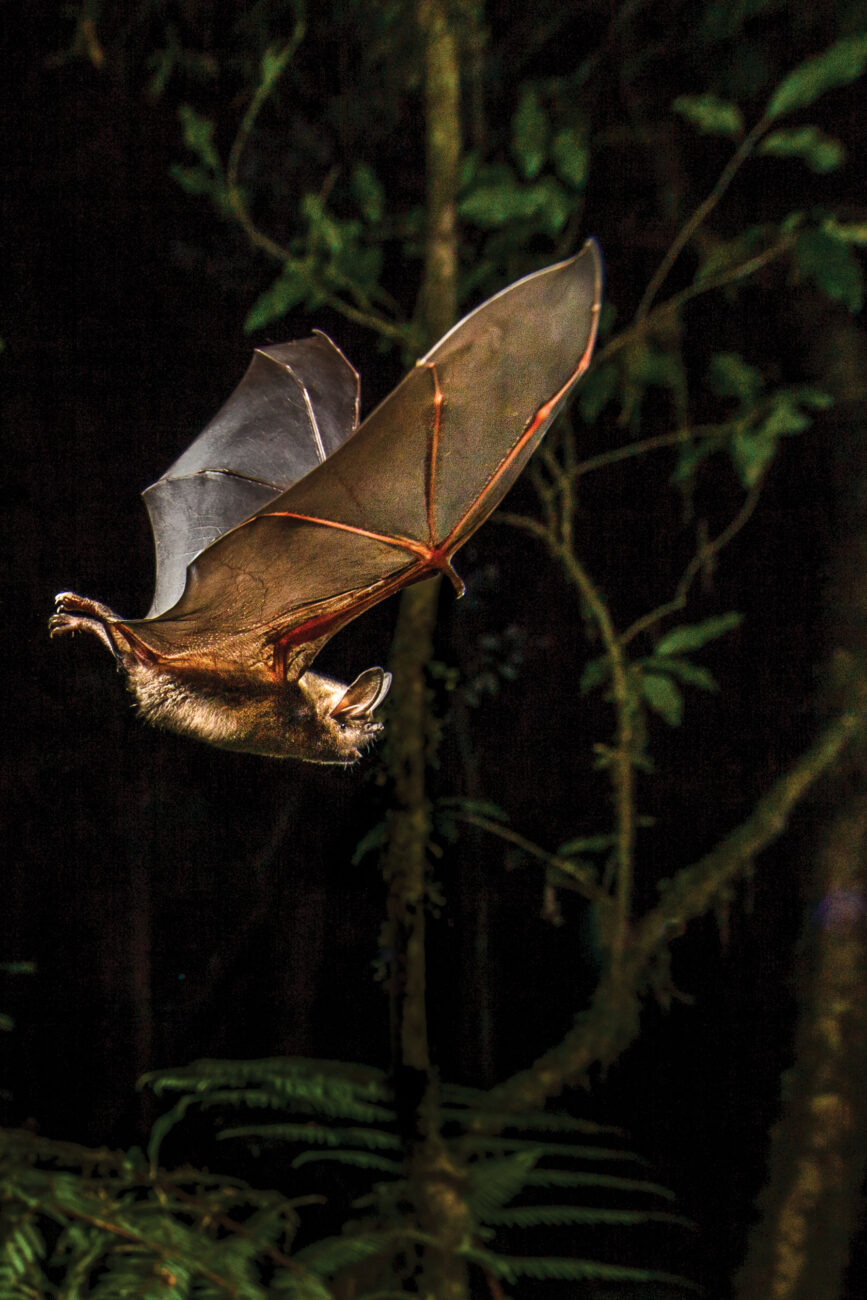
An invisible mathematical thread connects most creatures that fly, Danish physicists have found—and even those that “fly” underwater.
The group from Roskilde University hit on a universal equation that predicts how fast a creature has to flap its wings in order to lift off. (It’s proportional to the square root of body mass divided by wing area.)
The formula, presented in open-access journal PLOS ONE, works for all 414 flying creatures they tried: bats, mozzies, dragonflies and beetles, moths, bees, and many, many birds (even a robotic one). It also holds for penguins and several species of whale—creatures that must swim to stay submerged.
And people? “If you don’t build yourself some wings and rely only on your arms,” says lead author Jens Højgaard Jensen, “you would have to flap your arms at a ridiculous frequency to generate enough lift.” He’s talking hummingbird-ridiculous—given a body mass of 80 kilograms, and estimated “wing” area of 0.2 square metres: 44 times per second.
Okay, but what if you did build wings, boosting your wing area to two square metres? You’re still looking at 4.4 wingbeats per second. “You would need huge chest muscles to push them through the air so fast,” Jensen says. “I think the conclusion is that we are not really built for winged flight.”