










Keep reading for just $1
$1 trial for two weeks, thereafter $8.50 every two months, cancel any time
Already a subscriber? Sign in
Signed in as . Sign out


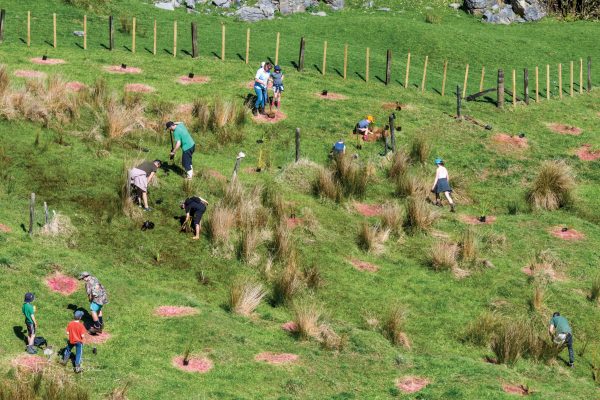
Whether it’s native tree planting, energy efficient buildings or sensors to protect fragile cave ecosystems, Waitomo’s tourism businesses are deeply committed to sustainability.
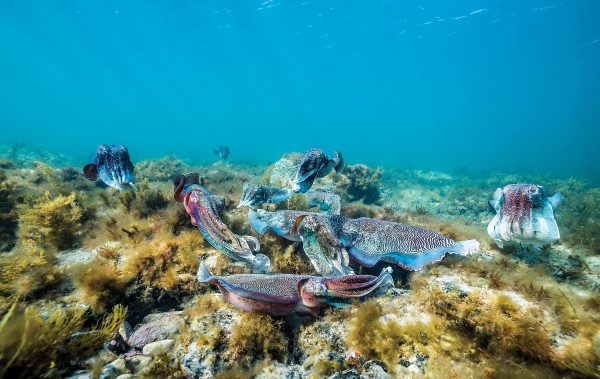
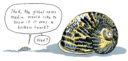
Have you ever found a cuttlefish bone washed up by the tide? You may also have seen one of the bleached, surfboard-shaped shells in a budgie’s cage, acting as a calcium supplement. These are actually neither bone nor shell, but function in a similar way, giving shape and buoyancy to cuttlefish. There are no cuttlefish in New Zealand waters, but their remains are washed here from Australia. So, which species were they? And what had killed them? Researchers at Te Papa Tongarewa set out to solve the mystery. They managed to extract DNA from the dorsal shield, the top layer of the cuttlebones, and discovered that those most commonly found belonged to the Australian giant cuttlefish, Sepia apama. This animal lives in seagrass meadows and rocky reefs around the southern coasts of Australia, and it can rapidly change colour, flashing through different shades like a neon sign. Next, the Te Papa team analysed the punctures, cuts, and scratches found on the cuttlebones to try to determine what had eaten them. Using animal skulls and teeth from the museum’s collections, they made indentations in Blu Tack, then matched up the bite marks with the patterns on the cuttlebones to find the culprits: albatrosses, sharks and dolphins.
Barley and cranberries for breakfast. Spelt and seeds for lunch, with soft cheese and beer. If you were a European salt miner 2700 years ago, that is. Researchers took a close look at salt-cured faeces, preserved for thousands of years in an Austrian salt mine, to identify components of the Iron Age diet. One ancient poo contained the fungal species used to make blue cheese (Penicillium roqueforti) and to ferment beer (Saccharomyces cerevisiae), providing evidence of, perhaps, a cheeseboard and a bevvy. The faecal samples pointed to a carb-rich, plant-based diet: lots of cereals such as barley and spelt, supplemented with occasional broad beans, fruits such as crab apples and cranberries, and seeds such as opium poppy seeds. There was a little consumption of meat from cattle and pigs.
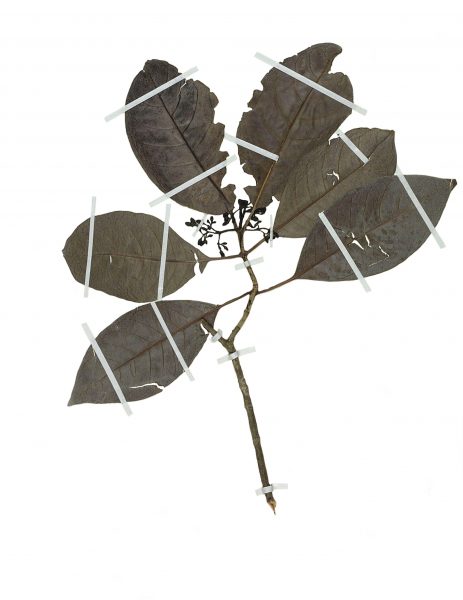
For generations, Samoan healers have been using the plant matalafi to treat inflammation, and illnesses caused by spirits or ghosts. So when Seeseei Molimau-Samasoni returned to her home village to collect plants for her doctoral research into traditional medicines, she was sceptical about matalafi. But of the 11 plants she analysed, it was the most potent. Matalafi (Psychotria insularum) is a member of the coffee family and grows throughout the South Pacific, but its use as a traditional medicine has been documented only in Samoa. Molimau-Samasoni consulted healers about how they prepared and used the leaf juice and pulp, and back at her lab at Victoria University of Wellington, tests on cells and in mice found that matalafi has an anti-inflammatory effect similar to ibuprofen, and that it affects cells’ iron levels. Working with Helen Woolner, who is Cook Island Māori, Molimau-Samasoni identified two iron-binding molecules with anti-inflammatory properties. Iron is an essential element, with an important role in cellular processes. While people are perhaps more aware of iron deficiency, says Woolner, iron imbalance or overload is associated with several serious diseases. She hopes to investigate matalafi’s effectiveness in the treatment of certain cancers and neurodegenerative conditions such as Alzheimer’s. Molimau-Samasoni is back in Apia, working at the Scientific Research Organisation of Samoa, where she leads a team looking into Samoan medicinal plants, soil microbes and marine organisms for any antibacterial, anti-gout or anti-cancer properties. “It is hugely important for Pacific people to lead research into Pacific traditional knowledge,” she says, “and Pacific natural or genetic resources.”

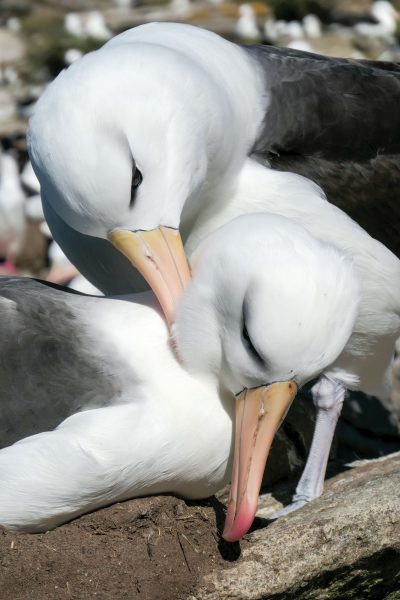
Divorce is a possibility for any socially monogamous species, from humans to seabirds. Typically, birds split up after breeding failures, allowing them to find a more suitable match. In the case of albatrosses, new research published in Proceedings of the Royal Society B suggests that climate change may increase divorce rates in couples who otherwise would have stayed together, with population-wide ramifications. Starting in 2003, international researchers tracked the mating behaviour and breeding success of black-browed albatrosses on the Falkland Islands in the southern Atlantic Ocean. They found that the divorce rates varied considerably from year to year, ranging between 0.8 and 7.7 per cent, and were strongly correlated with warm sea surface temperature anomalies, increasing as the waters warmed and fish became less available. The authors suggest the environmental stress could cause migrating pairs to arrive at different times, or that in times of shortage, females blame their mates for the lack of food, and look for greener pastures. The researchers predict similar patterns may be seen in other species, too, and say the findings represent an overlooked consequence of global climate change that could have unforeseen effects on endangered populations.
Kurahapainga Te Ua, called Kura, on joining a top kapa haka team, Te Waka Huia, touring the world, and artistic expression that lasts for generations.
Tiny plastic motes suspended in the atmosphere have an impact on the global climate, according to research from a New Zealand team. As plastic degrades, weathered by the elements, it breaks down into smaller and smaller fragments. Microplastics are between five millimetres and one micron in size—one-hundredth the width of a human hair. They’re tiny, but they’re everywhere: from deep ocean trenches to remote Antarctic icescapes, and, closer to home, in our table salt and drinking water. They’re even airborne, floating in the air we breathe and transported far and wide on the wind. Airborne particles can absorb sunlight or scatter it “like tiny disco balls”, says the University of Canterbury’s Laura Revell, who led a study into the impact of microplastics on the global climate. Scattering has a cooling effect, while absorbing light warms the Earth. “They do both,” says Revell. The plastic particles are pretty good at reflecting sunlight back into space, but they can also absorb heat radiated from the Earth, contributing a tiny amount to the greenhouse effect. Revell estimates microplastics will have a “significant” effect as plastic waste grows. In another modelling study, researchers estimated the amount of microplastics in Waikato River drinking water, which Auckland uses. Their worst-case scenario had the concentration at around 65 particles per litre—about five to ten times less than similar cities around the world, thanks to our low levels of industrial activity, low population density, and advanced filtration methods.
This four-bunk stone hut in the Ruahine Forest Park is unique and full of stories.
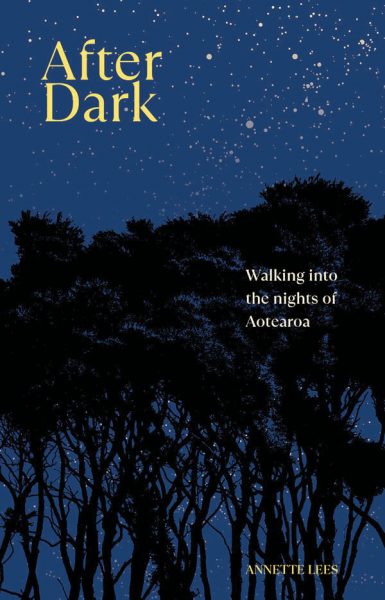
One spring, Annette Lees was given a bat monitor for her birthday—a black and olive plastic gadget with knobs for adjusting volume and frequency and a speaker to announce when a bat was nearby. It is hard to think of a present that you could do less with. Nevertheless, Lees set it to 40 kilohertz and stepped out into the night. Within minutes, the monitor started clacking. “I looked up and saw the quickest flick of something sooty, something fleeting and heart-stopping,” she remembers. In that moment, After Dark was born. The book is Lees’ highly personal and delightfully discursive celebration of a world that is foreign to most of us, and full of “suspense, lawlessness, hazard, sensuousness and awe”. Chapter by chapter, hour by hour, she traces the goings-on in day’s mirror realm as Earth rolls into its own shadow, plunging land and sea into deepening darkness. Lees, a conservationist, ecologist, and life-long night walker, is a reliable and informative guide. There are three grades of twilight, we are told early on: civil, nautical, and astronomical. Each begins in turn as the sun sinks lower beneath the horizon, with true night arriving when the sun has sunk so far that none of its light escapes to obscure the faintest stars and galaxies. In After Dark we encounter a great deal of the natural world, of course, from “the first cak cak cak of an echo-locating night-flying Cook’s petrel travelling east into the raised night”, to the synchronised rhythm of glow-worm lighting, and the urban feeding forays of bats in Auckland’s Waitākere Ranges. And here are practical tips: walk a dim forest trail by following the slight gap between leaves in the canopy above (called “crown shyness”), and—this from the 1880s—avoid mosquitoes by eating while wreathed in woodsmoke. The social history, too, serves up surprises. A woman hunting snails by torchlight is reprimanded for breaking wartime blackout regulations; an appearance of the ghost of Hooker Hut; the eerie seismological silence of Auckland during the national COVID-19 lockdown. With no machinery banging away, no traffic growl, no real activity of any sort, the sprawling metropolis had ceased generating what seismologists call “cultural noise”. Thanks to its confessional frankness, After Dark is also an absorbing and at times poignant memoir. Whether Lees is being discovered while attempting to creep past a couple on their rural veranda, getting dangerously disoriented in the bush, or reflecting on the death of her young son, she has the rare skill of vividly encapsulating the moment. Above all, After Dark reminds us of how detached from natural processes we have become, and at what cost. In the early years of street illumination, lamp lighting was linked to the moon’s behaviour—off when the moon was full, on when it was absent. Now, the ubiquitous LED, with its bluish light, “shouts ‘Daytime!’ even in the dead of night”, with disastrous consequences for insects, birds and other wildlife. And with the night sky brightening by two per cent every year, light pollution is increasingly recognised as a global concern. As a corrective, Lees invites us to experience “the company of night animals and insects, the glassy light of stars, the floating moon”. And if you missed the show last night, she says, “Don’t worry, the chance will come again in just a few hours, as it has 4.6 billion times before.”
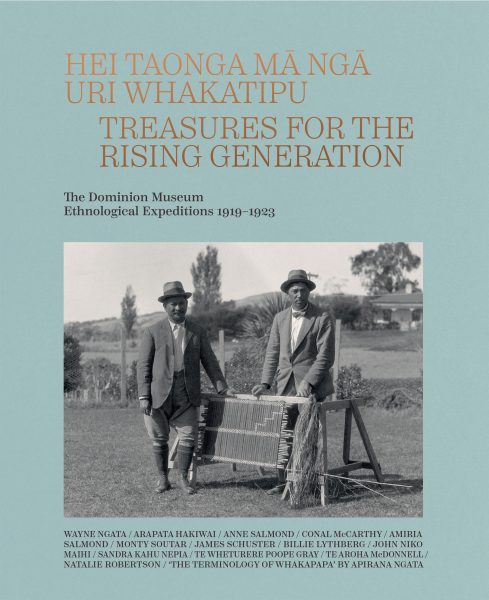
In December 1918, the politician Āpirana Ngata took time off from revising the Dictionary of the Māori Language to write to the Minister of Internal Affairs. In his letter, Ngata elaborated on a suggestion he had made earlier that day. It was all very well collecting and defining words in a dictionary, he wrote, but that didn’t very well serve a culture that had embedded its wisdom, traditions, and history in the nuances of spoken language rather than in literature. Better to send specialists out in the field to record the songs and oratory of Māori and to undertake “the ‘filming’ of hakas and pois, and of Maori village life, showing ‘tangis’, meetings, life on the cultivations and so on”. There was some urgency in Ngata’s call to preserve tikanga and te reo Māori. The 1896 census revealed that the Māori population had declined to 39,854 people. The First World War, just ended, had taken a further toll, as had the influenza pandemic that was then ravaging the country. Brought back by returning soldiers, influenza had quickly spread. In just two months, more than 2500 Māori died—a death rate eight times that of Pākehā. Among them were many elders, the custodians of much ancestral knowledge. Ngata got his wish. Between 1919 and 1923, the Dominion Museum sent out four ethnological expeditions, nominally led by museum ethnologist Elsdon Best, and including photographer and film-maker James McDonald and sound recordist and musical scholar Johannes Andersen. However, the real drivers behind the project were Ngata and his old Te Aute College schoolmate anthropologist Te Rangihīroa (Peter Buck), who, along with fellow parliamentarian Māui Pōmare and their old mentor James Carroll, were spearheading a Māori cultural reawakening. Inspired by Cambridge University’s 1898 ethnological expedition to the Torres Strait, the Dominion Museum team made use of the latest technologies, including a cinematic camera and a newly imported dictograph that used wax recording cylinders. Their first expedition, in 1919, took advantage of the unprecedented gathering of Māori at the Hui Aroha in Gisborne, held to welcome returning soldiers and to honour the war dead and those struck down by influenza. The second, in April 1920, covered an even larger Māori gathering in Rotorua to welcome Prince Edward, heir to the British throne. The third and fourth spent time with tribal communities along the Whanganui River (1921) and in Tairāwhiti (1923). These ground-breaking ethnographic expeditions were the first in the world to be inspired and guided by indigenous leaders. Hei Taonga mā ngā Uri Whakatipu: Treasures for the Rising Generation is a landmark account of the expeditions compiled by an impressive team of contributing editors, among them James McDonald’s great-granddaughter Dame Anne Salmond. Generously illustrated with McDonald’s photographs, Treasures overflows with detail. There is Andersen struggling to record the intricate arrays of quarter-tones in the Māori songs with musical notation and confessing that they were a revelation: “music of a kind I have never heard before”. The team witnessed fire made using a hika ahi (fire plough), and a demonstration of the cord drill—technology that had long baffled American ethnographers. They heard a canoe landing song, and a lament for a plundered kūmara pit, and learned that along the Whanganui River, the dwelling places of astronomers were marked by pōhutukawa. They filmed whai (string games) and the catching of eels. They listened to Teira Tapunga (Rongowhakaata and Ngāi Tāmanuhiri), a New Zealand Wars veteran and one of the last survivors of the ancient Māori world, reciting old waiata. At one point, a grayling—upokororo to Ngāti Porou—turned up in a weir on the Waiapu River. The freshwater fish had not been seen for 20 years, and the catch caused great excitement. Fresh traps were quickly set and what proved to be the last recorded specimens of the now-extinct fish were caught. Te Rangihīroa was discomfited when the fish were served up for dinner. “It almost seems sacrilege,” said the trained scientist in him. “They ought all be preserved as specimens.” Even the indefatigable McDonald failed to fix the fish on film, or if he did, the nitrate negatives have long since succumbed to the ravages of time. One of the most powerful themes in Treasures is the abiding presence of the past. Of how, in the words of contributor Natalie Robertson (Ngāti Porou, Clann Dhònnchaidh), photographs and films are far from being dead or lifeless images; they are “constantly in the process of becoming form as things with their own agency and interconnected relations”. They are living taonga, she says, able to connect with the spiritual realm. This is nowhere more apparent than when, in movingly described encounters, descendants come face-to-face with forebears who stood before McDonald’s lens a hundred years earlier. In the book’s prefatory mihi Arapata Hakiwai (Ngāti Ira, Ngāti Porou, Te Aitanga a Hauiti) urges New Zealand institutions not to let the taonga collected by the Dominion Museum expeditions linger as passive artefacts on shelves and in cupboards. Instead, he writes, they should be set free “to be reunited with their descendants to enable language, identity and culture to flourish and grow”. It is a plea increasingly voiced by indigenous peoples the world over.
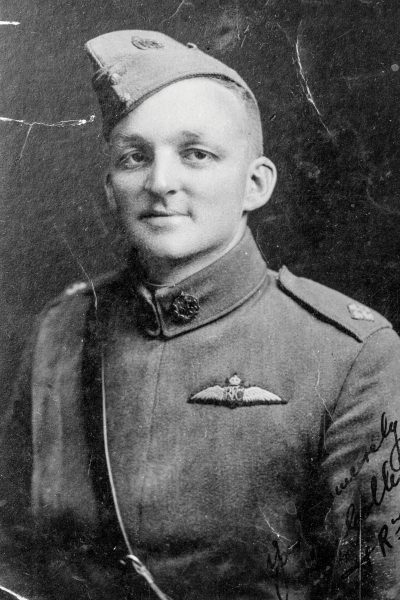
In WWI, fighter pilots went down with their aircraft. Could a bag of folded silk save them? In 1917, a New Zealander jumped out of a plane to find out.
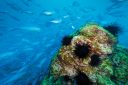
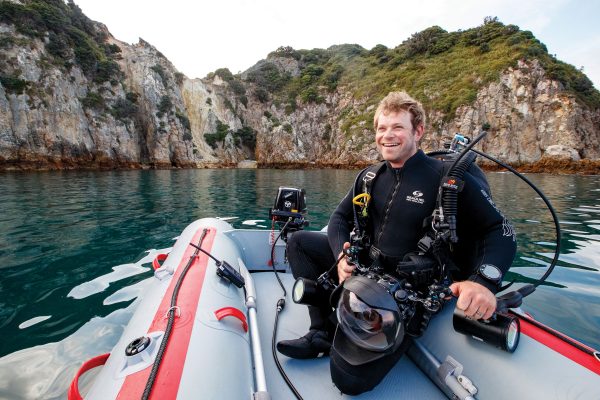
Arie Spyksma maps the seafloor to figure out how the underwater environment is changing.

3
$1 trial for two weeks, thereafter $8.50 every two months, cancel any time
Already a subscriber? Sign in
Signed in as . Sign out

Ask your librarian to subscribe to this service next year. Alternatively, use a home network and buy a digital subscription—just $1/week...

Subscribe to our free newsletter for news and prizes