









Keep reading for just $1
$1 trial for two weeks, thereafter $8.50 every two months, cancel any time
Already a subscriber? Sign in
Signed in as . Sign out


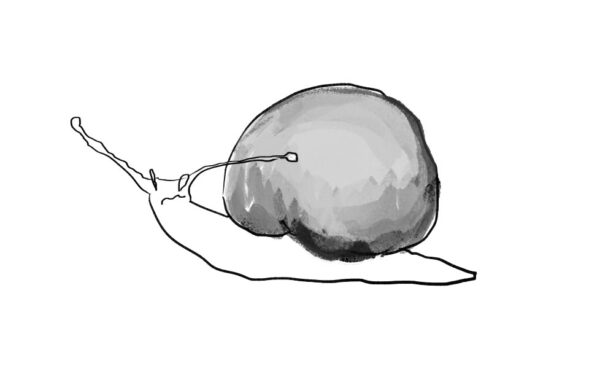
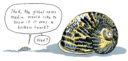
Most snail shells have a spiral only on the right—the left is more of a “behind-the-scenes business end”, as illustrator Giselle Clarkson puts it. Picture the bottom of a bread roll, or an outfit that looks great from the front—but at the back, it’s nipped and tucked with safety pins. “The back of the snail is like that, where everything is kind of cinched into place to make the front look amazing.” In picture books, movement usually travels from left to right across the page. This means the less-fancy side of snails has largely been wiped from the canon. But Clarkson snuck a snail “butt” into her 2021 book The Tiny Woman’s Coat—and we decided to show you one that didn’t quite make it into her ‘Just So’ cartoons on handedness and chirality. Our apologies to the snail, who is slightly mortified to be showing you his not-so-swish side.
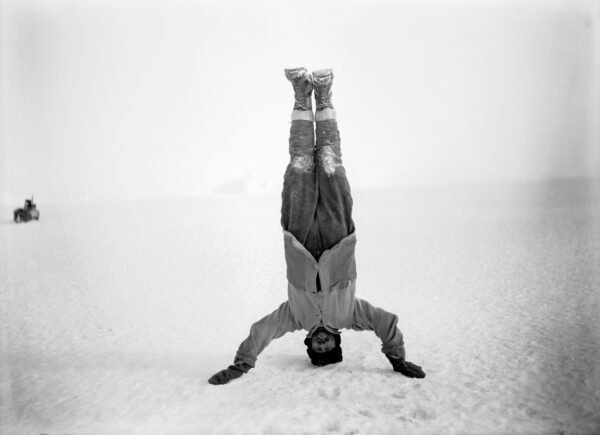
In 1909, Robert Falcon Scott convinced renowned photographer Herbert Ponting to board Terra Nova for Antarctica. “The quiet force of the man,” Ponting wrote. “He talked with such fervour.” On the ice Ponting was a man elated. A clear day “made the very drawing of the breath of life a joy”. Continuous daylight “was too novel and too wonderful to permit of sleep”, he wrote—he barely slept at all for the first four nights. He came home from the trip with a superb silent film, and a remarkable collection of frames, including this joyous selfie. But Ponting liked to push his luck. His “nearest squeak”, as Scott put it, came shortly after arriving in Antarctica. Ponting spotted a pod of orca in the water and inched across the ice toward them. He was six feet from the edge when the ice abruptly heaved beneath him and split into fragments. Eight huge heads lined up on the ice, eyeing him, snorting. “The head of one was within two yards of me,” Ponting wrote. “I saw its nostrils open, and at such close quarters the release of its pent-up breath was like a blast from an air compressor.” Serendipitously, the shock sent him backwards. Crew members were yelling from the ship, more than 60 yards away. “It was all I could do to keep my feet as I leapt from piece to piece of the rocking ice, with the whales a few yards behind me, snorting and blowing… I recollect distinctly thinking, if they did get me, how very unpleasant the first bite would feel, but that it would not matter much about the second.” Scott was waiting for him, deathly pale. “During the next year I saw that same look on his face several times, when someone was in danger,” Ponting wrote. “It showed how deeply he felt the responsibility for life, which he thought rested so largely on himself.” Scott, of course, did not come home. [chapter-break] Most snail shells have a spiral only on the right—the left is more of a “behind-the-scenes business end”, as illustrator Giselle Clarkson puts it. Picture the bottom of a bread roll, or an outfit that looks great from the front—but at the back, it’s nipped and tucked with safety pins. “The back of the snail is like that, where everything is kind of cinched into place to make the front look amazing.” In picture books, movement usually travels from left to right across the page. This means the less-fancy side of snails has largely been wiped from the canon. But Clarkson snuck a snail “butt” into her 2021 book The Tiny Woman’s Coat—and we decided to show you one that didn’t quite make it into her ‘Just So’ cartoons on handedness and chirality. Our apologies to the snail, who is slightly mortified to be showing you his not-so-swish side. [chapter-break] Asia Martusia King’s first piece for this magazine is a History column about bears going stir crazy in New Zealand zoos. The Wellington science communicator is training as a zookeeper, a dream job that grew from a childhood spent chasing bugs in the garden and, later, “a fierce Pokémon obsession”. Sounds silly, she says, but she was surprised by how big giraffes are. “As a visitor, you’re usually viewing them from a platform. It’s so different gawking up at this six-metre-tall alien creature you’re feeding, with giraffe drool and beetroot pulp dribbling down your shirt. Their poo is surprisingly tiny, though.”

3
$1 trial for two weeks, thereafter $8.50 every two months, cancel any time
Already a subscriber? Sign in
Signed in as . Sign out

Ask your librarian to subscribe to this service next year. Alternatively, use a home network and buy a digital subscription—just $1/week...

Subscribe to our free newsletter for news and prizes