For richer (not poorer)...
Tasman neighbours get hitched.


Tasman neighbours get hitched.
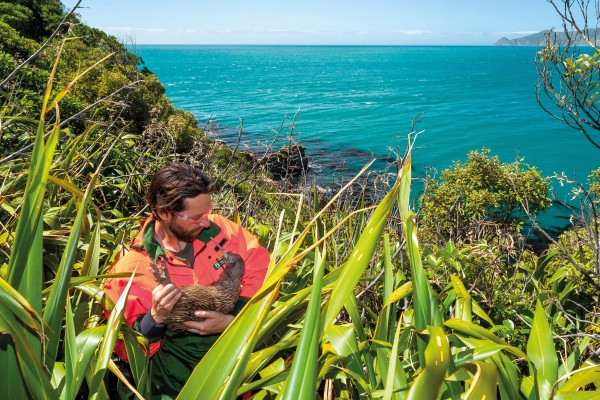
Grant Maslowski spent eight months tracking kiwi.
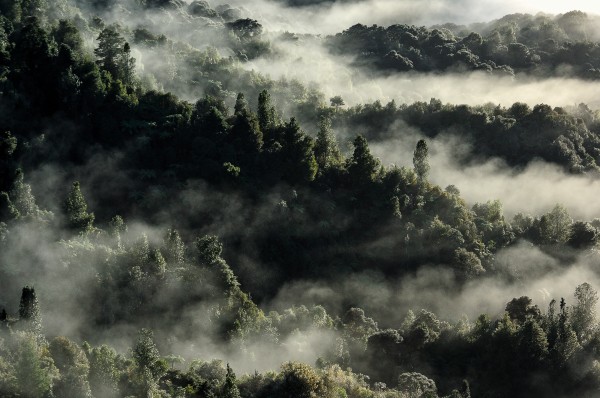
The forest canopy is home to all kinds of flora and fauna, some of which have only just been discovered. Canopy species are integral to soil health and climate regulation, but we don’t know exactly how, or why—and we’re in danger of losing them before we find out what’s at stake.
Microbes are confounding our understanding of life on Earth. They are also changing our expectations of what life might look like elsewhere.
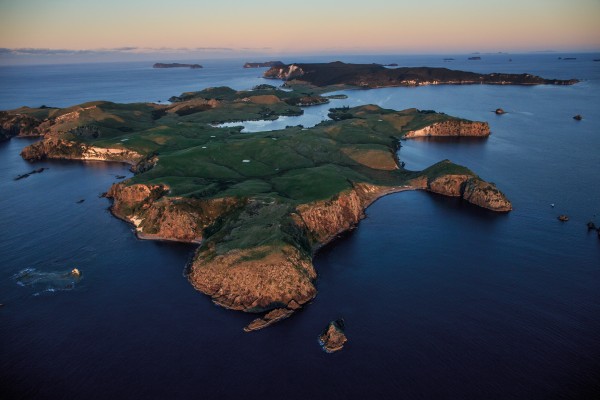
Great Mercury was one of the first sites of human habitation in New Zealand. Last year, a radical new public-private partnership sought to rid the island of pests. It was a unique operation, and the results have been astonishing.
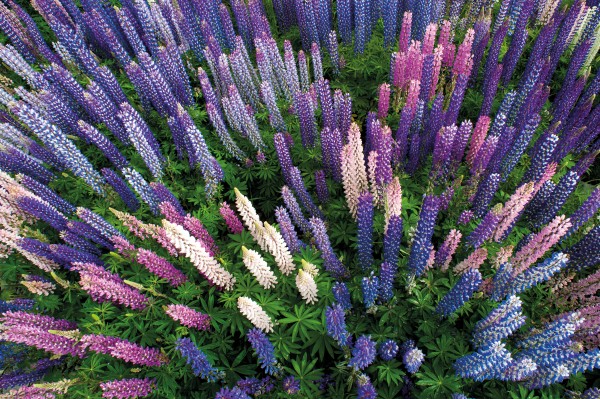
The planting of Russell lupins as sheep feed in the Canterbury high country is triggering a clash between farming and conservation values.
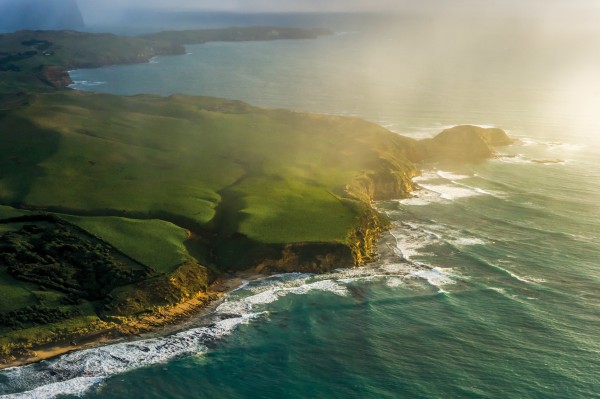
Chatham Islanders treasure their independence, but they have been forced to rely on the government to survive. Can they find a path to a self-sufficient economy?
Since it was opened in March 2013, the Timber Trail has become the new favourite among those who love the outdoors, but typically shy away from the hardships associated with tramping or mountain biking. At last, here is a remote yet relatively easy ride, through stunning forests with a fascinating history. There is a lovely lodge to stay at halfway, and you can even arrange to have your bags transported and meals supplied. From Pureora, 55 kilometres southeast of Te Kuiti, the trail heads south, weaving through tall rainforest where 800-year-old rimu and kahikatea tower 50–60 metres above the trail. Kererū (wood pigeon) and kākā can be seen swooping through the forest, and if you are lucky (and get up early) you might hear the haunting call of the rare kōkako, more commonly seen on the back of a New Zealand $50 note. The trail climbs around the flanks of Mount Pureora, through cloud forest, with an optional two-hour side trip to the top and back. The views are magnificent on a fine day. From the trail’s high point near the 14-kilometre marker post, a fantastic, well-graded downhill leads to massive swing bridges and more beautiful forest before finally breaking out into an area of recently clear-felled pine plantation. The cutover area doesn’t look so great right now, but is slowly reverting to native forest, and should be stunning again in a hundred or so years. Near the halfway mark you can choose between staying at the Black Fern Lodge or camping at Piropiro Flats. Black Fern Lodge is famous for its excellent food and accommodation, and its whio (blue duck) recovery programme. On the second day, the trail soon enters original forest again and crosses one of New Zealand’s longest suspension bridges, which offers breathtaking views of the forest. From there, a three-kilometre hill provides a challenge for those who haven’t done any cycling for a while, but it is followed by a long and easy downhill run on a historic bush tramway that was built almost a century ago. Interpretation panels describe the timber-milling industry that was prolific at this end of Pureora Forest and was based out of Ongarue, now just a small settlement at the end of this fantastic two-day cycle trail.
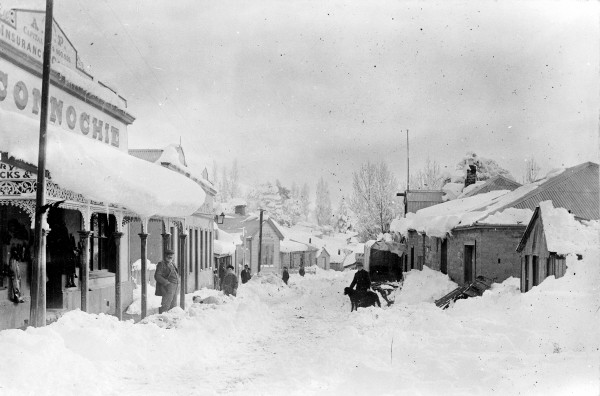
A record low temperature, accepted only this year, dates back more than a century.
There are more than 160 islands making up the archipelago of New Zealand, another 40 or so trapped within our lakes and rivers, some 30 more outlying islands, 20 that are part of the wider Realm of New Zealand (such as Tokelau and the Cooks), and a dozen others that are part of our territorial claim in Antarctica—islands within islands, islands without, and islands far-flung. As a nation we’ve become used to the idea of living a life adrift in the South Pacific. It’s part of our history and ingrained in our culture and ideology. It has made us tribal—just ask a ‘Mainlander’ about those from the North, or a Chatham Island ‘Weka’ about the ‘Kiwis’ over on ‘New Zealand’. Isolation has created connections and rivalry, it has stimulated innovation and built trading relationships. In this issue we visit some of our islands, but for reasons as diverse as the islands themselves. A government-commissioned report by the consultancy firm MartinJenkins looked at the unusual economic environment on the Chatham Islands, where every item carries an import-export tax in the form of ‘council dues’, where the employment is as finite as available work, and where the population has been decreasing at a rate of 10 per cent each decade. The report included some alarming insights and some future scenarios designed to move towards a more self-sufficient economy. On her first assignment for New Zealand Geographic, Anna Pearson travelled to Chatham Island to compare the report’s findings with circumstances on the ground, and to record the story of the islanders in their own voice. She found a situation more complex than the report made out, and within it, some islanders bringing characteristic tenacity to the opportunities afforded by their isolation. On a separate assignment—my first in some time—I ventured with photographer Richard Robinson to Great Mercury Island in search of kōkopu meant to illustrate last issue’s feature on the native fish. It didn’t go very well—we found just one—but stumbled on a much bigger story besides. The Department of Conservation and the merchant banking partnership of Sir Michael Fay and David Richwhite had just completed a unique eradication programme to rid the island of predators. In an environment of diminishing funding for conservation, this public-private model appeared promising. And in an environment without predators, the results were staggering. Within months of the eradication, birds were resettling burrows unoccupied for decades, and the island’s farmers were reporting record numbers of geckos, bumblebees and spiders as the island’s ecology rebounded. But it wasn’t the rebound that surprised DOC staff, it was the rate. Another staffer, deputy editor Rebekah White, deserted her desk for the relative discomfort of a climbing harness and visited the little-explored islands of life in the tree canopy. “The canopy is one of the least visited, least researched and least understood ecosystems on Earth,” writes White. “As a human race, we’ve spent more time sending spacecraft to Mars than figuring out how this layer of the forest operates, especially in temperate zones such as New Zealand.” Each of the islands we visited for this issue surprised us. Consider the eruption of an undersea volcano off the Tongan coast, depicted in the Viewfinder department in this issue. In 2009, an island sprang from the sea, firing rocks and steam into the air, and rose to a height of some 30 metres. A few months later, it was gone, devoured by the ocean swells. When it happened again in 2015, it stopped air traffic. This time, the cone towered to an altitude of more than 100 metres of ash and tephra, and joined two adjacent islands. Kiwi scientists cobbled together an expedition to see what the world’s latest island might reveal about the eruption sequences of volcanoes, to see what surprises this island might have, says study leader Marco Brenna, “before it disappears, too”. Islands appear to concentrate and juxtapose the challenges and achievements of life and culture that are averaged out and homogenised in the wider spaces of continents. In New Zealand, we are all islanders, adrift yet bound together by geography and circumstance, on the last and perhaps most surprising archipelago on the planet.
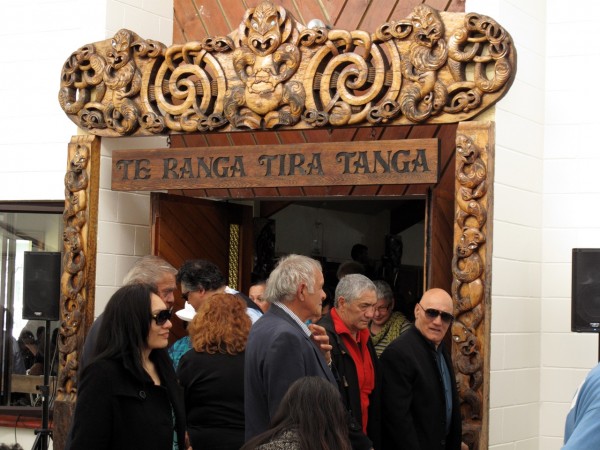
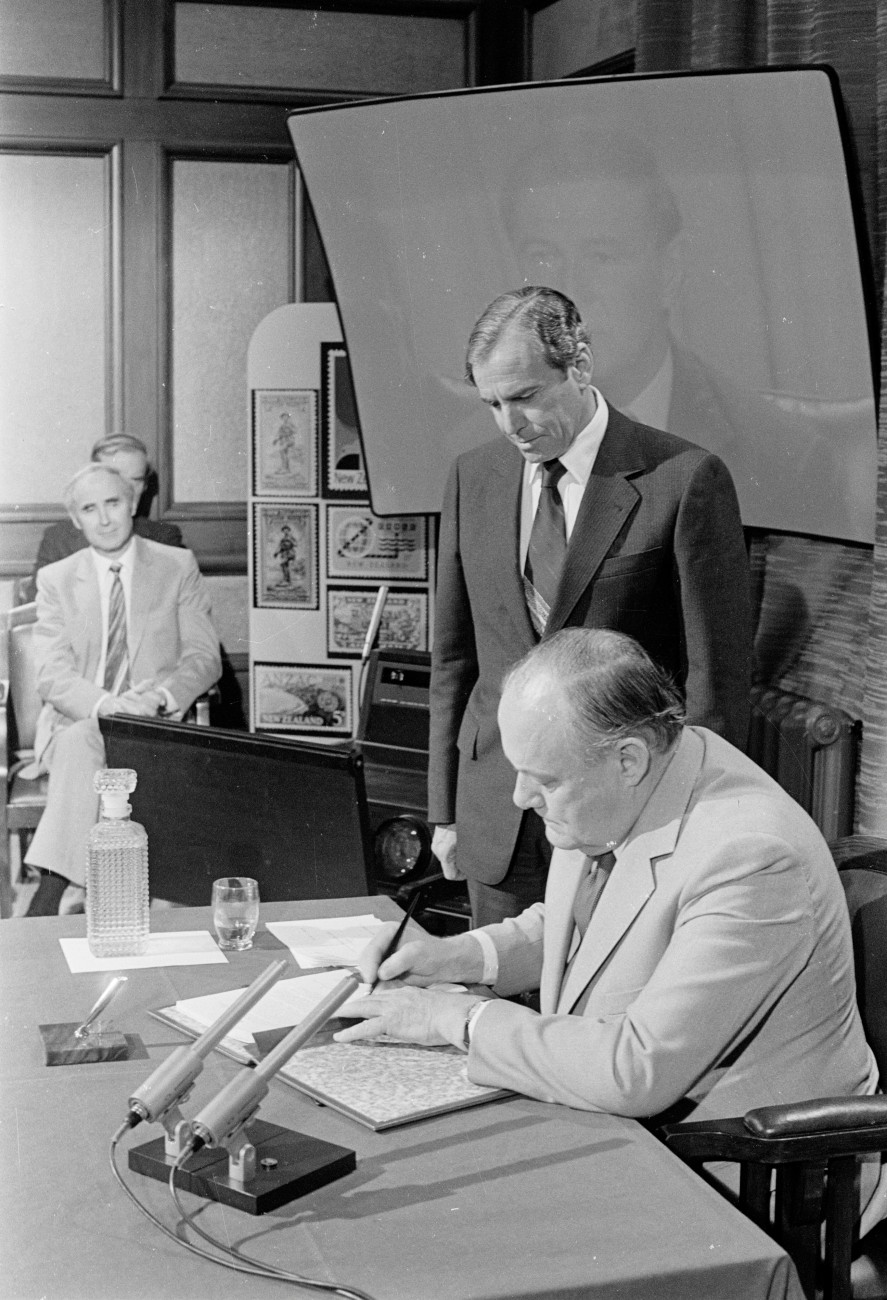
Sovereignty is in the public eye this Waitangi Day—and not just for Maori
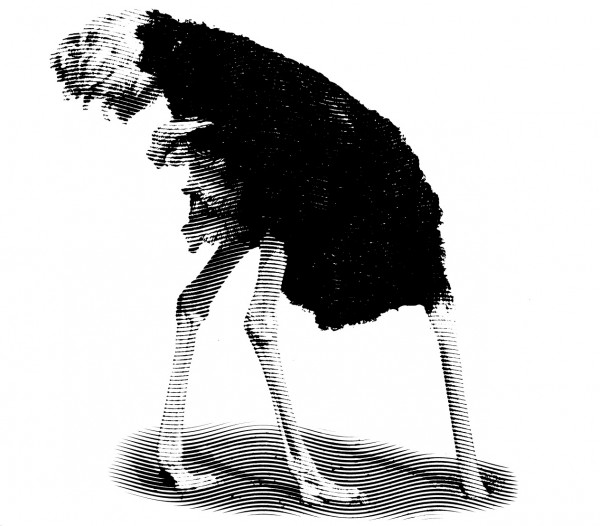
When did New Zealand's foreign policy get so feeble?
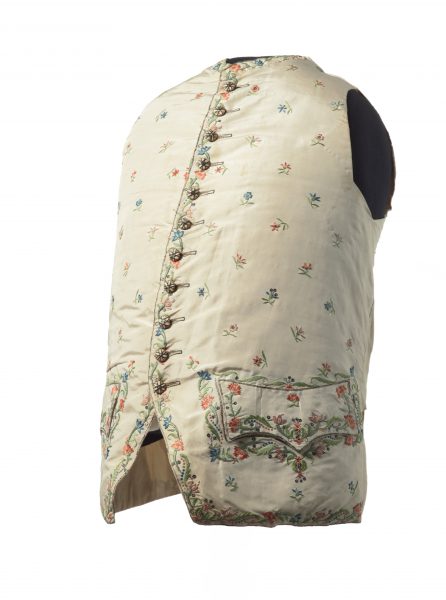
Captain James Cook appeared to have left a trail of waistcoats around the southern hemisphere.
Vitamin D deficiencies may be linked to infertility.
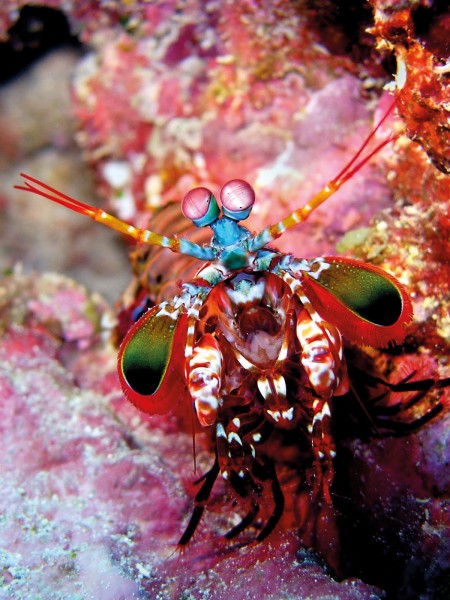
Mantis shrimps have an unbreakable code.
Microbes to save the planet, or build another…
The Tindales hold more than 250 world records.
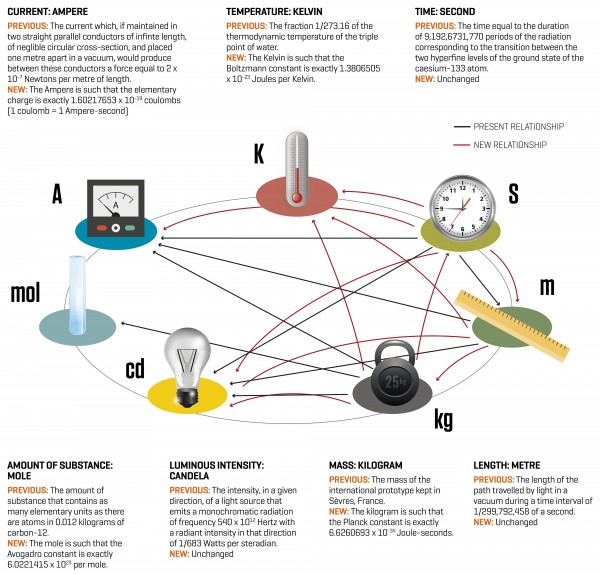
How much does a kilogram weigh? Well, it depends. Weight is merely a measure of mass―the force exerted by gravity―and it turns out that can vary, even here on Earth. So it’s best to go straight to the standard reference: you’ll find it in a heavily guarded vault just outside Paris, at the International Bureau of Weights and Measures in Sèvres. Inside, you’ll see a platinum and iridium cylinder that represents, as best we can determine, what a kilogram actually weighs. Except that it doesn’t. That cylinder has been there now for 126 years, and like any object, it’s been shedding mass all that time. Since 1889, it’s shed 60 micrograms. Thankfully, we’ve got our best people working on it, and they’re called metrologists. For them, measurement is pure passion, and they’ve been unhappy with the flagging performance of the cylinder—“le Grand K”—for decades. It’s the only remaining Système International d’Unités reference unit based on a physical object, and since the 1970s, teams have been collecting data, building a case for a new, mathematically expressed kilogram. Come 2018, the kilo will come courtesy of Planck’s constant, which relates a particle’s energy to its frequency. Then, we turn to Einstein and apply his exalted equation—E=mc2—to link them both to its mass. But the metrologists’ quest down the decades has been to first establish the base Planck’s value, as best they can, from an old, decaying lump of metal. In October, they reported in Nature that they finally had the numbers—arrived at through two different methods—sufficiently accurate and agreeable to consign le Grand K to the museum. The new formula won’t make the definition of a kilogram any more precise, but at least it’ll stay constant, and you’ll be able to work out your weights anywhere on the planet without having to go to Paris to check them. Once the kilo has been tamed, the metric system’s seven base units—mass (kilogram), distance (metre), time (seconds), electric current (ampere), temperature (Kelvin), substance (mole) and luminosity (candela)—will all be based on universal constants of nature. There is, believe it or not, an International Committee for Weights and Measures (CIPM), which presides over such, er... weighty matters, and it decided by draft resolution to revamp a whole suite of other standard units as well by 2018. The catch was that the new kilogram constant had to be derived by at least three separate methods, and two of them had to agree within tight parameters. [caption id="attachment_24163" align="alignnone" width="1600"] The magnitude of many of the units comprising the SI system of measurement are dependent upon the stability of a 136-year-old, golf-ball-sized cylinder of metal stored in a vault in France. That will change with an accurate expression of Planck’s constant, as will some of the relationships between the measures, which are at times boggling in complexity.[/caption] Perhaps only a metrologist could describe this, as did David Newell, a physicist at the US National Institute of Standards and Technology (NIST), as “an exciting time”. He painted a picture of electric tension as factions in the CIPM locked calipers over increments. Some philistines suggested simply averaging measurements from the two different calculation methods. “I think every metrologist worried, ‘What if they never converge?’” Davis told Nature. We should be grateful there are trained professionals paid to fret about this while we sleep oblivious. So how did they do it? One team at the German National Metrology Institute (PTB) in Braunschweig, known as the Avogadro Project, counted all the atoms in two silicon-28 spheres that each weighed the same as le Grand K. That tally gave them a value for Avogadro’s constant, a formula that relates molar mass (the amount of substance as measured by one mole) proportionally to mass. Once they had that, it was a relatively easy case of converting the Avogadro’s value into a Planck’s constant value. Meanwhile, a separate team at Ottawa’s Measurement Science and Standards laboratory purchased a watt balance—a meter that measures an object’s weight by the strength of an electromagnetic force fed through it. They weighed a test mass calibrated to le Grand K, and derived their Planck’s constant from those results. But then a bombshell: they didn’t match the Avogadro Project’s results. Newell, who chairs the Committee on Data for Science and Technology group on fundamental constants, described a trudge back to a certain drawing board: “We brought in a whole new research team. We went over every component, went through every system.” The anomaly was never solved, but late in 2014, everything, as sometimes happens in the world of physics, suddenly coalesced: the teams achieved a match. Meanwhile, relative uncertainties had been pared down to the exacting levels demanded by the CIPM. We have a new kilogram—down to the nearest 12 parts per billion. Or do we? For the Avogadro team, it seems, Planck’s constant is anything but. They cannot live under such a thunderous cloud of uncertainty. They mean to use every month until a July 2017 CIPM deadline to pin it down still further. In a relentless quest for exactitude, they mean to buy new spheres from Russia for experiments that will probe ever deeper into the nanoscopic depths of metrological arcana. Are they mad? What if the results divaricate again? They could unwittingly destroy the fragile balance, so laboriously construed, that is the kilogram. “Then we would be in trouble,” allowed Joachim Ullrich, president of the PTB. Taking this new wizard’s broomstick to the kilogram could upset the very fundament of modern civilisation: grocers everywhere would be oversold into insolvency. Weightwatchers, disoriented, would hurl down their medicine balls in frustration. Merely exhilarating for now, bungy jumping would be downright reckless. Nobody would cross a bridge. High rises would ring to the alarms of overloaded elevators. After all, as John Quincy Adams told the US Congress in 1821, “Weights and measures may be ranked among the necessaries of life to every individual of human society... The knowledge of them, as in established use, is among the first elements of education, and is often learned by those who learn nothing else, not even to read and write.” In metrologists, it seems, we can only trust...
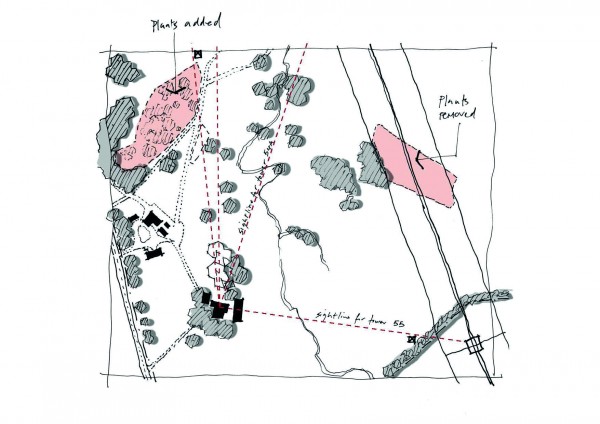
Editor Michael Barrett refers to Coast. Country. Neighbourhood. City.—a compendium of projects by landscape architects Isthmus Group—as a “mix-tape”. And at one level it is. The 25 projects, mostly designed over the past decade, are loosely grouped according to the categories in the book’s title. Geographically, they range from the Mokihinui Gorge in the South Island to the Puketoi Range east of Dannevirke; and from Wellington’s Oriental Bay to Achilles Point in Auckland. The type of project is equally varied: from pathfinding a 200-kilometre transmission line route to marshalling evidence against a proposed new power-generation dam; and from designing a coastal walkway on the rim of the storm-swept Tasman Sea to seeding a new suburb on Auckland’s upper harbour. What rescues Coast from being a 450-page CV—albeit a beautifully designed and presented one—is the attention it gives to the philosophical underpinnings of the projects. In doing so, it becomes a meditation on how, as New Zealanders, we might best interact with the land, and through the built environment express and reinforce our sense of identity and community. It encourages, in Barrett’s words, “deep thinking about the nature of place”. Formed in 1988 by four graduates fresh out of Lincoln University, Isthmus Group from the outset challenged the status quo. Not everyone was impressed. The New Zealand Institute of Landscape Architects fretted about the potential damage to what was still a young profession, and dashed off a letter suggesting that they cease practice and find work elsewhere. As Jacky Bowring of Lincoln University says in an introductory essay, intervening in the landscape is not something to be undertaken lightly, and nor should it be done reflexively. “As we are bombarded by the global flow of ideas through the internet, films and television, it becomes easy to mimic the look of other places. Pinterest boards become a mélange of placeless, cool things to be applied anywhere,” she writes. But nor should design succumb to a cloying and sentimental localism, which cynically appropriates and commodifies the characteristics of a region and sells it back to the people who live there. Coast testifies to the tightrope Isthmus walks, taking the best from international practice and incorporating it in design thinking that is sensitive to the natural, social and historical specifics of a site. Bowring offers a name for the process—Critical Regionalism. Allied to this is a desire to undercut the dominance of visual culture which, Bowring suggests, floods the world with seductive images of disembodied “perfect” places. By constructing pathways, structures and environments that expose people to the tang of a salt marsh, the full fury of a Tasman gale, or the vertiginous thrust of a cantilevered viewing platform, designers can accentuate the truly local. Transpower’s project to build a new 400-kilovolt transmission line from Whakamaru, north of Taupō, to Auckland presented unique challenges. The line, intended to assure security of supply to the country’s largest city, and to tap growing electricity generation from renewable sources in the central and lower North Island, involved figuring out the best way of placing 426 towering pylons and monopoles on a route stretching almost 200 kilometres. Isthmus was under no illusions that it could win the thanks of property owners anywhere along that route. Coast reminds us that the Dutch eventually came to terms with similar intrusions of technology (windmills) in their own landscape, thanks in part to sympathetic depictions on canvas by Rembrandt, Vermeer and others. But short of employing the Icelandic proposal of transforming power pylons into monumental striding figures of lattice and wire, art was unlikely this time to come to anyone’s aid. The 60–70-metre-high pylons were always going to be problematic. What Isthmus did do, was determine a path of least impact, then devise a scheme for planting trees at a distance to block the most contentious lines of sight. In all, 17,000 trees were planted on some 440 properties—an approach said to be a world first. Hobsonville Point in Auckland illustrates an entirely different design problem. How do you turn the site of an old disused seaplane base into a model 167-hectare suburb—one that will help mitigate the city’s housing shortage while meeting a range of social and environmental goals? Surprisingly, among the places Isthmus turned to for inspiration were the country’s Victorian and Edwardian suburbs. These suburbs were dense, with an average of 30–35 dwellings per hectare; they were “fine-grained”, with houses of differing size and type, varied streetscapes, and an admixture of commercial and sometimes industrial buildings; and they were “complete”, accommodating a wide cross section of society, and offering a range of amenities. Hobsonville Point attempts to mimic all this, by paying attention to the things that build community, such as locating schools, shops, bus routes and cycleways in manner that reduces reliance on the car, constructing open spaces that offer children “safe” freedom, introducing narrow carriageways that encourage slow traffic, creating a mosaic of house types, and producing building and landscape designs that dissolve the boundary between public and private, house and street. Hobsonville Point is a response to a housing shortage, but it is also the result of an enquiry into what makes successful suburbs appealing to live in. And here, as elsewhere, so much comes back to the land. “Land needs to breathe, to be given space to exist,” says Isthmus co-founder David Irwin. “If we tread lightly and pay respect, we allow room for other things to happen.”
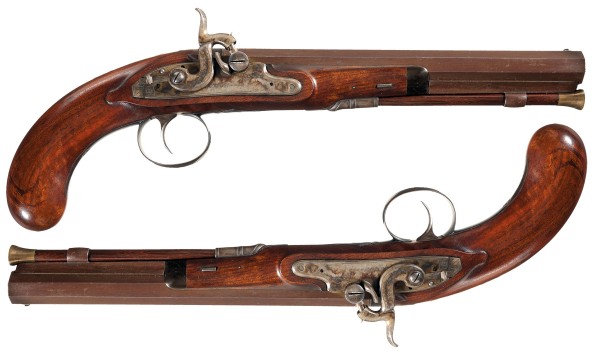
Lawyers settle argument in street.
Loading..

3
$1 trial for two weeks, thereafter $8.50 every two months, cancel any time
Already a subscriber? Sign in
Signed in as . Sign out

Ask your librarian to subscribe to this service next year. Alternatively, use a home network and buy a digital subscription—just $1/week...

Subscribe to our free newsletter for news and prizes