The river wild
The rage of the Clutha scattered livestock and infrastructure


The rage of the Clutha scattered livestock and infrastructure
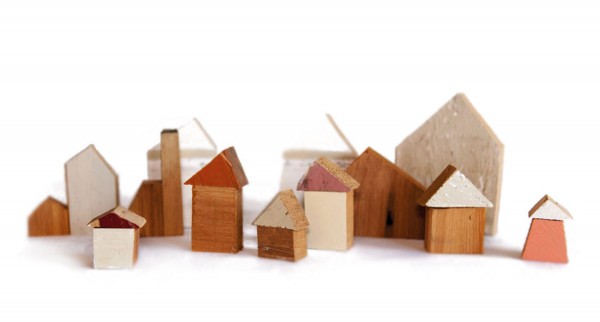
From a crescent of blue sky, a north-westerly rages through central Christchurch, sending billboards cartwheeling and sending up dramatic plumes of dust that are driven like fog through empty streets. There are moments when here dead centre in the CBD of a first-world city on a week day—I look around and can’t see a soul. It’s apocalyptic, and now nearly three years on from the devastating quake, also terribly sad. I’m here to install the New Zealand Geographic Photographer of the Year exhibition on a demolition site, hoping that the visual arts may help to reinvigorate patronage of the central city. I suppose I had expected to see flourishing construction. It’s happening, but is largely reserved to the suburbs and commercial premises at the central-city fringe. Here in the CBD, progress is marked by sentinel achievements—the cardboard cathedral, the Re:Start container mall that have emerged phoenix-like though relatively isolated from the rubble. As for the rubble, it’s largely gone; scooped up and trucked out, the tidy square lots scraped, levelled and rolled. Many have turned into poorly patronised carparks; others, rimmed by six-foot-high Hurricane wire fencing, await their fate, swirling in dust, conjecture and insurance wrangles. Earthquake tourists wander about, attempting to get their bearings amid a landscape without landmarks. They gawk and gasp, and take photographs of the tortured and tumble-down structures that remain writhing in some sort of architectural agony. In the red-zoned suburbs, the scene is rather more sobering, if that could be possible. Streets still awash in muck lead to fractured driveways and dwellings shattered with cracks. Weeds run rampant, lawns are two feet high and flowering with plastic bags and demolition debris. But there also seems to be a household on every street with a car in the drive, gardens tended and a horror story of an insurance lock-out, a battle with the Canterbury Earthquake Recovery Authority and the Earthquake Commission, or a simple desire to stay put in a neighbourhood that they love. They’ve formed groups, assumed names such as Quake Outcasts’, and together await a very uncertain future as their many and various claims get towed through the courts. "They’ve formed groups, assumed names such as ‘Quake Outcasts’ and together await a very uncertain future as their many and various claims get towed through the courts." In her feature, ‘Red Zone’, Sally Blundell follows their fortunes and investigates the horrifying social outcomes of a natural disaster with quite unnatural consequences. It’s a story that occupies the daily thoughts of many Cantabrians, but should have meaning for all New Zealanders. I brought home from Christchurch an array of little wooden houses made from the weatherboards of a home in those suburbs torn apart by the quakes and the bulldozers. They were ‘upcycled’ by Rekindle, a company attempting to make the best of the worst. If in any way the connection that people can have with their homes is imbued in the homes themselves, there’s a lot of love in those little blocks. And certainly a potent reminder that, long after the aftershocks have subsided, the social and emotional reverberations continue to rattle our friends and family in Christchurch.
Stewardship in the 21st century
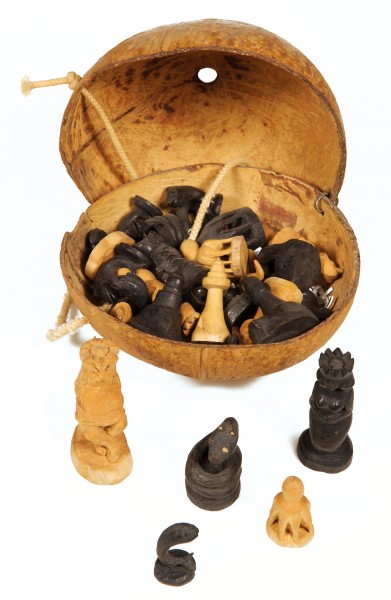
Chess in a land of life and death
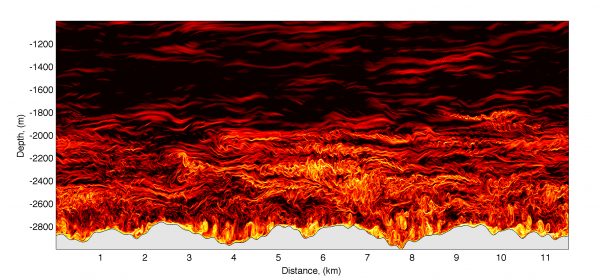
Undersea mountains in the Drake Passage cause oceanic turbulence, altering long-term climate patterns
Island fortresses less protected than expected
Ballerinas have modified brains which allow them to spin without feeling dizzy
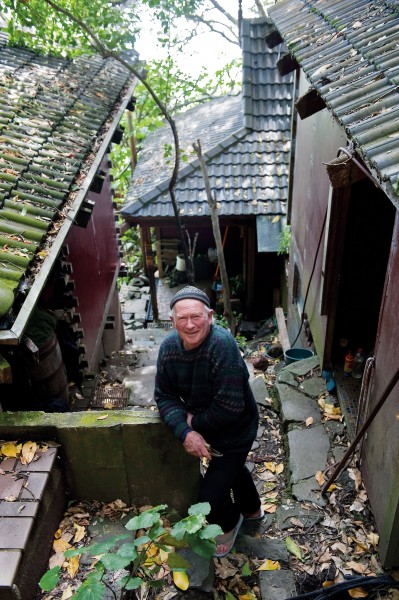
Tony Watkins, champion of the vernacular
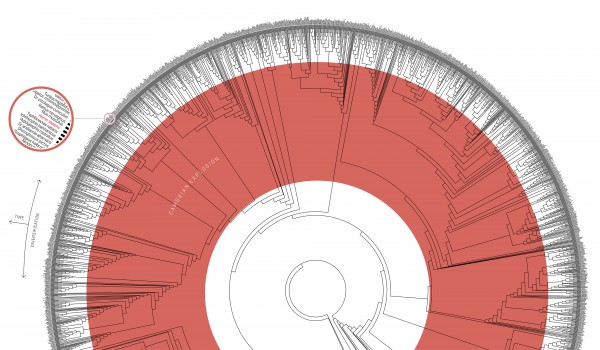
Why the Cambrian Explosion was like a Cadillac
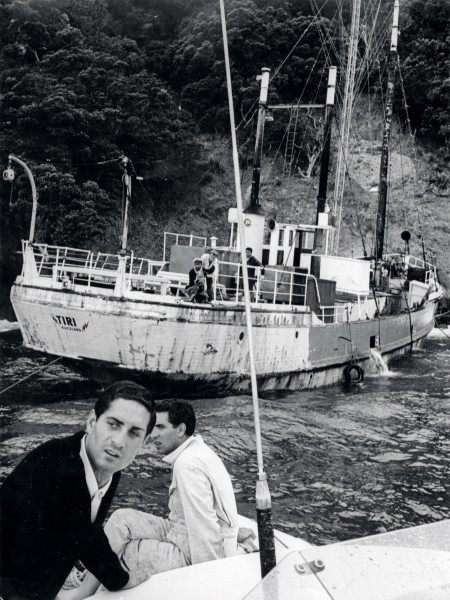
The state broadcaster is challenged at sea
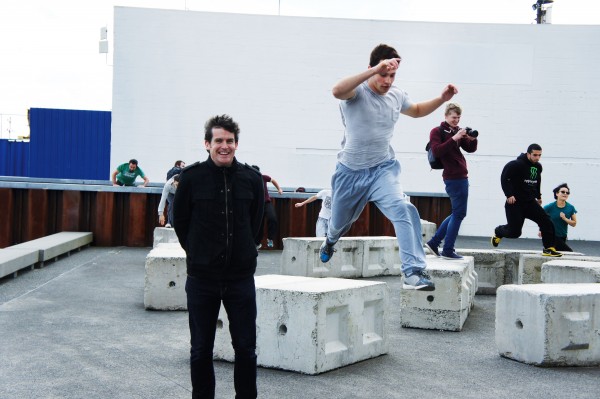
Robert Tighe on sport and society
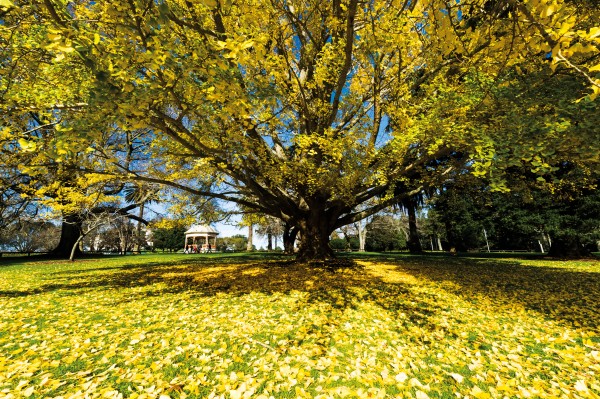
In 1845 Governor George Grey set aside 80 hectares of central Auckland for a park. On the crest of an ancient volcano, it is a memorial, a recreation space, a green heart for the city and its citizens.
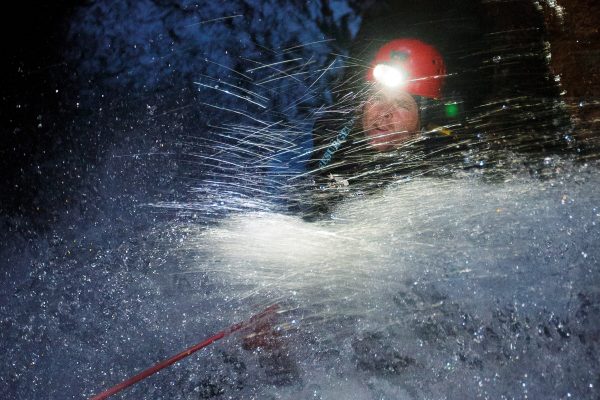
Water pounds my chest and face. Bracing with my legs against the mossy wall, I try to pendulum on the rope and sidestep out of the water, but it has me pinned to the spot. After years of rock climbing I thought abseiling would be the easy part, but this feels all wrong...
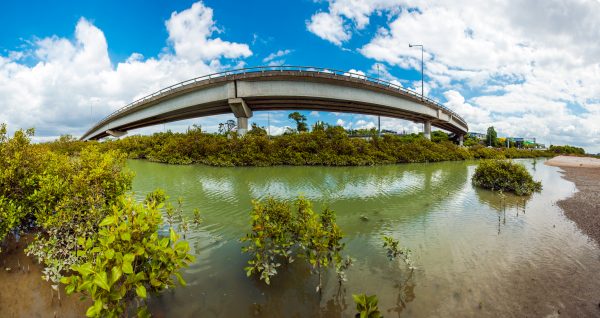
Within sight but out of mind of thousands of weekday commuters who thunder along Auckland’s North Western motorway, Motu Manawa/Pollen Island may be the most overlooked of New Zealand’s marine reserves. But among its mangroves, salt marshes and cockle banks thrives a community of modest critters going about their business—an ecological hotspot on the doorstep of the city.
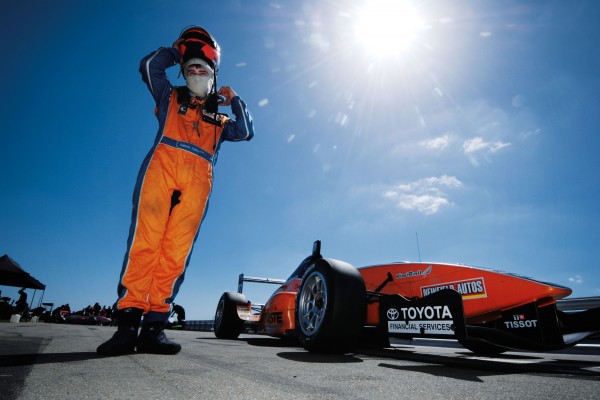
New Zealand has a proud tradition of producing world class motor racing drivers. Bruce McLaren, Denny Hulme and Scott Dixon are just a few who have blazed a trail on overseas race tracks. Now the next generation of speedsters from around the world is coming here for a series that’s fast gaining a reputation as a finishing school for up-and-coming talent.
This walk is relatively easy and can be done year-round—though take care when the river is high and use the alternatives if you need to. Leaving a car at the Mercer Service Centre is the better option, particularly as there is some major road construction work taking place at Rangiriri at the moment. Two pubs and various food options can make a nice end to the day. From the service centre, go over the SH1 overbridge to Skeet Rd (first on the right) and up the hill—where the orange Te Araroa markers start guiding the way. The initial stages have a few ups and downs, though pass through native bush and marshland areas where you’ll see plenty of birdlife and may even have a fantail keep you company. There is a choice of walking past the Whangamarino Redoubt—a historically significant site from the Maori Wars—or walking down through a pocket of DOC reserve, both arriving at the Whangamarino flood protection gates, before the track takes you under the rail and expressway bridges to reach the Waikato River. Down the side of SH1 to the former Meremere Power Station, then the track follows the stopbank cross-country to the rear of the Meremere Dragway complex. The first 9.5 kilometres from Dragway Rd to the Te Kauwhata Pumphouse is the most scenic part of the track. It follows farm tracks and the stopbank, and kahikatea, cabbage trees and puketea alongside the trail give a hint of the original riverside vegetation. Two kilometres south of the pumphouse, watch Ararimufor Tarahanga, an island that was used in former times as a Maori sentry post to detect invaders on the river. High priests here once uttered powerful incantations and sounded alarms through a rock structure known as Te Pahuu o Ngati Pou, warning of any impending danger. The track continues along the stopbank parallel to Churchill East Road for most of the remaining 8.5 kilometres to Rangiriri, diverting onto the road for a period, then returning to the stopbank again for the final two kilometres—though continuing on the road may be a preference for some. Take care near the end as some road construction is taking place.
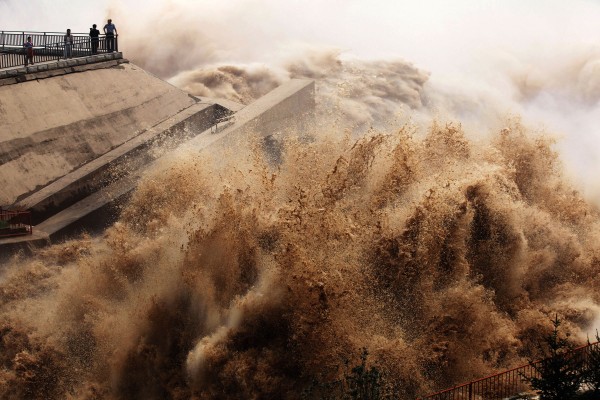
A spate of catastrophically destructive weather events, some of a magnitude not seen since the Middle Ages, raged almost worldwide in June, causing billions of dollars of damage and claiming thousands of lives. What on Earth is going on?
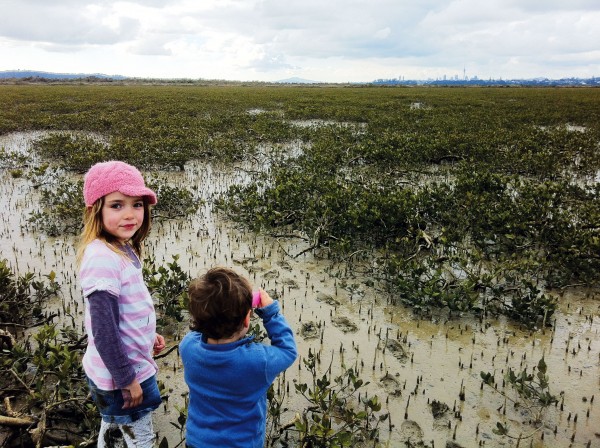
For several years, I lived at Muriwai Beach on Auckland’s ironsand coast and commuted to the city along the North Western Motorway. On the stretch between Rosebank and Point Chevalier, the motorway runs four kilometres along a causeway that appears to span a low-lying island of scrub, crossing a bridge over an estuary outflow before beginning its ceremonial sweep into the big smoke. On windless days, the harbour shallows were a pool of mercury that flooded the mangroves at the island’s edge. During storms, the chop seethed and raged at the road’s fringe, driving salt spray across the passing traffic. It was part of the journey I treasured—a brief brush with nature, a long view to the harbour bridge, a wink of the Waitemata early in the morning. But if someone had told me that this was a marine reserve, I would never have believed them. It’s too close to the influence of industry and urban sprawl, quite apart from the emissions of 100,000 vehicles using this stretch of highway each day. Photographer Darryl Torckler convinced me that this backwater was worthy of attention. Alternatively, I could have listened to my children, both of them mud enthusiasts who enjoy nothing more than fossicking among the roots of mangroves. So I took my kids with me to reconnoitre. Pollen Island is not well set up for visitors. To reach it, one has to sidle down a cycleway, climb over a berm, slither under the concrete spans of the Whau River motorway bridge and clamber over basalt boulders just to reach the almost impenetrable grip of mangroves. On our first attempt, my budding ecologists and I took a wrong turn and ended up beside the motorway, from where we were immediately whisked away in patrol cars—the police officers had never heard of Pollen Island and didn’t seem to share our enthusiasm to reach it. We embarked on a second, better-informed attempt with Kennedy Warne, who wrote the feature The Wilderness Next Door in this issue. To the background thunder of traffic, we wandered among a meadow of Salicornia blushing rouge in a clearing of mangroves, and stopped to watch the ‘slow traffic’—the crabs that emerge by the hundreds from their burrows when a visitor is willing to wait, or the hermits in cone shells that animate slowly across the mud, leaving behind them a pattern-language of madly looping trails. After a while, we ceased to notice the traffic, and the many little miracles of this marine reserve became evident. The children squatted on their haunches to watch the cast of this miniature theatre of mud, and peered through tiny pink binoculars to witness a cerulean blue kingfisher shoot out of the sky like an arrow to seize an unsuspecting crab. Quite apart from the obvious pleasure the kids take in the natural world, these are important and formative perspectives for a young mind; an environmental literacy every bit as important as developing vocabulary. Yet in a world dominated by technology, physical contact with untamed nature is gradually disappearing. Parks have structures for children to play on, plants are set out in rows, green space is drained, grassed, mown and cordoned off. “For a new generation, nature is more abstraction than reality. Increasingly, nature is something to watch, to consume, to wear—to ignore,” writes Richard Louv in the introduction to his book Last Child in the Woods. “As the young spend less and less of their lives in natural surroundings, their senses narrow, physiologically and psychologically, and this reduces the richness of human experience.” As contact with wild nature diminishes, is a liberating, vitalising, terrifying and perfectly natural element of childhood being regulated away? There’s a lot to be said for an unmediated ramble through mud, forests and waterways. And I dare suggest, parents might learn a thing or two also.
What was learned from New Zealand’s worst canyoning disaster?
Employing frogs to detect earthquakes
Loading..

3
$1 trial for two weeks, thereafter $8.50 every two months, cancel any time
Already a subscriber? Sign in
Signed in as . Sign out

Ask your librarian to subscribe to this service next year. Alternatively, use a home network and buy a digital subscription—just $1/week...

Subscribe to our free newsletter for news and prizes