We can't get no Satisfaction
Wealth and welfare


Wealth and welfare
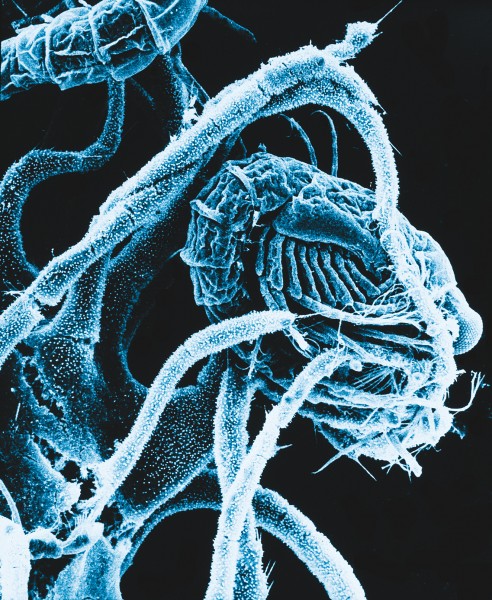
Just when you thought it was safe to get back in the bath...
Keeping an ear on space
Hen-pecked
New Zealanders have weak mussels, says Americans
The dancing meringue
The private life of sexy sticks
Young Muslims integrate best
Timing an untimely end
Yellow mellows a pine in the neck
Armour-plated gastropod
A French cure for dribbling
The babbling brook’s bum rattler
Bird triangulation
Heritage on ice
On September 30 this year a subduction zone 18 km beneath the Pacific seafloor lurched violently upwards, displacing a massive wave which travelled 204 km to strike the low-lying coast of Samoa and American Samoa to devastating effect at least 139 people were killed in Samoa, 22 people in American Samoa and seven people on Niuatoputapu, Tonga. Damage was particularly widespread in Pago Pago, American Samoa, where a wave over three metres high engulfed the village and travelled 100 m inland. Sixty per cent of recorded tsunamis have occurred in the Pacific Ocean which lies above highly active plate boundaries putting New Zealand at very high risk. In 1960 the largest recorded earthquake (magnitude 9.5) which struck Chile in 1960, created a tsunami that crossed the entire Pacific in just 12 hours and arrived completely without warning as a four-metre wave on the east coast New Zealand. A maximum wave height of 5.5 metres was recorded in Lyttleton Harbour While the Samoan tsunami only eventuated in a 40cm wave on the Northland coast, it was the first test for the tsunami gauge network installed just 18 months ago, designed to give an early warning and measure wave heights. However New Zealand is more at risk from a local tsunami, for which there will be little or no warning. Generated by earthquakes, underwater landslides or volcanoes along our plate subduction zones, these movements can create potentially enormous wave heights that can strike land within minutes a 10-metre-high tsunami generated after a minor earthquake off the coast of Gisborne in March 1947 struck the coast within 30 minutes. As the water receded it took dozens of small buildings and six hectares of pumpkins out to sea.
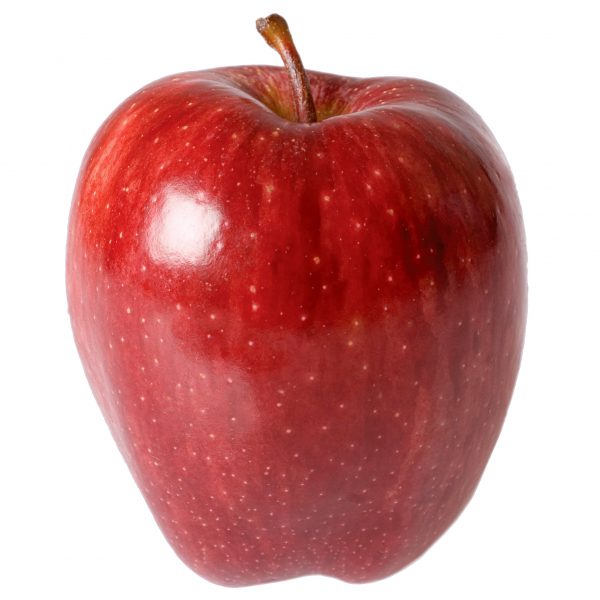
Anthocyanins, the molecules that turn fruit red and blue, are usually produced at a particular time and for a particular purpose, such as when a plant wants to advertise the fact that its fruit is ripe, or during times of stress. Anthocyanins are particularly powerful anti-oxidants, those molecules that mop up the free radicals that damage cellular components such as DNA, protein and lipids which is why blue and red fruit are so in vogue among health-conscious consumers In Central Asia there are ancient apple trees in which anthocyanin production runs amok and everything is turned red flowers, fruit, leaves, bark, even the roots. Scientists now know that this is the result of a natural alteration in the DNA of the gene that controls the anthocyanin pathway in apples, MYB10. This gene is a transcription factor, a class of genes that produce proteins which bind to other genes and swtich them on or off in other words, it’s the controlling gene, or boss, that determines the working lives of the rest of the anthyocyanin producing genes. Anthocyanin production is usually achieved in a controlled manner, but in red-fleshed apples this controlling gene contains a section of additional DNA that promotes it to a whole new level. This alteration was identified by Richard Espley, a molecular biologist at Plant & Food Research, and the work won him the Adding Value to Nature Award at this year’s MacDiarmid Young Scientist of the Year awards. Espley is actually aged 48, but qualified as Young Scientist because he came to science in his 30s, and completed his PhD only recently. “I’ve never had so much flak, I can tell you,” he says. The research helps Plant & Food with its development of a red-fleshed apple, or more specifically an apple that has all the novelty value of red flesh but also the other desirable characteristics of a modern apple. Espley notes that in the forests of Asia, where the world’s apples originated, there are all sorts of strange fruit. “There are red apples, orange apples, yellow apples, apples the size of cherries and extremely large apples. There is real weirdness in wildlife. People are so used to Foodtown, and seeing maybe four varieties of apples. Out there, there are thousands.”
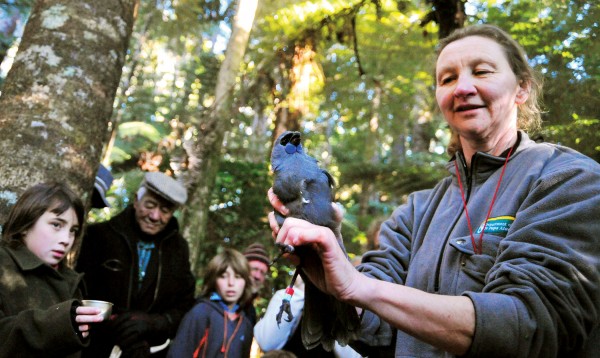
It was the first week of spring and during a solitary week of sunshine in months of rain, a pair of kokako from the King Country were released into the Waitakere Ranges in West Auckland. The area is owned by the Auckland Regional Council and, for several years now, has benefited from the actions of the volunteer group Ark in the Park. Like many similar organisations around the country, its aim is to rid the area of mammalian predators, although the Ark is doing this on a particularly grand scale. So far, its members have installed 2160 bait stations, 50 m apart, covering 1200 ha of bush. Robins, whiteheads and stitchbirds have been reintroduced over the past few years, and on September 8 the first two kokako were also ready for release. Though the birds were still in their boxes, bell-like sounds were already ringing out from the trees, thanks to speakers around the release site broadcasting looped kokako song. Researchers call it acoustic anchoring, and the theory is that the birds will think that if the area is good enough for other kokako then it’s good enough for them, ensuring they stay there. The first bird was tenderly removed from his box by DOC scientist Hazel Speed, who has spent 20 years working on kokako and much of the past decade studying a population in the Hunua Ranges, just southeast of Auckland. The bird was held aloft, confronted by a television crew, at least a dozen whirring cameras and a crowd of enthralled spectators. The bird’s response was to bite Speed’s hand, repeatedly. Speed flinched but valiantly held on long enough for everyone to get a close-up view of the striking grey creature with the ninja’s mask and vivid blue wattles. “It’s not really a flesh-eater,” she said. ARC chairman Mike Lee tried to feed it a banana. Eventually Speed sat the bird down on a fallen tree trunk and it promptly hopped up the nearby trees and disappeared into the canopy. Soon after, a female was removed from the box and similarly showcased before she, too, was allowed to fly away. Someone sang a waiata, an elderly gentleman began to incant in Maori, a stitchbird raised its alarm, and a couple of North Island robins fluttered nearby. Ark in the Park Chairman John Sumich stared up into the canopy where the bird had disappeared. When he lowered his head, he was grinning deliriously. He then flung out his arms and hugged the first person he saw, who happened to be the New Zealand Geographic journalist. This event was conservation staged largely for the benefit of the media and stakeholders, but behind it lay years of hard labour by volunteers prepared to spend their weekends on the mundane tasks of weeding, baiting, monitoring and raising money for such releases. (Ark had to raise $70,000 for the kokako release.) People like Sumich first talked about getting the kokako back into the Waitakere Ranges 10 years ago the birds were last seen in the forest 50 years ago but back then, few took the idea seriously. There simply weren’t enough kokako left for DOC to take such a risk. Now, contemporary conservation is reaping results that, not so long ago, were dismissed as pipe dreams. Three more birds were released two days later, and Speed hopes to release 30 over the next two years. “It’s good for the health of the forest, because [the birds] are fulfilling whatever role they had. And it gives people more of an opportunity to see these things.”
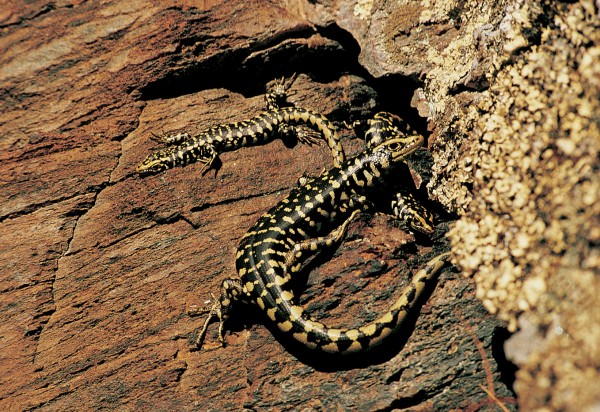
When the great Otago skink recovery programme began at macraes Flat in 2004, the populations of Otago and grand skinks—New Zealand’s largest and rarest lizards—were so low it was thought both species would be functionally extinct within the decade. The sense of urgency prompted DOC to take two management approaches simultaneously, so it could save some skinks and figure out which was the best way of doing so at the same time. The scientists set traps and bait stations over an area as large as they could manage (2000 ha), and also built two predator-free enclosures for the southern lizards. Scientists can now report a 230 per cent increase in the skink populations in the past few years; according to DOC that’s the most dramatic recovery of a critically endangered species on the mainland. Surprisingly, there were similar levels of recovery in both the predator-free enclosure and the predator-controlled area. DOC has now doubled the area under control, from 400 traps over 2000 ha to 800 traps over 4000 ha. As programme manager Andy Hutcheon points out, that’s an area equivalent to the size of suburban Dunedin, although it’s nothing compared to the skinks’ original geographical range. “They used to be across Otago, from Wanaka right through to the coast north of Dunedin. They’re now reduced to eight per cent of their former range.” However, the Otago skink will soon be returning to the Alexandra Basin where they haven’t been seen since the 1970s. This is thanks to the Central Otago Ecological Trust, which has recently completed a 0.25 ha predator-proof enclosure which it plans to formally open in mid-November, and release 12 Otago skinks into the area at the same time. “It’s a pilot study,” says trust chair Grant Norbury. “We just want to see if we can get a viable population going.” Norbury has great plans for the lizards, hoping they’ll act as ambassadors for the dry lands of New Zealand. Half of New Zealand’s threatened flora exists in these areas, but dry lands get only a fraction of the attention given to our wetlands or forest systems. “You need something attractive,” he says. “And these Otago skinks are big, they’re black with gold spots all over them, they’re spectacular.” If all goes well, the trust hopes to introduce other species into the enclosure.
Loading..

3
$1 trial for two weeks, thereafter $8.50 every two months, cancel any time
Already a subscriber? Sign in
Signed in as . Sign out

Ask your librarian to subscribe to this service next year. Alternatively, use a home network and buy a digital subscription—just $1/week...

Subscribe to our free newsletter for news and prizes