Boats and roses
Photographer Jocelen Janon on understanding your subject


Photographer Jocelen Janon on understanding your subject
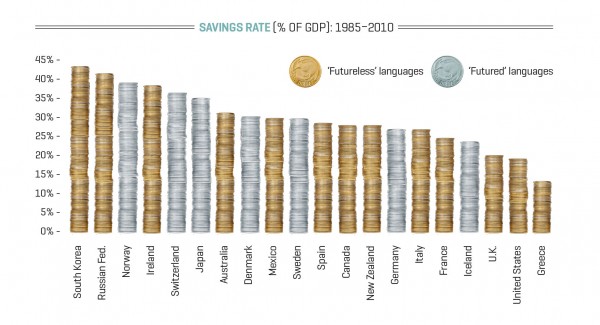
Your native language may dictate whether you retire in luxury or do so poor, obese and smoking
What was the main issue in last year’s election in the United States? You may think it was employment (American unemployment runs two per cent higher than ours), the weak state of the economy (US house prices have fallen by 20–40 per cent) or the war on terrorism... but you’d be wrong. It’s something much more arcane: philosophies of government. Republicans stand for individual liberty and freedom from too much government control. Democrats believe more in the inclusive society, with better government welfare programmes, and regulations to protect workers and the environment. I spent almost a year camping in the United States recently and was amazed at the venom with which many Americans wanted to get the “oppressive federal government” off their backs. For them, freedom mainly meant freedom from their own government, a notion I found quite astonishing, especially in the bastion of democracy that is the United States. Here in New Zealand, we’re not much concerned with those ideas. Sure, we have a fading Act party and a Libertarianz party which espouse such ideas much more explicitly—though the latter won just 0.07 per cent of the vote in 2011, seven times less than even the Aotearoa Legalise Cannabis Party managed to win. While freedom is a big deal in America, in New Zealand we use the word but pay it little real heed. The thesis of Fairness and Freedom, by Boston history professor David Hackett Fischer, is that fairness has become our central creed, our guiding ideal, what freedom represents to the citizens of the United States. Fischer (who is aged 77 and has a number of well-regarded books and a Pulitzer prize to his credit) made several visits here in the mid-1990s and was struck by the similarities and differences between New Zealand and the United States. This scholarly volume is the fruit of his inquiries. Fischer attributes our differing national obsessions to our countries having been founded in distinct eras of the British Empire, when ideas in Britain about colonies were quite different. From the time Britons started going to the New World after 1630 right through to the War of Independence in 1775–83, Britain was concerned with keeping the new colonies in subjection. They were to benefit Britain. She sent oppressive governors, tried to mandate religion, and introduced restrictive laws and punishing taxes on groups of settlers who were struggling to establish themselves in a very different land. Fischer notes, “What is astonishing about the first British Empire is how many tyrants were dispatched to America and how incompetent were their tyrannies.” He quotes historian JR Seeley, “[Britain] claimed to rule the colonists because they were Englishmen and brothers, and yet it ruled them as if they were conquered Indians.” This maladministration established a yearning for freedom and liberty in America, and led to the United States Constitution, which enshrined freedoms in the new country and led to the establishment of myriad checks and balances in the American system of government. Why doesn’t the United States have a public health system? Many people I quizzed expressed fears about letting Washington into yet another realm. And most education in the United States is run and funded by local government. But what of New Zealand? By the late 1830s, the British Colonial Office was controlled by Sir James Stephen, a man of moral character who admired Maori. He wrote, “The two Cardinal points to be kept in view in establishing a regular colony in New Zealand are, first, the protection of the aborigines, and secondly the introduction among the colonists of the principle of self-government, to the utmost extent in which that principle can be reconciled with allegiance to the crown.” It was a perspective very different from that in the United States. We did not have to struggle much for freedom and liberty, but instead new ideals of social justice and fairness took root here. Fischer explores the development of freedom and fairness through detailed, expansive comparisons of American and New Zealand histories. Among subjects surveyed are treatment of Maori and Indians, land settlement practices, immigration policies, women’s rights, racist wrongs, progressive political movements, external relations, the Great Depression and reforms, military traditions, and the crises and challenges of the past 50 years. It’s vast in scope and surprisingly lively, but still a well-referenced history book with 70 pages of notes. His ideas explain how we have ended up with top-rating television shows such as Fair Go that celebrate the principle, an Ombudsman slogan that reads “Fairness for all” and the strapline for our Inland Revenue Department that once read “It’s our job to be fair”. And his digging has unearthed a central tenet of New Zealand society that we may be too close to really appreciate—that the principle of fairness remains at the core of our national identity. “Few Americans think of fairness as the organising principle of their open society,” writes Fischer. In fact, “Americans on the right believe the ideals of fairness and fairplay are hostile to capitalism, destructive of national security, and dangerous to liberty.” Fischer thinks that the world can learn something from us. Certainly we can learn something from him.
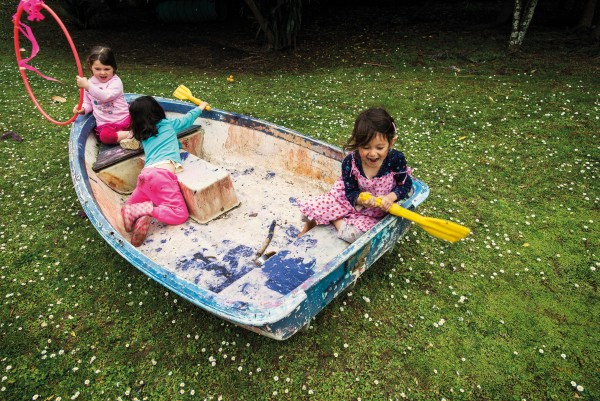
A sea of daisies churns beneath Isla, Naomi and Mira sailing their ship at Mt Albert Playcentre. Every weekday, the doors of nearly 500 Playcentres open for similar adventures. For 70 years this volunteer-based movement has pushed the boundaries of learning in New Zealand, with philosophies of child-led play and a belief that parents are the child’s first and best educators.
IN THE 1960s, while Barry Crump’s hard-case yarns of deer-hunting in the Ureweras were taking New Zealand by storm, another eccentric take on the culling business lay languishing among family papers. Those Wild Men From the Bush, the visual diary of a government deer culler written 20 years before Crump’s novel, had to wait another half century to taste printers’ ink. The diary’s author was 20-year-old Neville Spooner—“Stag” to his mates—a lively, bright-eyed lad with a wiry beard and an unruly mop of hair. Born into a hunting family (one photo shows 15 or more of the Spooners’ guns leaning against a wall), he developed an early interest in both art and hunting. As a boy, he neatly combined the two by producing illustrated stories about his shooting and fishing exploits. Spooner’s impulse to record reached a peak with Those Wild Men. Across 80 pages and 320 captioned drawings it faithfully recorded the daily doings of cullers contracted to bring the country’s burgeoning wild deer population under control. The 80-page diary begins in the severe winter of 1939, with the men cutting tracks in the Tararua Ranges near Spooner’s Carterton home. Action then shifts to the Whitcombe Valley in Westland where, armed with his old ex-army Lee-Enfield rifle, Spooner proved to be a skilled marksman. He shot a record 525 deer in the season downing 41 on one memorable day alone. The diary has now been reproduced in facsimile as part of a generously illustrated biography by Chris Maclean, Stag Spooner: Wild Man from the Bush. Spooner’s vignettes are to treasure: “While Pete went up to bag a lone hind (losing his knife in the process) Stag boils the billy but set light to the tussock slope—silly fellow,” declares the caption to one drawing. After much tramping and shooting, camp making, letter reading and billy boiling, punctuated by several forays back to civilisation, Those Wild Men trails off into uncaptioned pictures and pencil sketches then, finally, a blank ruled page. Spooner’s thoughts had turned to war. On July 1, 1940, he volunteered for active service, surprisingly fetching up as a non combatant with the Fourth Field Ambulance. Military minds apparently rated his early job driving a grocery vehicle around the Wairarapa more highly when it came to waging a world war than his prowess as a sharpshooter in the mountains. Army life stretched Spooner. He was stationed in North Africa and described his experiences (which included, briefly, being taken prisoner) in a steady flow of letters to family, enclosed in outrageously decorated envelopesWild Man from the Bush reproduces more than 30 of them, along with several drawn by brothers Tory and Bryan. Soon he was selling specially printed envelopes to fellow soldiers, reporting that one edition of 1500 copies sold “like hot cakes—DOENUTS—at 3d each”. In June 1944, Spooner’s ambulance unit entered newly liberated Rome. “We stared in wonder. There was the great marble pillars of the Old Roman Forum, and the world’s largest amphitheater the ‘Colosseo’ which will hold 87 thousand people, and all round those old historic ruin sare the 18, 19 and 20 century buildings, including the greatest monument I have ever seen, the King Emmanuel Memorial,” he wrote in a letter home. “Ten years ago I would have never dreamed that I could come here, and although it is a great thing in a bloke’s life, I would enjoy myself much better on the mountain or at the coast but then one can always do that, can’t one.” In 1945, the brothers arrived back in New Zealand, their army days at an end. Spooner took up cabinet making and dreamed of living off art. The next year, aged just 28, he was dead. The cause is unclear, but it seems that he caught pneumonia while on a solo hunting trip in a remote spot at the northern tip of Lake Te Anau. In a letter to Mrs Spooner, the boatman who had dropped her son at the isolated camp site wrote: “I have seen practically every bit of New Zealand and Australia and also a fair bit of the world during the recent war but I still have to see a more beautiful spot than this final bay of the North Fiord.” The fact that he died in such a place, while engaged in an activity he loved, could have been little consolation to Spooner’s mother. Or to readers who see the talent and promise at the heart of Stag Spooner.
Derived from voix de ville, literally voice of the city, vaudeville performances became popular in the United States at the turn of the 20th century, competing for patronage as an upper-class alternative to the more sultry form of burlesque. A troupe in Auckland is the latest in a worldwide revival of the variety show, translating the voice of their city for a new generation of theatre-goers.
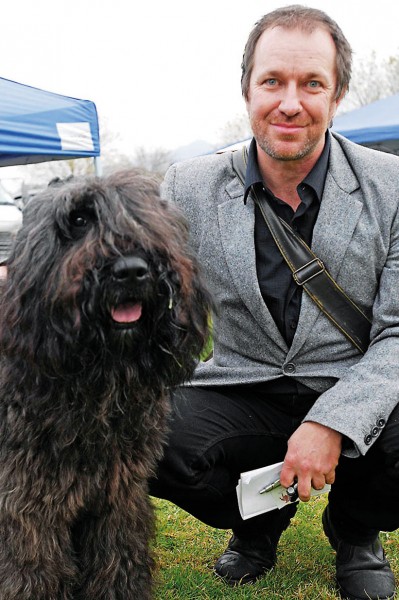
A cat lover among canines
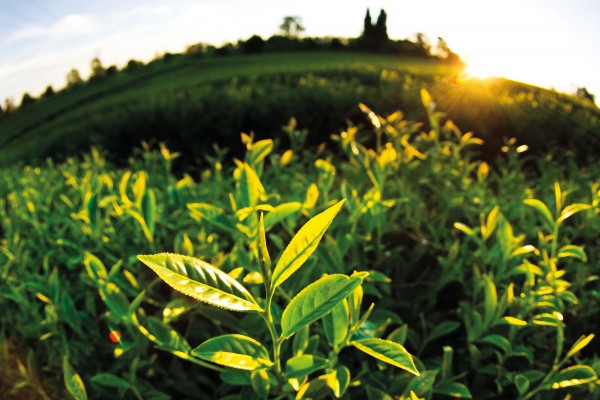
New Zealanders once consumed more tea per capita than any other nation in the world. A resurgence in the popularity of boutique varieties, and—for the first time locally grown tea, may make it time for tea once again.
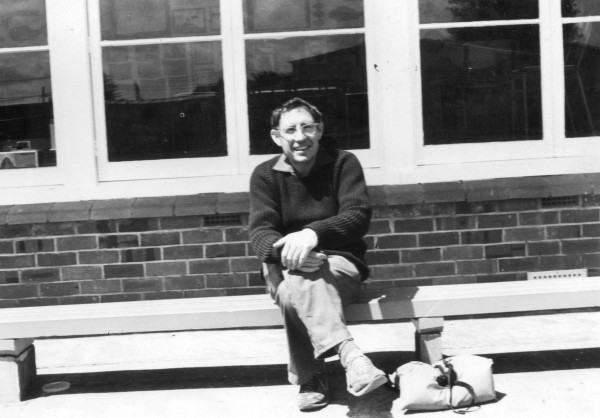
I was six years old when I took this picture. I remember the satisfying crackle as the film advance lever wound TMax film onto the spool, the weight of the metal-bodied Nikormat FT2, and the concentration it took to align the split focus in the viewfinder.
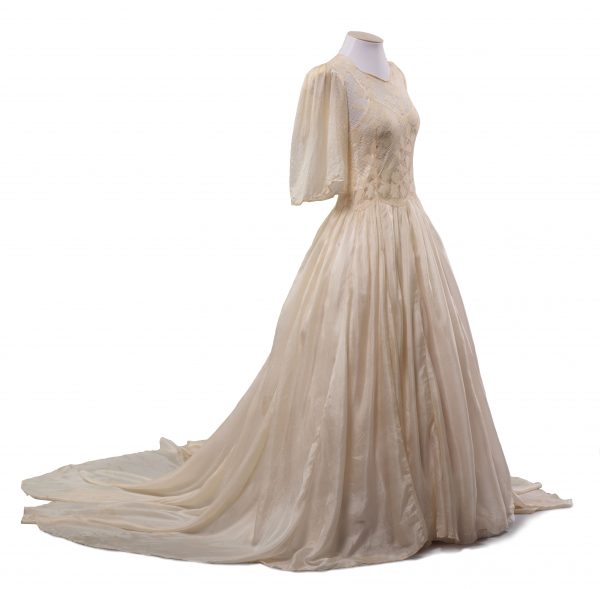
Fabric rationing during World War II meant that scores of brides wore dresses that were far from the extravagant wedding garments they may have dreamed of unless they had a parachute. Carol Gifford from Taranaki was presented with a silk chute brought home by her groom, returned serviceman Owen Thomas, who had been posted in the Pacific. While the real prize was up to 65 sqm of silk free of rationing restrictions, the parachutes also featured cords for ruching and panels of zigzag seams. During wartime, bridal garments were typically a simple suit or one’s best dress. Supplies of silk had dwindled when the main supplier of the time, Japan, became allied with Germany and Italy, and silk supplies already in circulation were diverted to parachute manufacture. Unless the bride was donated extra rationing coupons, the amount of fabric available would service only minimalist tastes—the trailing skirt with embroidered bodice on Gifford’s dress would have been a lavish addition. The dress was never worn again after the wedding ceremony on August 8, 1946, at St Andrew’s Presbyterian Church in New Plymouth. However, the sleeves were later removed and the silk used for the family’s christening dresses.
He came, he saw, he was put on hold.
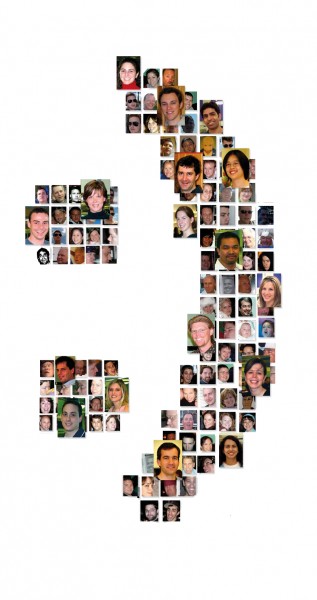
Micro-blogging the world’s mood
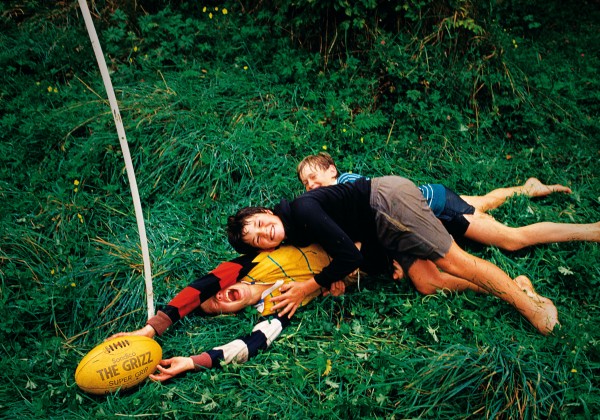
Far from the steely glare of stadium lights our national game takes place in snow and mud in the south, on sun-parched plains in the north, on provincial fields, in back paddocks, back lawns and on beaches. Taking in these themes, a new New Zealand Geographic book captures rugby, the heart and soul of New Zealand, and the landscape in which it is played.
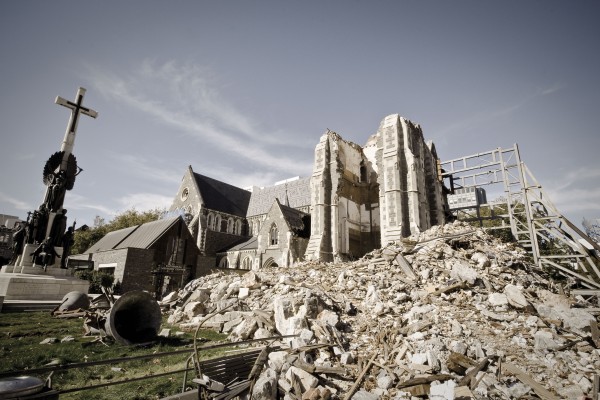
Though ChristChurch Cathedral will almost certainly be restored to former glory, the fate of other heritage buildings, indeed the future of the city itself, is less clear.
Brigid Gallagher unearths the past
Tribute to a conservation superhero
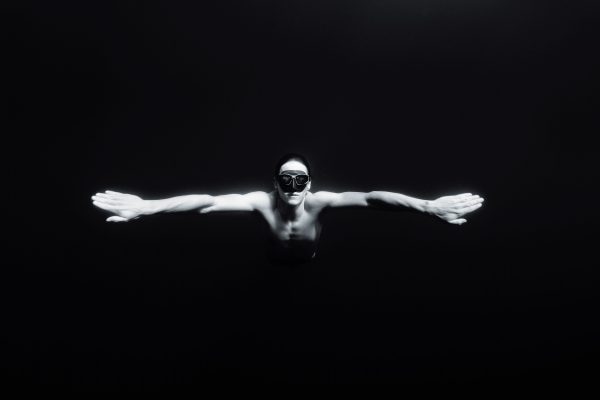
William Trubridge's quest to dive a hundred metres on a single breath.
For nearly two centuries, the origins of a Spanish whaler and trader who founded a dynasty on the east coast were a mystery. Manuel Jose’s descendants are New Zealand’s largest family, and have recently reunited with their Spanish relatives. This summer, the Spaniards journeyed to the east coast for the first time to connect with their Maori cousins, and with the culture that embraced their forebear.
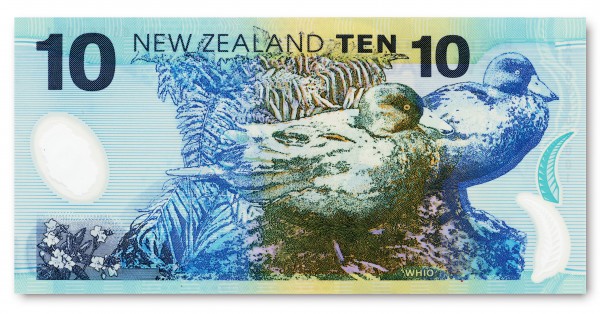
How many of us really examine our country’s everyday artefacts? Could you name from memory the people, plants and animals printed on the crumpled banknote in your pocket? Would you know their stories, their accomplishments or the perils that may one day render them extinct? There are 20 million New Zealand $10 notes in circulation. Yet the whio, or blue duck, printed on these notes number only 2500 individuals. Hymenolaimus malacorhynchos is endemic to New Zealand and the male’s whistling call (which is the onomatopoeic source of their name) is heard, though all too rarely, in New Zealand’s river catchments. The whio is the only member of its genus, and one of only four waterfowl in the world to inhabit white-water rivers year round. Surviving mainly on freshwater invertebrates, they have an unusual fleshy lip-like overhang on their beak, which helps them scrape insect larvae off rocks. They lay a clutch of between four and nine eggs in caves or under logs near the rivers. In 1992, when whio were first printed on banknotes, researchers were witnessing a staggering and mysterious decline in their population. In 1999, cameras placed on whio nests in Fiordland recorded stoats killing female ducks and taking the eggs. No ducklings survived. It was introduced predators, rather than habitat loss, that researchers decided was the key factor in their demise. Traplines were set in the area immediately and the survival rate of ducklings increased to 65 per cent. Now, eight areas in the North Island and 13 in the South are protected in this way. Tongariro Forest’s whio population has increased by 50 per cent since traplines and the poison 1080 were employed in 2007. It’s all money in the bank for the whio.
As we honour and mourn those lost in the Pike River tragedy, we also consider the future of underground coal mining in New Zealand.
Loading..

3
$1 trial for two weeks, thereafter $8.50 every two months, cancel any time
Already a subscriber? Sign in
Signed in as . Sign out

Ask your librarian to subscribe to this service next year. Alternatively, use a home network and buy a digital subscription—just $1/week...

Subscribe to our free newsletter for news and prizes