A digger's legacy
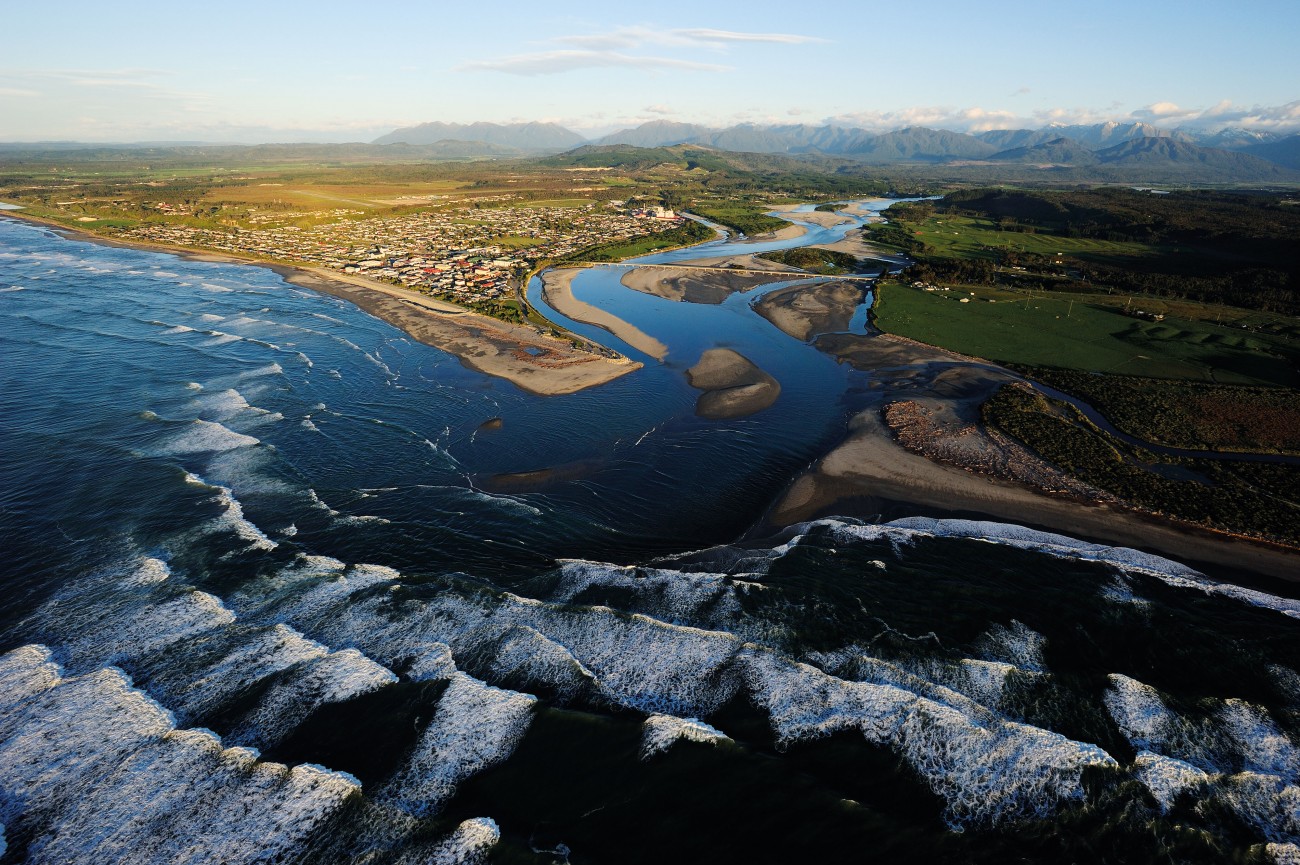
150 years ago, they came seeking gold and found a fresh start in an uncompromising land. For many of the West Coast’s pioneers it was a regrettably short stay, while others would endure for generations


150 years ago, they came seeking gold and found a fresh start in an uncompromising land. For many of the West Coast’s pioneers it was a regrettably short stay, while others would endure for generations

Like many children of the 1970s, I grew up on five-layer casseroles and meatloaf. But over the course of my childhood, my mum discovered a world of cuisine. I remember her first pasta, her experiments on ‘vegetarian’ visitors, and the time that the pet mince got mixed up in the freezer and became a lasagne of radical flavour and questionable nutrition. I remember the shocking green flesh of my first avocado, the oozing centre of my first Brie, new experiences with sun-dried tomatoes and olive oil on salads. It was a time of profound change in Kiwi kitchens, a time when the British traditions gave way to flirtations with Mediterranean fare. Food became something more than sustenance, and New Zealand cuisine began to acquire an identity of its own—as our new deputy editor, Rebekah White, discovered in her profile of Tui Flower for this issue. Our geography was changing too. The rolling pastures that used to bake brown in summer and sprout thick and verdant in autumn took on an evergreen quality thanks to superphosphate and an irrigation regime that’s doubled in area every 12 years since 1970. (More irrigation, particularly in dry areas, can triple the output of a farm.) My memories of fields of sheep—at the time outnumbering New Zealanders 25 to one—slowly faded as sheep numbers halved, replaced in part by the massive expansion of dairying. These changes have been driven by the economics of the free market, rather than rural planning, and the economy has responded positively to the high-input model. It was the primary industries that gave New Zealand buoyancy to emerge from the global recession before most other developed nations, and the government’s Economic Growth Agenda calls for agricultural exports to earn 40 per cent of GDP by 2025, hingeing on something approaching a trebling of current production value. But market-led change in the global context also results in some bizarre distortions. We import lettuces from Fiji, and export lettuces to Fiji. New Zealanders, on an isolated temperate archipelago, are the world’s largest consumers of bananas, a tropical fruit. Farmers in Canterbury are converting fields of cereals—crops suited to the dry, thin soils of the plains—to pastures for a dairy herd that can’t be productive there without untold volumes of water from pivot irrigators. High-intensity agriculture comes at a high price: pollution, eutrophication, fertiliser run-off, pesticides that contribute to colony collapse in honeybees. Our distance from international markets creates cost and concern and doesn’t insulate us as much as we would like from pest species and pathogens. We need only to consider the outbreaks of PSA, varroa, fruit flies and great white butterflies that have resulted in national emergencies and the collapse of entire market sectors to appreciate the vulnerability of monocultural cropping to a biosecurity breach. There are alternatives—organic, biodynamic, permaculture, hydroponic, intensive farm systems but detractors suggest they can’t achieve the volume or the efficiency to feed our nation and its economy, let alone sustain three-fold growth in international receipts. In the clamour of industry, shrill cries to eat less meat or buy organic produce are easily drowned out. The only truly effective means of altering the behaviour of a market is educating consumers and highlighting their responsibility for the shape and nature of the supply chain. But, like farmers, consumers feel bombarded by the issues. There’s a lot to consider when you shop: food miles, nutrition, animal welfare, traceability, industrial sustainability, international worker rights, product safety... A conscientious consumer can’t hold a fork without quivering with anxiety. Greg Bruce’s special feature in this edition is the fifth in New Zealand Geographic’s 25th-anniversary series on the issues that will shape our nation over the next quarter-century. Since humans first set foot here, food production has shaped the land and will likely have a greater impact on the structure, prosperity and natural values of the country than any other factor. Is there an alternative? How much will it cost? Can we afford to change? Can we afford not to?
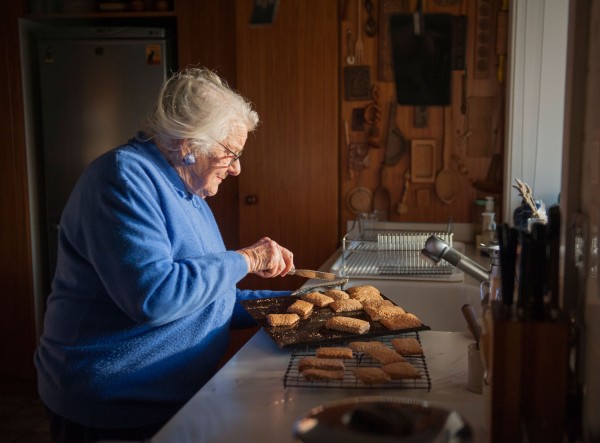
Tui Flower taught a generation of New Zealanders to cook, and remains a champion of good, honest food.
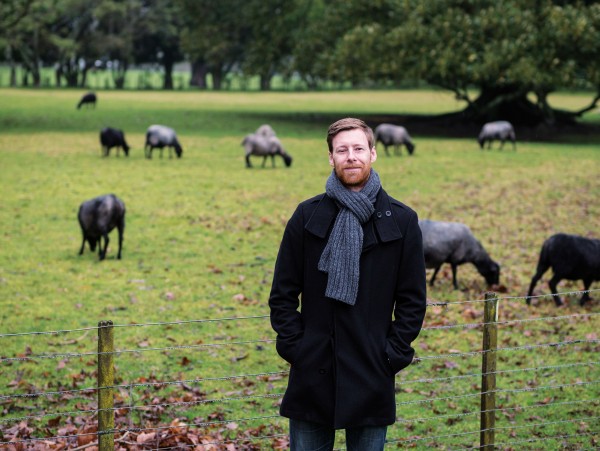
Greg Bruce ponders the meaning of lunch
A kilometre of seal that’s been an ancient Maori path and redoubt, a promenade for housewives to ritzy stores, then a motorway-scarred red-light party zone… and now maybe something else again.
Social media’s answer to a conversation across the back fence
Losing your legs would end most mountaineering careers, but for Mark Inglis, it was just the beginning.
Connection in an age of fragmentation.
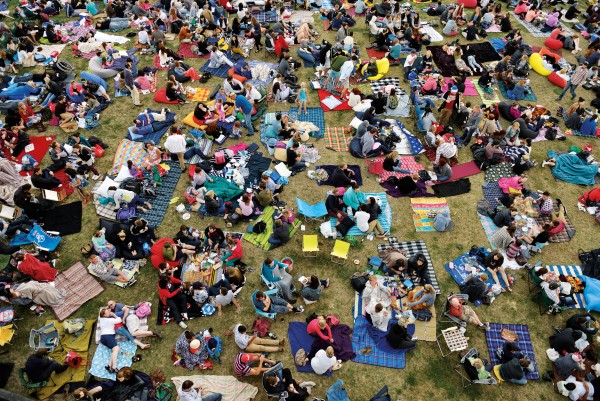
Slowly, almost imperceptibly, New Zealand society is changing before our eyes. Despite being the last land mass to be inhabited by humans, we are now one of the most ethnically diverse. And despite priding ourselves on our egalitarian society, the gap between rich and poor is growing faster in Aotearoa than in almost any other country in the OECD. Our cities are thriving, the regions are declining, and almost as nothing is as it seems.
We were taught that in 1840 Maori willingly exchanged their sovereignty for the benefits of becoming British subjects. What if we were taught wrong?
I remember driving into the country early one morning, Mum in the front, my two brothers and I arranged across the back seat. We didn’t have to go far. Within a couple of kilometres, we were surrounded by expansive fields of cool, damp grass. We pulled over, leapt across the swale and hurdled the number-eight-wire fence into a paddock. Cows idled in the morning glow, and we dodged their fresh and fragrant offerings, searching in the long grass beneath the fenceline for mushrooms. Within 10 minutes, we’d collected a couple of bags full. Almost nothing of that memory remains today. What once were open fields have been subdivided and thousands of near-identical houses arranged along curvaceous culs-de-sac occupy the green fields where once I picked mushrooms. There are outlet stores, businesses, an ice-skating rink, and an enormous mall billed as “one of New Zealand’s largest dedicated towns of shopping”. The structure of our society is different, too. Three decades ago, almost every household in the country was like mine—a nuclear family with children under one roof, middle class. Today, I’m in the minority—only 25 per cent of households are composed of a couple with children, and the gap between rich and poor has doubled. It’s a good thing that New Zealanders are now more diverse, more tolerant, more numerous, more... interesting. But I had assumed that New Zealanders also prized an egalitarian social environment. Indeed, to a large extent, it was the primary reason many of the first settlers left Victorian England, and recent immigrants have chosen to set roots here for similar reasons. Many of the findings of Greg Bruce’s feature on population in this issue challenged my assumptions and caused me to look back with pause to those days wresting fungi from empty fields. So, too, did Kennedy Warne’s analysis in this issue of the Declaration of Independence, signed five years before the Treaty of Waitangi. In it, iwi asserted their sovereignty in ardent terms, which casts new light upon the Treaty itself and indeed the constitutional foundation of the nation. New Zealand society is changing rapidly, and may not have even started as we have been told. That might be alarming, or exciting, depending upon your point of view, but it cannot be ignored.
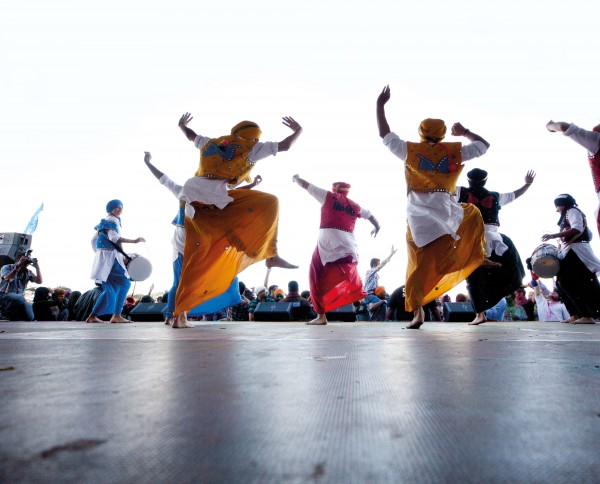
Since the Immigration Act of 1987, migration from the Indian subcontinent has swelled Auckland’s suburban population, bringing with it a cultural cargo of music and dance that has coloured urban life and changed what it means to be a New Zealander.
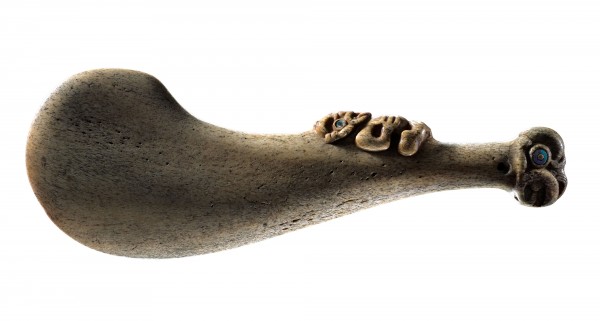
A souvenir to foreshadow a society
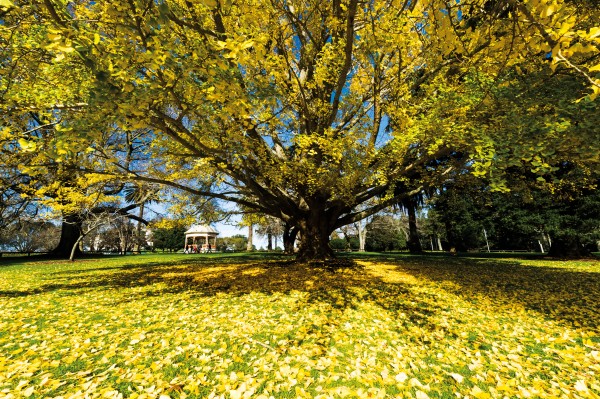
In 1845 Governor George Grey set aside 80 hectares of central Auckland for a park. On the crest of an ancient volcano, it is a memorial, a recreation space, a green heart for the city and its citizens.
Keep it simple, stupid...
What was learned from New Zealand’s worst canyoning disaster?
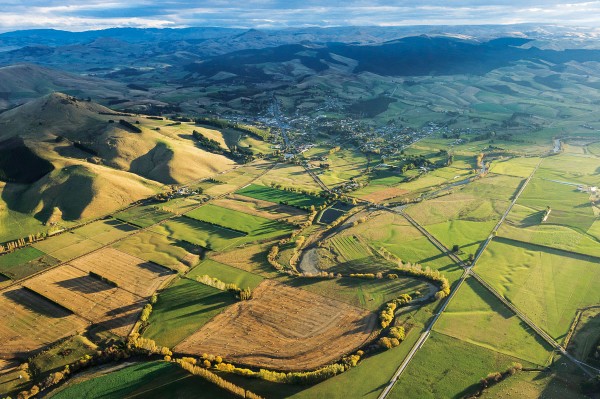
From Moeraki to Karitane, and inland to the edge of the Maniototo, East Otago is a seldom-traversed province where the rich legacy of whaling and gold persists. Today, mining and agriculture shape the fortunes of this land of rolling hills and rose-gold beaches.
While carbon-fibre catamarans hydrofoil around America’s Cup courses, the roots of New Zealand yachting were formed around another prize. The Lipton Cup—donated by Sir Thomas Lipton, who made no fewer than five challenges for the Auld Mug—actually stands two inches taller than the America’s Cup, and this year at least, attracted more entries. It has been the prestige annual event of the Ponsonby Cruising Club for nearly a century, held under the shadow of the Auckland Harbour Bridge. In a good year, 10 ‘mullet boats’—22-foot ballasted centreboard yachts directly descended from 19th-century fishing boats—face the starter. Even if the shores are no longer lined with spectators as they were in the 1920s, the event remains a major sporting occasion, right at the core of the city’s culture.
Human geography is concerned with the interaction of humankind with the planet, for better or worse. While producing this issue the editorial team found themselves considering that interface in two realms: on land and under the sea. The Three Kings Islands were inhabited by Maori for centuries, and visited by the first European explorer to sight these shores, Abel Janzoon Tasman. Tasman arrived at these islands some 53 kilometres north of the mainland in 1643 searching for fresh water, of which he was desperately short. He found none, but noted the presence of Maori and the absence of trees, which had been cut down to make way for crops. Marion du Fresne witnessed a similar scene 130 years later, though by that time every square inch of Great Island had been cleared and cultivated but for the cliffs. Maori continued to live on the islands until about 1840. In 1889, two goats were introduced to provide ready roasts in the event of a shipwreck. Needless to say, they decimated the bush that remained and multiplied in number to 393. Since then the Three Kings have had little human contact save for commercial fishing boats sweeping the waters with nets or recreational fishers reeling in marlin. Yet even this light brush with humanity has left the marine environment around these islands dramatically changed. According to a team of scientists from five institutions that visited in April, there is a profound absence of apex predators—sharks, marlin, kingfish and grouper—that might be expected in an ecologically unmodified environment. Here then, from the very first, is the history of New Zealand in microcosm: human arrival, land clearance, cultivation, agriculture and the selective exploitation of the marine realm that removes an entire category of life. Closer to the other end of the country is another object lesson in human geography. The history of East Otago has left a deep imprint on the land. From mud banks and river mouths, archaeological evidence erupts which speaks of the region’s prehistory. Sediment at Shag Point carries the bones of plesiosaurs, and further inland, where there were once dense forests, lie the remains of moa and Haast eagles. The bush was cleared by the first humans to set foot here, and moa were a plentiful prey, for a time. Whalers and sealers, then missionaries and crofters, pastures and fences left their mark on a landscape that kept giving: sheep, wool... gold. Then milk, and more gold. Families and towns, layers of human relationships and social wealth, gave this corner of New Zealand a timeless quality, even as farming and mining was changing it before their eyes. We idealise these social beginnings and rightly feel connected to the spirit and determination of pioneers—both Maori and Pakeha—who laid the foundations of what we now realise is a culture to be proud of. But these lessons in human geography also have an unsettling quality. The wild, rugged frontier of New Zealand that also forms part of our collective mythology has been largely denuded and tamed. Its rivers turn turbines, its rolling hills now feed our stock within electric fences. The Haast eagle no longer casts a shadow here, and even the predators of the deep are conspicuously absent. Both Maori and Pakeha came to New Zealand in search of a new land in which to fashion a new society. But what ultimately resulted was not dissimilar to the civilisations they had left. It was human nature that needed to change. It still does.
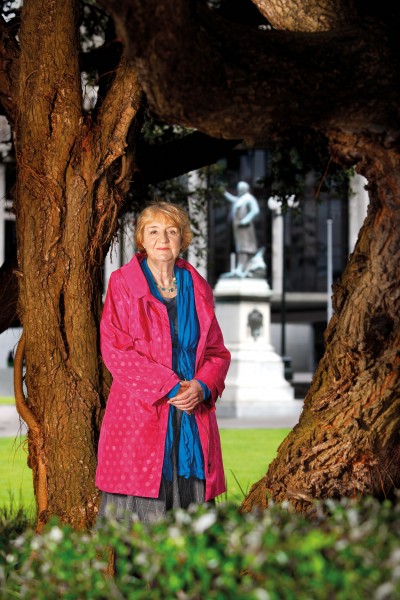
Parliamentary Commissioner for the Environment Jan Wright.
Loading..

3
$1 trial for two weeks, thereafter $8.50 every two months, cancel any time
Already a subscriber? Sign in
Signed in as . Sign out

Ask your librarian to subscribe to this service next year. Alternatively, use a home network and buy a digital subscription—just $1/week...

Subscribe to our free newsletter for news and prizes