Nineteen sixty-four
A red-letter year for conservation continues to send ripples around the world.


A red-letter year for conservation continues to send ripples around the world.

How do you identify minerals in the field?
Termites design self-regulating buildings of the future
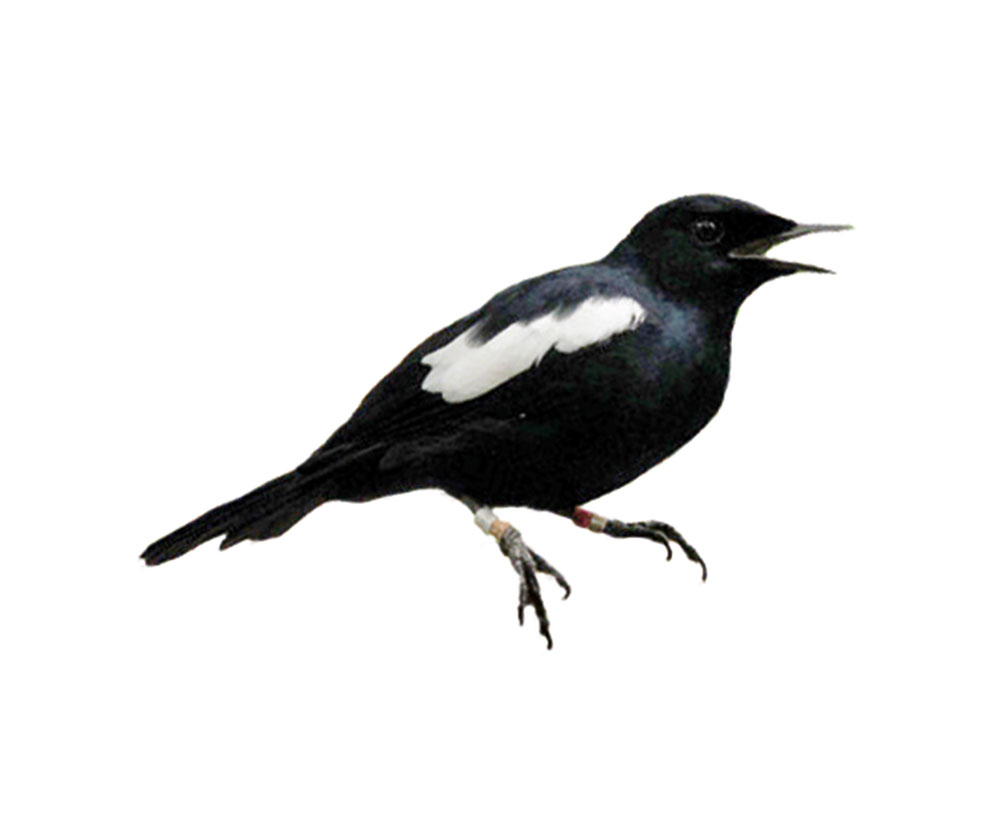
Tui will pair for a season, but many females stray and breed with other males.
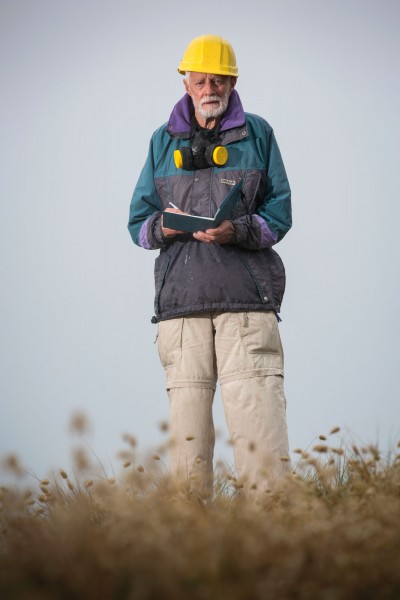
Volcanologist Peter Otway has spent more than 60 years trying to predict the unpredictable.
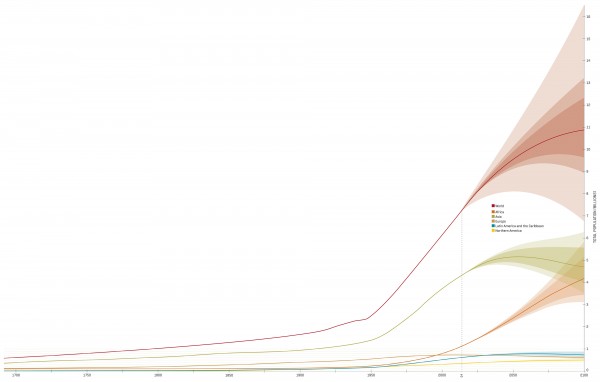
There are too many people who cannot feed themselves. Worse, there are too many who can.
Shortly after the February 2011 earthquake brought down Christchurch Cathedral’s bell tower, staff member the Rev Craig Dixon came across a brief mention of Shigeru Ban in a magazine. The Japanese architect was making a name for himself building temporary emergency structures out of unlikely materials. Among his works: a church for quake-damaged Kobe which, said the magazine, was significant not because it was quick to build, but because “its beauty among the wreckage was a sign of hope, and brought the community together”. Dixon approached Ban for help in designing a stand-in Anglican cathedral for Christchurch, and the architect immediately offered his services at no cost. The result was a six-storey structure of exquisite lightness, fashioned largely from industrial-strength paper tubes, shipping containers and translucent polycarbonate sheets. It is undoubtedly true, as Andrew Barrie suggests in Shigeru Ban: Cardboard Cathedral, that Ban is one of the biggest names in international architecture ever to work in New Zealand (this year, he received the most prestigious award in architecture, the Pritzker Prize). More importantly, as Barrie also claims, the cardboard cathedral is likely to gain global recognition as one of this country’s most architecturally significant buildings. “The old cathedral was an essentially European building; the new one is essentially Pacific,” notes architect David Mitchell in the book’s afterword. “Some day we might see the Cardboard Cathedral as an architectural lighthouse, and thank Shigeru Ban for pointing us away from one past and into another.” Published on the first anniversary of its opening, the beautifully produced Cardboard Cathedral is a fitting celebration of this symbol of Christchurch’s rebirth.
The Celebrated New Zealand botanist Leonard Cockayne was one of the first to preach the benefits of swinging a boot in the Great Outdoors. “Mountains are the noblest recreation ground, the finest school for physical and moral training, a source of perfect health to those who visit them, and the place of all places for enlarging our minds by the study of nature in Nature’s greatest laboratory", he wrote in 1900. More than a century on, few would deny the reality of what might be called ‘the wilderness dividend’. Or of New Zealand’s unrivalled qualities as a trampers’ paradise. It has spectacular scenery, the world’s best hut and track network, easy access, an absence of dangerous wildlife, and no population pressure. And, unlike the European Alps or the Himalayas, New Zealand’s mountains have no inns and few alpine settlements. This, along with a challenging topography and unpredictable weather, forces a defining self-reliance. That list is courtesy of Shaun Barnett and Chris Maclean, whose book Tramping: A New Zealand History charts the evolution of backcountry recreation. Drawing on personal experience, published accounts, notebooks and the photographs and recollections of fellow enthusiasts, Barnett and Maclean trace our growing love affair with wild New Zealand, beginning with the adventurous treks of the Anglican missionary William Colenso in the 1840s and culminating in the opening in 2011 of Te Araroa, a 3000-kilometre walking trail that stretches from Cape Reinga to Bluff. It was inevitable, in such a young country, that missionaries, explorers, surveyors and fortune-hunters would kick off the whole enterprise by “walking with a purpose”— to borrow one of Tramping’s section headings. Among the best of them were the indomitable Charlie Douglas, whose knowledge of Westland was unsurpassed, and fellow explorer Arthur Harper. Both found time for fun—Douglas recording his pleasure at climbing an outlier of Mt Ragan in socks (his boots were not up to the job) and naming the prominence Stocking Peak, Harper noting the satisfaction both men got when, delayed by fog, they passed the time by dislodging large boulders and sending them crashing down the slopes. Pioneer Work in the Alps of New Zealand, Harper’s 1896 account of his exploits with Douglas, is considered the country’s first tramping book. Many 20th-century trampers—prime ministers and labourers alike—saw themselves as successors to the early settlers: individuals as competent and at ease in the bush and mountains as they were at the beach. But it was nevertheless some time before tramping as a leisure pursuit was widely accepted. Perhaps this had to do with its apparent aimlessness, compared with activities such as exploring or hunting. Undoubtedly, it was also due to the appearance of the trampers themselves. As Tararua Tramping Club’s Tony Nolan wryly noted, “their hobnail boots clattered and struck up sparks from the pavements, while their waterproof ‘slickers’ stank of linseed oil and stale woodsmoke... Tramping men were disdained as members of ‘The Great Unwashed’, while females were viewed with open suspicion, snubbed and given a wide berth on public transport.” In the 1950s and 60s, tramping entered a golden age, reflected in the writings of John Pascoe, Geoffrey Orbell and the Dunedin publisher Alfred Reed, whose walking tours on “Maoriland byways” were related in a series of popular books. The number of national parks quickly grew from four to 10 within a few years of the passing of the National Parks Act (1952), and the New Zealand Forest Service entered the game in 1954 with the first of many State Forest Parks—Tararua. During these years, access to the wilderness became more affordable and the government embarked on a massive programme of hut building, track cutting and footbridge construction. In 1960 alone, the Forest Service built an average of one backcountry hut a week, for the use of both deer cullers and trampers. Between 1957 and 1972, it chalked up 680 huts and shelters, 166 footbridges and cableways, and 4000 kilometres of tramping tracks. Such was the success of all this activity that purists began to call for restraint, warning that the wildness of remote New Zealand was being tamed by over-development. The answer to what the New Zealand Alpine Journal called “the imperceptible whittling away of solitude” was the creation of ‘Wilderness Areas’, places free of huts and other amenities, without tracks or bridges or even the possibility of a helicopter drop. Today, we have what the Americans call a ‘Recreation Opportunity Spectrum’— choices for experiencing the backcountry tailored to every need and ability, from fully formed paths to unmarked mountain routes. Cockayne’s noble recreation ground, great laboratory and training school has never been more accessible—or, given our increasingly urban and sedentary lives, more necessary.
Auckland’s great ironclad scare.
Wading the Waikato in search of giant goldfish.
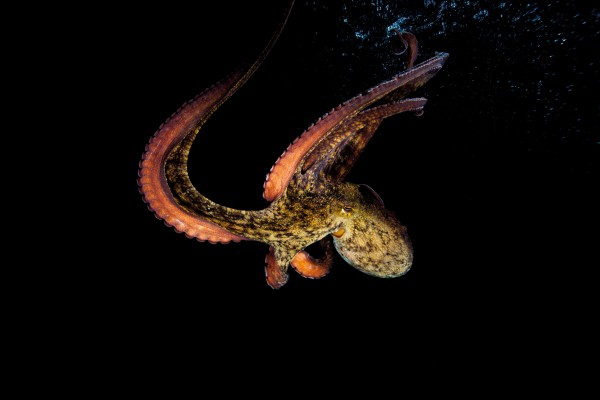
Inside the many minds of the octopus.
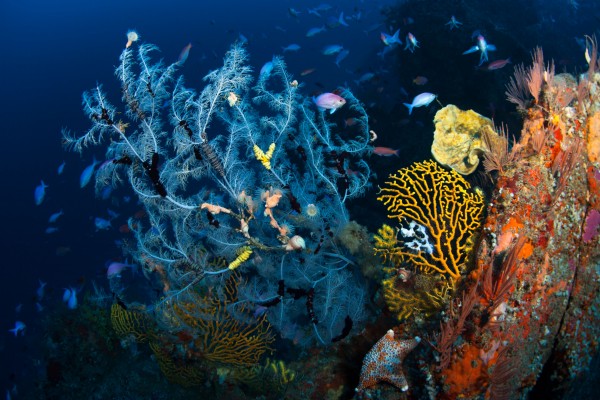
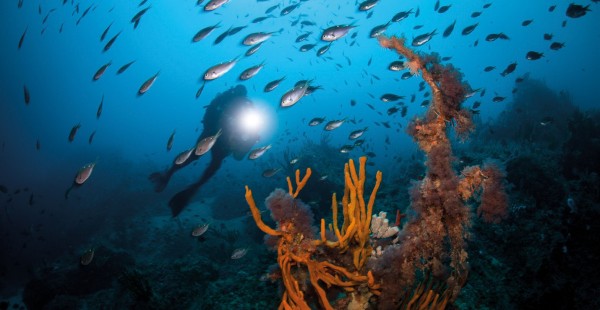
“The sea has all our dreams,” writes Keri Hulme. For some, those dreams are of strange and wonderful creatures, such as you might find 70 metres below the surface at the Poor Knights Islands. For others, the dreams are of the ocean’s untapped riches: minerals, fossil fuels, sea creatures, energy. Which dreams will prevail in 21st-century Aotearoa?
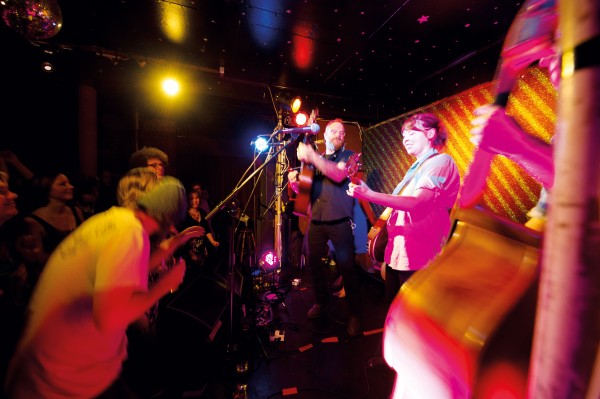
Country music resonated in 1940s rural New Zealand, and its legacy burns here still, no more so than at the annual Gold Guitar Awards in Gore.
This month we revisit Te Hikoi o Te Kiri—previously covered here—as Te Araroa Trust (TAT) has recently opened a new section of track that allows walkers to proceed all the way down the western ridge of Mt Tamahunga to Matakana Valley Rd, completing the route planned many years ago. Only an hour from Auckland, this walk can be rocky and muddy underfoot in parts and offers a reasonably intrepid adventure and nice “next step” for people more used to urban walking. From the end of Rodney Rd, the first kilometre is across farmland with great views north to Mangawhai and south across the Mahurangi area. Crossing a gully—watch the footing—the track heads into the treeline where the ambience instantly changes as the beauty of regenerating native bush takes over. Near the summit, a climb up a large rock can be testing but the reward is the view north from on top. A helicopter pad and trig mark the summit of Mt Tamahunga (437m) and from there on the underfoot conditions get quite rocky as the track leads directly under a weather radar station before improving as the gentle descent begins. A ‘grassy knoll’ offers more views south across Omaha and Tawharanui towards Kawau Island, but for the most part it’s the splendour of the trees that will treat you on the way down. Towards the bottom two stiles are crossed before a narrow and slippery final section (across private land which TAT is very grateful to have access through) provides a tricky finish to the walk. A final 200m ascent delivers you to a stile onto Matakana Valley Rd. It’s south from there to Govan Wilson Rd where the Te Araroa route continues towards the Dome Valley, and Matakana village is 6km south, where cafes, bars and ice-cream await weary walkers. If day-walking, it will take some organisation to leave a car at one end and drive around to the start. Note that room to park is very limited at the Matakana Valley Rd end—there is a small lay-by opposite the Govan Wilson Rd intersection and another slightly further south. Please do not park in any driveways or on the roadside as the road can be busy with quarry traffic—do take care.
As the climate warms, methane is liberated in strange and unusual ways.
My grandmother used to say our family had salty blood, as if to explain our magnetic attraction to the sea. But it appears that’s true of everyone. Human blood plasma bears salts of sodium, magnesium, potassium and other electrolytes in a strikingly similar proportion to seawater. (I’ve read that navy surgeons during World War II used diluted seawater for emergency transfusions when supplies of plasma were unavailable.) So there’s a little bit of the sea in all of us—we’re made of the same stuff. However, the connection is richer than that for New Zealanders. Oceans encircle our archipelago and comprise some 95 per cent of our political estate—we are an overwhelmingly oceanic nation within the Earth’s greatest ocean. For New Zealanders, the seas are a playground, a habitat, and an asset. In economic terms they represent a barrier to trade, a moat to protect our industries from destructive pests, and more recently, a realm to harvest—fish, shellfish, oil, gas, metals and minerals. As a result it has become popular economic policy for governments to place monetary values on these resources before they have been exploited to underscore the commercial opportunities that abound in what is grandly called the “marine estate”. Quantifying living and mineral resources in this way attracts commercial interests—domestic and foreign—to license tracts of territory to drill, trawl or mine. Provided it’s done responsibly, does no harm, and returns adequate compensation to New Zealand (points that can be disputed under present arrangements) it’s hard to mount an ideological objection. But shouldn’t our natural systems have some intrinsic value in an undisturbed state? Pioneer diver and biologist Wade Doak makes the case for marine reserves as “wet libraries”, underwater reference sections for the structure and function of marine life. Other advocates use economic arguments, pointing to the fact that no-take reserves benefit those fishing around them as target species ‘spill over’ reserve boundaries, and larvae drift with currents—what biologist and marine reserve advocate Bill Ballantine refers to as the ‘thistledown effect’. Just as regulating a financial market can benefit all traders; limiting fishing can improve fishery yields. But this logic may not go far enough. Can’t the ocean realm be valued for what it is, rather than what can be extracted from it? We seek the sea as a salve, as solace, as sustenance—something brought to mind in every email from New Zealand Geographic’s Editor at Large, Kennedy Warne, who wrote the special feature in this issue. His email footer quotes the words of Danish author Isak Dinesen (Karen Blixen), “The cure for anything is salt water—sweat, tears or the sea.” Now, it seems, we need a cure for the sea itself.
The Waitangi Tribunal has just released the first part of its findings on the treaty claims of Ngapuhi and other iwi from the north. In a pipi shell, the tribunal has found that those tribes did not cede sovereignty when they signed Te Tiriti in February 1840.
Observing oystercatchers and remembering a life aquatic.
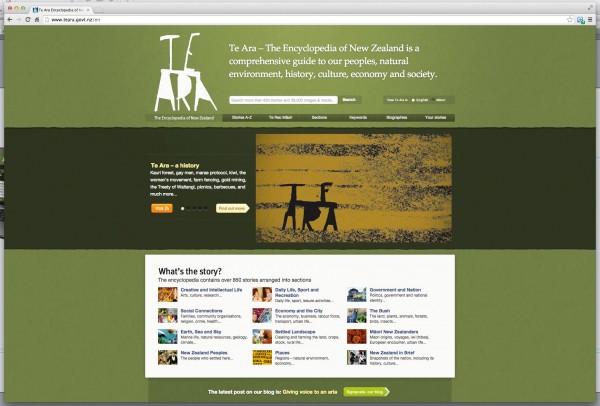
How to prevent New Zealand’s national encyclopaedia from getting out of date as fast as it’s printed? Put it on the internet.
Loading..

3
$1 trial for two weeks, thereafter $8.50 every two months, cancel any time
Already a subscriber? Sign in
Signed in as . Sign out

Ask your librarian to subscribe to this service next year. Alternatively, use a home network and buy a digital subscription—just $1/week...

Subscribe to our free newsletter for news and prizes