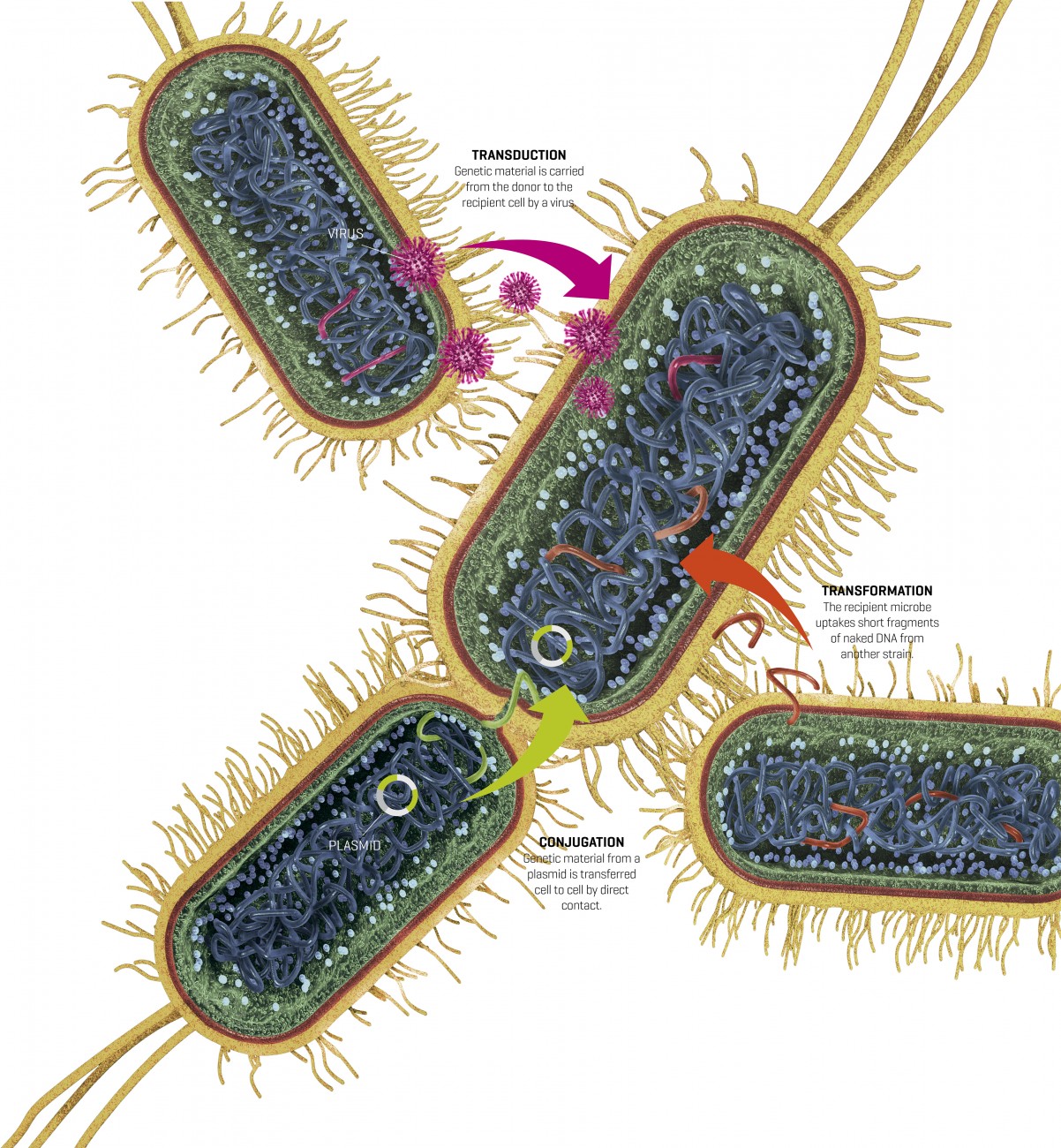
Horizontal gene transfer
By taking a lateral approach, brainless blobs of plasma created the natural world.


By taking a lateral approach, brainless blobs of plasma created the natural world.
Predictions of the West’s decline are nothing new. Mindful of how the mighty Roman Empire had imploded, observers on both sides of the Atlantic have long watched for cracks in their own cultural enterprise. Oswald Spengler’s The Decline of the West, first published in 1918 was, however, the first book to systematically investigate why civilisations collapsed. More recently, in Guns, Germs and Steel, Jared Diamond explained the historical dominance of Eurasia largely in terms of ecology. For Diamond, the West owed its rise not to inherent superiority but to the distribution of plants and animals and other accidents of nature. Diamond was followed by Ian Morris, whose magisterial Why the West Rules—For Now, elevated the importance of geography. ‘Chaps’ are essentially the same the world over, argued Morris. Which just leaves us with ‘maps’ to make sense of history. Jim Penman will have none of it. His new book, Biohistory: Decline and Fall of the West, proposes a new key to understanding the rise and fall of civilisations: temperament. The notion that economic and political systems reflect the prevailing temperament is not original; what Biohistory introduces is the idea that different temperaments have a biological basis—one that changes over time, defining our culture and determining our identity. “Biohistory takes issue with the idea that differences between peoples can be explained by genetics, such as the idea that Europeans and East Asians are more intelligent,” says Penman. Genetically, humans are very similar, he says. What makes the difference is the way in which genes are switched on or off by the environment. “These epigenetic differences can make people more or less hard-working, rigidly dogmatic or open to change, peaceful or violent, timid or forceful, honest or corrupt, accepting or rejecting of brutal authority, and much more.” Drawing on studies of animals, including baboons and gibbons, Biohistory shows that, among other things, food restriction lowers testosterone, reducing sociability and improving learning and the drive to explore. Importantly, it also makes people capable of impersonal loyalties, and this is profoundly important—large societies will be more stable if people are loyal to institutions (such as banks) and distant rulers they have no kinship ties to. Successful societies are those that are able to mimic the effects of food restriction, even in times of abundance, says Penman. And one of the most effective tools for doing that is religion, with its emphasis on chastity, fasting and discipline. “Scientists such as Richard Dawkins preach that religion is the outdated superstition of another age, without value or purpose in civilised times. But a better understanding of the science indicates that religion is the essential driving force behind human civilisation, which would not be possible without it,” says Penman. “Religious teachings not only help people to cooperate better in large groups, they create the very temperament that is needed if civilisation is to flourish. That is why the decline of religion is a danger sign for any society.” But food shortage alone is not the full story. Dangerous environments in which food supplies are highly variable trigger further adaptive behaviour that proves useful to civilisation—chief among them aggression and a high degree of organisation. Penman claims that biohistory is the first explanation for the rise and fall of civilisations able to be scientifically tested. However, the twists and turns needed to fit theory to historical events is not always convincing. According to Penman, World War I was largely caused by a surge of testosterone across a highly patriarchal Europe, combined with the transmission of anxiety from mothers to sons. In support of this, he quotes Ernst Junger, whose Storm of Steel famously elevated war into a mystical experience. Buy why Junger and not fellow German Erich Maria Remarque’s harrowing All Quiet on the Western Front? Or any of the English war poets… all of whom have a contrary take on the meaning of war. World War II produced another generation of “stressed infants” growing up in peace time, says Penman, and he is obliged to find their aggression both in the Vietnam War and in the “massive and often aggressive student protests” (calling them largely peaceful anti-war protests would not serve his purpose). Similarly, he views Tiananmen Square largely as “a further surge of student unrest”, rather than as an impulse toward democracy. Economic and religious decline, a growing gap between rich and poor, disillusionment with politics, increasing obesity and infertility, and a loss of national identity all suggest to Penman that the West is in terminal collapse. The remedy? Perhaps, says Penman, individuals could take a “supplement” to reactivate the triggers of civilisation that no longer work. There is no doubting Penman’s seriousness of purpose, and Biohistory does offer valuable insights into human behaviour. But attempts to present it as a unified field theory of history inevitably weaken the argument. And the appeal to eugenics will, for some, make it a bitter pill to swallow.
“Mountaineers climb in pursuit of relaxation, emotional and spiritual refreshment, and the sense of achievement gained from reaching a summit. Though the activity of mountaineering is not always pleasant and is often dangerous, mountaineers climb for pleasure and to achieve self-realisation. These are different satisfactions from those sought by people who enter the mountains to find a new pass, discover gold, or admire scenery.”
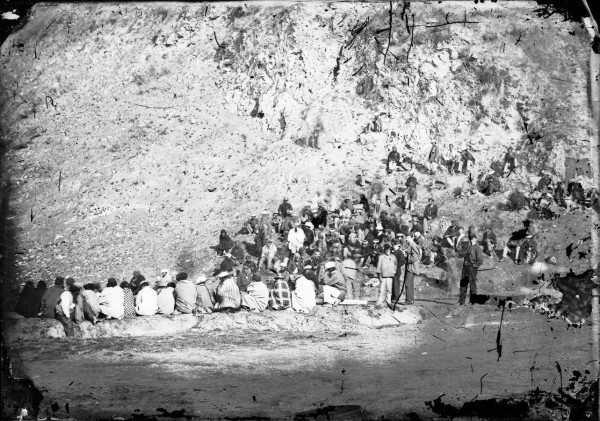
Te Kooti lands a new religion.
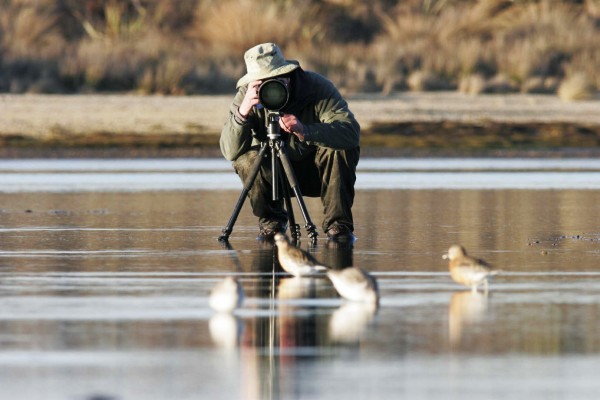
Craig McKenzie’s hobby involves spending a lot of time motionless.
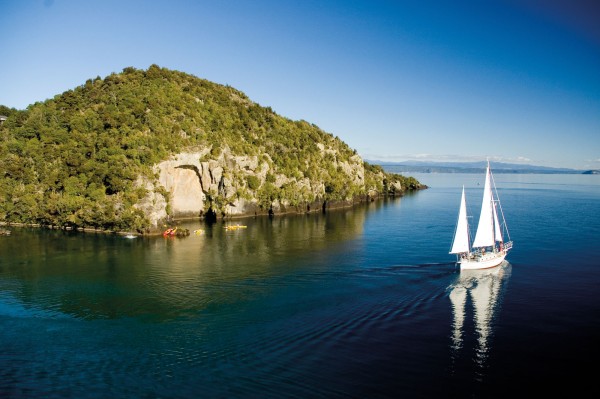
A turbulent past, an exhilarating future.
Three 21st-century trampers shadow three 19th-century prospectors in the hope of striking it rich.
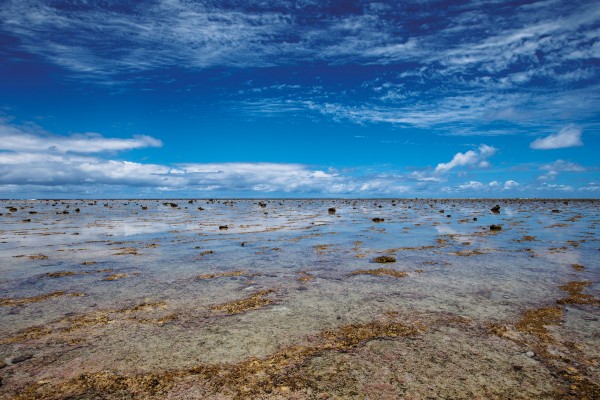
The distant and remote Minerva Reefs—the closest coral atolls to New Zealand—have been the subject of political intrigue, a failed libertarian state and a naval showdown. Scientists believe they may also be the origin of some tropical species reaching New Zealand’s northern waters.
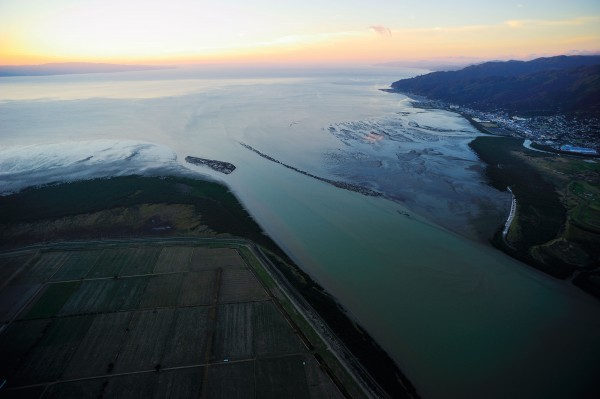
For 200 years the Hauraki Plains and Firth of Thames have been bent to the commercial interests of man. We have extracted timber, gold, peat, fish and shellfish, then tipped in millions of tonnes of sediment as our thanks. We have drained the marsh and farmed it, then intensively farmed it, returning the run-off of agriculture. Today, the region is a case study for the carrying capacity of land and sea. How resilient are our natural systems, and how much development is too much?
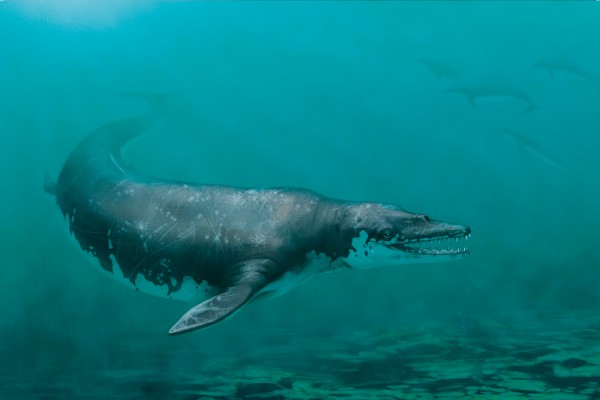
The North Otago limestone country holds one of the world’s most important fossil cetacean records, a coherent story of how whales and dolphins evolved in the Southern Ocean. It’s a story that one small rural community has embraced as its own.
The Rimutaka Cycle Trail follows riverside cycle paths, a historic rail trail, quiet country roads and a coastal route used by drovers in the 1840s. From Wellington Harbour, the trail circumnavigates the Rimutaka Range—a mountainous forest park dividing the lower North Island into the Wellington and Wairarapa regions. The ride starts at the Petone foreshore, incorporating the Hutt River Trail, a very easy cycle path that runs beside the Hutt River. Both the beach and the river are popular for swimming in summer. The second stage of the ride crosses the top of the Rimutaka Range via a railway formation with tunnels and bridges that were built in the pioneering days when rail was king. The route then hugs the range and passes the expansive Lake Wairarapa en route to Palliser Bay. From Palliser Bay, the final leg follows a rocky and wild coastline past Windy Point and Turakirae Head to one of the country’s older farms, Orongorongo Station. Elephantine rocks are dotted throughout a landscape of low coastal vegetation and, on a fine day, the ocean seems an impossibly rich shade of blue. A recommended option is to branch off to Martinborough, the region’s wine-growing capital, for a night or two.
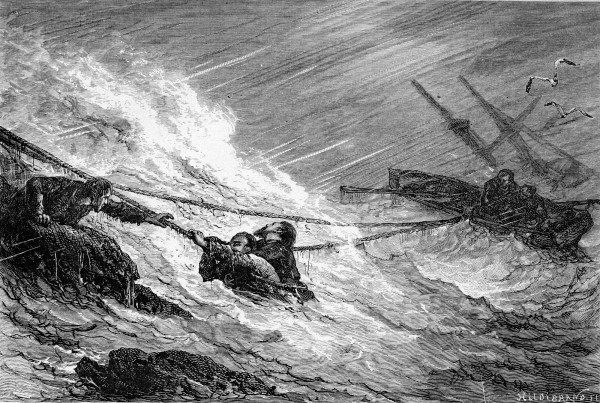
How New Zealand’s most dangerous islands revolutionised our weather forecasting.
Not long ago, farms were considered the lifeblood of communities, crucial suppliers of local produce as much as they were businesses that supported the local economy. More recently, however, farmers have been cast as industrial-scale polluters and corporate profiteers. What on Earth went wrong? The change in public attitudes to farming has been a gradual erosion of trust that can be traced back to October 16, 2001, the day that dairy went corporate. “New Zealand now produces enough milk for 45 million people, more than 90 per cent of it is going to people abroad,” says Daniel Tisch, a doctoral candidate at University of Auckland’s School of Business. “So the stakeholders are no longer just the local communities, but international markets too.” Tisch has been interviewing farmers around the country to understand how they make sense of the dramatic changes shaping their businesses. “People in local communities used to understand where milk came from, it was a health product distributed in schools,” said one Northland farmer interviewed by Tisch. “We were promoting the goodness of milk, but Fonterra dropped the ball. Young people don’t know where their food comes from now, they just see an industry that pollutes and sends milk overseas.” New Zealand society has benefited from the international trade of dairy products, but it’s changed the structure of rural communities—dairy farms are being purchased by investors and run by sharemilkers which has a social impact say Barry and Kate Came, long-time dairy farmers interviewed by Warren Judd in this issue. “Most of those who work on farms are now transitory workers who’ll only be there for a year, two at the most. They have no roots in or commitment to the local community,” says Kate. It’s changed the public conversation too. The scrutiny applied to environmental compliance has been alienating and distressing for farmers, as has been public criticism of run-off and effluent entering rivers and streams. Farmers are also being encouraged to expand and intensify by Fonterra and the government, which is betting the farm on a doubling of agricultural production by 2025. “There’s a lot of uncertainty out there,” says Tisch. “And a bit of shame. Farmers don’t know how to address the problems and they feel like they’ve been broadsided. It’s their land, they want to do what they want with it, but they’re afraid to say something in public that will implicate themselves or the industry.” The parties have become opponents and the conversation has stalled, despite shared values. “Farmers care deeply about the environment, that’s come through very strongly in my research,” says Tisch. “But the corporate conversation will only be changed when the situation becomes intolerable to a larger and larger number of people; when enough people no longer feel safe swimming in their rivers, and farmers are forced to reflect that outlook in the executives they vote to the board.” The challenge for farmers is to balance their dual responsibility to an international customer and a local community. That message need not be conflicted—the international image of New Zealand commodities benefits enormously from the ‘clean, green’ story. If that image is eroded, the value of the commodity will suffer, if it’s enhanced, everyone benefits. Rather than facing off as opponents, it’s time to re-connect industry and community, something that made its first tentative steps during the Living Water public open days in April—a new partnership between Fonterra and the Department of Conservation, and the opportunity for a new conversation to begin.
I'm not sure which announcement surprised me more: the leaders of the G7 industrial nations declaring their intent to phase out fossil fuel use by the end of the century or executives of six European oil companies calling for a carbon tax. Angela Merkel was promptly called a climate hero for daring to use the D-word—decarbonise—in her summation of the G7 summit in Bavaria. Leaders also committed to limiting global temperature rise to a maximum of two degrees over pre-industrial levels. Even tar-loving Canada signed on.
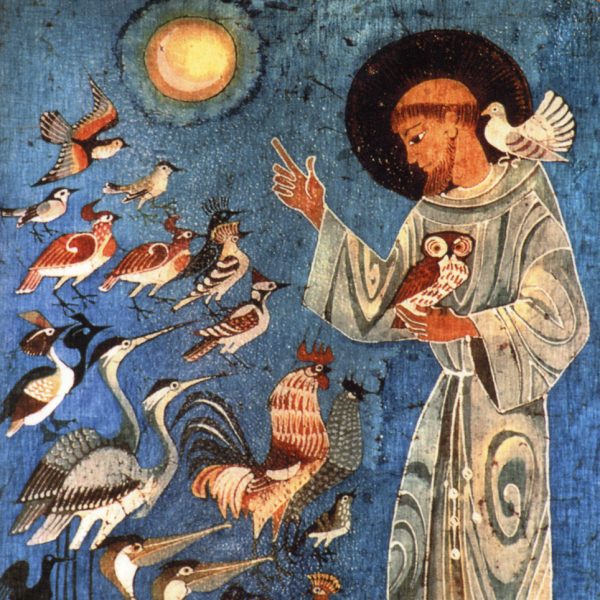
At 40,000 words, the pope's much awaited encyclical covering climate change, the environment and the poor (though also, in fact, touching on life, the universe and pretty much everything from urban architecture to social media) is not a light bedtime read. "Laudato Si'"—literally "be praised," a repeating phrase from the celebrated Canticle of the Creatures, a song by Pope Francis's namesake saint—landed with a thump right at the start of Matariki, signalling, perhaps, fresh beginnings in the church's environmental thinking.
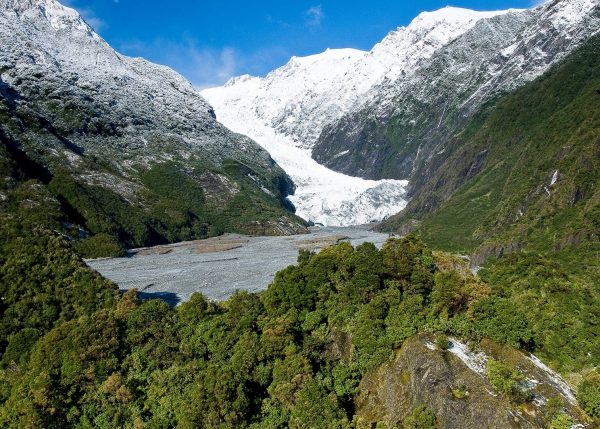
Twenty years ago you could walk to the snout of Franz Josef Glacier, clamber over some rocks and find yourself standing on a river of ice. Not anymore. The closest you can get to the terminus of Franz Josef—or its neighbour, Fox—is a viewing platform a couple of hundred metres away. If you want to stand on the glacier you need to take a helicopter flight.The reason? Global warming, pretty obviously. The glaciers have retreated dramatically in recent years, and are continuing to shrink back into the valleys they carved. Disappearing glaciers are one of the more obvious signs of climate change in New Zealand. An increasing incidence of weather extremes, such as drought, is another. Are New Zealanders on board with the new climate reality? Are we taking action to mitigate the country's greenhouse gas emissions?
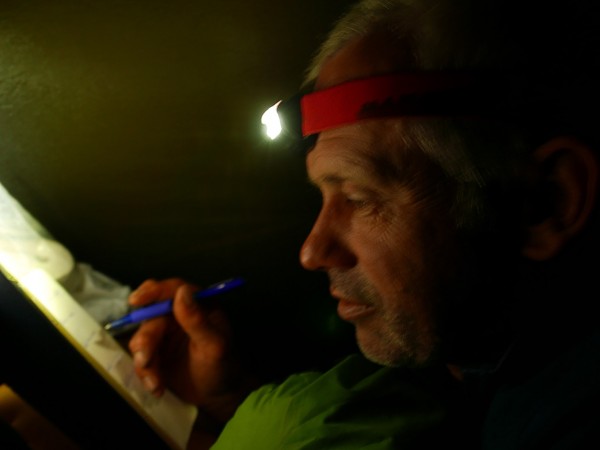
When you're hemmed in by rain for three days, camped in soggy forest at the junction of two rivers in South Westland (see "Back for the Gold" in the latest issue of New Zealand Geographic) there is plenty of time to talk. Snippets from an interview I recorded with Mick Abbott—head of the School of Landscape Architecture at Lincoln University, a member of the Canterbury Aoraki Conservation Board, and co-founder with his wife, Carli Richter, of Kiwi Ranger, a family environmental education programme—appear in the story. Here are some longer excerpts from our conversation, beginning with recollections of Abbott's epic solo traverse of the South Island, which he made in 1988/89. How did that journey come about, I asked him . . .
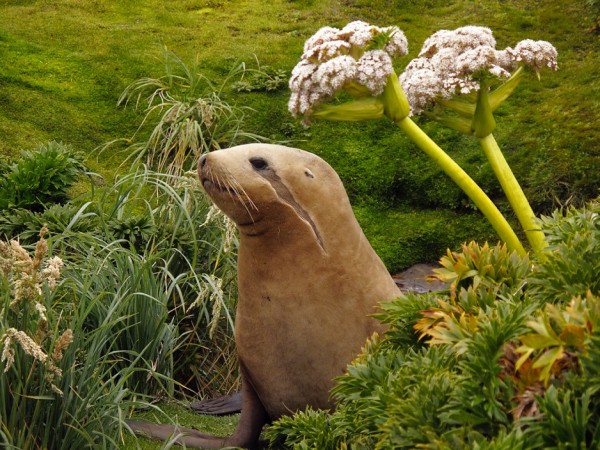
Earlier this week, in its latest update to the Red List of Threatened Species, the IUCN (International Union for the Conservation of Nature) downgraded the conservation status of the New Zealand sea lion from vulnerable to endangered. This is bad news, and reflects a failure of government agencies responsible for sea lion conservation and management to adequately safeguard this taonga endemic species from the negative impacts it faces.
Late last year, I helped to catch baby lemon sharks in St Joseph atoll, a remote location in the Republic of Seychelles. I held their smooth, sandpapery bodies while a young Swiss researcher snipped a speck of fin for DNA analysis and injected a tiny tracking tag. As I released them into the bathwater-warm lagoon and watched them swim sinuously away, I felt again the surge of respect I have for these stately, stealthy creatures.
Selfies in front of Red Mountain or solitude for the wilderness explorer—which vision should prevail?
Loading..

3
$1 trial for two weeks, thereafter $8.50 every two months, cancel any time
Already a subscriber? Sign in
Signed in as . Sign out

Ask your librarian to subscribe to this service next year. Alternatively, use a home network and buy a digital subscription—just $1/week...

Subscribe to our free newsletter for news and prizes