Out of his tree
Steven Pearce goes out on a limb for a good picture.


Steven Pearce goes out on a limb for a good picture.
New Zealand’s pioneer of marine reserves will be missed.
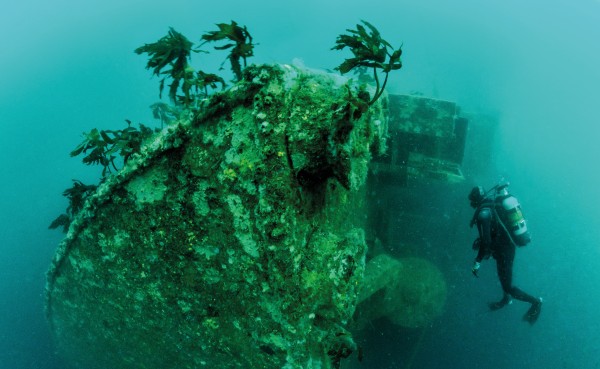
Four years on from New Zealand’s worst maritime environmental disaster, salvage and clean-up projects around the MV Rena near their end. The wreck demanded one of the world’s most complex and expensive recovery operations, but the hulk of the container ship, and some of its cargo, still lingers on Astrolabe Reef/Ōtāiti. How much more can human intervention correct this mistake—and how much can be left to nature to set right?
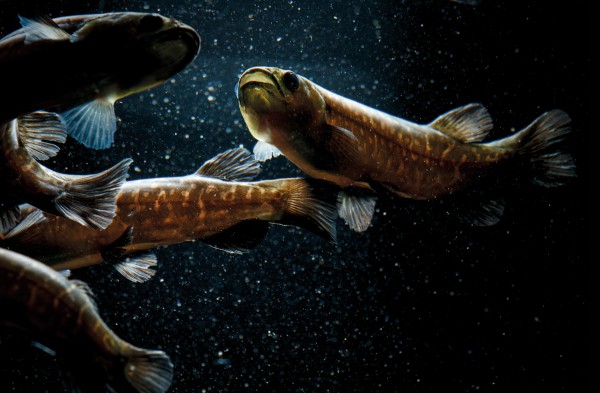
New Zealanders love their native galaxiids—sandwiched between two pieces of white bread for the most part. What most people don’t realise is that whitebait are actually the juvenile of a spectacular family of native fish, a group of species as unique as our kiwi, kakapō and kereru, only far less visible. And just as we are getting to know our galaxiids, we are driving them towards extinction.
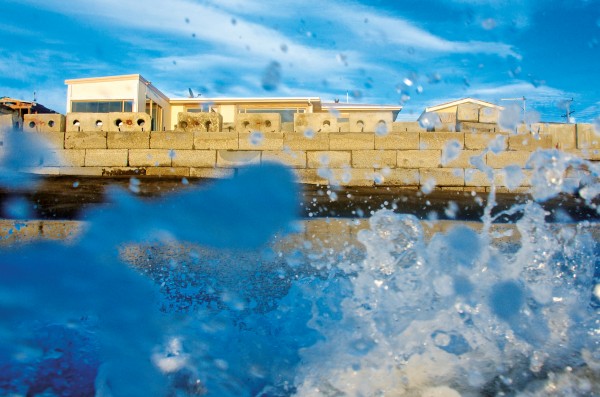
With predicted increases in sea level of a metre or more by the end of this century, present-day problems of coastal erosion, flooding and salt-water intrusion into groundwater are going to get much worse. As world leaders gather in Paris to seek a political solution to climate change, it’s timely to ask how we in New Zealand are responding to the challenge of rising seas.
New Zealand's highest mountain, Aoraki/Mount Cook, forms the cornerstone of the country’s longest cycle trail. Starting from the Southern Alps, this 260-kilometre trail descends 540 metres through the Mackenzie Basin and down the Waitaki Valley to Oamaru and the Pacific Ocean. The Alps 2 Ocean (A2O) trail has eight distinct sections, which can be ridden individually, or combined to create one of the most memorable cycling holidays of your life. The first half from Aoraki/Mount Cook to Omarama has spectacular mountain scenery, and three sections of fantastic off-road trail. The trail sections around the base of Lake Pukaki, the base of Lake Ohau and across the Quailburn are absolutely world class. The cycling can be complemented with a trip onto Tasman Glacier, a swim in Loch Cameron, or a glider flight at Omarama. The second half of the trail also has some great bits of cycle path, mixed in with quite a lot of road riding past lakes Benmore, Aviemore and Waitaki. It then enters the fascinating Vanished World, with Elephant Rocks and fossilised creatures from another epoch such as giant penguins and vicious-looking dolphins. The strange landscapes have been used for a few movie sets, including The Chronicles of Narnia movies. Finally, the trail enters Oamaru on a disused railway line and passes through the Victorian Precinct before suddenly emerging at a long pier on the edge of the Pacific Ocean. If you don’t have time to do the whole trail, cherry-pick the sections from Lake Pukaki to Lake Ohau and over the Quailburn to Omarama. They have the best scenery and the least traffic.
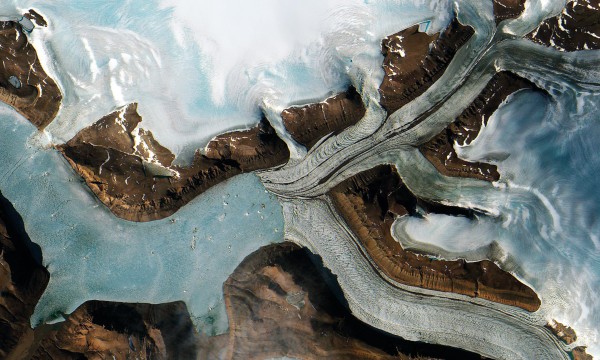
As ice sheets melt, magma flows.
In a story full of surprises, the most staggering notion in Kennedy Warne’s rising seas feature is that all the world could stop burning fossil fuels today, and it wouldn’t make a shred of difference to sea levels for at least 100 years. The chemical changes that we have wrought in our atmosphere and seas since the Industrial Revolution have set our course, and the consequences are baked in. We are, as Warne puts it, “slouching towards Atlantis”. Other elements of climate change can be mitigated—even reversed—in the medium term, but the seas will keep rising. We may keep carbon dioxide under 400 parts per million. We may keep warming to a figure around the average of 2o°C warming to avoid the worst effects of a high-energy atmosphere, but our coasts will erode, seas will over-top barriers that have withheld the waves for generations, and saltwater will leach into our groundwater and bubble up through low-lying areas as surely as the Earth turns about the Sun. In his book Climate Change and the Coast, Massey University professor Bruce Glavovic suggests that our coast is the “frontline of the sustainability struggle in the Anthropocene, and the primary arena in which humanity must learn to adapt climate change”.High seas and Violent weather humanity will survive. In the fullness of geological time, these changes will define the human epoch to the same degree as the social forces of population and consumption. Critics of the public discussion around climate change have noted the themes of catastrophism in statements such as this. It’s a fair observation, but the scientific support is compelling. The International Energy Agency has concluded that meeting the 2o°C target will require leaving two- thirds of the Earth’s known reserves of oil, gas, and coal in the ground. That would require most countries to write-down the $40 trillion value of those fossil fuels, and switch, almost entirely, to renewable and carbon-neutral fuels for energy and transport within the next 30 years. Yet we’re burning more fossil fuels than ever, and increasing the rate at which we’re burning them. This, and the long-standing political gridlock, led a team of scientists from the respected Potsdam Institute for Climate Impact Research to model our current trajectory, one in which we burn all available fossil fuels. The results, published in the journal Science Advances, were neatly summarised by the paper’s lead author Ricarda Winkelmann, “If we burn it all, we melt it all.” And if we melt it all—the Arctic ice cap (already well on its way), the Greenland ice sheet, the east and west Antarctic ice sheets—the sea level will increase some 70 metres. That would inundate all of Auckland, cutting it off entirely from Northland and swamping the city’s isthmus to a depth of more than 50 metres. The sea would surge up the Hauraki Plains and allow one to sail a yacht inland as far as Te Kuiti. Carterton would be a seaside town, Palmerston North and Hamilton sunk. Wellington would be underwater, Miramar awash, the Hutt Valley a long, deep harbour. You could safely navigate a container ship across the Canterbury Plains inside of Banks Peninsula, and half of Southland (including all of Invercargill) would join an expanded Foveaux Strait. This result didn’t particularly surprise the scientists—after all, Antarctica was once covered in lush rainforest—but what did alarm them was the timeframe. Half of this melting could happen within 1000 years, on the order of a foot of sea level rise per decade; about ten times the rate at which it is rising now. This is not catastrophism, but a consequence of our current consumption. Switching to eco lightbulbs isn’t going to stop the juggernaut, and the problem has now become too large for the consumer to fathom, too complex for one country to solve. We are, as a species, trapped in the headlights of the oncoming train. Do we pretend it’s someone else’s fault? Do we hope that the train might just be a figment of scientific imagination, or look for a ‘technological solution’ that might stop it in its tracks? Do we run, or just watch in awe, and brace for impact? Do we demand political action, or wait for failure?
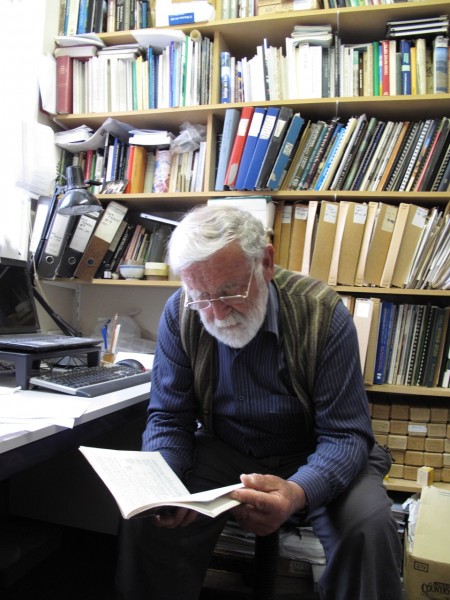
The latest issue of New Zealand Geographic features a short profile of eminent botanist, tussock grasslands expert and conservationist Sir Alan Mark. It was written from a telephone interview I conducted with him a few days before the magazine went to print. Space did not permit me to include some of the items of conversation. But with this blog I get to take another nibble of the tussock, so to speak.
The world has lost a great advocate for the marine environment. On Sunday, Bill Ballantine, recognised as the father of marine reserves in this country and a pioneer in global marine conservation, passed away, aged 78.
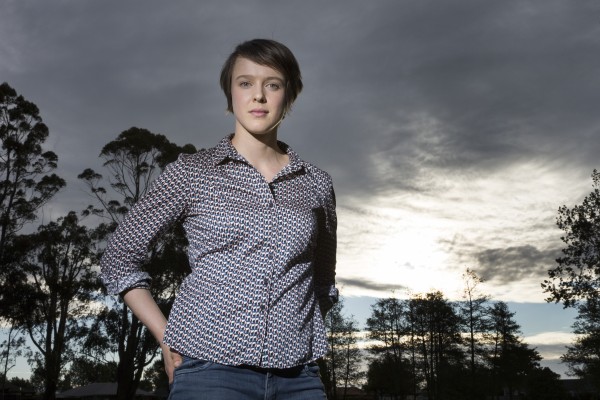
A Waikato law student is suing the government over its climate change policy, claiming its greenhouse gas emissions targets were arrived at illegally, and that the low emissions reduction pledge it will make in the upcoming UN climate conference in Paris in December is “unreasonable and irrational”.
Are we selling future generations down the river?
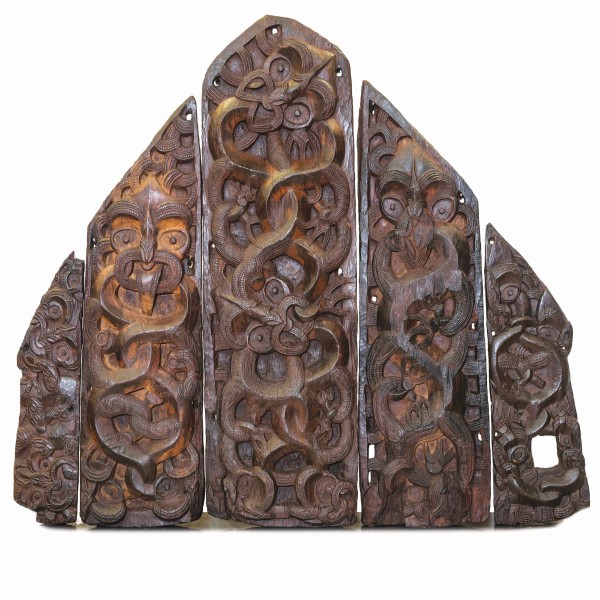
After a 40-year saga involving art theft, kidnapping, ransom and negotiation, a unique set of five carved panels have been returned to a Taranaki iwi.
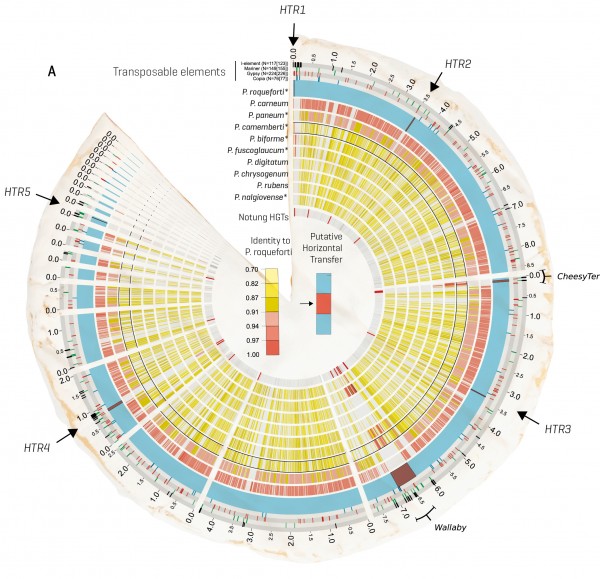
Cheese moulds have collaborated genetically to evolve, but now there’s no way back.
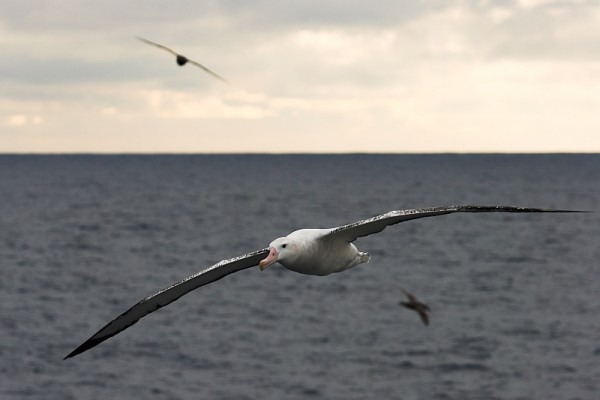
The Tasman is no place to linger for seabirds.
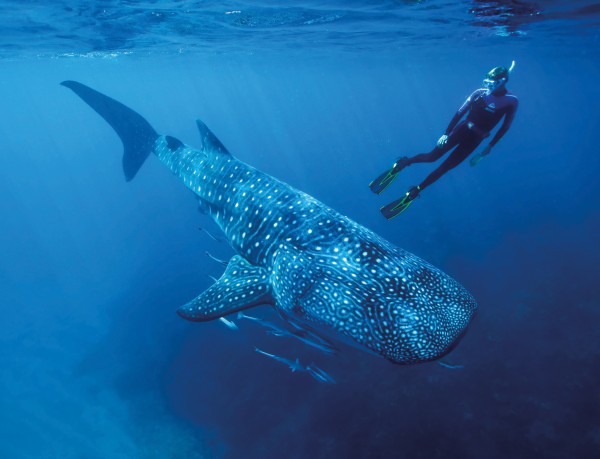
Whale sharks save energy by sinking slowly.
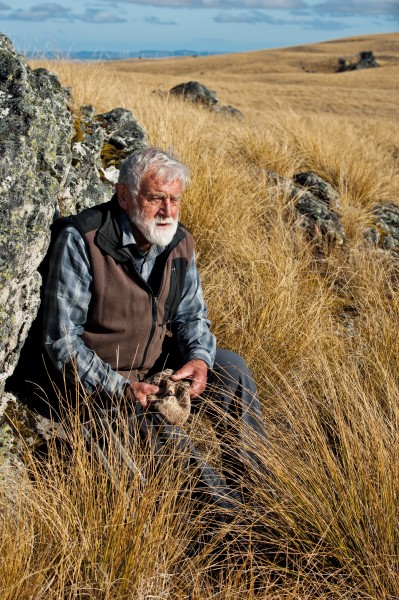
Once a botanist, always a botanist, for this staunch conservation advocate.
Are we in for another Silent Spring?
David Cameron's visit to Jamaica in September—the first by a British prime minister for 14 years—was intended, as he put it, to “reinvigorate” ties between the two countries. However, almost immediately on arrival, he was confronted with calls for slavery reparations. It remains a contentious issue in the Caribbean, where 98 percent of the population are said to be descended from victims of the slave trade. Cameron declined to apologise to campaigners or promise financial amends, preferring, as he said, to “move on from this painful legacy”. He did, though, remind his listeners of Britain’s role in wiping the scourge of slavery from the face of the Earth. That has been the prevailing attitude towards slavery in colonial New Zealand; that thanks to the tireless work of Protestant missionaries, supported by enlightened colonial administrators, Māori were gradually weaned off the barbaric practice of slavery and raised to something approaching a state of civilisation. But were they? And if so, was it thanks to the evangelical labours of missionaries? At a more fundamental level, is it even useful to see Māori social and economic organisation through the lens of the transatlantic slave trade? Historian Hazel Petrie is inclined to answer all three questions in the nega-tive. Her reasoning is set out in Outcasts of the Gods? The Struggle over Slavery in Māori New Zealand. In 1836, the missionary William Yate told a House of Commons select committee that about half of the Māori population in northern New Zealand were slaves, but that in the South Island it was more like one in 10. Samuel Hinds, who had never set foot in the country, told an 1838 select committee that by his estimate, 90 per cent of the population were enslaved. Whatever the true figures, the numbers alone are misleading, argues Petrie. The intertribal warfare of the early 19th century was transformed by the musket, and to buy these, tribes grew crops and produced trade goods in quantities that required the labour of captives. The possession of muskets, in turn, enabled capture on an unprecedented scale. Something of an aber- ration, this social dynamic was at its height in the 1820s when missionaries were becoming active and European mariners were making increasingly frequent visits. Their observa- tions, misunderstandings and calculated manipulations created a slave narrative that both simplified and distorted the Māori reality. In another quirk of timing, the international trade that Māori had earlier exploited began to change soon after. The market for hemp, which was laboriously prepared from flax, was eclipsed by a trade in timber that required fewer workers. And the increasing use of metal tools in agriculture further reduced labour. As a consequence, and quite independently of the Christian message of salvation, many captives were set free, first by Ngāpuhi, then by Ngāi Tahu and others. Indeed, Petrie argues that war-fatigued Māori may have even seized on Christianity as an excuse to lay down their weapons. They certainly found creative ways to skirt their own cultural precepts when relationships with Pākehā were put at risk. Britain banned the slave trade in 1807 and in 1833 emancipated its enslaved people with a state-sponsored payout of an unprecedented size—ironically, the money went not to the slaves but to British slave owners, to compensate them for “loss of human property”. The abolitionists’ view of slavery in New Zealand was coloured by the African experience—and not merely figuratively. Northern hemisphere slavery was racially defined and its modus operandi was clearly defined, unrelenting and often brutal forced labour. As Petrie explains, slavery among Māori was far more nuanced. Some slaves were taken as wives by rangatira. Others, when offered release from servitude, pleaded tearfully to be allowed to remain where they were, such were the bonds of attachment to their new masters. Yet others, through loss of mana, feared that the old life was forever closed to them. And rangatira everywhere testified that it was beyond their powers to compel anyone to work for them. Even a definition was hard to come by. Depending on the situation, war captives, criminals and refugees all took on the semblance of slaves. There were tales of unspeakable cruelty; of a slave being fed to guests or killed as a proxy in a revenge attack. Some witnesses testified to the mild nature of Māori slavery. The Methodist missionary Thomas Buddle, for example, declared of war captives: “It was not reduced to system. No grinding labour was exacted. They were not treated with cruelty.” Nor were they shut out of the afterlife. According to Māori belief, when a person died, their left eye became a star. “The brightest stars may have been those of the great, but war captives still shone in the sky,” writes Petrie. “Albeit more dimly.” While Outcasts doesn’t claim to have the whole truth about slavery—“there will always be limits on our understanding of the past,” says Petrie—it is a welcome corrective for anyone still tempted to use a template cut from the transatlantic slave trade on early colonial New Zealand.
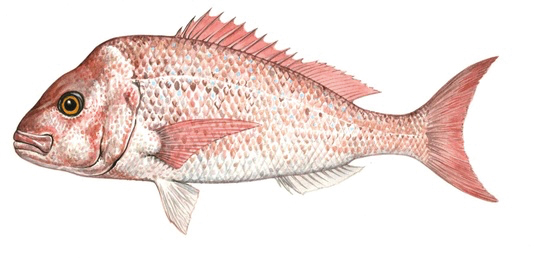
Te Papa Press' publicist Elizabeth Heritage must have been cursing the richness of New Zealand’s fish fauna as she carried the 2000- page, four-volume, 11-kilogram back-breaker The Fishes of New Zealand up the six flights of stairs leading to New Zealand Geographic’s Britomart loft. The four-volume title catalogues all 1262 of New Zealand’s described fish species—only the second descriptive catalogue of our fish fauna. The first was compiled by Frederick Hutton and James Hector in 1872 and ran to just 148 (mostly coastal) species. This fact alone indicates the extraordinary scientific effort conducted in Aotearoa’s aquatic realm over the intervening 143 years. And yet it’s not complete, and will probably never be complete. For the sake of practicality, the cut-off date for inclusion in the book was June 2013, and since then, at least 14 new species have been discovered, while more than half of our four million-square-kilometre Exclusive Economic Zone remains unsampled. So this is a mile- stone, a summary of our knowledge to date from the minds of 44 specialist authors and generations of scientists. Together they surveyed the fish spectrum, from writhing hagfish to dainty triplefins, basking sharks to blobfish, cut-throat eels to sunfish—a myriad of bizarre body plans and bewildering life cycles. They were hauled out of swamps and scooped into sampling sleds in the abyssal deep, and many of these first holotypes are under the scientific gaze still, preserved in formaldehyde or printed in one of these volumes, with diagrams, distribution maps and biological notes, for the next generation of scientists eager to explore the remaining half of our liquid realm.
Loading..

3
$1 trial for two weeks, thereafter $8.50 every two months, cancel any time
Already a subscriber? Sign in
Signed in as . Sign out

Ask your librarian to subscribe to this service next year. Alternatively, use a home network and buy a digital subscription—just $1/week...

Subscribe to our free newsletter for news and prizes