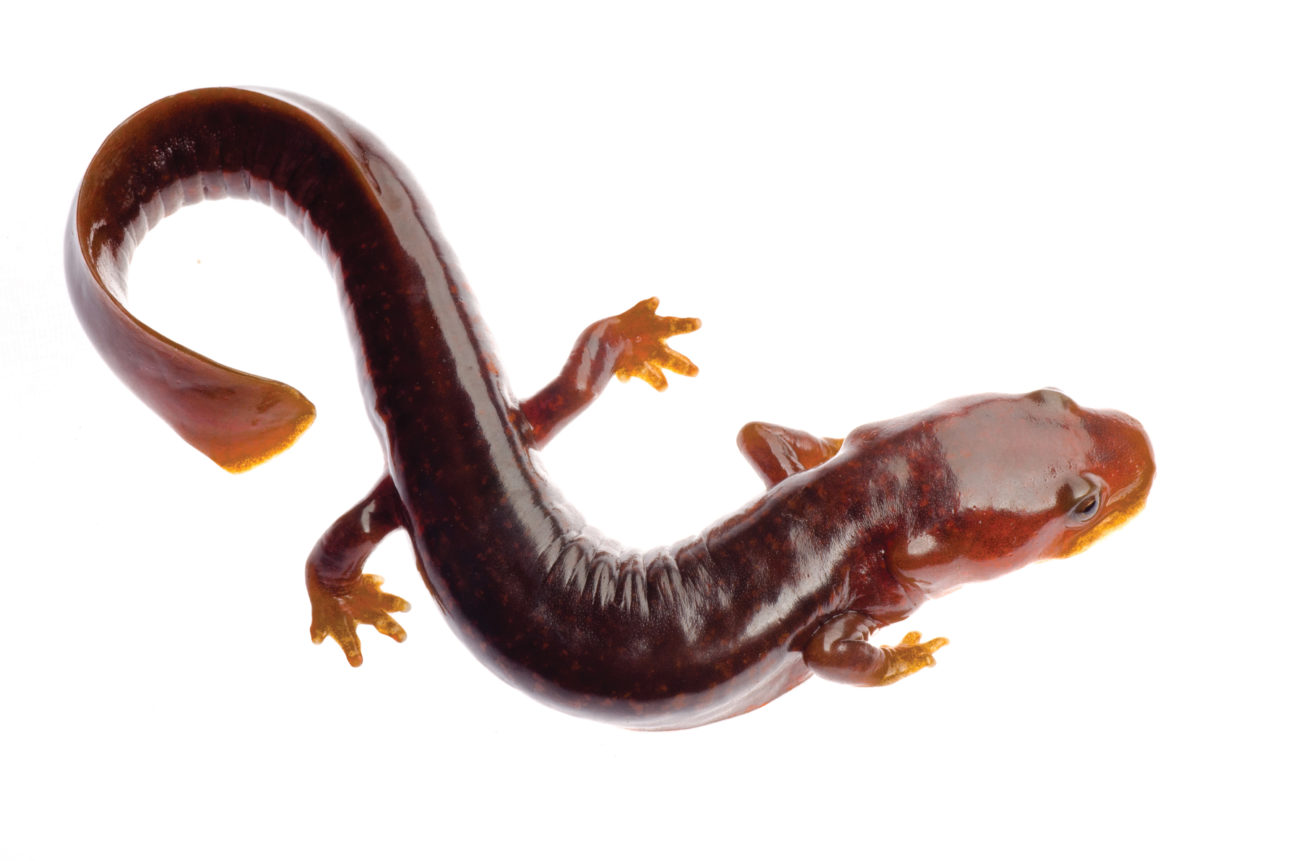
Lessons from salamanders
Can humans also regenerate damaged limbs?


Can humans also regenerate damaged limbs?
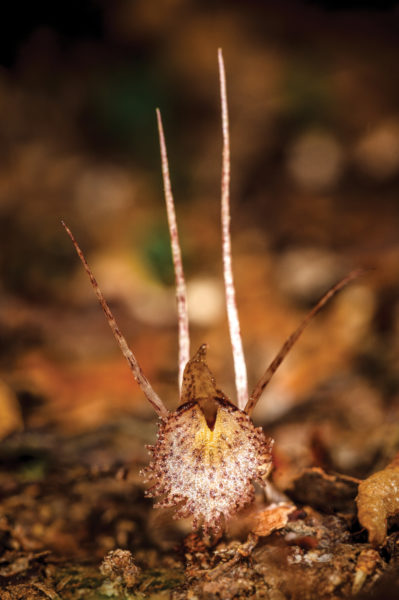
Carlos Lehnebach has been looking for a ghost orchid for ten years. In July, he found one.
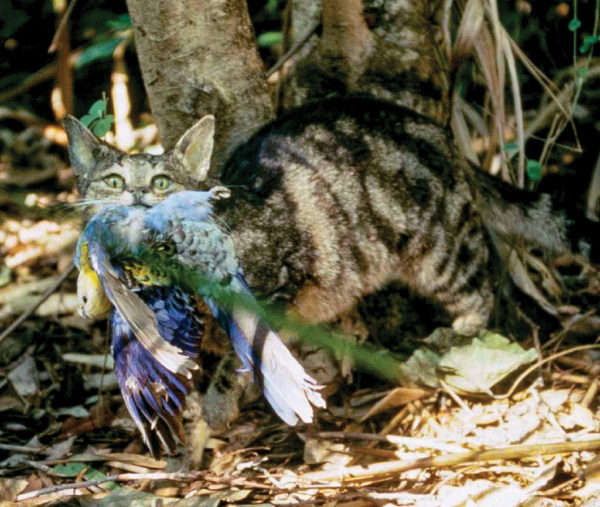
“Cats tamed humans about 4000 years ago, and since then they have cunningly used humans to provide food, comfort and safety, and to aid their dispersal across, and conquest of, most of the world,” write professors John Woinarski, Sarah Legge and Chris Dickman, who lead a major Australian study on the impact of cats on Australian wildlife. Cats are thought to have played a leading role in two-thirds of Australia’s mammal extinctions—that’s 20 species—over the last 200 years. Feral cats are greater killers than pet cats, because pets’ territory is limited by the number of other cats nearby. Cats also pose a threat on the microscopic level: a study by researchers at the University of Adelaide found that feral cats are effective at spreading the parasite Toxoplasma gondii. Kangaroos are particularly susceptible to it. In New Zealand, the parasite has been implicated in the deaths of endangered Hector’s and Māui dolphins, but the role it plays is not yet clear.
First, you’ll need some ancient seabed that has been buried in the Earth’s crust, cooked up deep down, and then spat out onto the surface. Macquarie University geoscientists studied how diamonds are formed. In experiments recreating the extreme pressures and temperatures found 200 kilometres underground, they demonstrated that seawater in sediment from the bottom of the ocean reacted in the right way to produce the balance of salts found in a diamond. Most diamonds found nearer the Earth’s surface are made this way. “There was a theory that the salts trapped inside diamonds came from marine seawater, but couldn’t be tested,” says lead author Michael Förster. “Our research showed that they came from marine sediment.”
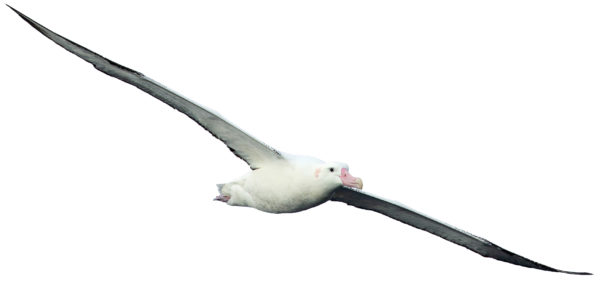
Albatrosses are good omens for sailors, but are not having too much luck themselves. The population of female wandering albatrosses that nests on Antipodes Island has plummeted by two-thirds in the past 14 years. This rapid decline has alarmed researchers Kath Walker and Graeme Elliott, who have been studying the species for two decades. There appear to be a number of causes, but the primary one is changing oceanic conditions that force the birds to forage in more northerly waters where the risk of being caught by commercial longliners is higher. Some years have seen female mortality rates as high as 20 per cent. “We think about polar bears with despair, but it’s a rather similar sort of situation here,” said Walker in an interview with RNZ. [caption id="attachment_344954" align="alignnone" width="1066"] Numbers of Antipodean albatrosses are declining on the Antipodes.[/caption] Antipodean albatrosses forage for squid, which is also used as bait by the longliners. While many fishers have a suite of techniques and technology to avoid bycatch, those that don’t risk birds taking the hooks and drowning with the sinking line. As Antipodean albatrosses raise only one chick, and both adults provide food during the first year, the loss of a single adult often means the death of its chick too. Antipodean albatrosses range widely—far beyond New Zealand’s exclusive economic zone, into the stateless realm of the high seas and as far east as Chile’s continental shelf. Regional fisheries management organisations regulate fishers out there in a similar way to those in New Zealand waters, but the level of compliance and reporting of bycatch is debatable. Without better data on where the birds are foraging—and dying—researchers are at a loss to determine the threats to the population. There are some 3000 registered longliners in the Pacific, and it’s uncertain which vessels or jurisdictions they interact with. To complicate matters, female Antipodean albatrosses forage further to the north, in more dangerous waters, and are disappearing at a greater rate than the males, leading to a severely skewed sex ratio. The Department of Conservation and the Ministry of Primary Industries deployed about 75 satellite-transmitting devices on Antipodean albatrosses this year, and in association with the Southern Seabirds Solutions Trust, intend to deploy the same number again next season. The tags track the birds’ locations as they forage, and researchers can overlay this data with the position of fishing vessels operating in the area to determine the risk of contact. If left unchecked, the Antipodes Island wandering albatross could be the first albatross species in the world to become functionally extinct.
The largest animals in the ocean weren’t always mammals. They were birds. A newly discovered penguin was the size of a human—1.6 metres tall, weighing 80 kilograms. Its bones were unearthed from the Waipara Greensands in North Canterbury in 2011 by Leigh Love, an amateur palaeontologist. One of the fossils, encased in rock, sat in a display cabinet in Love’s living room for years. “I would use it for the fossil talks I did with school groups coming in,” says Love. “This thing would get passed around the kids: ‘Here’s something that’s about 60 million years old’.” In 2018, Love started to learn fossil preparation—the art of removing the rock to leave the bone exposed. He practised on a crab, then had a go at the penguin leg. It was soon clear it was a new species, dating from a time when penguins ruled the waves. “Marine mammals took 30 million years to evolve, so there was an ‘age of the giant penguins’ in the oceans for 30 million years before finally the whales and seals took over,” says Paul Scofield of Canterbury Museum. “There was a possibility that penguins were going to become whale-size—all the genes for true giganticism are in a bird, because they are dinosaurs. But it never happened, because mammals took over that niche.”
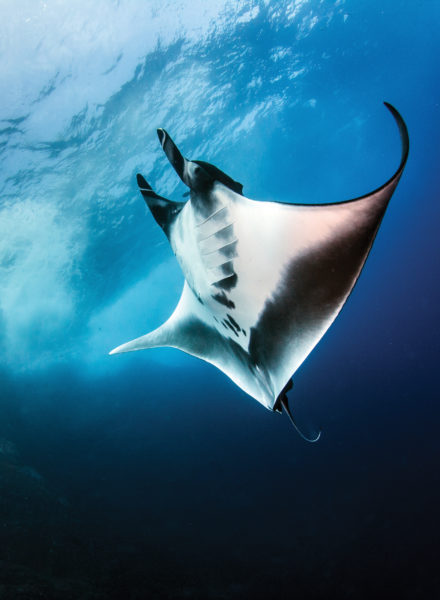
Manta rays have unique patterns of spots on their bellies, allowing individuals to be identified. University of Queensland researchers have created a database of more than 1300 manta rays, supported by a citizen-science project. Scientists are able to keep track of the movements and health of reef manta rays (Mobula alfredi) via photographs and videos submitted by members of the public. More than 7000 sightings have been recorded, showing that manta rays can travel up to 1000 kilometres at a time. The data will inform conservation projects and reef management.
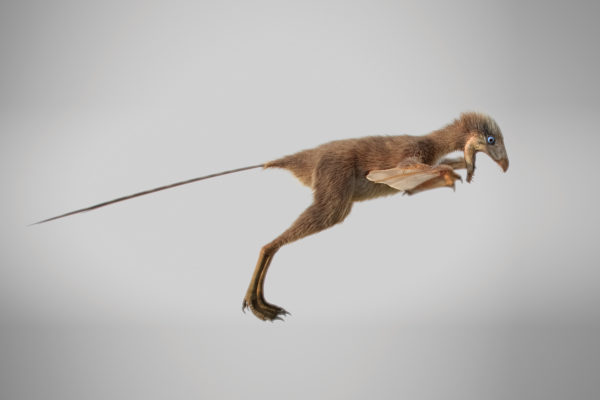
It’s not a squirrel, or a bat, but a dinosaur that acted like all three. The newly discovered species Ambopteryx longibrachium lived in the forests of China 163 million years ago, climbing trees and gliding between them. Ambopteryx, which was described in a paper published in Nature in May, is only the second feathered dinosaur to have been found with signs of membranous, bat-like wings. The first, Yi qi, or ‘strange wings’, reshaped theories about the evolution of flight following its 2007 discovery. (It’s now believed that dinosaurs developed flight up to four times, using multiple types of wings.) Ambopteryx is a member of the scansoriopterygid family: tiny, feathered, lightweight dinosaurs. Alive, it probably weighed a few hundred grams, or about the same as a burger. It had long hands and fingers, feet suited to perching, and wrist bone called a styliform which looks like it would support a wing. “These fossils demonstrate that, close to the origin of flight, dinosaurs closely related to birds were experimenting with a diversity of wing structures,” write the authors. Now, the hunt is on for relatives of Ambopteryx and Yi.
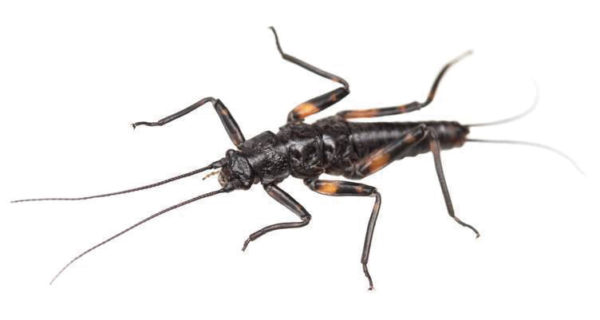
It’s been alone for two million years, during which time it lost the ability to fly, and its habitat has shrunk to just a few hundred metres of stream with a view of Dunedin Airport—but the Maungatua stonefly is finally enjoying a moment in the spotlight. Its discovery was an accident: Jon Waters, a professor of zoology at the University of Otago, was out in the Maungatua Range looking for an entirely different species of stonefly. But this species was different, and Waters knew it. It’s flightless, chunky, and short, less than two centimetres long. PhD student Brodie Foster, who led its taxonomic description, called it a “relict”. Juvenile stoneflies, called nymphs, live under stones in rapids. At first, researchers found only nymphs of the Maungatua stonefly, so they reared a male to adulthood to study. DNA analysis confirmed it as a new species, named Zelandoperla maungatuaensis. Landcare Research considers nymphs from the Zelandoperla genus to be indicators of good water quality—they’re among the first species to disappear from an unhealthy stream.
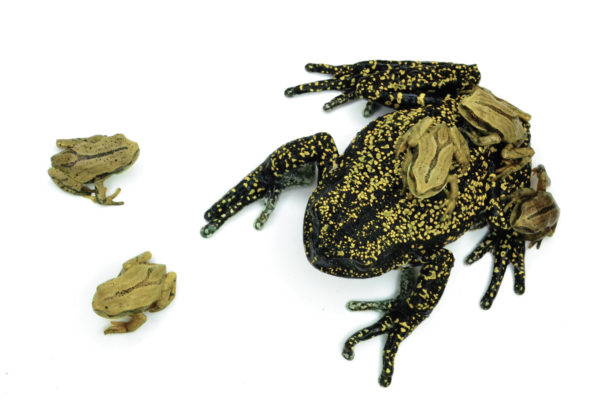
Chytrid fungus is the Genghis Khan of the amphibian world: it has spent the past 50 years invading nations one by one, slaughtering as it goes. It has spread to more than 60 countries, wiped out 90 species, and caused significant population declines in more than 500 species, according to an international study led by the Australian National University. The fungus, which eats the skin of amphibians, is responsible for the world’s greatest biodiversity loss due to a disease. Researchers say it should be considered one of the most damaging invasive species in the world—up there with rats and cats in terms of the number of species it endangers. Though chytrid is present in New Zealand and Australia, one nearby land mass remains a sanctuary: New Guinea, which is home to six per cent of the world’s frog species. In June, a team of 30 international experts published a paper in Frontiers in Ecology and the Environment calling for greater support and protection for New Guinea’s island haven.
When spider monkeys, honey bees, or sharks are foraging for food, they’ll use a pattern of movement called a Lévy walk—random but correlated steps with no destination in sight, involving many short movements mixed with a few longer ones. The theory goes that this pattern is statistically best for finding randomly distributed objects, such as food. Now, Japanese scientists have shown humans also do the Lévy walk when moving through crowds—the free spaces substituted as the resources being sought. Though people move haphazardly, they naturally choose efficient routes. The study has implications for crowd-behaviour research and urban design.
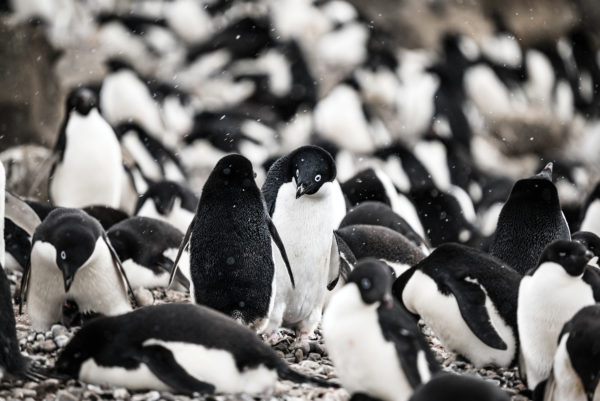
Wherever penguins and seals wander on the Antarctic peninsula, biodiversity hotspots spring up in their wake, thanks to the soil enrichment provided by their poo. Its nourishment allows mosses and lichens to grow, which in turn host small invertebrates, such as mites and springtails. The poo partly evaporates as ammonia, and this is blown inland, resulting in a total area of enrichment up to 240 times the size of the penguin or seal colony. In a study published in Current Biology in May, Dutch researchers mapped these biodiversity hotspots across the peninsula, which will be updated in future by tracking penguin and seal movement by satellite. Next, they plan to look at whether these hotspots are enabling invasive species to spread.
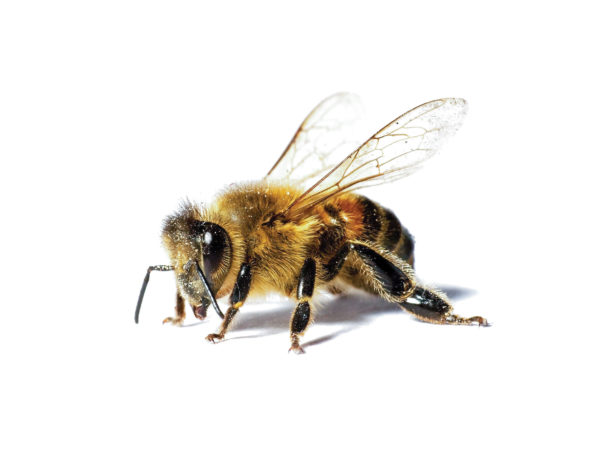
Three fathers, two mothers, one father and two mothers—all are naturally occuring parent combinations for honeybees. Honeybees are haplodiploid, which means that females hatch from fertilised eggs (and have two parents) while males hatch from unfertilised eggs (and have no father). This makes it possible for new forms of reproduction to occur, and new research into bees’ DNA, published in Biology Letters last November, found that they can have multiple parents of various sexes. Researchers estimate that one to two per cent of bees are born this way—they’re known as sex mosaics, or gynandromorphs, and have a mixture of male and female characteristics.
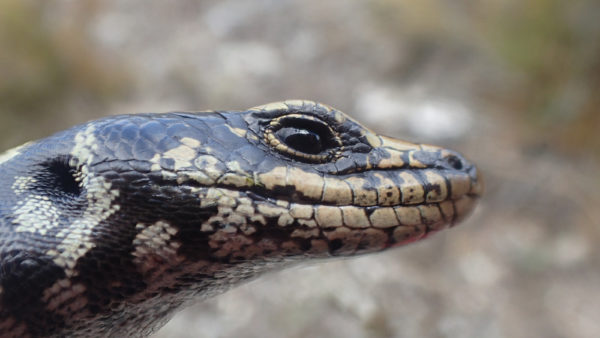
A citizen-science project to spot Otago skinks will help a Dunedin PhD student collect valuable data about the weather conditions that they prefer. Jo Virens set up eight cameras in Redbank Reserve to photograph Otago skink habitat every minute. The result: 750,000 images. Virens now needs help identifying which pictures feature skink appearances. By plotting the reptiles’ activity alongside detailed data on wind, solar radiation, temperature and humidity, Virens will be able to figure out which temperature conditions best suit them. “It’s all about how that affects body temperature, they’re going to be wanting to maintain a body temperature of probably around 25 to 35 degrees.” Then, using localised weather projections for the next 100 years, Virens will be able to create a skink forecast: will there be skink-friendly weather, encouraging them to bask all day long? Or will they need to move to new habitat to survive? There aren’t many skinks to spot—they’re endangered—but they pop into the frame often enough to tempt a viewer to spot just one more. “I’m not expecting it to be that entertaining,” says Virens. “I’m hoping the challenge behind it is what’s going to be appealing about it.” Otago skinks have black and gold markings reminiscent of lichen growing on rock, and reach up to 30 centimetres in length. Their patterns are unique—individual skinks can be identified from pictures of their face markings. Not that they always come that close in Virens’ pictures. Virens has set up the project on citizen-science platform Zooniverse—anyone can view 10 time-lapse images at a time, and flag when Otago skinks appear. Follow this shortcut to access them: nzgeo.com/skink The skinks are hard to spot, warns Virens, so look closely. “The beta test revealed that false negatives—people missing skinks—were relatively common, whereas false positives—people saying they saw a skink when there wasn’t one—practically never happened.”
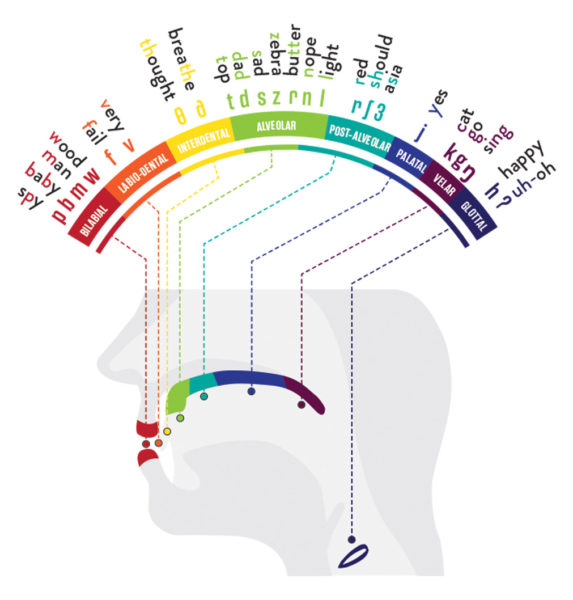
Eating grains may have given rise to human speech, say Swiss researchers. The change from hunter-gathering to milled-grain consumption is correlated with a change in human tooth structure, where the upper teeth were pushed slightly in front of the lower teeth. This allowed the mouth to produce new sounds known as ‘labiodentals’, which are found in half the world’s languages. They are made by touching the lower lip to the upper teeth, such as when saying ‘f’ or ‘v’.
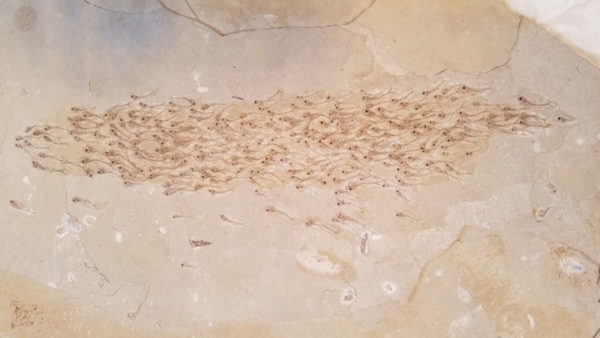
Fish have been forming shoals since at least the Eocene Epoch, according to this fossil of 259 tiny, extinct Erismatopterus levatus, which lived about 50 million years ago in giant lakes that covered Wyoming, Colorado and Utah in the United States. By analysing the positions and swimming directions of the fish, researchers from Arizona State University found their group behaviour to be the same as fish species today: they avoid straying too far from the shoal and swimming too close to each other. Communication and behaviour are usually absent from the fossil record, but in this case, a mystery remains: how were these fish preserved mid-swim?
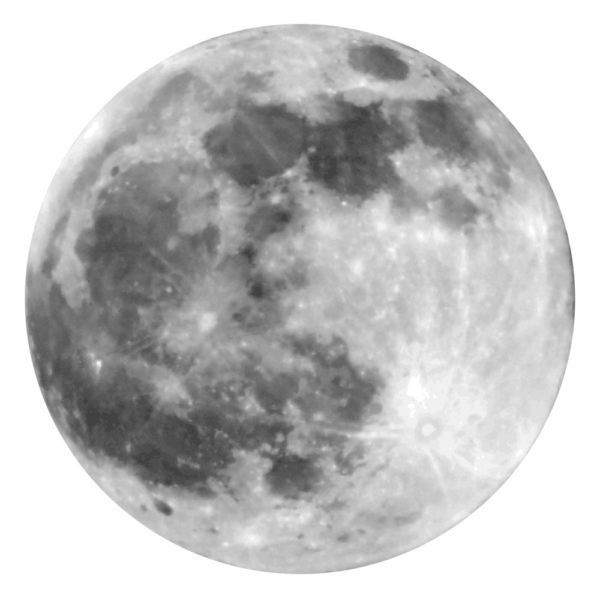
It seems like an ancient, static hunk of old rock, but the moon does seem to be tectonically active, according to new research based on four seisometers left on its surface during NASA’s Apollo programme. The devices recorded 28 shallow ‘moonquakes’ between 1969 and 1977. A recent paper published in Nature Geoscience analysed them in an attempt to pinpoint their epicentres. Researchers from the United States and Canada compared the epicentres to land features such as fault scarps, loose soil and rock deposits, and boulder movements, and say their findings may mean the moon is currently tectonically active.
Trees give us a better life: they keep us cool, provide habitat, filter carbon dioxide, produce oxygen, help with flood protection, improve our mental health, increase house prices, reduce car crashes and shield us from wind. But trees can be a marker of inequality, too. Auckland Council data from 2017 shows that urban trees cover 18 per cent of the city’s land on average—but that can fluctuate from eight per cent to 74 per cent depending on the suburb. Māngere, Ōtāhuhu, Ōtara, Papatoetoe, Manurewa and Papakura had an average of 10.5 per cent tree coverage, while central areas had 19.3 per cent and Devonport and Takapuna 24.6 per cent. How to get the benefits of more trees in our cities, and share those with everyone? Other than discouraging cutting them down, new research from Boston University, published in PLOS One in May, suggests that just planting more trees isn’t enough, as those in cities grow faster but die younger than their relatives in the country. Our understanding of trees is based on intact, rural forests and doesn’t apply to urban ecosystems, say the authors. They conclude that taking better care of existing trees can have more of an impact—in terms of the total biomass of urban trees—than planting loads of new ones.
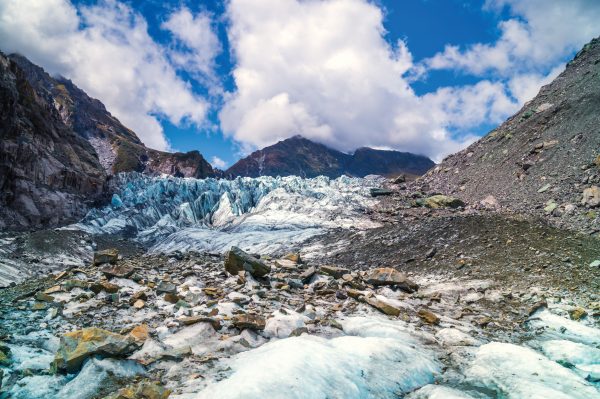
As glaciers retreat, they lose invisible ecosystems formed of microbes—before we’ve had a chance to get to know them. Bacteria thrive just about anywhere, but nobody has investigated the microbiome of alpine glaciers on a global scale, says geologist Mike Styllas, leader of a three-year, round-the-world expedition to study ice-loving microbes on 200 glaciers in 15 countries. The team, from the Swiss Federal Institute of Technology, want to find out how the microbes adapted to extreme conditions, and what’s happening to them in a changing climate. This project is a first-of-its-kind worldwide inventory of unseen life during times of dramatic change. New Zealand was the first stop on the itinerary because of the wealth of long-term observations gathered during annual end-of-summer snowline surveys. The late Trevor Chinn, who began the survey in 1977 and took his last flight over the Southern Alps last year, helped the team scout out the best locations—such as Richardson Glacier, one of 50 ‘index’ glaciers Chinn selected to be tracked every year. On arrival, Richardson Glacier looked dirty, hiding its ice under a thick coat of surface moraine. This provides a thermal buffer, slowing its retreat. But its recent history of withdrawal was written into the landscape, with moraine heaps dumped much further down the valley. The Aoraki/Mt Cook region was one of several field sites along a north-south transect of the Southern Alps. At each, the team gathered environmental data and took samples for DNA sequencing to identify microbial communities: one dataset from a glacier’s terminus, another from the glacial stream. “With the Richardson, we know where the glacier was a hundred years ago,” says Styllas. “Sampling further downstream, we’re going back in time and can see how microorganisms have adapted and evolved as the glacier has retreated.”
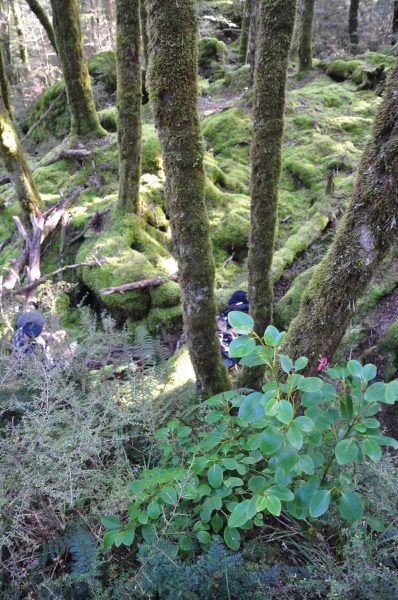
Is it true that deer act like moa in our forests, filling the ecological niche that moa left empty? Nope, says a new study by Landcare Research–Manaaki Whenua palaeobiologists Janet Wilmshurst and Jamie Wood. They compared prehistoric moa poo with modern-day deer poo, both from Daley’s Flat in the Dart River valley. Using plant pollen preserved in the faeces, they reconstructed the diets of both species, and found a wider variety of pollen in the moa poo. This points to a more diverse forest having existed at the time. Some of the plants found in moa poo are now restricted to areas deer can’t reach. (The lower half of the picture above is a boulder-top inaccessible to deer.) “It is the final nail in the coffin for any idea that deer fill the same job vacancy in the ecosystem as moa,” says Nic Rawlence, director of the University of Otago’s palaeogenetics laboratory. “Ever wondered why our native forests are relatively open under the canopy? Now you know why.”
Loading..

3
$1 trial for two weeks, thereafter $8.50 every two months, cancel any time
Already a subscriber? Sign in
Signed in as . Sign out

Ask your librarian to subscribe to this service next year. Alternatively, use a home network and buy a digital subscription—just $1/week...

Subscribe to our free newsletter for news and prizes