Power play
Scientists build a 2000sqm high-tech playground. Kids go berserk.
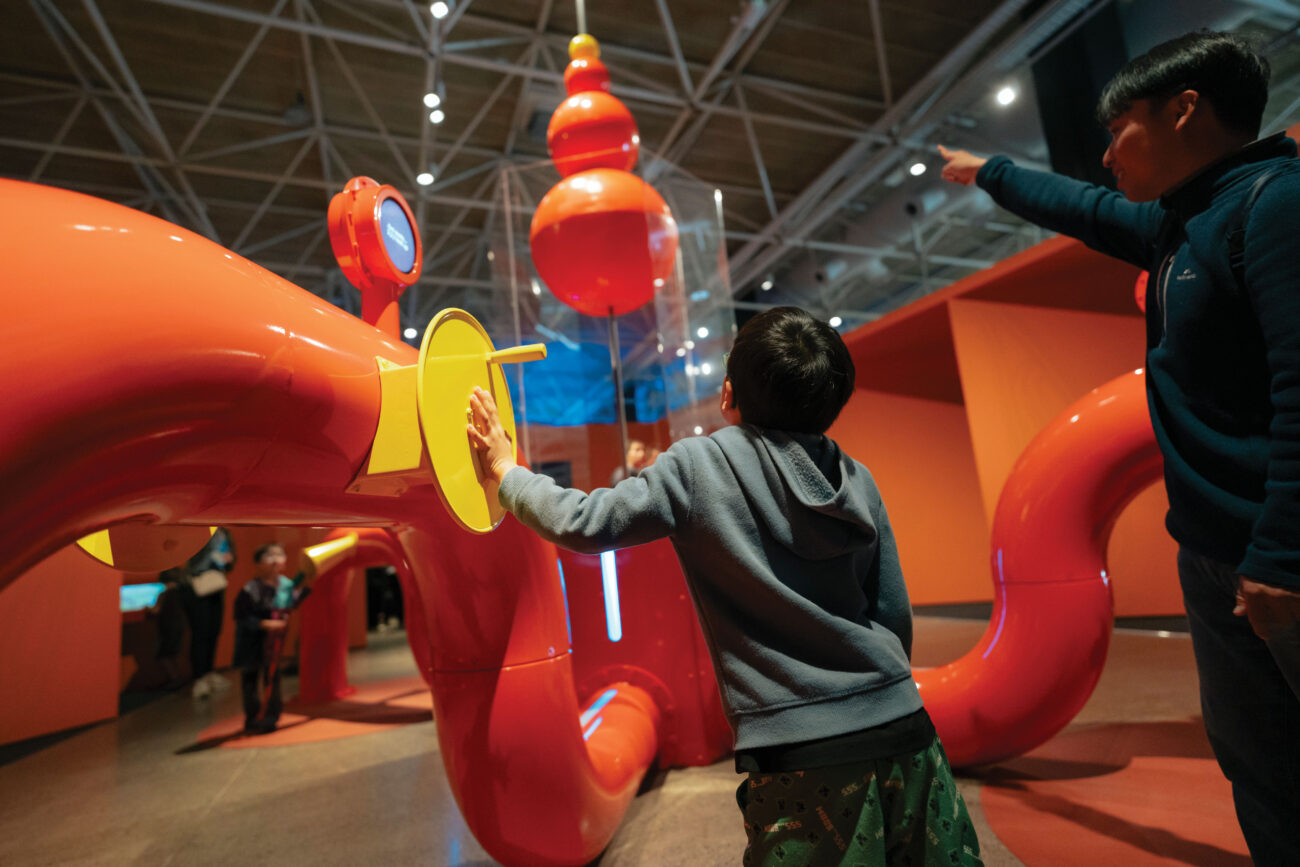
“They are charging around the centre with their bodies in exactly the way we hoped. They are taking ownership of the space in a very visceral, loud way and this shows it is a great base for play and learning,” says Esther Tobin, Te Puāwananga Science and Technology Centre senior Exhibition Developer.
Since the centre opened recently, she says there has been a significant visitation increase at MOTAT and visitors are spending longer than average in the galleries, which shows it is striking a chord.
Te Puawānanga represents the biggest investment in visitor experience in more than a decade for MOTAT. The 2200 square-metre interactive centre has three sections designed for different age groups: Te Tumu is a play space aimed at 0–5-year-olds, Te Puku is a science space aimed at 8–10s, and Te Waha is a multipurpose innovation space designed for everyone but aimed at the harder-to-entertain 12–14s.
It was a huge collaborative effort to bring the centre to life, Tobin says. “There were many advisors, creatives, and fabricators involved. It takes a lot of thought and care and it’s a process of constant collaboration, filtration and editing. We have included some classic science centre offerings, but we have also connected it to local stories, stories from here.”
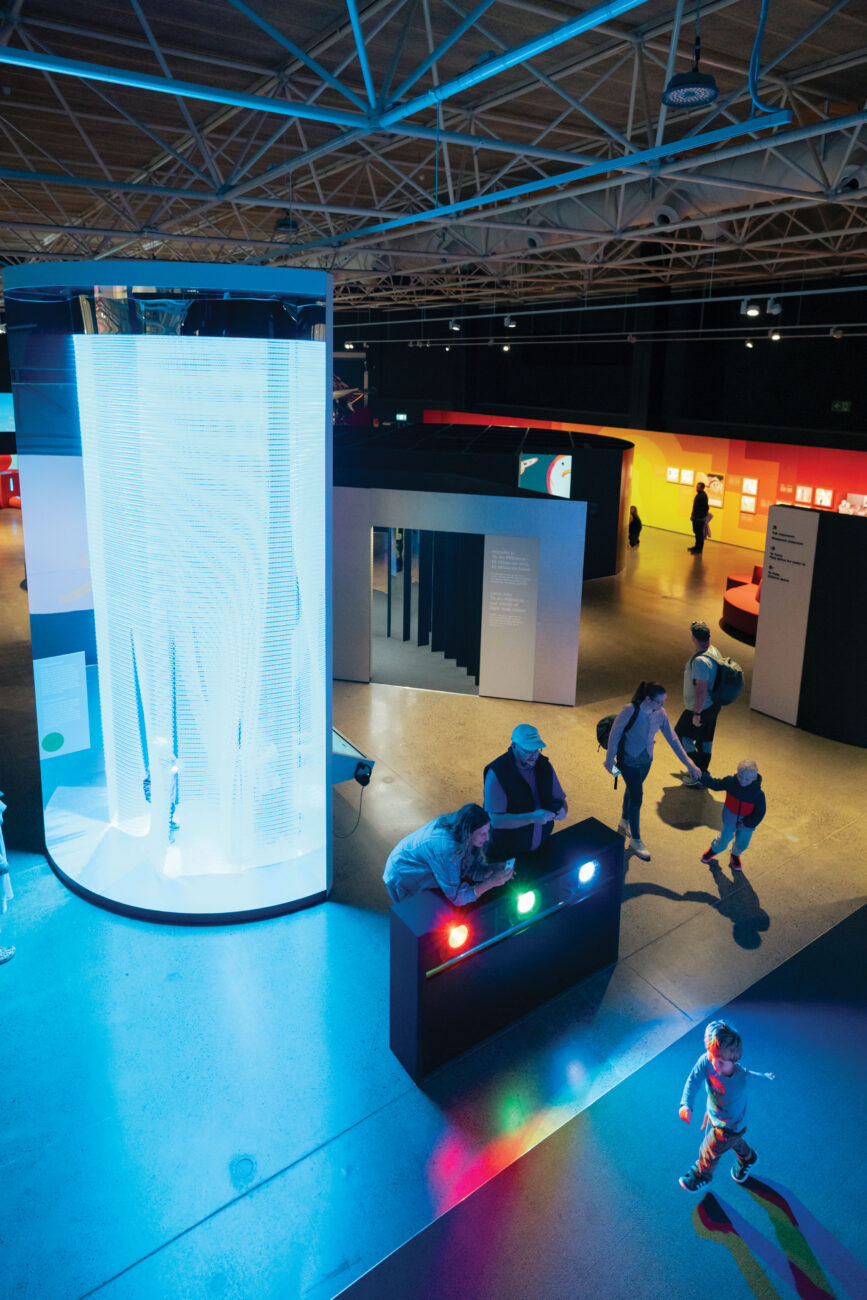
There are some real crowd pleasers, she says, like the exhibit where you can see your shadow in different colours and the energy machine, an idea that came from the head of chemistry at the University of Auckland.
“It looks like a giant octopus. You can transfer your chemical energy from food through heat, sound, shouting, singing, grinding and jumping.”
The energy accumulates and three giant balls rise up. When they get to critical mass they drop and make “an almighty smashing noise” and the top ball bounces back up again.
“Visitors love it. It has been so popular we’ve had to change it to a timed experience. But that is a fantastic problem to have.”
For the older audience, there are maths and art experiences, such as music tech across time. Research shows there’s a decline in kids moving into STEAM areas when they’re about 10–12. “So let’s hook them onto science and technology in those crucial years and give them a diverse range of ways into that knowledge.”
“Teachers need support delivering the curriculum, especially those without as much experience, so this is a physical way for kids to explore and take it back to the classroom.”
Te Puawānanga has three classrooms and the experiences are aligned to the curriculum but the goal was to “blow everything up to a huge scale. We didn’t want to replicate home or a classroom”.
Another important goal was to promote different knowledge systems and demonstrate how classic science and Mātauranga Māori are both about the importance of observation and the “environment being our teacher”.
“That is a shift for MOTAT that visitors may not be expecting, but we can all benefit from understanding knowledge specific to our place in the world.”
Tobin says the team is proud of what they have been able to create, and the positive response to it.
“We used every dollar and every hour we had to make the centre as engaging and relevant to families and schools as possible. We hope it continues to resonate with our visitors and with the next generation.”