Peak performance
‘Maoriland alpinists’ take top prize.


‘Maoriland alpinists’ take top prize.
Bill Morris grew up on a farm in the headwaters of the Rakaia Valley, the son of a farmer and bush poet. As a result, he became interested in writing at a young age, and the sometimes-fraught relationship between people and the land. Later, he worked as a commercial diver around the coast of Stewart Island, trying to eradicate the invasive seaweed Undaria. The team had been tearing up the fast-growing weed by its roots for four years already, and Morris worked in the frigid waters for a year before DOC ultimately pulled the project—Undaria had got away on them, and their work had become futile. He crossed Foveaux Strait and began a career in journalism, first with the Southland Times, later as a freelance writer and television director at Natural History New Zealand, where he still works. His first feature for New Zealand Geographic was on country music, his second on 60-million-year-old whales. In this issue he writes about the tiny fresh-water fish, kōkopu. Variety is the spice of Morris’ life. “I didn’t really know anything about native fish before writing the story, but found this entire subculture of conservationists, scientists and impassioned people—almost a secret society—that exists around these little fish,” he says. “Most of the species are endemic to New Zealand and we know so little about them, people are fascinated by that, and the prospect that there may still be new species to be found.” This month, he was browsing produce at the Dunedin farmers’ market when he came across one of his dive buddies from his days combat- ting Undaria. To Morris’ alarm, his mate was selling Undaria, which also happens to be the raw ingredient wakame, the seaweed used in Japanese cuisine. He bought some. “It raises some interesting philosophical questions,” says Morris. “How much energy and effort do you pour into protecting indigenous ecosystems, when nature is a thing that’s in constant flux? All conservation is artificial, in a way, so where do you draw the line? “In New Zealand we have a very black and white view of conservation, of trying to return to a Garden of Eden state, but we live in a modified landscape, and we need to find a balance between existing here and using the country’s resources without compromising what makes it unique. We’ve got a long way to go in terms of finding that balance. It’s something we’ve been searching for since the first Polynesian set foot here, and that influences not just our environment but our identity as a people.”
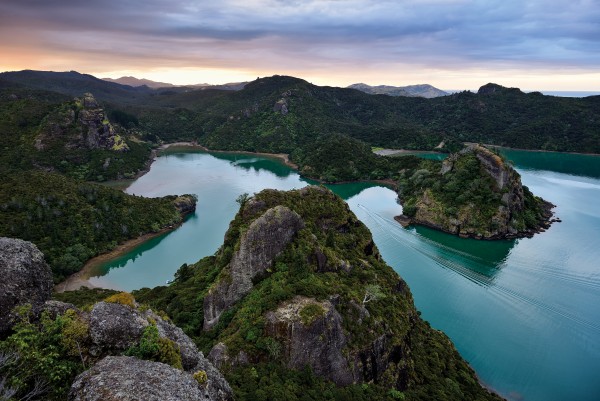
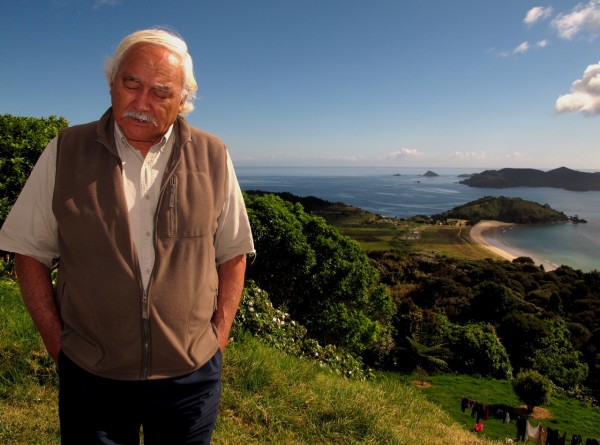
Old traditions, new beginnings in Northland's historic harbour.
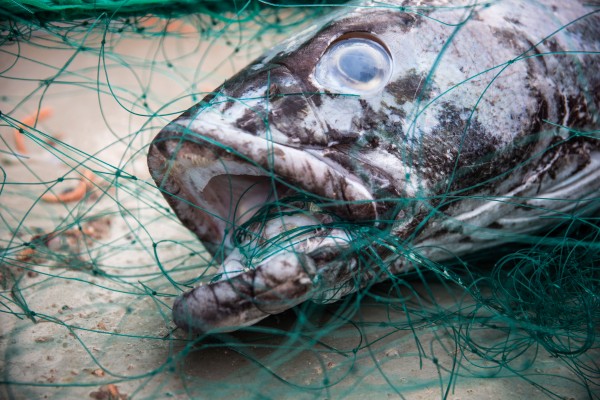
Last summer, the Royal New Zealand Navy ventured far from its beaten path into the iceberg-strewn waters off East Antarctica. There it found three pirate ships illegally fishing Antarctic toothfish—a deep-dwelling favourite of top chefs, a fishery worth nearly $600 million. What followed was a four-month chase also involving Australian authorities and two vessels of the direct-action organisation Sea Shepherd. By the end, five pirate ships were detained and one lay at the bottom of the sea, sunk in suspicious circumstances. This is a story of navies and pirates, of governments and vigilantes, of an ugly fish that grows to the size of a human, and a daring pursuit across three oceans to drive poachers out of our seas.
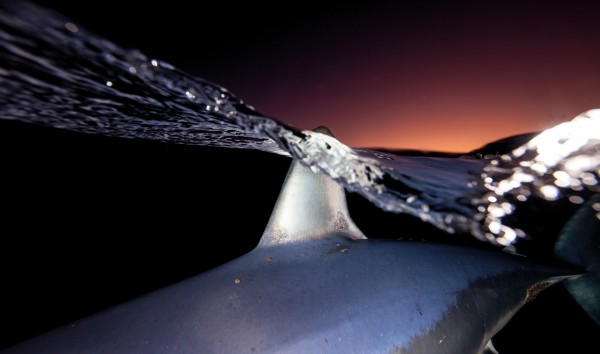
Built for acceleration and power, the shortfin mako is the fastest shark in the world and an icon of New Zealand seas. Although heavily fished for decades by commercial longliners, mako populations are beginning to recover, and prospects look good for this oceanic speedster.
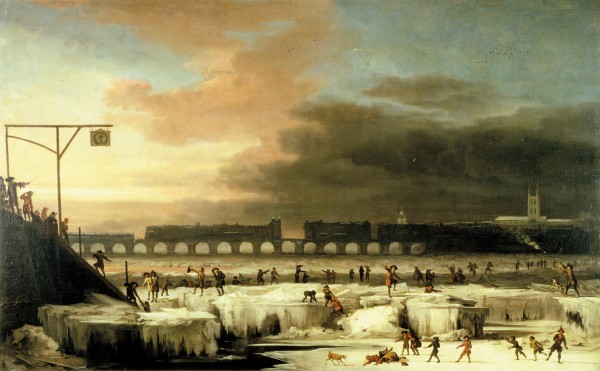
Curling requires perfect weather conditions for its national tournament, the bonspiel, to take place. For the first time in 84 years, the frosts aligned and New Zealand’s gathering of curlers returned to the Central Otago town where it all began in 1879—Naseby.
Now that the Bay of Plenty has three fabulous cycle trails, it is an excellent destination for a biking holiday. The Motu Trails can be ridden individually, or combined into one long loop for cycling enthusiasts. The bay also has great bush walking, beach-combing and boating. There is something for everyone. The Dunes Trail is an easy all-weather path, with iconic coastal scenery. Most people do it as a there-and-back ride, making the cafe at Tirohanga Holiday Park their destination. There are views out to smoking White Island (New Zealand’s most active volcano) and inland to the bush-clad peaks of the Raukumara Range. Motu Road, the original coach road from the Bay of Plenty to Gisborne, is ideal for those with an appetite for exercise. It is a narrow gravel road with large hills and excellent scenery. In places, the native trees meet overhead, and on our trip we even saw a wild deer trotting along the road. For experienced mountain bikers, the Pakihi Track provides the icing on the cake. It’s a historic stock route, weaving through the beautiful Urutawa Conservation Area. This forest is home to many species of native birds, native bats, and the endangered Hochstetter’s frog.
New Zealand's newest domain, gazetted only in 1982, stretches 200 nautical miles in all directions from our shore. Our Exclusive Economic Zone takes in an area of sea that puts New Zealand, ironically, among the ten largest countries in the world, at least in terms of marine estate.
Questions surrounding the proposed new flag—should we change, should we stay the same, why isn't the laser-eyed kiwi in the final four?—are focusing attention on the issue of national identity. But it's not just a matter of symbols . . .
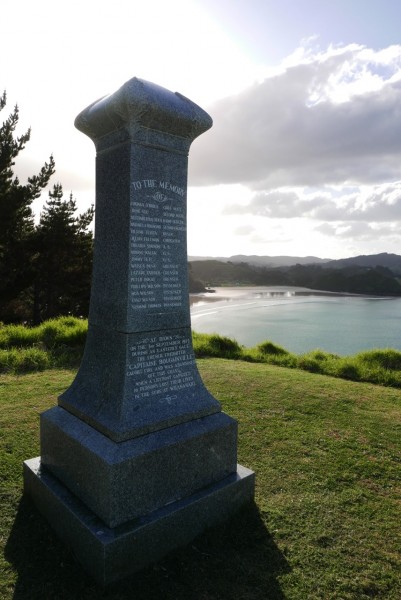
Yesterday, as people around the world mourned the drowning of a Syrian migrant mother and children, lost to the waves during a desperate crossing between Turkey and Greece, I found myself thinking of another family drowned off the Northland coast exactly 40 years before.
Names matter, so we need to find the right ones.
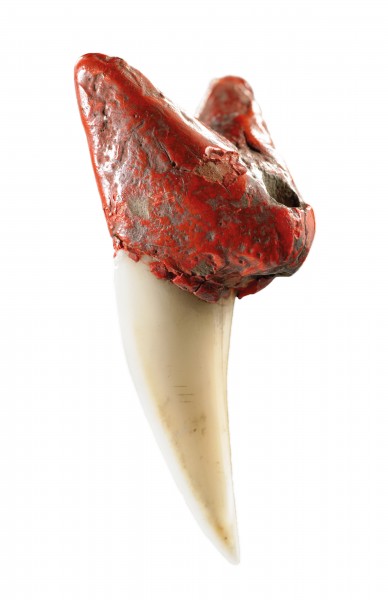
A toothsome adornment from the natural world.
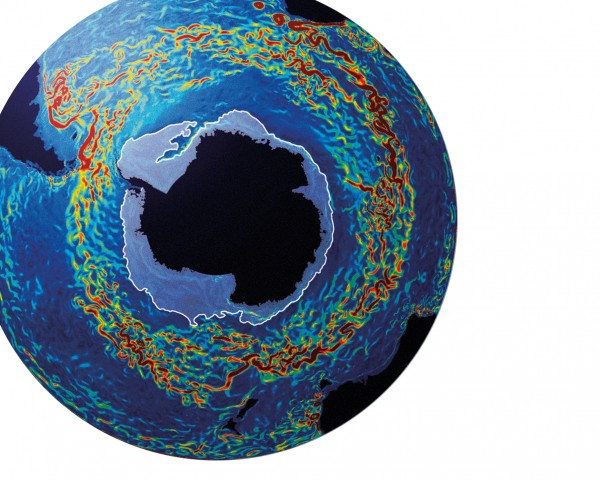
How the world’s strongest current was born.
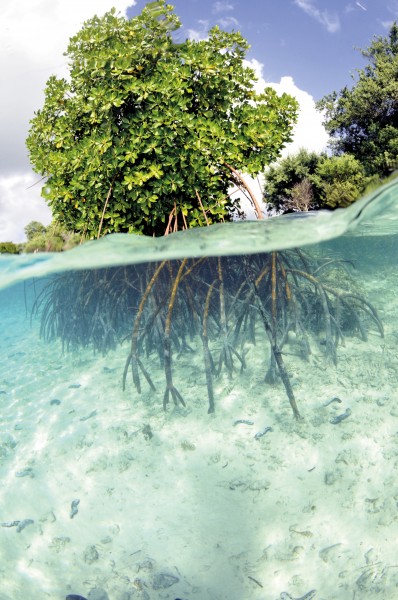
Mangroves to the rescue.
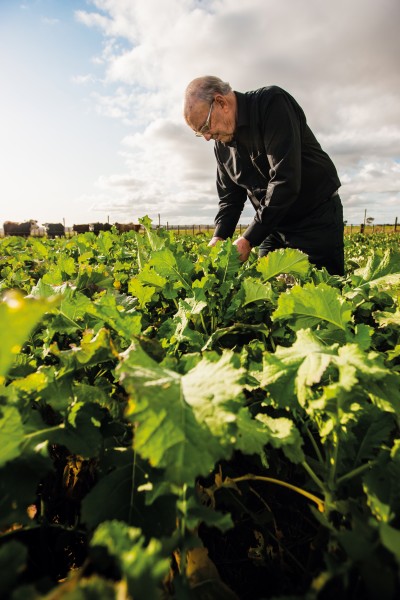
John Baker invented a revolutionary piece of agricultural machinery, a seed-planting drill proven to increase crop yields while decreasing carbon emissions from arable farming. Bringing it to market and convincing farmers to use it has been his life’s work.
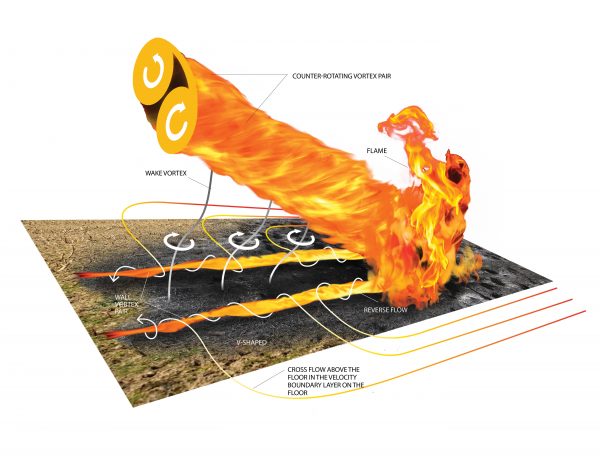
‘Firenadoes’ may become more common as wildfires increase in frequency.
“The first thing we need to change in the way we talk about the ‘man drought’ is to listen,” writes Hannah August. “The most recent population estimates, from March 2015, put the number of ‘extra’ women [in the 25-49 age group] at 52,920—roughly the same as the entire student bodies at the universities of Auckland and Otago, combined. Much of the existing characterisation of the ‘man drought’ overlooks the diversity of women’s responses to it, and the way some of these responses challenge the cultural norms perpetuated in most of the mainstream media. Both mainstream media and academic articles that consider ways women might change their behaviour in order to find a male partner miss the point: the whole premise of the ‘man drought’ is that, statistically speaking, a proportion of women will simply be unable to do so.”
Geoff Chapple is no stranger to the country’s topography. He spent more time than he probably cares to remember finding a route for what would become the 3000-kilometre-long Te Araroa hiking trail—a grand traverse of New Zealand that wends from Cape Reinga to Bluff through an interconnected series of shorter tracks and walkways. Seven days into a trek across the Richmond Range in Marlborough, Chapple caught sight of spectacular rust-red hills “glowing like a sunrise”. Informed by a geologist that they were “seabed rock that lay on the land like a wrecked ship”, he decided to find out more. In fact, that Richmond encounter sparked a larger enterprise, of which Terrain is the tangible result. Subtitled ‘travels through a deep landscape’, the book is the record of what Chapple calls his “year of geology”— a 12-month dance with Te Araroa in the company of an articulate medley of ‘rock’ people, a jeweller here, a sculptor there, and almost everywhere the interpretive sonority of geologists. Chapple’s earlier published guide to walking Te Araroa looked outward, at vegetation, landscape, the built environment. Terrain largely directs its metaphoric gaze downward and back, picturing the work of geological agents over unimaginably vast stretches of time. The narrative begins at Cape Reinga, on what Chapple calls “old oceanic floor”, and immediately geology is to the fore. A gravel path from the lighthouse is identified as red chert, trucked from a quarry on Karamuramu Island in the Hauraki Gulf. Flagstones are traced to a limestone quarry near Whangarei. Boulders in a rock wall are identified as gabbro, dolerite, and basalt, probably from Kaitaia. The point being that geology is everywhere. It is the stuff with which we shape our world. But it is also a thing of unimaginable power, size and duration. Chapple’s bigger purpose is to peel back the veil of familiarity and, with the help of some of the country’s leading geologists, report what is really going on beneath our feet. Two broad themes emerge: Scientific theory is in a constant state of becoming, and we are living on the back of something that has a frightening capacity for destruction and a capricious disposition. James Hector, the first director of the New Zealand Geological Survey, was blind to Northland’s allochthon—a vast, distantly formed intrusion of rock that began moving in 23 million years ago—because the evidence didn’t mesh with what he had been taught. An older stratum of rock appeared to sit above a younger one, but he simply left the offending layer out of his 1877 report and got on with the job of mapping coalfields. Northland’s low topography, vegetation and relentless weathering had made a mess of the clues and discouraged theoretical leaps. The allochthon was not conclusively acknowledged until the 1980s. The conceptual struggle was reprised further south as the long-cherished notion of the New Zealand geosyncline came under threat from an upstart theory of terranes. A terrane is a fragment of crustal material that has broken from one tectonic plate and attached itself to another with an entirely different geological history. Again, the new understanding was slow to supplant the old, partly because, as Chapple says, terranes couldn’t just be talked into existence, they had to be painstakingly “proved” through fieldwork. Science is also steadily recalibrating the ways in which we might meet our end. These include the Wellington Fault, a major rupture of which is estimated to occur roughly every thousand years so that, in the words of geologist John Begg, “one generation in 20 has to pick up the pieces”. Less well known is the Plate Interface Fault, 25 kilometres under the capital, which appears to be locked—and accumulating strain. What happens if and when that coiled spring releases is anybody’s guess. Then there are the volcanoes. Auckland sprawls above a 50-kilometre-wide hotspot roughly aligned with the city’s volcanic field. But the Taupo Volcanic Zone is in another league entirely. Mangakino darkened the skies and chilled the air for distant Homo erectus a million years ago. Okataina did the same for Homo sapiens and Homo neanderthalensis 62,000 years ago. And British volcanologist George Walker calculated that Taupo’s biggest eruption, 25,500 years ago, pushed 530 cubic kilometres of magma into the sky. With the current odds of a rhyolitic eruption in the Taupo zone in any one year at just 900 to one, a question arises: When do you give a warning? After an earthquake swarm? A rise in lake level? And when do you give the all-clear to return? “Whenever scientists talk about giving warnings about this or that, have at the back of your mind, what are they warning against,” geologist Colin Wilson tells Chapple. After the first Christchurch earthquake, people were told the largest aftershocks would be about a magnitude smaller. No one said: it will be channelled on to another fault that will rip Christchurch apart with one of the highest peak ground accelerations ever recorded. “That is what’s missing from the whole hazards and warnings thing. A real appreciation of the cussedness of Mother Nature,” says Wilson. Terrain may lack an index, take anecdotal diversions that are not always relevant and, unavoidably, deliver explanations that require concentration, but Chapple is not short on arresting ideas.
Loading..

3
$1 trial for two weeks, thereafter $8.50 every two months, cancel any time
Already a subscriber? Sign in
Signed in as . Sign out

Ask your librarian to subscribe to this service next year. Alternatively, use a home network and buy a digital subscription—just $1/week...

Subscribe to our free newsletter for news and prizes