Message in a bottle
This month, two dozen yachts depart the Bay of Islands to begin one of the largest-scale ocean surveys in the world. They’ll bring home hundreds of samples collected over thousands of square kilometres of ocean—data that will give an unprecedented insight into life in the sea and, perhaps, our own.
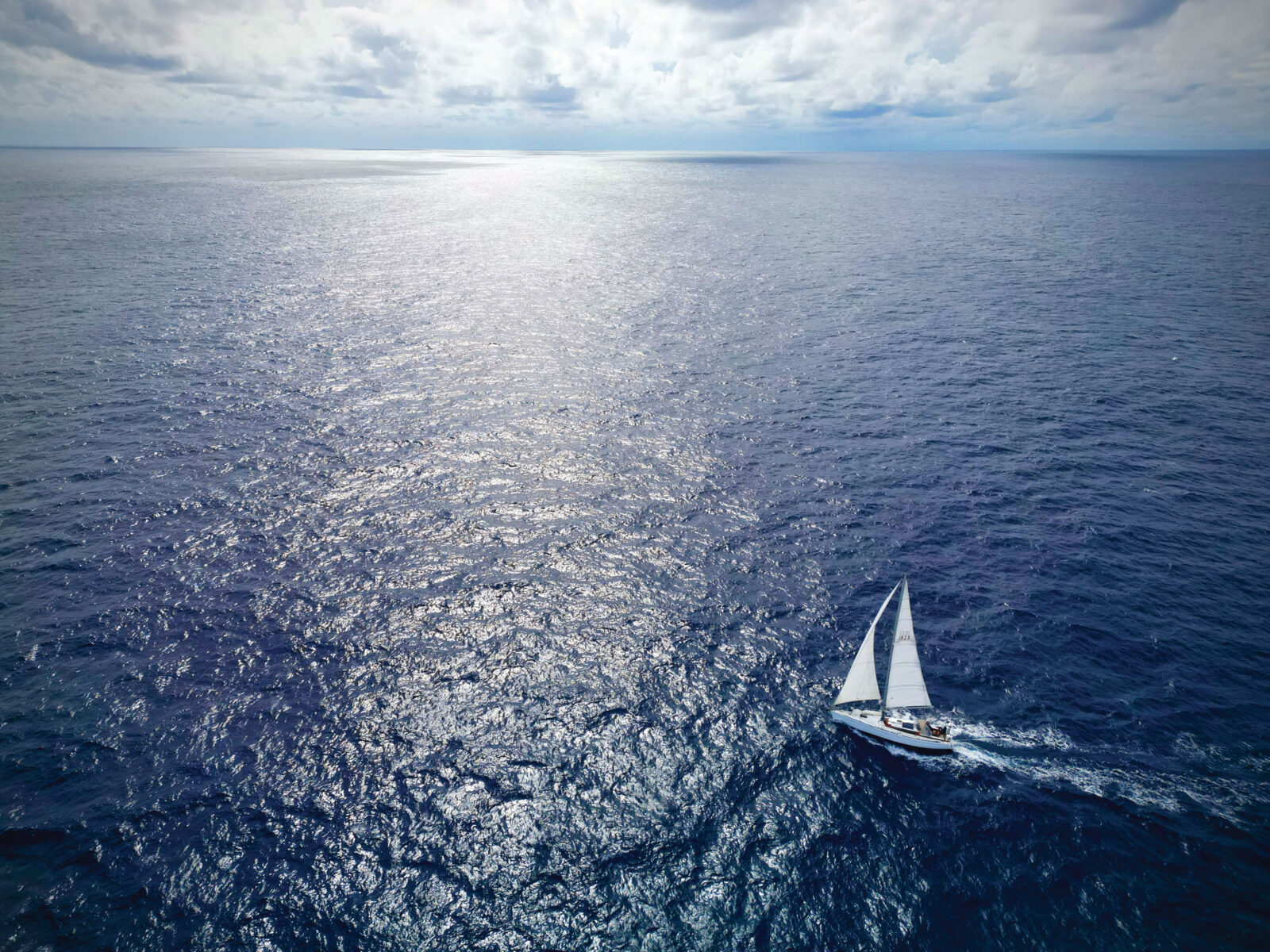
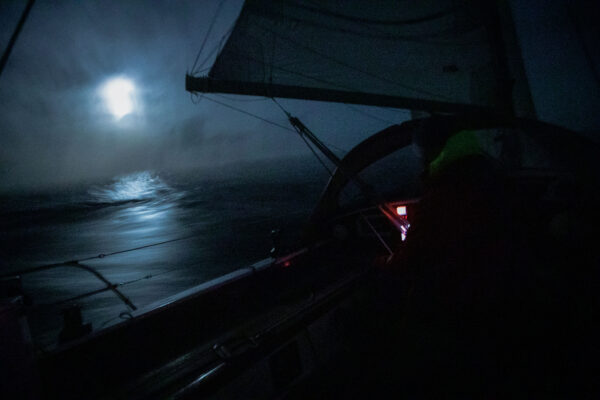
Sparks tumble in the wake, and every so often, a pulse of light bursts from the rudder, like we’re channelling ghosts from the deep. Cloud obscures the stars, painting the world beyond the loom of the cockpit instruments an inky black.
The sails pull us through the night on a gently curving course from Fiji to New Zealand. We have been bashing our way south through an unsettled sea for three days, three nights, watching the slow progress of a dot on a chartplotter. Behind us a tropical storm is boiling the clouds on the horizon. In front of us the black night looks sharper, though North Cape is still four days and nearly a thousand kilometres distant.
It’s easy to feel alone out here. Other than the four souls aboard, the closest human beings are the crew of the International Space Station, passing 400 kilometres overhead every 90 minutes.
The glittering wake behind us, however, tells a different story. We are not alone at all, rather ploughing a furrow through fertile fields of life.
[Chapter Break]
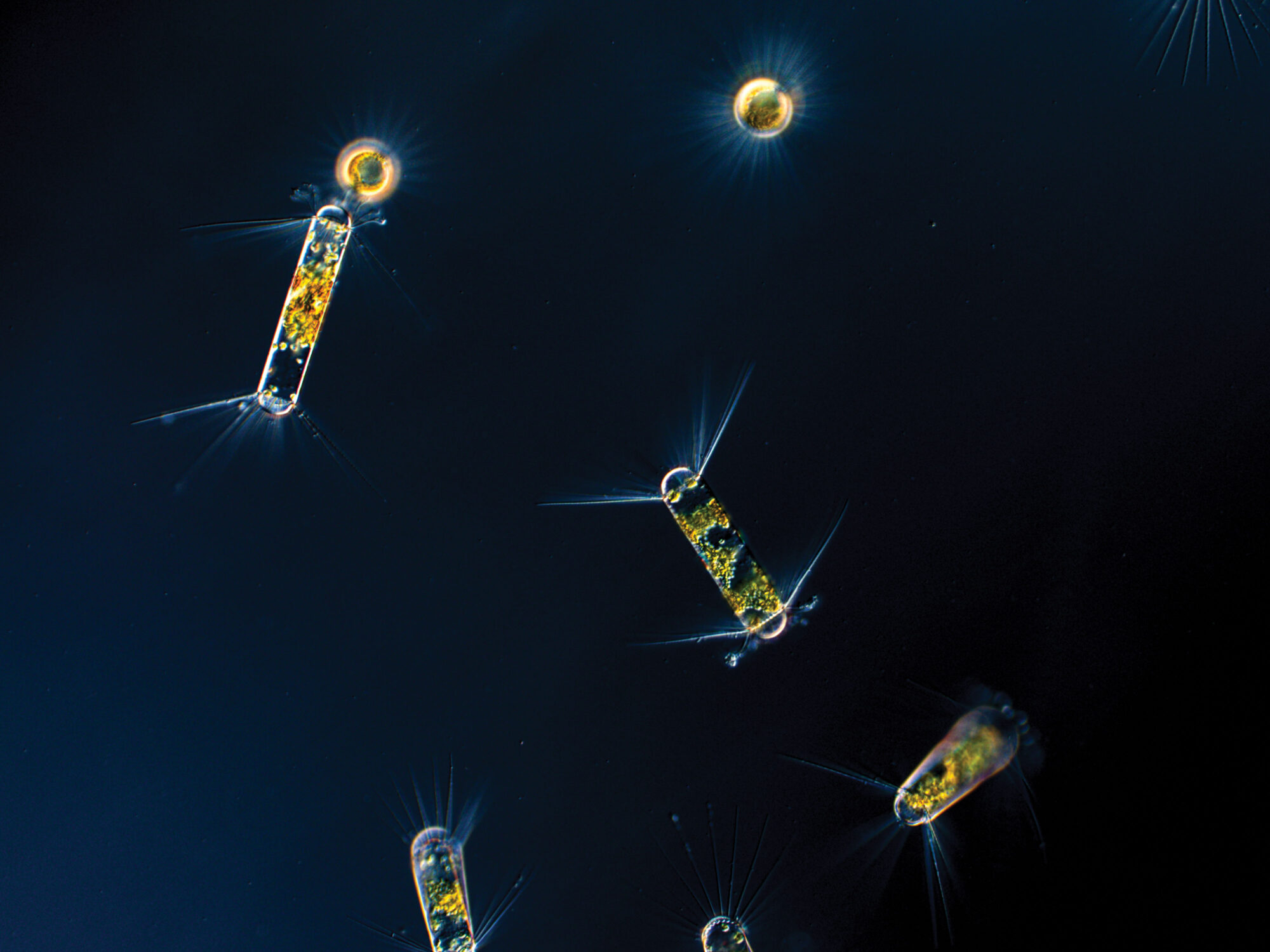
The most numerous animals on the planet are not wildebeest, nor beetles, but microscopic plants and animals collectively called plankton.
Scoop up a bucket of seawater and peer in. You won’t see much. But there could well be millions of individual “plankters” in that one bucket. Now try your maths on this: There are 100 billion buckets in a cubic kilometre of ocean. And well over a billion cubic kilometres of ocean on the planet. It can be hard to fathom such numbers, but think about millions and billions with this in mind: a million seconds is 12 days, a billion seconds is 32 years.
The ocean is not empty. It is a heaving, writhing, vast medium of life. Most of it is made up of plants and animals so tiny that they cannot be seen by the naked eye.
The amount and type of plankton in a bucket of seawater vary across the oceans, as if it were a patchwork quilt. The pattern changes in response to the length of the day, the temperature of the water, nutrients, ocean chemistry, and distance from shore. It’s also a reflection of local weather and regional climate variations, currents, even volcanic events.
For scientists, plankton can provide critically valuable clues about the health of the ocean and how it interacts with our climate. But even though we can detect the temperature of the ocean from satellites, the only way to understand the fabric of our planktonic world is to go to sea and scoop some up.
So that’s what we’re doing.
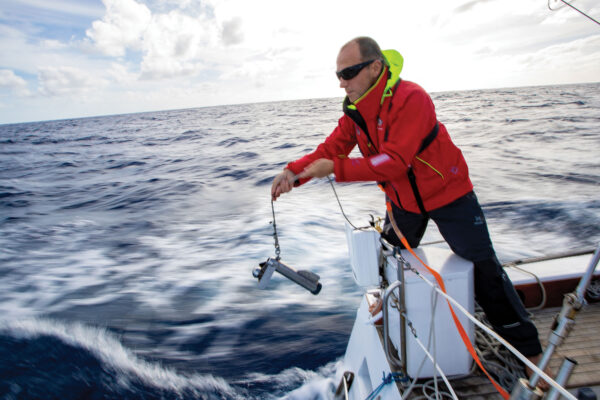
Every day at noon, I spread a nylon filter across a stainless-steel sieve, tease out the wrinkles, screw it on to the back end of a tube with a 3D-printed nose cone, and throw it over the stern, watching the tow rope curl and whip on the deck as it disappears in the wake.
Then the drogue goes about its task, swallowing hundreds of litres of seawater and pressing it through the filter under pressure.
Previous versions of devices like this were delicate, sock-like nets that had to be towed at walking speed. But this new design from the Cawthron Institute, dubbed the “TorpeDNA”, can be dragged behind a yacht rollicking downwind at five times that speed. It means that cruisers don’t need to re-rig their boats to slow down, finally bringing the sampling task in line with the reality of ocean crossings.
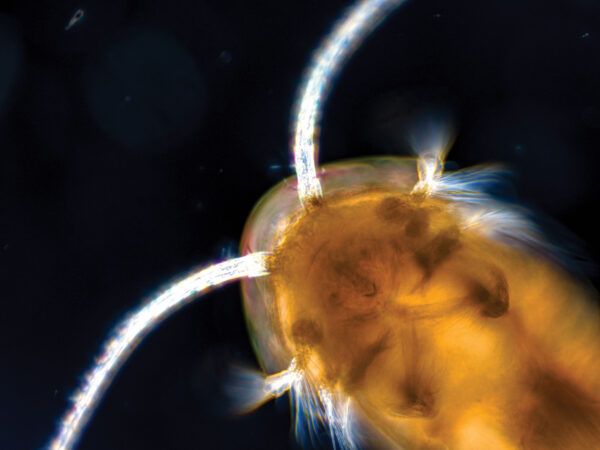
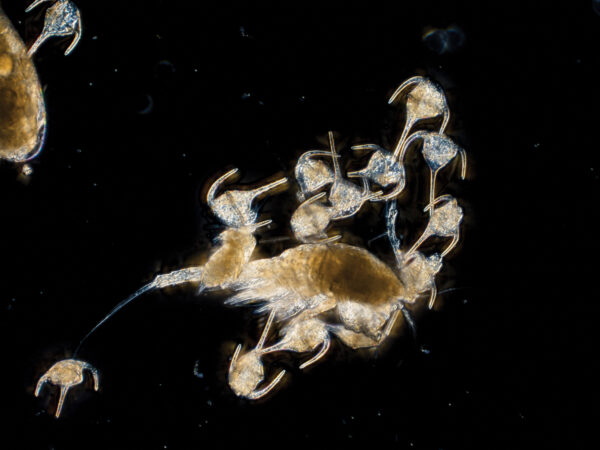
After five minutes we pull the drogue in, hand-over-hand, as if landing a tuna. The end cap is unscrewed and the filter removed. It’s slimy with biofilm, with a dusting of rust-coloured particles that are the plankton. Then comes the task of folding the filter in half with tweezers, in half again, and again. Now, slide that neat wedge of goop into a small plastic tube while rolling around below deck—a bit like threading a needle inside a tumbling Zorb ball—and pop it in the fridge.
Now a fresh nylon filter, and we repeat the process twice more, each day of the 2000-kilometre voyage home.
[Chapter Break]
Xavier Pochon wears a grin that consumes the lower half of his face, and squeezes the upper half until his eyes twinkle with joy. He is a fountain of enthusiasm, and never more than when describing symbiotic foraminifera, dinoflagellates, eDNA—the invisible structure of life in the seas.
He’s pursuing an unlikely career for someone who grew up in a landlocked country. But in summers, Pochon and his parents would drive from Switzerland to the seaside edges of France—sometimes the tranquil Mediterranean, other times the wild Atlantic coast of Brittany—just to visit the sea.
“It’s this force of water, the smell of the birds and the dimension of it all,” he says. “Then you wait a few hours, the tide goes out, and you can walk on the beach and discover all of this life attached to rocks… the shells, algae, crabs under the rocks and worms in the sand.
“You realise that, wow, there’s life everywhere.”
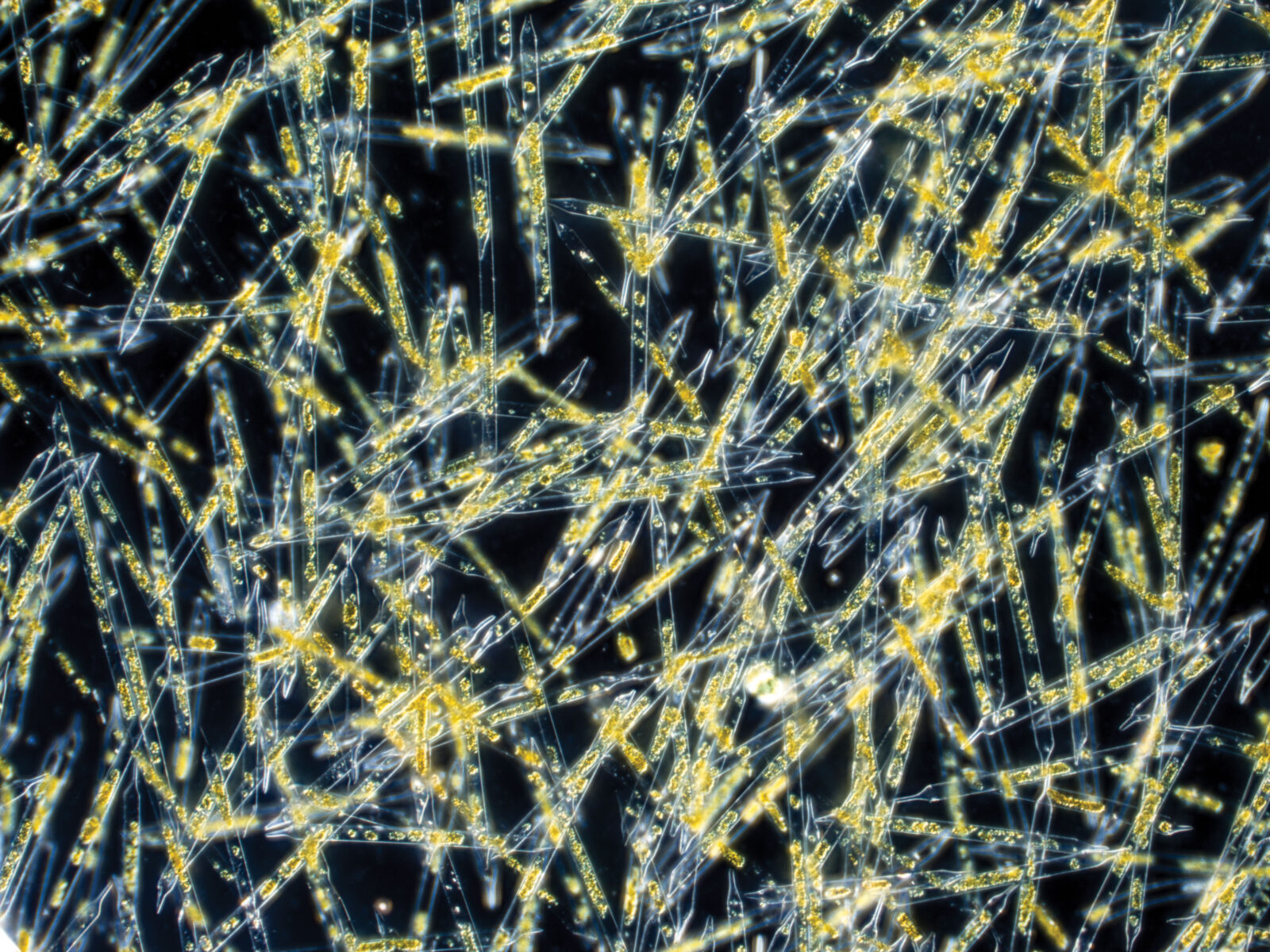
The feeling wouldn’t let him go, and it has led Pochon around the world—Australia, Guam, Hawaii, Central America.
But even as his horizons expanded, his study subjects began to shrink. From coral to protists to plankton, Pochon began to form the view that the structure of vast oceans was built on the back of very small forms of life. Then he went smaller still, from the microscopic world of plankton to the molecular realm of DNA and RNA molecules that are the codebase of life on Earth.
The arc of his career also reflected the growth in technology enabling it. Instead of DNA strings being painstakingly grown inside bacteria, piece by piece, the advent of high-throughput sequencing meant researchers could quickly reveal the genetic traces of thousands of organisms left in, say, a couple of litres of seawater, or a smidgen of sediment.
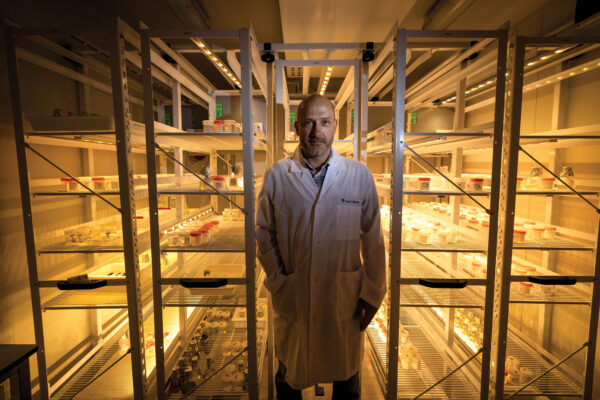
“Suddenly, you had a technology that allows you to audit your sample across the tree of life automatically, rapidly and cheaply. It was a gamechanger,” he says.
Pochon moved to Nelson to work with the Cawthron Institute in 2012, deploying eDNA technology to understand changes in the ecology of salmon farms, pollutants from land and invasive species from overseas.
The speed at which samples could be sequenced continued to accelerate, as did the understanding and potential applications of the technology, until scientists were able to make impossibly profound deductions.
“You’re taking a cup full of water and predicting things that are considerably bigger than the cup, or impossible to see. It’s like science fiction,” he says. “Human beings need to see things with their eyes to trust them. So this science becomes almost philosophical. It’s like, do you believe in gravity, and why?”
eDNA technology can assess biodiversity and give clues about the stability of the food chain and the structure of the food web. It can detect rare or charismatic organisms such as whales or manta rays or seabirds, where they live, how they migrate.
It can also help us understand the ocean’s microbial communities and the role each species plays: some, for example, eat plastic waste; others use solar energy for photosynthesis, or transform carbon dioxide into organic material.
[sidebar-1]
Squillions of these tiny functions occur at a massive planetary scale across vast swathes of interconnected oceans. They are, in a way, what makes a body of salt water an ocean. They affect the chemistry of the water, the cycling of minerals and the interaction with the atmosphere—heat transfer, production of aerosols, cloud formation… the factors that affect our climate.
We often think of oceans as vast, perpetual, and slow to react. But the microscopic life in the sea is exquisitely sensitive to environmental factors.
“Plankton is extremely responsive to climate change,” says Pochon. “And we know for a fact that the entire community can change or completely regenerate in about seven days.”
Triggers include changes in sea-surface temperature, salinity or acidity—and at sea, the speed of this environmental response is some 500 times faster than in forests on land.
In the context of climate change, understanding the universe of tiny things in the ocean has existential implications for humanity. The problem is that science is expensive, research boats are few, and the ocean is large. How can we do ocean science at ocean scale?
[Chapter Break]
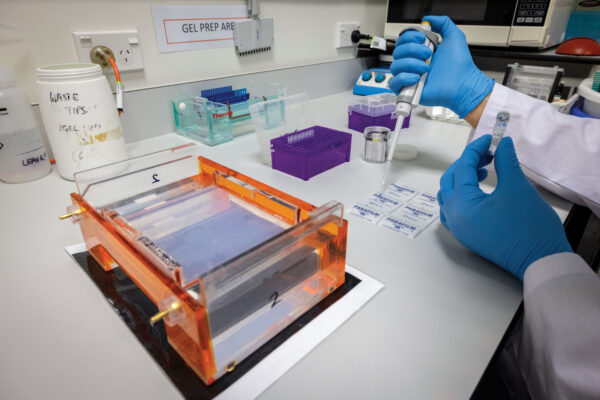
The Biosecurity official in Auckland looked at our collection of plankton goop and associated paperwork with vague disinterest and waved it all through. I couriered it to Cawthron in Nelson, and Pochon and his team of scientists set to work, decoding the secret order of the ocean.
Environmental DNA is encoded in four letters, A-C-G-T, the four horsemen of all life on Earth—adenine, cytosine, guanine, and thymine. Each is a base that can be joined, like Lego blocks, to describe the millions of species that represent cellular life.
Just as the pattern of letters on this page describe a story that is unique, we can also find patterns in DNA and RNA and compare them with species that have been sampled and formally described by scientists.
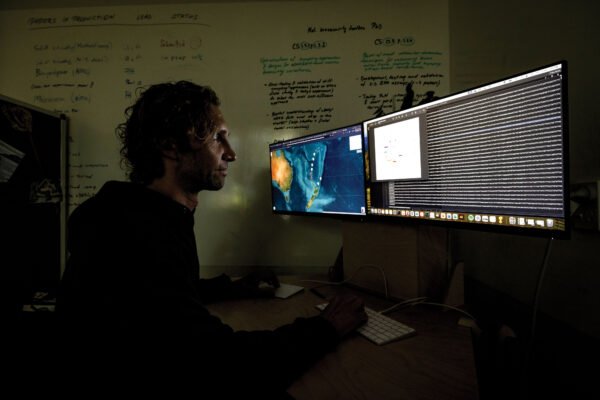
While last year’s expedition was mainly a test of the TorpeDNA, the samples we collected with one device on one boat identified almost 9000 species—from zooplankton to corals, jellyfish and fish species. We never saw a purpleback flying squid, or a surgeonfish, but they were present in the samples. We sailed blithely past the slender tuna and the orange wrasse. We overlooked the wind-sailor jellyfish and the smooth cauliflower coral. Yet each one of these creatures left a trace of its presence in the water.
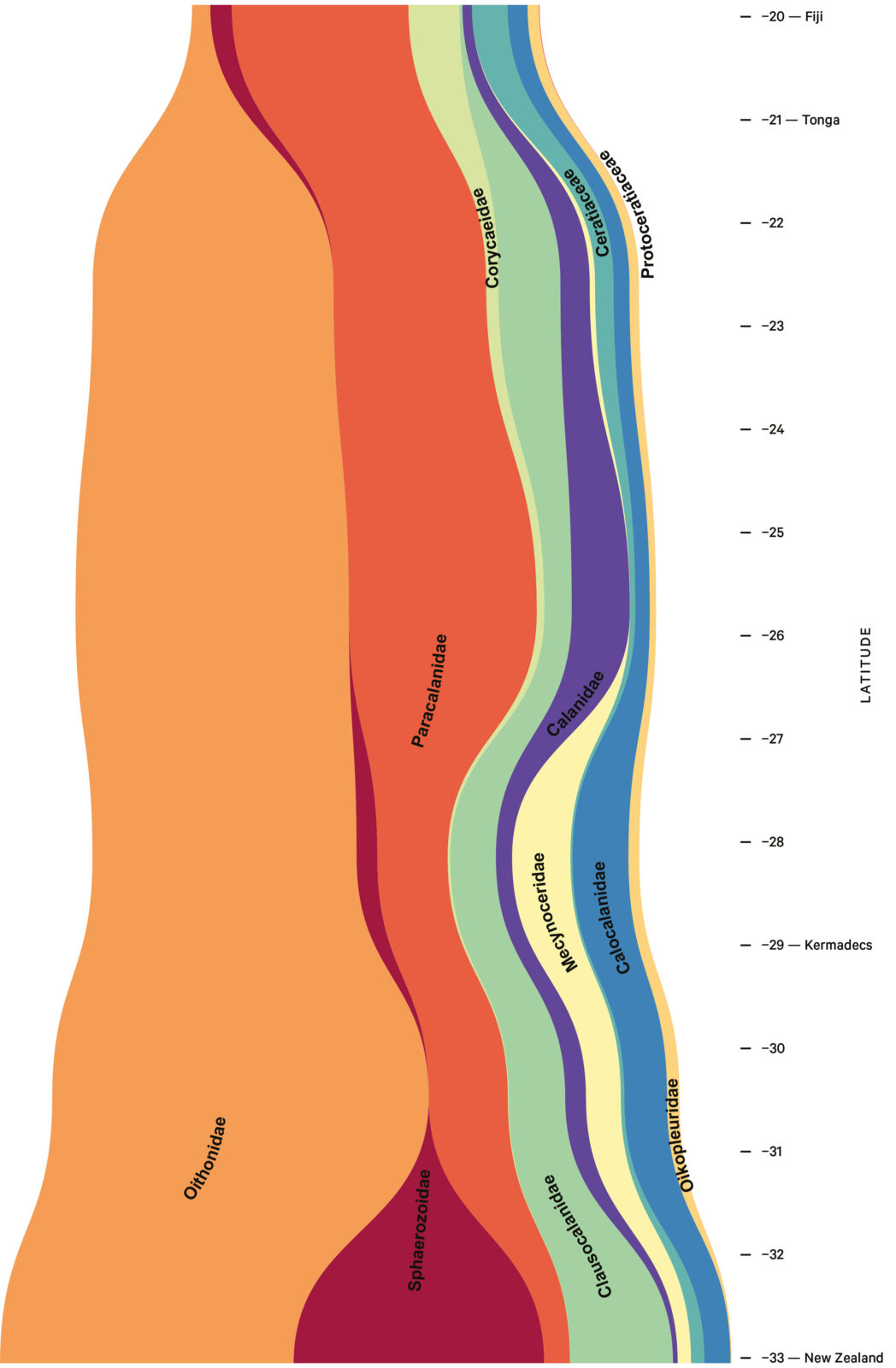
More important than the individual species was the sum of the data. Our samples showed, for instance, that while there is greater diversity of animals in the tropics than down in New Zealand, for bacteria it’s the opposite in winter—a finding that surprised the scientists.
More big-picture findings: bacteria that digest plastic are much more common far from shore and in the tropics. But bacteria that use the sun’s energy to digest carbon or for photosynthesis (like algal blooms) favour the higher latitudes, closer to New Zealand.
Our dataset also highlighted some pathogenic bacteria and toxic dinoflagellates, which are associated with diseases in marine animals as well as in humans. As oceanic waters warm, the geographic range of some of these unwelcome visitors is expanding. (For example, the neurotoxin ciguatera—present in fish and potentially fatal to humans—has been detected at the Kermadecs, just 1000 kilometres north of mainland New Zealand, and could threaten our fish and fisheries.)
If we had richer eDNA data, we would have a much better picture of ocean health and how it is changing—information that could help humans cope with climate change, better manage fisheries and save governments millions of dollars in remedial actions.
Imagine what we could learn if a whole lot of boats collected samples in the open ocean, rather than just one? It was this question that launched a partnership between New Zealand Geographic and the Cawthron Institute late last year.
This month, under the banner of “Citizens of the Sea”, 24 yachts will drop their dock lines and slip out of Ōpua in the Bay of Islands, their bows pointed north at a blue horizon. Each crew will be equipped with a TorpeDNA and a range of other tools to conduct citizen-science work around a long loop enclosing Tonga, Fiji, Vanuatu and New Caledonia.
“It really resonates for us because we live in the ocean and we care about the environment,” Debbie Torok told me, while hunkered down in her family’s boat, Thursday’s Child, in Tauranga. Torok sees the project as a way of giving back to the health of the ocean and helping to ensure that future sailors can marvel at whales, dolphins and birds as she does. “It’s time to take a step towards prevention and protection of these places we love.”
All crews will be collecting oceanic eDNA samples—towing drogues to sample that precious oceanic goop. Some will also be swimming in circles around coral, using a special app on their phones to scan the reef and construct an accurate three-dimensional photogrammetric model. Using this, scientists will be able to better understand coral health and diversity and measure the effects of marine heatwaves, cyclones and acidification. This work will happen across a greater range of sites than has ever been possible before.
Because the data is digital, it can be layered, compared and shared internationally. It can be processed using new machine learning tools to find patterns and make connections. Taken as a whole, it will give marine scientists an unprecedented understanding of millions of square kilometres of ocean previously out of reach of science. It will be the largest such ocean survey in the world—a kind of version 2.0 of the Age of Discovery, but powered by offshore sailors, ocean racers, voyaging waka and local communities.
“We’ve never done anything like this before. I couldn’t pass up the opportunity,” says Margeaux Podaski on Lion’s Den, who will be sailing north with an eight- and 10-year-old aboard. “This adds a whole other layer of purpose.” She likes to think about the vastness of the oceans, and how small the yacht is, skimming across all that life—and helping, in a new and powerful way, to protect it.