Petrels’ submarine sprints are putting them in harm’s way
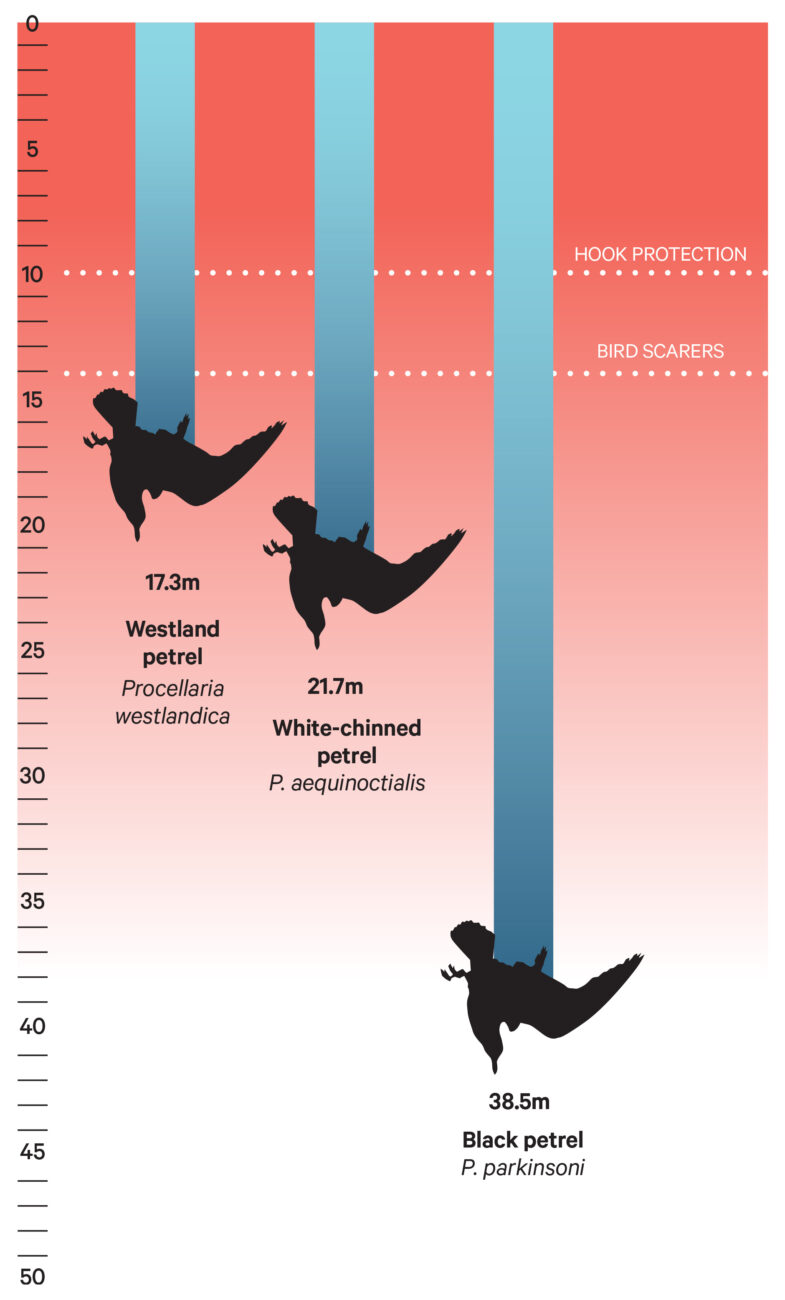
How deep do seabirds dive, and how fast do they go? Faster and deeper than we realised, according to a new study of New Zealand petrels.
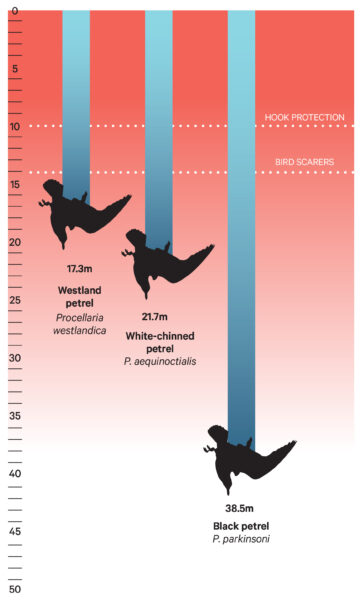
Answering these questions is crucial to preventing bycatch: tens of thousands of seabirds killed each year when they go for bait attached to commercial fishing longlines. Birds get hooked or tangled and drown, mostly while the line is being set. Lines are thought to be seabird-safe when sunk 10 metres deep.
New Zealand researchers attached data loggers to 91 birds across three colonies: Westland petrels near Punakaiki, black petrels on Aotea/Great Barrier Island, and white-chinned petrels on the subantarctic Antipodes Island. Then, the researchers tracked and analysed 12,767 dives, and found that each of the three species set new records for depth. (One black petrel reached 38.5 metres, the deepest recorded dive by any petrel species.) Importantly, one in four black petrel dives were deeper than 10 metres, while all the birds dived faster, on average, than fishing lines sank out of reach—meaning that current fishing regulations aren’t protecting petrels.