Fly like a bird
To design sleeker, sneakier aircraft, researchers are mimicking the physics of our feathered friends.
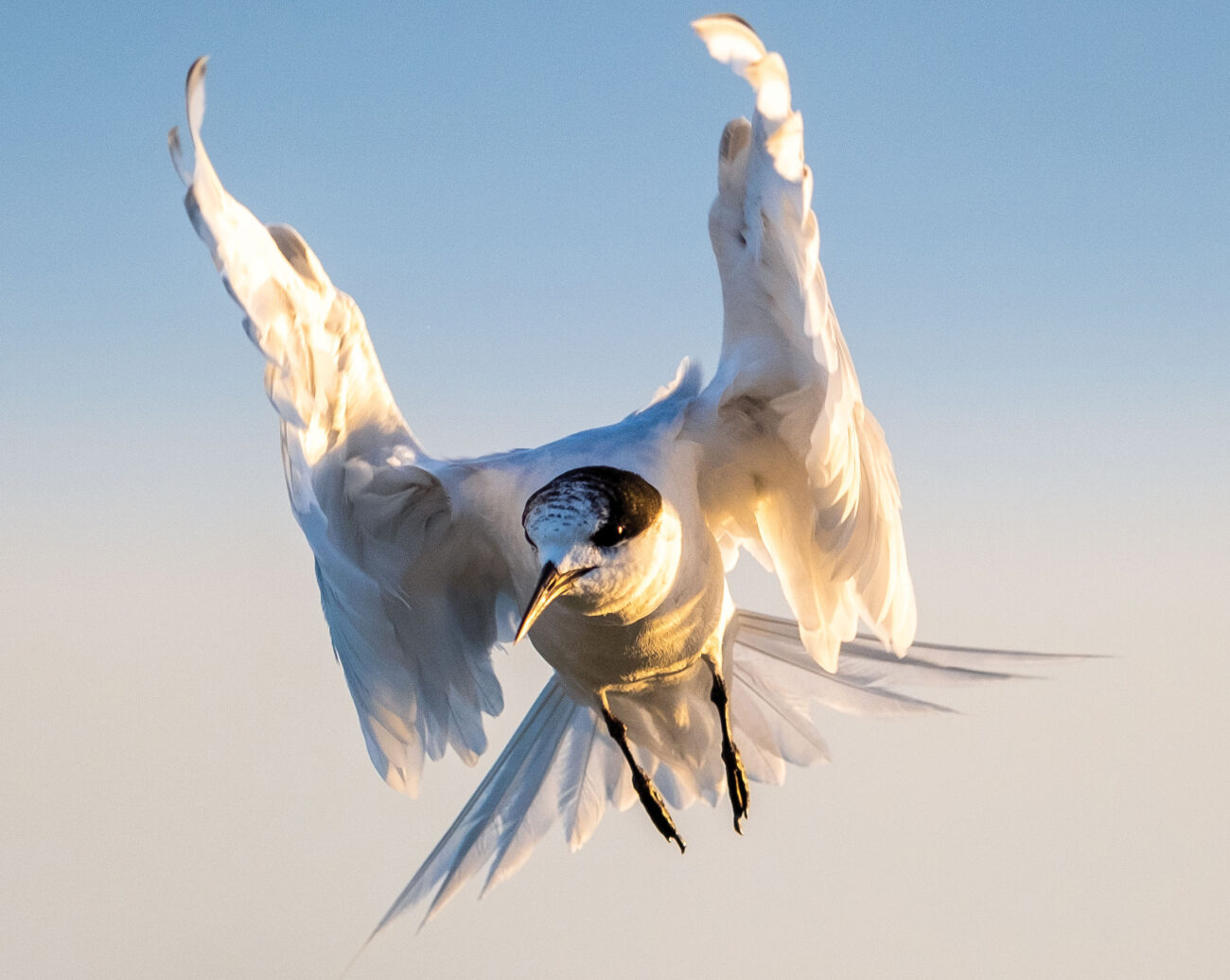
Pigeonbot II is a robot garbed in genuine bird plumage. Fifty-two feathers are attached to a mechanical wing with joints akin to wrist and finger. Programmed to imitate the reflexes of a bird in flight, Pigeonbot adjusts its wings, spreads its tailfeathers, tilts and shifts just like the real thing. These manoeuvres help the robot stay steady, whether gliding in a turbulent wind tunnel or soaring outdoors.
In aircraft, it’s the vertical tailfin that confers this stability. Losing the fin and emulating avian aerodynamics, the Stanford University team behind the bot conclude, would make aircraft more energy efficient. It would also help the plane evade radar.
More innovation comes from birds of prey: a hawk-drone built by a Swiss team can twist its tail to bank left or right, or even turn sharply at high speed, while keeping its wings still (see page 34 for more on hawks).
Another recent study, out of Princeton University, finds that wing flaps inspired by covert feathers—the smaller plumes that create a smooth contour on top of the wing—can boost lift, reduce drag, and enhance stability. It’s not just feathers, either. A second Swiss robot, dubbed RAVEN, has birdlike legs that allow it to leap into flight faster and more efficiently than a standing take-off.