


What’s the point of the Fast-Track Bill?
The bill is set to green-light projects that clash with local council planning, the government’s future goals, and our international agreements.
On Sunday, the coalition government finally revealed a list of 149 projects set to bypass environmental protections and public consultation en route to construction.
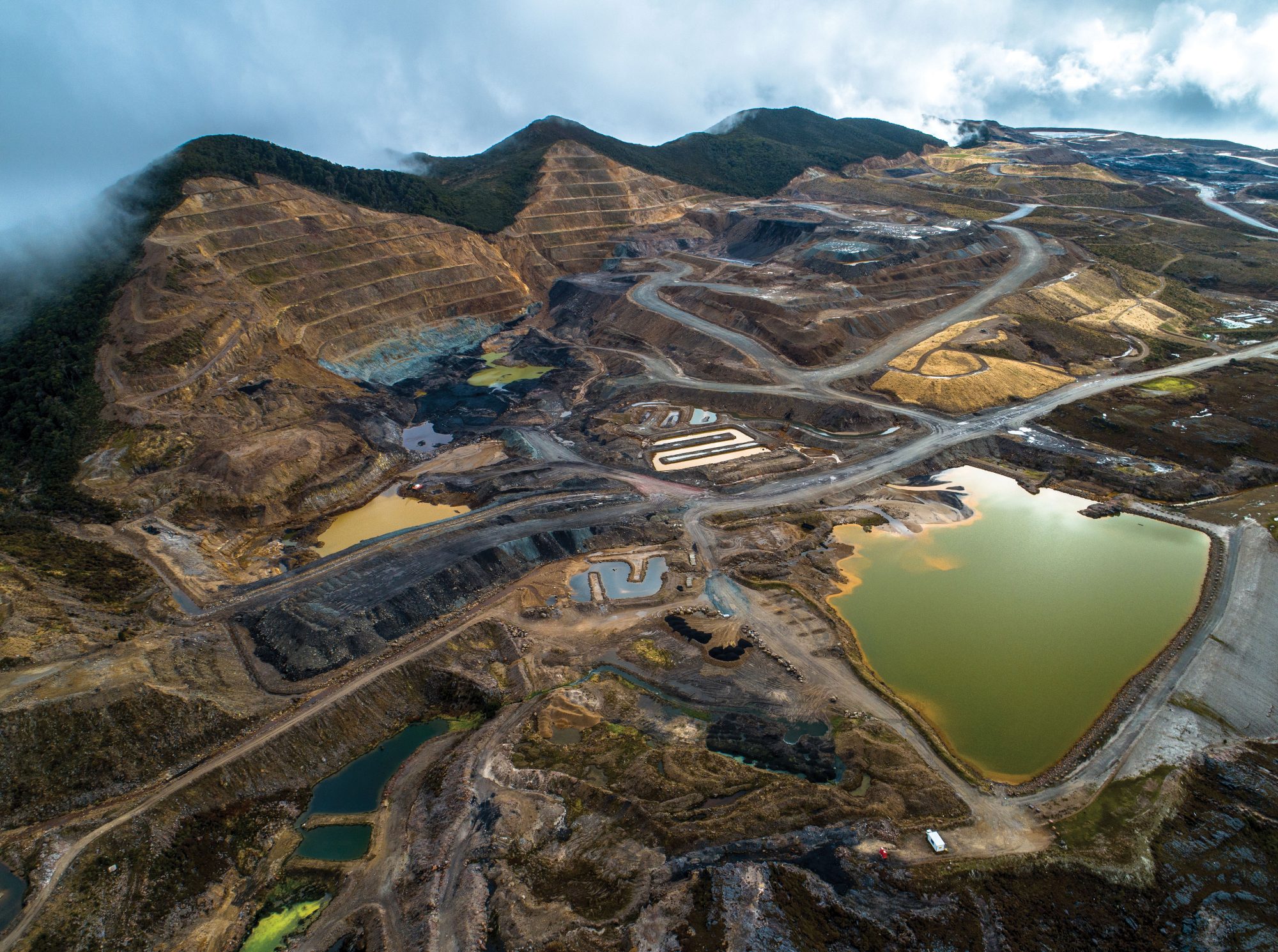
The list of projects includes large-scale housing developments, solar farms, wind farms, mining projects (for gold, coal, sand and seabed minerals), new roads, road upgrades, aquaculture projects, and a roof for Eden Park. They were winnowed from 384 applications, which had been prioritised by an advisory panel.
Ministers mostly chose projects from the top three priority levels, then cherry-picked others from the remaining five sections, with a bias among those towards aquaculture, mining, and renewable energy.
Overall, it isn’t clear why particular projects have been chosen, and the list has a somewhat garage-sale vibe to it. “They are all incredibly ad hoc, and some of them run contrary to other directions of evolving government policy,” says Gary Taylor from the Environmental Defence Society.
Many of the housing developments, for instance, are located in places councils have no plans for housing, nor the infrastructure necessary to serve them. Seven of the eight developments proposed for Auckland are located in greenfield areas outside the city, which goes against Auckland Council’s strategic goals. The city’s Unitary Plan limits greenfield developments to no more than a third of new housing because of the cost of supporting infrastructure like roads, water and wastewater.
Greenfield developments are more expensive for ratepayers in the long term, writes Timothy Welch, an urban planning lecturer at the University of Auckland. They make public transport “inefficient or entirely impossible”, he says, leading residents to rely on cars. Auckland Council has the goal of reducing transport emissions 64 per cent by 2030. Multiple studies have connected car dependency to poorer health outcomes.
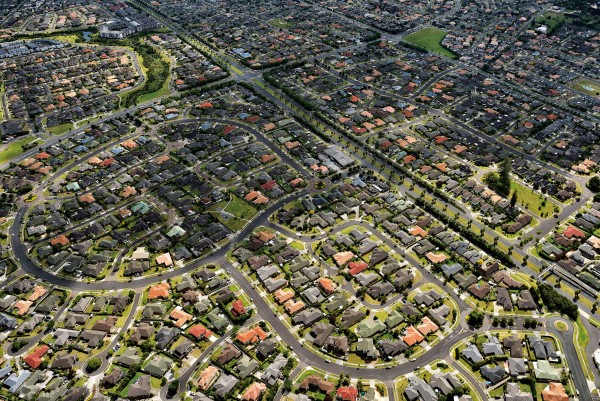
Many housing projects have previously been rejected by councils. A greenfield project for 4200 homes in Rolleston, near Christchurch, was refused permission by Selwyn District Council in 2022, because there wasn’t enough infrastructure to support it. The same council rejected a 500-house development on Birchs Road, which is now on the fast-track list, as well as an 850-house subdivision in North Canterbury which was rejected by Waimakariki District Council in 2023. Councillor Al Blackie told The Press the bill makes a “mockery” of local planning.
“Normally, greenfield housing developments are authorised by a plan change, not a resource consent,” says Taylor. “The idea of a plan change is that it is consistent with the overall direction of councils’ land-use development for housing.”
If housing developments are consented against the will of councils, in places where no infrastructure is planned, who will build the roads and sewers to service them? That’s not yet clear.
Opponents point out that many projects on the list have been previously denied: seabed mining off the coast of Taranaki, the Ruataniwha dam, the Rakiura aquaculture project, the Balmoral solar farm, and a hydro dam on the Waitaha River. And a dozen projects are associated with $500,000 in political donations to the coalition parties.
[chapter-break]
Another clash appears between the government’s goal to double renewable energy and Fast-Track Bill projects. Offshore wind projects weren’t eligible for a spot on the list, because the government intends to create different legislation just for them. But offshore mining projects could apply, and they’re competing with wind-energy companies for use of the same stretch of water.
If seabed mining gets a Fast Track head-start in the South Taranaki Bight, it will likely preclude the wind turbine project slated for the same area, and limit commercial fisheries, too. “From an economic perspective, it’s at the expense of two other types of economic activity,” says Richard Capie, general manager of advocacy at Forest & Bird.
Usually, resource consents are not the main problem facing renewable energy, as Newsroom’s Fox Meyer pointed out on The Detail. “There’s a huge amount that’s already consented,” says Capie. “We’ve got a whole stack of already consented renewables that just isn’t getting built. Why is that? Basically, it looks like there’s structural issues with the market.”
Which is why the New Zealand Ecological Society is arguing against several renewable energy projects in the Fast-Track Bill that threaten rare landscapes. Plans for a large solar farm project on Balmoral Station near Lake Tekapo were rejected in 2023 due to the Mackenzie Basin’s plethora of rare species, including the last 160-odd kakī left in the world. But that project is back on the list, along with two other solar projects in the Mackenzie Basin. The largest of those would be “potentially catastrophic” for kakī, according to an internal Department of Conservation report obtained by The Press’s Charlie Mitchell.

“Nationally, we lack strategy about where the most sensible places are to do developments that don’t compromise ecological values,” says Jo Monks, the society’s vice-president. Monks wants a process that involves the government and public “thinking about where it is smart to develop and where it’s not”. Rather, here, the process seems to be led by “which landowners want to do the development”.
In these instances, experts will need to balance meeting climate goals with biodiversity, but we’re missing a national energy plan to “identify areas that are suitable for renewables and areas that aren’t”, says Gary Taylor.
“The biggest economic transformation that’s happening in New Zealand is the transformation to renewables. You would think that we’d have a national plan that we could assess the merits of these things against.”
Is there strategic planning behind projects selected for the Fast-Track Bill? Or is it more like a lucky dip, with each project selected for its own merits against an unpublished set of criteria?
And will the Fast-Track Bill improve on existing legislation? So far, 108 projects have been fast-tracked under legislation introduced during COVID and incorporated into the Resource Management Act. Taylor says Environmental Defence Society analysis found the average time for consent was 88 days. Importantly, those projects all passed a series of environmental checks and balances. “Every application passes through our scrutiny, and there’s been very few that we’ve felt the need to engage with,” says Taylor.
[chapter-break]
As of today, October 11, it has been 190 days since Fast-Track applications opened, and there are still two stages to go: Parliament must pass the bill, and then a series of expert panels must be formed to consider the 149 projects. They have a maximum of 70 days to do so. The panels can hold hearings, invite submissions, commission reports, and request further information. “I can’t see, in a practical sense, how it’s going to be possible to process them in the fast-track time frames,” says Taylor.
Neither is there any guarantee that green-lit projects will go ahead. Of the 108 previously fast-tracked projects, only eight are in progress. The 193 projects cut from the initial round of the Fast-Track Bill may re-apply later, along with new projects that meet the bill’s eligibility requirements.
As RNZ reports, the Fast-Track Bill puts our freetrade deal with the United Kingdom at risk. There, New Zealand has agreed not to weaken environmental protection to benefit trade. Meanwhile, our trade deal with the European Union involves an agreement not to take actions which contradict the Paris Agreement.
Opposition to the bill and its sweeping powers has accumulated from all sides, says Capie. “You’ve got the Parliamentary Commissioner for the Environment raising major red flags, and the Attorney-General warning against bad lawmaking. You’ve got the Auditor-General saying he has deep concerns about this. So, how many heavyweights do we need to wade in and say, ‘Look, this needs to get fixed?’”


