About that plastic wrapper…
For six years New Zealand Geographic has been working to find a better wrap to protect our magazines from water damage when mailed to subscribers. We post more than 50,000 copies a year, and altogether, some 10 million magazines are sent around the country annually. It’s a problem worth solving.
We looked at switching to paper envelopes, but the gum that seals the flap means it can’t be recycled, so it goes to landfill. We looked at a paper wrap, but it requires around six times the carbon footprint of the plastic alternative—so it would be popular, but amount to greenwashing.
We worked with WasteMINZ to trial compostable wrap, but struck two major roadblocks. First, a trial (with NZ Gardener) put temperature loggers into home compost bins around country and demonstrated that more than half never reach composting temperature because they’re shaded too much of the day. This would result in readers systematically turning un-composted plastics into arable soils all around New Zealand. We also discovered that many are confused about which bin compostable wrap goes into, often contaminating recycling schemes.
Later, we found a study by NZPost which had evaluated various materials for courier bags against 14 environmental indicators. It came to an interesting conclusion: Comparing the carbon footprint of new plastic, paper, compostable and recycled plastic, it was the recycled plastic that outperformed all others. Recycled low-density polyethylene (rLDPE), to be specific, which has half the carbon footprint of new plastic wrap and around nine times less than a paper wrap. It was worth looking into.
We found a handful of suppliers. The standout product was called Pollastic. Ironically the Better Packaging office was just up the hill, so I popped in for a coffee with chief executive Becs Percasky. She explained the idea: Plastic is light and durable, meaning it is mechanically stronger, so you need to ship less weight around in our transport systems—factors which result in the lowest carbon footprint of any packaging material. But it becomes a terrible liability when disposed of improperly, and particularly when it makes its way into waterways, or the sea.
What if, wondered Percasky, you could make recycled plastic packaging from plastic pollution that was already bound for the ocean? Capture it, make rLDPE, then recycle it indefinitely? The idea became Pollastic, and to be certified ‘ocean bound’ needed to meet three criteria: it had to be abandoned, in areas with no formal waste management infrastructure, and within 50 kilometres of a coastline.
Better Packaging made courier bags, mailers, even labels, but they had never made magazine flow-wrap before. This was going to be an adventure.
They made the first batch of rLDPE for us from ocean-bound plastic in Indonesia. The three reels weighed 25 kilograms each, and to check them in Percasky and her co-founder Kate Bezar had to lighten their suitcases by wearing most of their wardrobes through Customs and on to the plane. The good folk at Webstar ran a trial and it worked well on the press, but when they tested it in NZPost’s mail-sorting machine it came out looking like it had been mauled by a bear.
Percasky and Bezar recycled that lot, went back to the drawing board, and three months later came back with another roll of film. This one survived both the press and mail sorter.
If you received NZGeo in the mail recently, the wrap you peeled off was once on its way to the sea, was plucked out by Better Packaging Company, recycled in a facility paying a fair wage in a developing nation, to arrive in your letterbox, all using a fraction of the carbon of alternative materials.
Six years is a long time, but we’ve arrived in the right place. Next step is to scale the project so that all 10 million magazines shipped in New Zealand use recycled ocean-bound plastic. After that, we will try to close the loop, which means finding a scheme to return and recycle the wrappers, reducing waste, energy and carbon. That, I expect, may take another six years.
[chapter-break]
In the meantime, New Zealand Geographic has been on a journey of our own. In the last issue of this magazine I wrote a column that presaged a month-long appeal. The nub of it: our journalism is a marginal commercial proposition, and with costs increasing, advertising getting more challenging and the grip of the tech giants tightening, we need a new gear.
I released our accounts online which revealed our income, expenses and profit, and described how the best hope for the immediate future was subscriptions. (You can stay up to date on the business of NZGeo on our Publishing page.) I calculated that we needed 10,000 subscriptions to put New Zealand Geographic on a stable financial footing for the immediate future.
I was nervous doing it. What if no one responded? What if NZGeo was an artefact of another age, and perhaps a disposable cultural asset today?
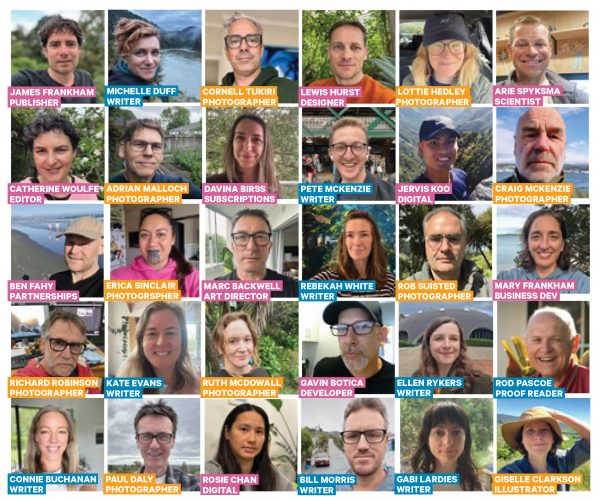
I need not have worried. Subscriptions flooded in. Our subscriptions manager, Davina, had to increase her hours just to keep up with the phone calls. In October we had 7900 subscriptions. As I write this our dashboard says 9,785 and counting—more than 20 per cent subscription growth in a month.
It is a shot in the arm for our confidence, but it comes with new responsibility. Readers have assigned us a mission that is greater than a commercial transaction to deliver a magazine six times a year. You have made a commitment to invest in our future as a media organisation, to maintain a voice in the public conversation, and to contribute something special to our sense of identity as a nation.
We are bound together now, you and I. We need you, you want us to stick around.