


Nikon D4S
An upgrade is often viewed as the anti-climax of a product life cycle; but the Nikon D4S holds a few surprises.
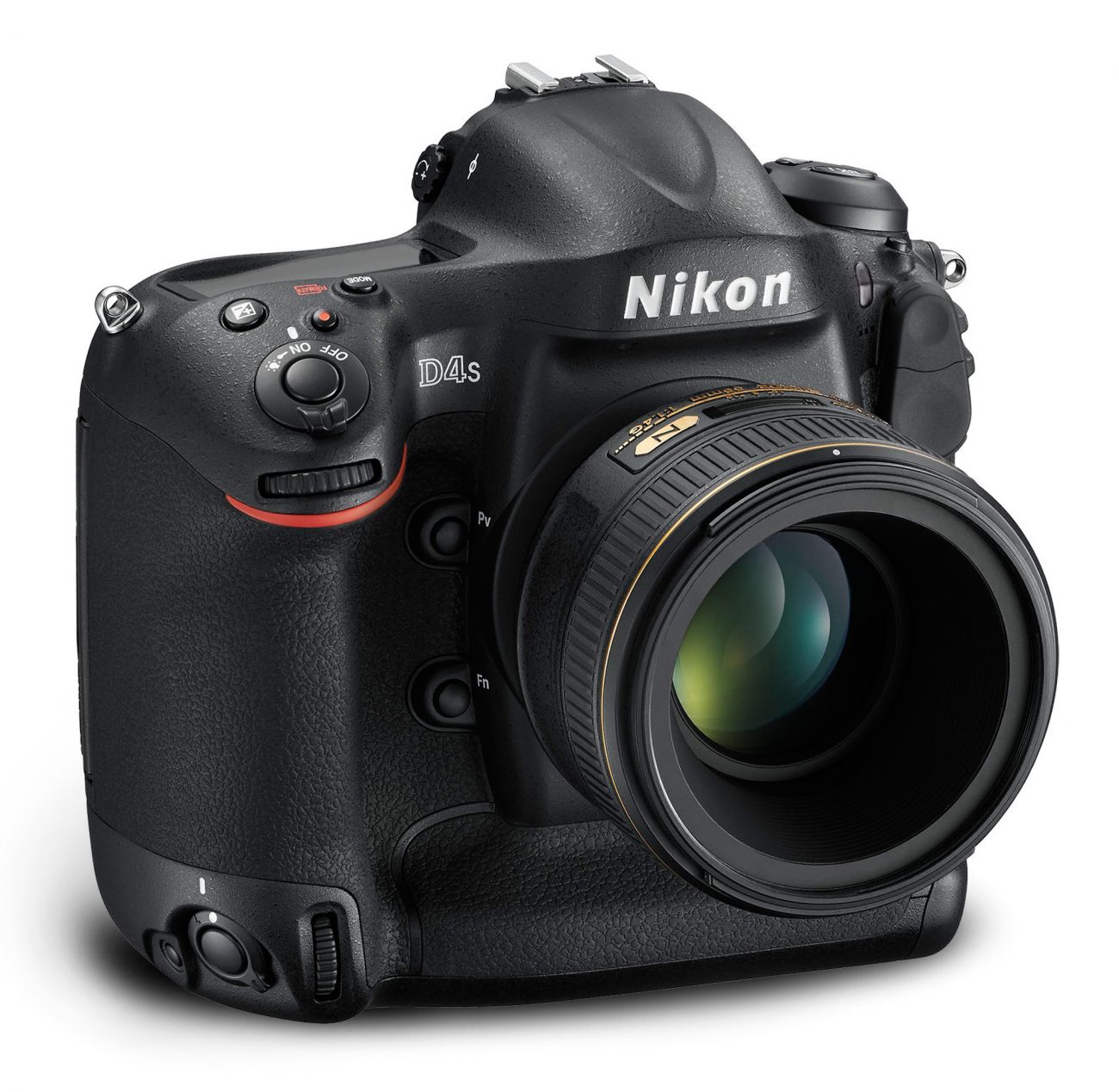
The upgrade of Nikon’s flagship model undergoes more scrutiny than most photographic product releases. It boasts industry-leading architecture, state of the art electronics and processing, and extends the yardstick by which all cameras are judged. These flagship models are usually the platform on which manufacturers premiere new technologies, and set the course for the entire industry to follow. So expectations for the latest release were high.
In terms of physical features, however, the Nikon D4S sports a deeper grip, a more substantial thumb block, and… well, that’s about it.
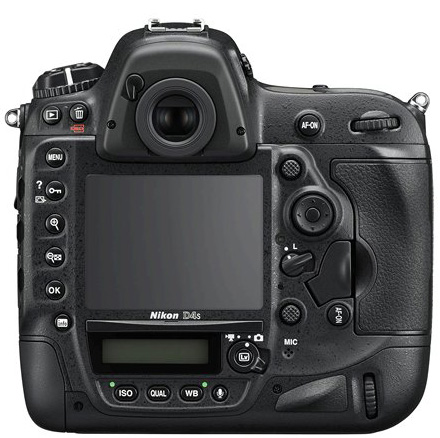
At face value the D4S is an identical twin of its older sibling D4; the same muscular body, the same legendary weatherproof architecture and build-quality, the same easy access to well-positioned buttons in both regular and vertical grip orientations. Like the D4, it feels positive in the hands—weighty, robust, purposeful, a sort of military quality to it. The vulcanised surface beneath the palm has the texture and grip of a football. The controls have a satisfying action, and the back-lit buttons are a boon for shooting in darkness (where this camera excels), but those features all shipped on the D4 as well.
Many industry gawkers were miffed at the lack of new hardware on this model, but then they didn’t look very hard. The differences between this camera and its predecessor are almost entirely under the hood, and may not be as subtle as web commentators have alleged.
It’s important to understand the product life cycle, which—like iPhones—has followed a pattern of consecutive major product generations paired with interstitial product upgrades. (And occasionally an X model upgrade after the S). It’s a brand strategy that caters to two quite different consumer biases. The early adopter will leap in on the new generation product, pay more for it, and endure the few bugs in return for an advanced feature set. (They’re the ones reading this article on Google Glass.) The more prudent consumer waits for the upgraded release, and receives a product with few features new to market but every one of them working at their best, usually off the back of a major processor upgrade.
Now that sensor sizes are at their meaningful maximum for most mediums, it’s the processor that’s often the limiting factor in terms of through-put of data and the complexity of the algorithms it’s attempting to parse. As a result, second-release models often have technical maturity, stability and utility greatly superior to the first iteration of the generation. As they say, it’s the second mouse that gets the cheese.
NIGHT VISION
The D4 was launched in February 2012 to much fanfare; there were numerous ergonomic enhancements on the D3S and it set a new yardstick for the professional sports photographer, able to capture at 10 frames per second with full metering and auto-focus between each. It also had a freakish ability to see in the dark.
Both the continuous shooting and high ISO performance has improved in this upgrade (now 11fps with AF for 9999 exposures and up to 409,600 ISO). But while some Internet pundits have been underwhelmed by the modest new feature set of the D4S, serious photographers would likely disagree. The improvement in image quality (particularly at high ISOs) wrought by the new Expeed4 processor is significant.
Side-by-side comparisons reveal a brighter, sharper, more colour-accurate sensor response right through the ISO range. Little noise is visible until about 3200 ISO, when a light, diffuse scatter is first evident, and acceptable for 300dpi magazine print right up to about 25,600 ISO. Definition in the shadows is also visibly better, and contrast perhaps a tad greater.
At every point in this spectrum, the response of the D4S appears better than or as good as the D4 at the lower ISO setting—from the bench tests of this reviewer, the D4S seems to give photographers an extra stop, in every light condition.
Underwhelmed pundits have suggested that improvements on its predecessor are “incremental”, but any professional will acknowledge that a stop is a big increment.
MIND OVER MATTER
If the sensor is a camera’s eye, the image processor is its brain, and making sense of the massive stream of data is a Herculean task. A good processor will deal to noise without sacrificing clarity, banish colour noise without losing saturation, find edges without creating artefacts, improve apparent sharpness without wrecking blur, and faithfully recognise and reproduce skin tones. There are algorithms upon algorithms to achieve this balance and the chip must be able to compare each pixel with its 16 million neighbours fast enough to keep up with a photographer now able to shoot 11 frames per second for 9999 exposures in a row.
There are still more algorithms that attempt to calculate which object in the frame the photographer is attempting to focus on—what is foreground, what might be background, which objects passing rapidly through the frame are subjects of focus, and which are merely distractions. It’s a task akin to mind-reading, and needs to happen between frames in 1/11th of second and deliver a single unimpeachable answer.
With its substantially larger brain, the D4S proves positively clairvoyant. It’s far more reliable in this guesswork than its sibling and now calculates the right answer across 35 focus points.

I’ve never attempted to read the mind of a photographer, much less do it in 1/11th of second, but that mathematical aplomb seems impressive to me. To find someone harder to wow I called Andrew Cornaga, photographer for PhotoSport, who has been trialling the D4S on the fastest things he can find—V8 Supercars travelling down the back straight at Pukekohe at over 260 kilometres per hour.
“It’s a good step up from the D4,” he says. “The focus is faster, and it tracks easier. The D4 you might get one or two soft shots out of a sequence of a dozen. But the D4S is bang on every time. You just can’t miss a frame.”
CINEMATIC
There’s a couple more items on the D4S consignment note, and for anyone with even a passing interest in motion picture, they’re big ones. The camera can now shoot 1080p video at 60fps—the gold standard for full HD video production—and you can adjust audio levels during recording, both important considerations for the serious production filmmaker.
The D4S also writes video to card and streams it through the HDMI port at the same time in full uncompressed HD, allowing a filmmaker to write direct to an external disk recorder. Or for those who are forced to shoot with an art director looking over their shoulder, they can now keep that supervision at a safe distance with a remote HD display.
It seems that Nikon has built a very reliable successor to the D4, with a number features that add polish to the flagship badge. In fact one gets the impression that if the D4 was the outrageously talented adolescent, the D4S is a product that has finally come of age.
See more at: www.nikon.co.nz


