Forget me not
If our memories make us who we are, what’s it like to have a different type of memory entirely? What can animals remember? Do goldfish have a memory longer than three seconds? And can plants remember anything at all?
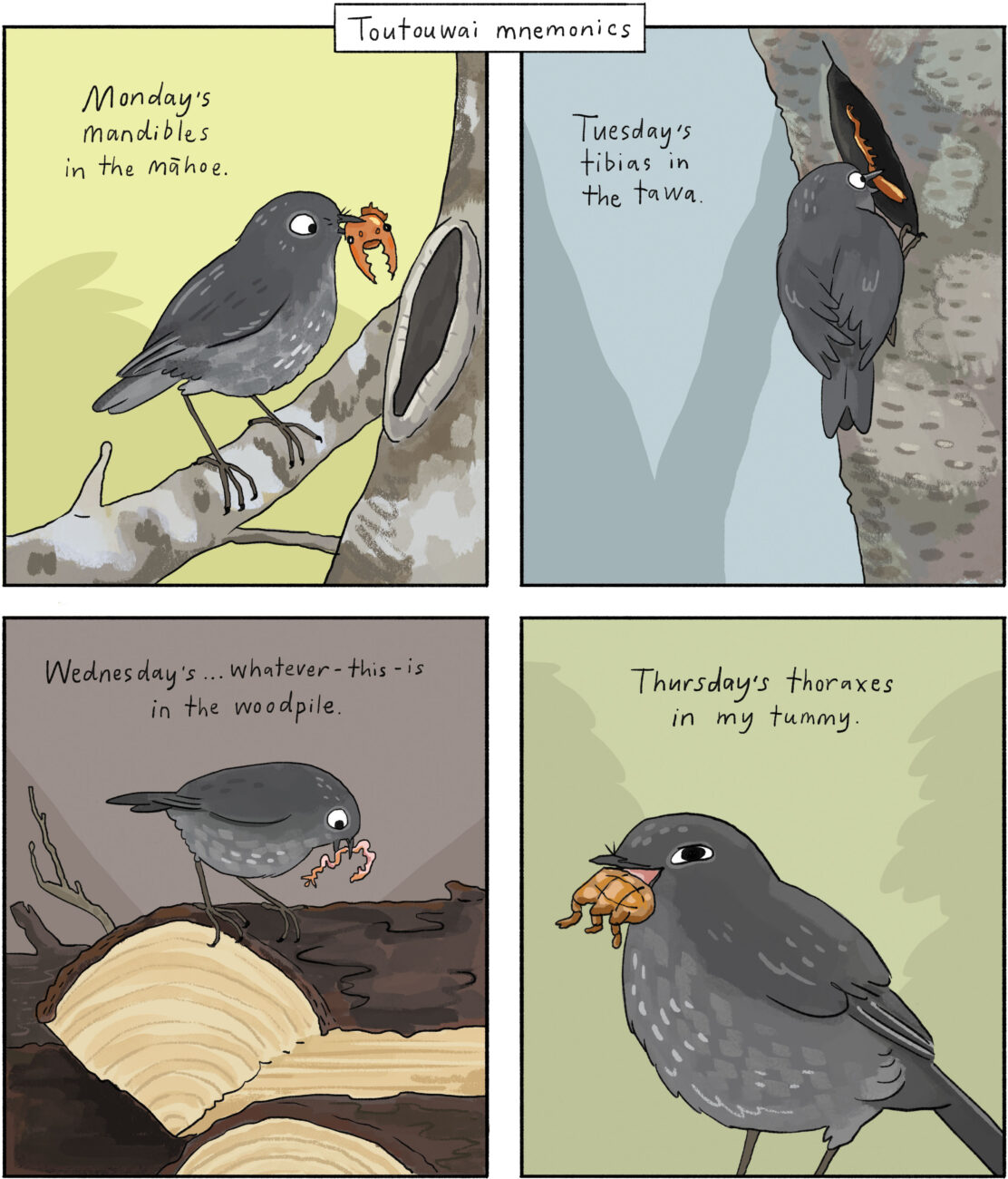
Rachael Shaw is only a few steps into Spark’s territory when he darts out from between the trees and perches on a stump. The toutouwai’s little grey body is perfectly still, his eyes unblinking. He’s waiting for his memory test.
But first, Shaw has to weigh him. She puts a set of scales down on the leaf litter, and Spark jumps on. She needs the New Zealand robin to be hungry—or at least interested enough in food to focus on her experiment. Otherwise, if he flunks the test, she won’t know if it’s because his memory’s bad or because he didn’t feel like a snack. Getting a bird to focus is a science in itself.
After she’s recorded his weight, she places a doughnut-shaped object on the forest floor. It looks a bit like a ring light, but instead of bulbs, it’s fitted with eight small containers. Shaw makes sure she’s got each container in exactly the same position as last time. Only one has a worm inside. In theory, Spark should remember this, and head straight to it without checking any of the other containers.
But he’s not very good at it. He picks the wrong container—again. So far, he’s near the bottom of the class, along with another bird called Scooby.
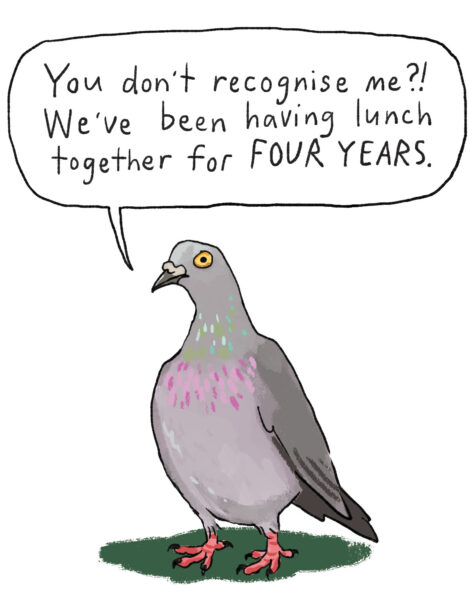
Toutouwai are supposed to have good memories, says Shaw, who heads the Wild Cognition Lab at Te Herenga Waka/Victoria University of Wellington. These robins are the only bird in New Zealand known to hide food for eating later. If they kill an insect that’s too large to eat in one go, they’ll simply dismember it and cache it. “They’re kind of like panthers,” says Shaw, “in that they take down large prey, rip it up into bits, and then hide it around in the trees and their territory to snack on later on during the day.”
They certainly don’t look like panthers. Spark could fit into Shaw’s palm. Perched with his wings folded behind him, he looks like he’s wearing a trim grey cape, and he’s balanced on legs the width of flower stems.
His brain can do some of the same things ours can, but it’s structured completely differently—“like a Christmas pudding”, says Shaw, compared to our “layer cake”. Bird brains also pack in many more neurons for their size than ours do. “So they can, with these very different brains, do some really phenomenal feats of memory,” says Shaw.
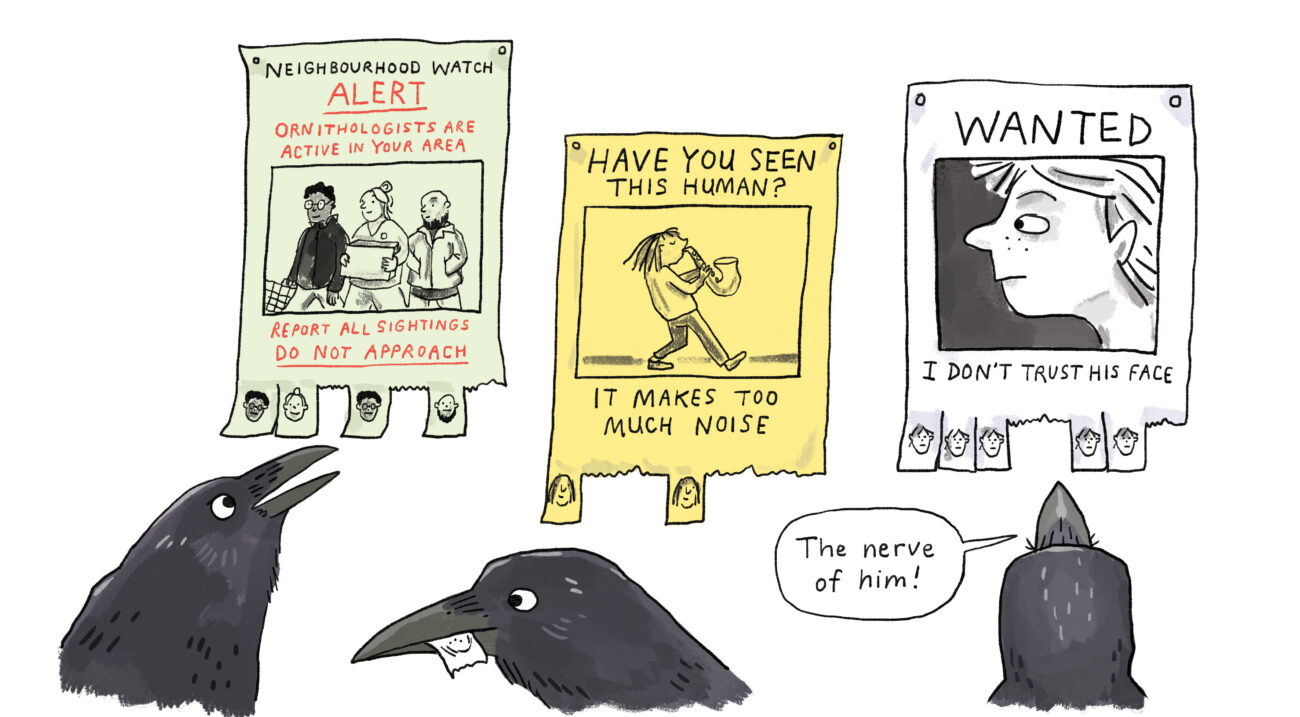
Some Northern Hemisphere birds cache food in up to 20,000 different places, then unearth it piece by piece months later. Urban pigeons can recognise human faces—and aren’t fooled if experimenters swap clothes. Magpies not only recognise faces but remember which ones are attached to people they don’t like. Crows do all of the above, as well as teaching other crows which people are mean to them—and they’ll hold this grudge for at least two years, US researchers found. (Researchers wearing caveman masks trapped and put leg bands on seven crows from a 10,000-strong colony. Later, when they walked around wearing the masks, ever-increasing groups of crows scolded them. Without the masks, they were fine.)
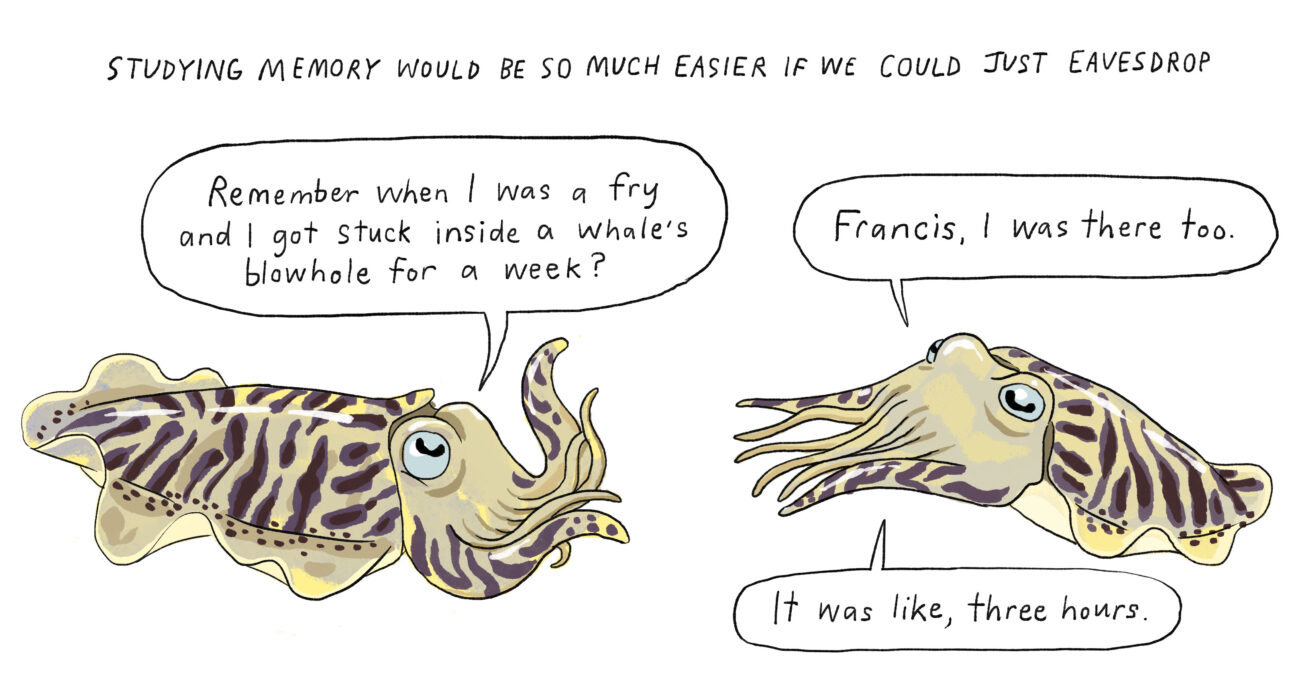
Crows’ ability to recognise faces made life hard for Shaw when she was studying them; it took her nine months of just sitting in her research lab’s aviary before she built up enough trust with the crows to be able to work with them.
By contrast, toutouwai are innately curious. Shaw suspects they can recognise people, too, but she hasn’t done the research to prove it.
To be fair, toutouwai aren’t the stars of the bird-memory world. Their location memory lasts for about an hour—the same amount of time they cache food for. But when Shaw returned to the birds, two years later, she found that they remembered how to open the lids of the containers from the test. (This was a skill she’d had to teach them; birds she hadn’t trained couldn’t figure out how to do it.) For a toutouwai, two years is a very long time—they usually live to five. “That’s like the equivalent of us learning something when we’re 10 years old,” says Shaw, “and then when we’re 50 being like, ‘Oh, yeah, I immediately know what to do’.”
[Chapter Break]
There are lots of different types of memory. There are the ones we tell ourselves as stories or play as videos in our minds. There are ones that live in our bodies—thus we remember how to walk, drive, or ride a bike. There’s working memory, the kind that can remember a phone number for a few seconds. There’s spatial memory, which allows us to navigate streets, and birds to remember where they stashed food.
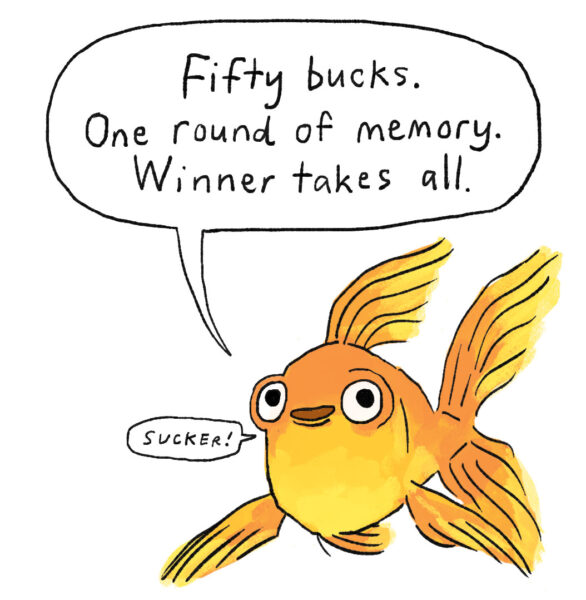
And there are also a lot of myths around memory—especially in animals. Like the one about goldfish having only a three-second memory. It’s considered common knowledge, and exists around the world (sometimes it’s two seconds, sometimes it’s 10, but it’s always incredibly short).
In fact, we’ve known for more than a century that goldfish can remember things for much longer. Goldfish are often called on to perform memory tasks in the lab; they’re used as a model species for studying memory in fish, just as Shaw is using toutouwai as a model for birds. A study published in 1916 found goldfish can memorise the layout of a maze; their spatial memory lasts for months—at least.
It all depends on what kind of memory we’re talking about. Human working memory (the remembering-phone-numbers type) lasts only 10 to 15 seconds; unless you rehearse what’s in your mind, you’ll forget the phone number more quickly than a goldfish forgets a maze.
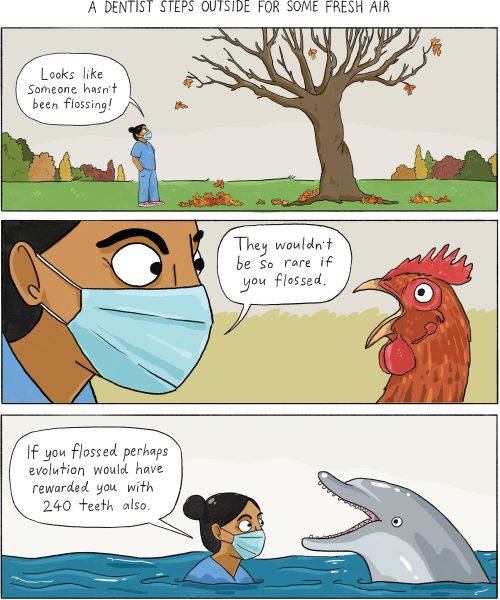
Even a Venus flytrap’s memory lasts longer than our working memory does. When it senses a touch on the trigger hairs on its jaws, it starts counting.
Two touches within 20 seconds and it snaps shut. No more touches and it reopens; perhaps a dead leaf floated inside. Five quick touches, however, is a sign it has trapped something living. The plant starts making digestive enzymes to turn whatever it is into delicious mush.
Misunderstandings about memory type are often at play in stories about dogs having bad memory, says animal cognition researcher Shany Dror from the University of Veterinary Medicine in Vienna, Austria. She thinks dogs’ spatial memory probably isn’t great, because they don’t need to navigate in the same way that a bird does. “Animals are good at what they need, right? Dogs are very cultural, and their ability to thrive in the world depends on their ability to work with humans and understand humans.”
Her research shows that dogs have a vocabulary of hundreds of words—she tests this by asking dogs to fetch toys or objects with specific names hidden in another room. “Every time I do these studies, I’m shocked by how much they could actually remember,” she says.
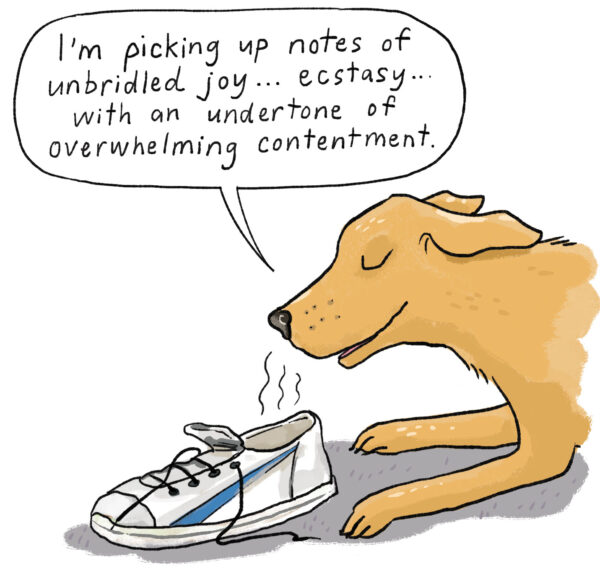
She suspects that dogs’ memories, just like ours, are stronger when they’re charged with positive or negative associations.
So do dogs remember all the walks they’ve been on? Perhaps. Research shows that dogs can remember specific events, but it’s extremely difficult to test whether any animal has our video-player type of memory. This is officially known as episodic memory—it’s stored in our minds like tiny fragmentary television episodes. Episodic memory is the show we watch over and over again, one that reminds us who we are.
Some studies suggest that animals—dogs, birds, cuttlefish—have episodic-like memory. But there’s a crucial piece we can’t test for: autonoetic consciousness. “So that’s the awareness that you were the author of those memories,” says Shaw. “But how on Earth do we test for autonoetic consciousness in a dog?”
It’s difficult for us to imagine how other species remember because the way they perceive the world is so different. Birds see more colours than we do. They can sense the magnetic field of the Earth. “If a bird, for example, could replay a video in their minds—first off, the colours of that video could be completely different to what colours would be for us,” says Shaw. Their memory show isn’t like our show, and for now, it’s largely unknowable.
[Chapter Break]
Episodic memory is important but flimsy; it’s the first type of memory we lose as we age, and it’s also susceptible to encoding the wrong thing. That’s because episodic memory is stored in pieces: a smell here, a visual there, a feeling over there. When you remember something, you call up all the pieces again and fit them together, but sometimes you accidentally pull out a piece from a different memory entirely.
Do animals, too, form false memories? Cephalopod researcher Christelle Jozet-Alves decided to test this in one of the memory champions of the sea: cuttlefish. She’d previously demonstrated that cuttlefish can keep track of time, and that they have episodic-like memory. “They can remember what they’ve eaten, how long ago and where it was,” she says. “They are the only invertebrate species where it can be shown that they can do that.”
Jozet-Alves, who is based at an animal-behaviour lab in Bretagne, France, trains cuttlefish to touch transparent plastic tubes in exchange for the food inside them. (The cuttlefish, which is the size of a pigeon, hesitates at one end of a fish tank, its colours fluctuating through a range of demure greys and browns. Then it darts forward and reaches out two slender tentacles to tap the tube.)
Then the real test can begin. Jozet-Alves presents three tubes: one containing a shrimp, the cuttlefish’s favourite food; one empty; and one with a crab, which cuttlefish will choose if shrimp isn’t on the menu. Each tube has a distinct background pattern.
Next, she attempts to trick the cuttlefish. She shows them only two tubes: the shrimp one and the empty one, with the patterns visible but no food in sight. The idea is to disrupt the original memory. The cuttlefish don’t get to choose a tube at this point, only look.
Jozet-Alves waits an hour, then gives her subjects a final choice. This time, they’re shown the patterns for “crab” and “empty”, and allowed to tap a tube. If they remember correctly, they’ll choose crab; it’s better than nothing. But half the cuttlefish pick the empty tube. They have muddled the patterns for “shrimp” and “empty”—perhaps because of that confusing flash of the tubes earlier—and as a result, they get no snack at all.
This isn’t a sign that cuttlefish have bad memory—rather, they have very sophisticated memory, says Jozet-Alves. “Because their life is not so easy. They have a lot of predators. They can’t fight, because they only have these small arms—not like octopuses. They’re not able to hide in small crevices, because they have this cuttlebone.” Cuttlefish, instead, spend their time motionless and camouflaged; they might move only an hour a day. Swimming around makes them vulnerable. “When they move, they have to make the right choice at the right moment,” she says.
In another study, Jozet-Alves fed some cuttlefish shrimp at the same time every evening. Once this routine was established, she offered all the cuttlefish crab (their equivalent of cabbage) during the day; those accustomed to a delicious shrimp dinner refrained. It showed that cuttlefish could imagine the future as well as remembering the past.
Jozet-Alves’ lab also studies octopuses; so far, they haven’t been found to have episodic-like memory, but that’s mostly because the octopuses are naughty, and she hasn’t been able to design an experiment to properly test their memory. “It’s like when you are in a classroom with children. You know, you have the ones that always do things perfectly. That’s the cuttlefish. And you have the child who’s throwing things everywhere. That’s the octopus.”
[Chapter Break]
If memory is so useful, then is evolution slowly increasing animals’ memory skills? Not necessarily.
After Shaw had conducted all the toutouwai memory tests, and figured out which birds had good recall, she and her team tracked them through the rest of the breeding season. Male birds that did better at the memory game—so, not Spark and Scooby—had more chicks, and brought their chicks more food. “So it does look like, from the evidence we have, that toutouwai spatial memory is under selection to basically favour birds that can remember better,” says Shaw.
But having a good memory made a difference only to male birds; it didn’t affect female birds’ offspring or behaviour. Perhaps there’s a different type of memory that’s more important for female toutouwai, says Shaw. Perhaps the process of evolution sometimes favours one type of memory at the expense of the other, so neither version comes out ahead. Otherwise, “if great memory is a good thing to have, then why doesn’t everybody just have the best memory possible?”
Such questions could potentially be answered by Spark’s grand-chicks—presuming his descendants remember that their chicks need feeding, and where they cached all the juicy thoraxes.