The fungus among us
A mycologist on a mission to catalogue all New Zealand’s species of rust has just added another 26 to the list. For Eric McKenzie, the fungal pathogens have been a 55-year passion. Some specimens have been sitting dried and unnamed in Manaaki Whenua—Landcare Research’s fungal collection for decades, but others McKenzie collected himself from shrubs and herbs in bush clearings, high-country grasslands, and islands from the Kermadecs to the subantarctics. The rusts can be quite hard to find, he says. “You’ve got to get down on your hands and knees, stick your bum in the air and crawl around. And then I have to get up again afterwards!”
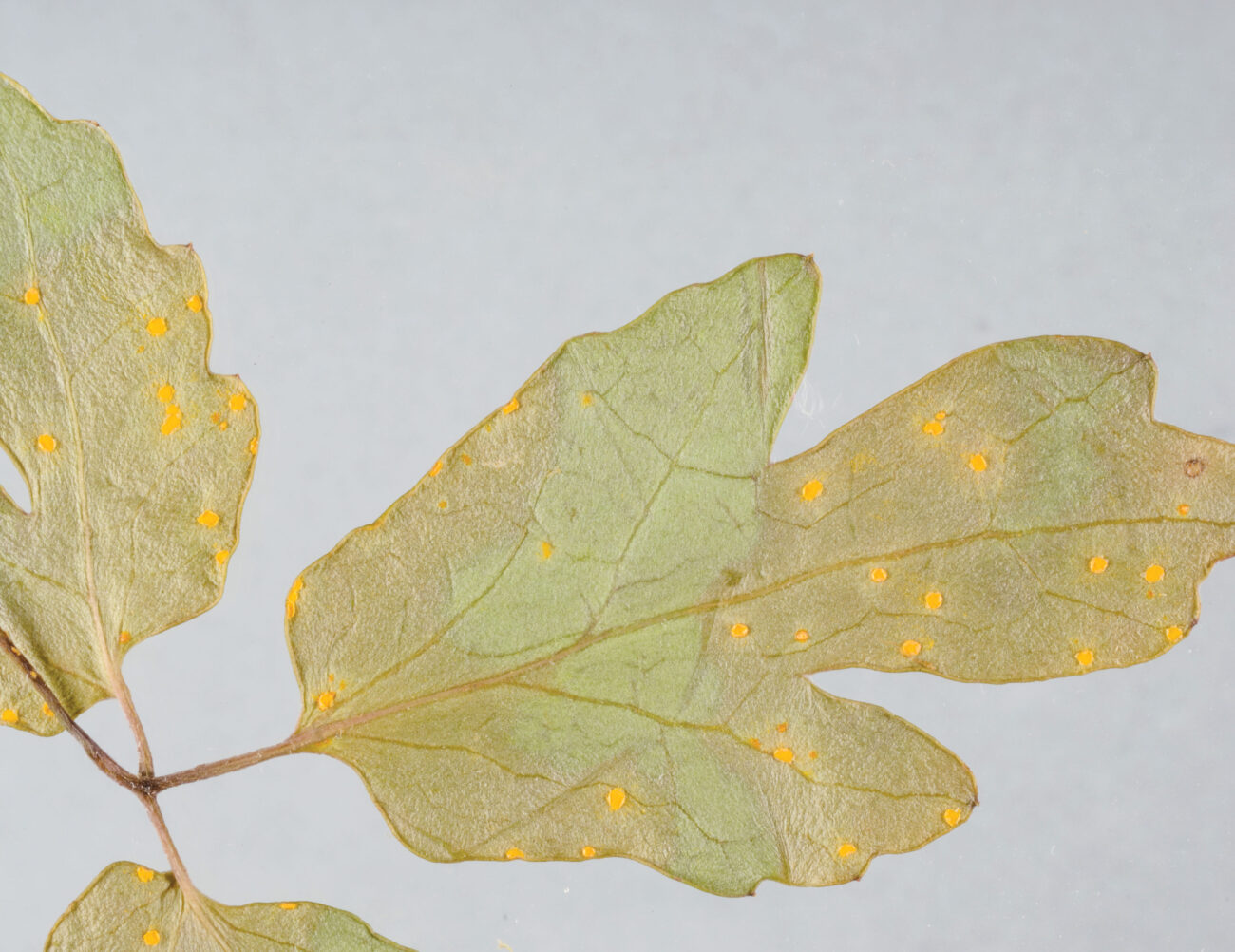
His efforts are rewarded, though, when he sees their bright colours and unique shapes under the microscope—such as Coleosporium puawhananga, pictured here on clematis. “It’s the thrill of the chase,” he says. “You never know quite what you’re going to see.”
One of McKenzie’s new rusts, described in New Zealand Journal of Botany, is an exotic that favours fuchsia plants. The other 25 are natives, and go for hosts including karo and the Marlborough rock daisy. Typically, each rust infects a specific species or genus, forming clumps of orange, yellow or brown spores on leaves and stems.
Spread on the wind or by passing animals (or people), rust infections can take out whole crops—the ancient Romans had a god of rust, Robigus, and every year sacrificed a puppy to him in the hope of alleviating the damage done by wheat rust.
The notorious invader myrtle rust now tearing through New Zealand bush is a particular threat, because unusually, it attacks a wide range of plants, and hits them hard (see ‘The Forgotten Pandemic,’ Issue 188).
We now know of around 150 native rusts—but unlike myrtle rust, they cause only minor damage, says McKenzie, as they “all live pretty much in harmony and balance with their host plant”.