The invisible immigrants
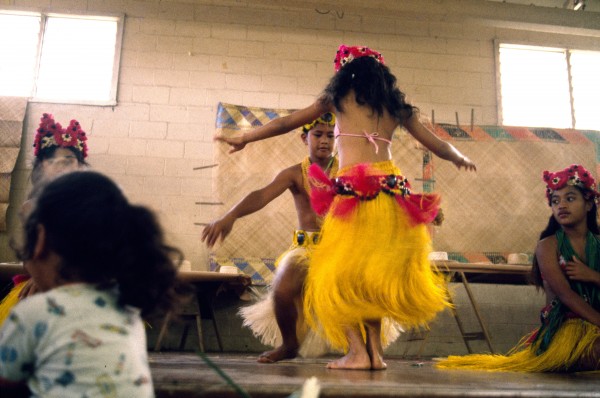
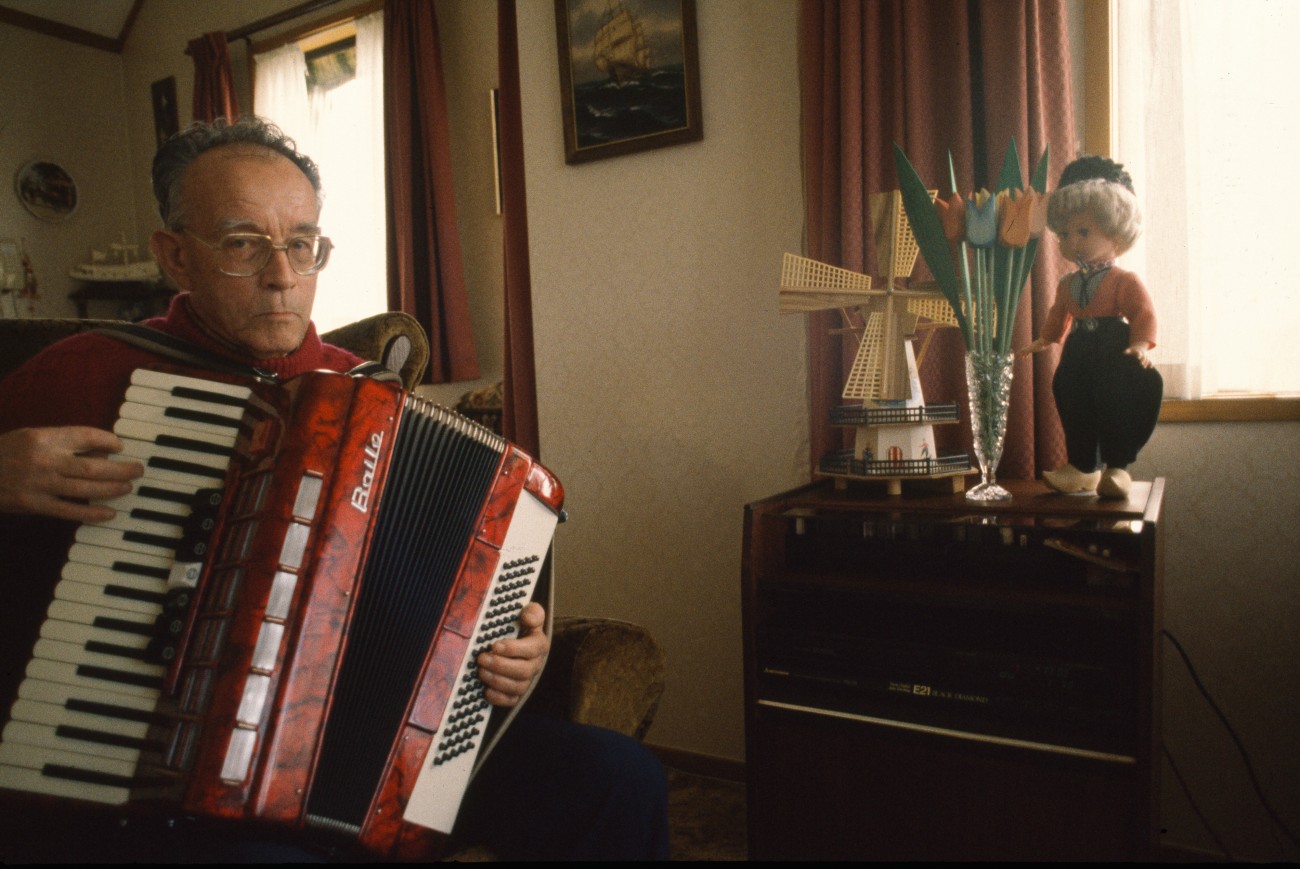
Three hundred and fifty years after Abel Tasman and his sailors became the first Europeans to sight these shores, we go in search of Tasman's legacy: the Dutch in New Zealand.


Three hundred and fifty years after Abel Tasman and his sailors became the first Europeans to sight these shores, we go in search of Tasman's legacy: the Dutch in New Zealand.
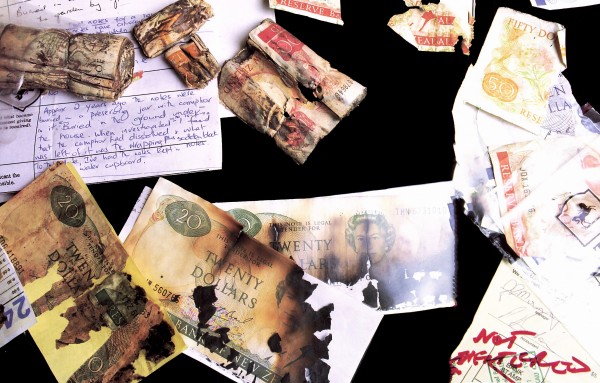
Dough, bread, boodle, brass, lucre, readies, folding—it doesn't matter what we call it, but it's the key to our dreams. Most of us will never get our heads on it; we'll be satisfied just to get our hands on it.
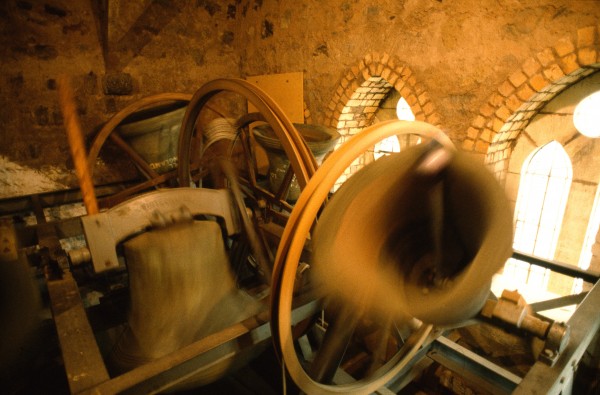
Though the age of electronics has robbed bells of many of their traditional roles,there is a world of ringing that has remained unchanged for 300 years.
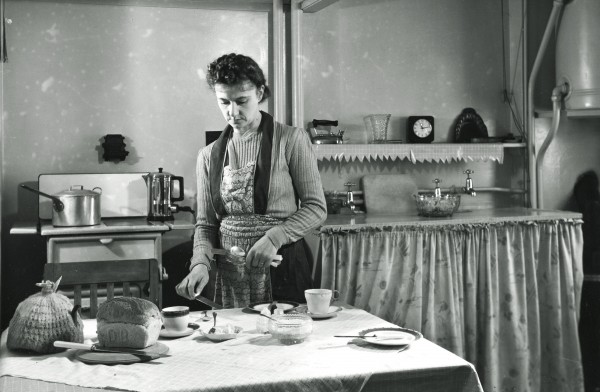
There was a time when the New Zealand dinner was a slab of meat, a dollop of mashed potato and a mound of boiled cabbage. Now, most of us have become more adventurous in our tastes.
It takes six hours' walking to reach Port Craig from the Bluecliffs road end. Seven hours if the tide is in. Seven hours of boulders, hills, streams, beach and wet bush. Finally, there's a bit of a clearing, a trampers' but and a few rotting wharf piles down on the beach. It's difficult to imagine that one generation ago this isolated headland at the southern tip of the South Island was the site of the largest and most modern timber mill in the country. Port Craig is at the western end of Te Waewae Bay, 45 kilometres from Tuatapere. Minty Hughes went to school there, in what is now the trampers' hut. He shows a photograph of himself standing with other school children in front of the building. There are more photos: family homes, singlemen's huts, a billiard hall, cook house—and the huge mill. Minty's 79-year-old eyes gain added brightness when the album flicks over to pictures of the bush locomotives and steam haulers. Now living in Invercargill, the dedicated steam hobbyist has spent the last two-and-a-half years building a working replica of the mill's Lidgerwood steam hauler. The Lidgerwood was the largest steam hauler used in the New Zealand bush, and was built in North America. Mounted on rails and weighing 90 tonnes, it pulled logs along a skyline cable held up by two rimu trunks spliced together to form a 30 metre spar. It had a vertical boiler connected to two engines capable of producing 128 horsepower, compared to the 10 to 20 horsepower capacity of ground haulers of that period. The two engines drove a total of ten winches. Minty's older brother worked as whistle boy for the Lidgerwood, signalling the hauler driver to slacken or tighten the wire ropes which ran off the winch drums. Seventeen men worked with the Lidgerwood: fellers with crosscut saws, trackers to clear lines for the trees, sniggers to hook the logs on the wires, riggers for the spars, and the driver and fireman. The hauler pulled mainly rimu logs from the hillsides to a radius of half a mile, until a complete circle had been worked. Later, the Lidgerwood was replaced by six ground haulers, each manned by five men and one boy. Minty left school at 14 to be whistle boy on one crew. Logs were pulled from the hauler sites to the mill by steam locomotives: a large Price built in Thames, two Invercargill-engineered Johnstons and a British Barclay. The mill itself was two storeys high, with the saws and benches on top and massive boilers fired by sawdust beneath. In its heyday it produced more timber than anywhere in the country—up to 1800 cubic metres a month. In the absence of a good harbour, timber was first carried to offshore traders on 12-metre lighters towed by launches. But after sand built up around the breakwater, the overhead cable technology of the Lidgerwood was copied on the wharf. A 21-metre tower was built, and loads of timber were slung, sometimes day and night, on to waiting ships, many of them bound directly for North Island markets, and some to Australia. At its peak, Port Craig was a town of some 230 people, with the mill employing at least 150 hands. Workers were paid once a month by cheque—to discourage gambling—with the company-run store bill deducted from the wages. Alcohol could be consigned from town, but had to be kept at the store until Saturday, after work had finished. When workers and their families travelled to town they were ferried across to Bluecliffs Beach by launch, and landed by surf boat. Today the most spectacular relics of Port Craig's logging era are four wooden viaducts built to carry the haulers and locomotives across ravines to the west of the township. Incredibly, all are still standing. The largest, the Percy Burn, spans 125 metres and stands 36 metres above the stream bed. Buried in the regenerating forest for 60 years, and virtually unknown outside the district, the Percy Burn viaduct was selected in 1990 as one of New Zealand's 50 great engineering works by the Institute of Professional Engineers of New Zealand. The viaducts represent the very best of the bridge builder's trade. All are of trestle design, with steel-braced beams of Australian hardwood, probably jarrah. A cookshop and huts for about 20 men were built at the site, and construction took nearly a year. A cable was slung across the gully from one of the logging haulers, and the bridge components winched across under a carriage and placed in position. The Percy Burn was the biggest viaduct constructed for a bush tram in New Zealand, and it was the second-longest and second-highest ever built. The largest was the Ormondville viaduct on the Hawke's Bay railway line, demolished 20 years before the Percy Burn was com pleted in 1923. At £5000, the viaduct was expensive, but a cheaper option than building extra tramlines and excavating to maintain a gradient around the head of the stream. Time is finally beginning to catch up with the Percy Burn viaduct. Some of its supporting beams and trestle legs have rotted out, and wind stress has caused it to buckle. Deterioration was hastened in the 1970s when a pig hunter set fire to the structure. As the story was told in Tuatapere's Waiau Hotel, the hunter had lost a pig dog off the side of the then undecked bridge, and to spare fellow hunters a similar fate he tried to bum it down. Fortunately, his attempt failed, and shortly afterwards the Forest Service redecked the viaducts to increase safety and improve access for hunters and trampers walking between Port Craig and Waitutu Forest. Recently the Tuatapere community, Department of Conservation, Southland District Council, Historic Places Trust and New Zealand Army joined forces to carry out repairs on the Percy Burn viaduct. Soldiers from the Army's Ready Reaction Force abseiled from the deck to brace deteriorating timbers. Under their war gaming scenario, the bridge had been weakened by enemy fire. In reality, it was the 1920s economic recession which was the death knell for the Port Craig sawmilling operation—at that time the largest and most ambitious in the country. Falling prices and a depressing assessment of the remaining timber resource forced the owners to close the mill on October 6, 1928. Minty Hughes, like all Port Craig workers, was given four days' notice. When the Bluff Harbour tug, Southland, arrived to pick up residents, they had only a few hours to gather together what they could carry. Many arrived in Invercargill with nowhere to go, and, with the Depression beginning, they had little chance of finding other work. In 1940 the machinery, mill and houses were sold to a salvage firm and removed. All that remains are the viaducts: unique relics of Southland history.
Mark Scott continues his exploration of the Cooks, looking in this article at the southern islands.
As a showcase for New Zealand's native timbers, the works of two little-known Auckland cabinet-makers are unsurpassed.
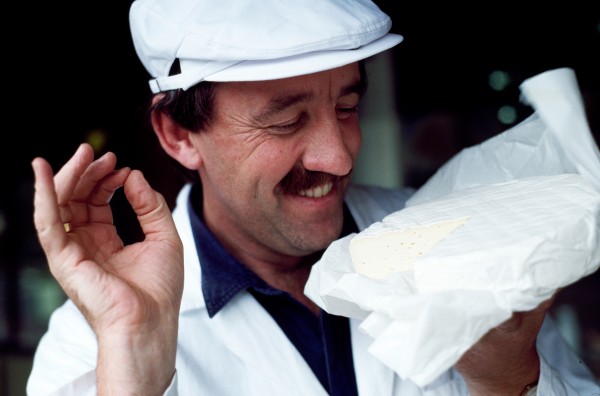
It is remarkable that the coagulated solids of just one product — milk — should be capable of producing so many different flavours, textures and colours. David Burton takes a close look at one of the world's favourite foods.
The sight and sound of a score of waka taua, war canoes, and their sweating, chanting crews will forever remain etched on the memories of those who attended the 1990 Treaty of Waitangi commemoration. The waka has become a symbol of Maori unity and pride in this year of remembrance. Some say it is the vehicle which will carry the mana of Maoridom into the 21st century.
We shake hands. I say, "Kia ora," you say, "Kia ora," and, unless you're Maori or we are in a Maori setting, this is usually followed by a conscious effort on my part to contain the urge to press noses with you. For a Maori, the hongi is a physical expression of our meeting on a spiritual level. My wairua (spiritual self) greets yours. The hongi is the key to a free flow of emotions based on mutual trust and goodwill. The breath of life enters and leaves through the nose. The practice of hongi with the deceased at a tangi is a physical acknowledgement that the wairua has indeed departed its mortal coil — the nose being the final part of the body to turn cold. But, back to you and me, the Maori in me says, "Go ahead," but somehow the conventions and the times in which we live dictate something else. There is an uneasiness. I see it in your eyes, I feel it in your hand — your wairua and mine do not sit comfortably together. We have merely acknowledged each other's presence. Even after 150 years we still choose merely to co-exist. Come, feel the warmth of my nose.
Darkness. And the shuffling of the crowd around me. Excitement hangs over us, sparkling faintly in the whispers and coughs, the yawns and murmurs — soft, with the dawn. We wait. Then, begin to move. Forward, slowly, all of us, behind her. And behind the old man whose voice lifts and soars, lifts and soars, cutting through the dark, clearing the way. They pause at the door, that special group, there in front of our fumbling, tense, rippling mass. They are so still. Like we are meant to be, try to be. A question is asked, and the name is given. With a sigh the door slides open, while the karanga, the mourning, keening, gripping chant-cry of the kuia, the old women, fills the cool air around us. And suddenly there is light, a radiant flood of light, pouring through the windows, spilling on to the verandah, gracing the rafters. Light from the ceilings; light from the eastern skies. We all gasp — a long, collective, loving gasp — at the beauty of this new house, so rich, so splendid, so warm. Carved images prance and smile and reach out for us from the walls while panels of lattice tukutuku weaving lock them firmly into place. Overhead, the rafters stretch wide, protecting us with their smoothly flowing patterns, and, beneath our feet, finely woven fibre mats cover the floor. The new house is ours, from them — another gift. From the artistry of our ancestors, from the certainty of their knowledge, from the strength of their spirit. He oranga ngakau mo to iwi — a source of pride for us. [chapter-break] Taha wairua, the way of the spirit in matters Maori, permeates our world so profoundly that to isolate and analyse it is almost like threatening the very fabric itself. Spirituality and artmaking have formed an integral part of the Maori world view from ancient times until the present day. The early voyagers from the central Pacific settled this land over a period of four or five hundred years. Oral tradition tells us that the final landfall probably occurred some time after 1400, yet the very first food was eaten on these shores in the tenth century, over a thousand years ago. Guiding those great ocean-going canoes and ensuring a successful journey were a myriad of supernatural beings, creatures of wairua brought from Hawaiki Nui, the home‑land. Some were carried in the form of tokens and talismans, but most were conveyed silently and secretly, in the hearts of the people. With the new land's abundant resources of stone and fibre, wood and feather, bone and shell, the settlers' hearts were opened, and their creative imagination flourished. Divine inspiration shaped those very first taonga tuku iho, treasures of the ancestors, that are revered, cherished, and admired today. And thus the spirit thrived. In contrast to the islands of origin, this new land offered vast wealth: colossal trees for house and canoe building and ornamentation; prolific bird life providing masses of food and decorative feathers; huge river-hewn quarries of jade; long ocean beaches stranding disoriented whales; cliffs of glittering obsidian; vast tracts of supple, shining flax plants. More than enough to compensate the loss of the aute — paper mulberry for Papa cloth — and hara — the sturdy pandanus for weaving. Though cold in winter, the land was an incredibly plentiful resource; Papatuanuku, Mother Earth, gave generously. And as she gave, so her gifts, ultimately, were returned. Every art piece or artefact made before 1800, and certainly most since then, has been a tribute to the natural world. Although fashioned by human hands, the taonga remain sourced within the environment. An elaborately carved war canoe will typically be a gigantic totara or kauri tree, enhanced by paua shell and toroa feathers, resin, supplejack and flax fibre. With time and circumstance these materials may once more become part of Papatuanuku, to be folded within her earthen self. Awareness of this possibility is constantly acknowledged by the people. Similarly, great houses are seen as living entities rising from the earth — even now, despite the inclusion of introduced materials and technology. Like canoes, great houses can travel, get dismantled for long periods, be concealed deliberately and carefully, or find themselves falling, easily and miserably, back into the ground. But whatever may happen to the material form, the wairua, the spirit, of the taonga remains with the natural world, with the environment, with the land. The old-time Maori lived with a stone age technology. The impact of metal upon the material culture the arts, warfare, architecture — was dramatic, even devastating. Adaptation was immediate, especially in whakairo, the carver's art. Stories of nails meticulously removed from ships' decks are no doubt true. These nails became the first metal chisels and transformed the face of traditional carving, just as musketry disfigured the subtle nuances of warfare. But whatever the means employed, the inspiration and the genius still came from the spirit. Wairua was surely a realm of great beauty. The ancient Maori was an ardent lover of beauty in the natural environment and in any manufactured reflection of that world. Beauty was, and has remained, an essential quality of Maori life. It is a mirror of the inner self, imbuing even the most functional object with specialness and spirit. Even very mundane items — eating bowls and utensils, baskets, gardening tools, mats, fishing sinkers and fishhooks, chisels, bird troughs and canoe bailers — were gracefully designed and craftily decorated. Everything, no matter how simple, had to be pleasing to the eye and touch. Which brings us to fashion — to the supreme beauty-consciousness of the early Maori and their enjoyment of elaborate dress, complex (and usually permanent) facial make-up, and a dazzling display of jewellery and accessories. The first Pakeha explorers noted the richness of chiefly costume and the regal manner of their bearing; their immaculately dressed hair fastened by combs of wood or bone; their glowing pendants and curious amulets of polished nephrite; their shimmering fibre cloaks and brightly textured dogskin wraps; their haughty faces golden brown beneath a swirl of chiseled indigo. Balance a harmony of textures, colours and tones — was essential to achieve the appropriate effect, and, more importantly, to move within the flow of the natural world. For the fashionable chief reflected his or her environment, and therefore had to be aligned with it. Every piece of the well-dressed Maori's wardrobe had a significance, an essential mauri, or life force, which linked the taonga to the natural world, and in the end, to Papatuanuku herself. Balance was also a vital element in weaponry. The first settlers brought with them from Hawaiki the original patu shape — the short, hand-jabbing weapon of Polynesia. Here the form blossomed. Crafted from jade, hardwood, basalt or whalebone, and used like a thrusting short sword, the patu had a simplicity ornamented only by its grip. The medium would determine the complexity of design. Mere pounamu, greenstone clubs, are thus deceptively clean and unadorned, yet balanced with lethal accuracy; patu paraoa, made from softer whalebone, often feature elaborate bird forms and shell inlay, or carved manaia profiles. Elegant and deadly, such beauty would inspire courage and bolster the warrior's spirit. Each weapon, whether a jabbing patu or a striking taiaha, longstaff, had its own name and identity; not only from its function and the material it was made from, but, more significantly, from its custodian and wielder. All prized Maori artefacts acquire power from those many people who have looked after and enjoyed them. Related again to the natural world are the design forms taken by the taonga. Within the plaited complexity of taniko weaving and tukutuku wall panels are the flounder shapes of patiki, the wavy chevrons of aramoana, the twinkling stars of purapura whetu. Kowhaiwhai rafter painting recalls unfurling fern leaves, sinuous shark shapes, budding flowers and gaping seed pods. Artists followed a cycle of acquiring raw materials — wood, fibre, or some other making the taonga, and then, to complete the transformation from resource material to manufactured item, applying in decorative form a reference to the taonga's source. Like a spiral, one of the art's most common yet potent symbols, the taonga turns back to its beginning, back to itself. Up until now I have referred to taonga using the word "it", when for most, if not all, Maori, taonga are living entities, best addressed as "her" or "him", or, ideally, by a personal name. The impersonal pronoun neutralises an artefact, not only demeaning the power within, but distancing the treasure from the beholder, the toucher, the caregiver. The relationship that Maori enjoy and cultivate with taonga tuku iho is of major importance. A carved house truly does embody a revered ancestor; a great canoe actually personifies a concept, a vision, that motivates the people. Even the tiniest pieces demand this firm regard: one of the daintiest, most delicate taonga in the fabled Te Maori exhibition — a tiny bone earring — was among the most memorable. Despite her size, she ached with the quiet power of all those generations who had fondled and coveted, touched and admired her unusual beauty. For the Maori people and, specifically, for this Maori person, ancestral art holds many different meanings. The taonga inspire and confront; they relax and soothe; they provoke and energise; they empower and sustain. They convey memories from the past and make promises for the future. They tell us where we, as a people, have come from, and they show us where we are going to. They represent hope, fortitude and resilience: the survival of spirit. Over the last two hundred years much has been utterly, irretrievably lost — deliberately burned in the name of Christendom, recklessly smashed by colonial expansion. Carved structures flattened, sacred sites desecrated. In some regions it is said the visual arts vanished altogether. Yet the embers stayed warm and the wairua remained. In spite of the bitterness of land confiscation, introduced epidemic diseases and language loss, those plundered generations survived, and beneath the ravaging pressures of the nineteenth century, they created some of the finest, most fabulous taonga we have. The legacy of that troubled, desperate time to this one is one of genius, of adaptation, of energetic and extraordinary artmaking. And what will be our legacy to the next generation, as we move into the third millenium? The ancestral art forms, and their making, have been successfully retained and fostered, though not without considerable struggle and the grim determination of remarkable individuals. Rangimarie Hetet, the doyenne of Maori fibre art and garment manufacture, continues to inspire, motivate, and encourage; her own family, and their many scores of students, celebrate the tradition and reinforce its continuity. The artistic offspring of such tohunga as Piri Poutapu and the brothers Taiapa still enthrall contemporary Aotearoa with spectacular houses and superb canoes. And, predictably, as the cultures of this land entangle, convolute, merge, or parallel, new art forms and new artmakers rise to the surface from within the Maori world. The wairua lives on: a new beginning... and another story.
There are more cautionary notes in Māoridom dealing with mana than you could shake the proverbial stick at. It is a source of both personal and collective strength, pride and identity. Mishandled, it becomes the bearer of shame, ridicule and embarrassment. If mana allows us to walk tall, then it also casts a long shadow—humility. To write about mana can be likened to picking blackberries: it's not a job for the barefooted, the fruit is sweet but fragile, and don't upset your neighbour—stick to your own patch. In other words, draw on your experiences, not those of others. Chris Winitana, journalist and student of Māoritanga, is a blackberry picker from way back.
A traveller through Northland who takes a wrong turn at Moerewa could stumble on Matawaia, and the verdict might be: this is a place God forgot to finish. There are no shops, just a school, a marae and a few dozen houses dotted around the valley. The corrugated metal roads are bounded by bracken fern and teatree. Creeks run into acres of swamp. This is my home base, my turangawaewae. Life takes me all over the place, but in Matawaia I know who I am. It is the place from which my canoe was launched on life's rocky road; it is the stump to which I will tie that canoe at journey's end. In life it is the ground on which I stand, in death it becomes to ukaipo, the breast that nurtures me at night. In this essay Professor Timoti Karetu, chairman of the Maori Language Commission, describes his experience of turangawaewae.
On Waitangi weekend, 1989, the tiny central North Island town of Minginui was at the centre of a massive military operation. Troops and artillery flowed into the town in a last-ditch effort to quell a (mock) rebel uprising. The townspeople, mostly spectators in the army drama,had reason to reflect on the significance of the clash: in many ways Minginui itself is facing its darkest hour.
Thank you, New Zealanders, for your overwhelming support. We now have 7000 subscribers — twice as many as our target — and all the shop copies we printed have been sold. Response to the first issue has been fantastic. Some of the scores of letters we have received from readers are printed on pages 7 and 8. One of the most exciting responses comes from Horowhenua, where a primary school has been using our first issue as the basis of its social studies programme. Colin Dunn, headmaster of Foxton Beach Primary School, took a class set of copies of the magazine and the Form One and Two students have been working through the stories one by one. The children love it! And as a result of reading the article on Goat Island marine reserve, they plan to take action to preserve the Foxton Beach area. Obviously Foxton Beach School takes geography seriously, and this became even more apparent when we visited the school and found a full-scale telescope in the schoolyard. Foxton Beach is the only primary school in the country, we believe, with its own observatory. We heard from another teacher that there was more information on our rock pool poster than in the education syllabus resource material. It's feedback like this that makes us confident we're heading in the right direction with New Zealand Geographic. We sincerely believe that this is one teaching resource that should be in every school. And not only in schools, of course, but in the home. New Zealanders are becoming more and more aware of the global threats facing Planet Earth, and we are convinced that the subject of geography must take centre stage in the education of parents and children alike. New Zealand Geographic has been launched with just that purpose in mind. We hope that each article, photograph, illustration and poster will in some way improve our appreciation of New Zealand and its people. And beyond that, to build respect for the planet and all its inhabitants. We are proud that our journal is already being used as a learning tool to make geography exciting and relevant to schoolchildren in New Zealand. Who knows, after reading this issue our Foxton fans may all become amateur beekeepers!
Digging into placenames inescapably pushes us into our own colonial history. The colonists came seeking a new and better life, but Britain was still home. Old patrons and old heroes remained. Britain hadn't made life easy for the New Zealand Company, but on the muddy shores of Port Nicholson the company's Principal Agent, Colonel William Wakefield, patriotically chose "Britannia" as the name for his fledgling settlement. Governor Hobson approved. So did the New Zealand Gazette which promptly added "Britannia Spectator" to its name. On August 22, 1840, it commented: "It [Britannia] is a good name, because till now unappropriated by any town ... and further, in being agreeably associated in the minds of all Britons with their fatherland ..." "Fatherland"! Colonel Wakefield's superiors were unimpressed. Their displeasure surfaced in an "earnest wish" that the town be named after the Duke of Wellington "... to commemorate the important support His Grace had lent to the cause of colonisation." Head office's "earnest wish" could not be ignored. On November 28, 1840, just four months after the New Zealand Gazette and Britannia Spectator had lauded the choice of name for the embryo town on Lambton Bay, the journal announced further change. "Wellington" had replaced "Britannia." The Gazette, now incorporating "Wellington" in its masthead, again approved: "The directors always contemplated calling the town of their principal settlement after the illustrious warrior of modern times ... The directors of the New Zealand Company have made this settlement familiar to thousands throughout Great Britain by associating it with the name of the Great Captain of the Age..." Meantime, life in the Bay of Islands wasn't proving easy for Governor Hobson. He was unsure where the capital of the new colony should be. Eventually, he settled for a location a few miles along the beach from brash and booming Kororareka and named it "Russell". He was honouring "the courage and the capacity" of Lord John Russell who, as Colonial Secretary a year earlier, had bluntly rejected New Zealand Company claims that Cook's landing on New Zealand soil had vested sovereignty in Britain. Kororareka settlers were not amused. Russell beame "Hobson's Folly", doomed from the start. Kororareka was the biggest and bawdiest town in the colony; the land speculators had been busy and everyone confidently expected it would be named the capital. The settlers who wouldn't then accept "Russell" were not to know that a few years later the name would drift along the beach and be adopted almost without question by Kororareka. With Russell unacceptable, Hobson sought an alternative. He crossed to the Hokianga, found a site suited to his purpose and named it "Churchill". But like the original Russell, Churchill remained a mark on a map. Before the surveyors moved in Hobson discovered the Waitemata. His search was over. There was no European settlement there — something Hobson's detractors in newly-named Wellington were quick to point out — but the potential was great. He called the place Auckland and a debt was repaid. Three years earlier Lord Auckland, then First Lord of the Admiralty, had recalled him from obscurity as a retired naval officer on half-pay and won him command of the India Station ship Rattlesnake. His voyage to New Zealand in 1837 marked him for greater things. To the chagrin of Wellington — which had petitioned the Governor "humbly expressing the hope of the [Wellington] settlers that His Excellency would decide upon fixing the seat of Government at a spot so admirably adapted for it as Port Nicholson..." Auckland mushroomed and grew rich. The genesis of an ongoing rivalry between the two cities was established. More importantly, a pattern had been set. The names of Britain's great and famous proliferated as new settlements appeared. Palmerston in both the North and South Islands nodded deferentially towards the Foreign Secretary who had given Hobson his Governor's brief. Nelson honoured the hero of Trafalgar; Napier remembered "one of the greatest and best Indian Captains"; Alexandra took the name of the Danish Princess who was to become consort of Edward VII; Gladstone in the Wairarapa and in Southland paid tribute to a British Prime Minister; Lawrence remembered the defender of Lucknow. Auckland remained the capital for a quarter of a century but pressures of politics and growth, coupled with strident calls for South Island independence unless political and geographic imbalances were remedied, saw the seat of Government transferred to Wellington in 1865. Even then, there was something to make Auckland smile wryly. It took an invited commission of Australians to direct the Government into change.
Tony reid describes himself as "unashamedly urban in background, tastes and living skills." Understandably, the idea of visiting lighthouse keepers in some of New Zealand's wildest and most remote locations caused the former Listener editor some apprehension. "I was protected by luck and an Austrian photographer named Arno Gasteiger," says Tony. "While the weather forecasts were threatening we never struck one of those legendary storms that lighthouse keepers enjoy talking about. And the skills Arno learned as a truckdriver in Europe were put to good use negotiating the often hair-raising road access to some lighthouses." A background in rock-climbing came in handy for Arno as he clambered up and down windswept cliff faces to seek out the perfect photographic angles. "Even the keepers were amazed at some of the places he got to," says Tony. Arno's unusual command of the English language turned out to be a great ice-breaker on the lighthouse stations. "He might politely say, 'I am thinking a very interesting picture. And now we will please go outside and make it, okay?' You watched the keepers and their wives just melt in the face of such a charmingly expressed request. I am convinced I would be a more successful interviewer if I could learn to speak English the same way!" Even so, Tony managed to fill six notebooks with material from more than 70 hours of interviews. "Although the visits were brief they were also intense and I felt we had made friends with some terrific people. We were privileged to be shown around some places that most New Zealanders know nothing about." For Yvonne van Dongen, leaving the plush offices of Brierley Investments Ltd, where she was researching material for a book on Sir Ron Brierley, for the rigours of Minginui was something of a shock. "Now I know what the tourist phrase 'New Zealand — land of contrasts' really means," she commented, on returning after five rain-soaked days. "Actually, that's more sad than funny. Even worse than the unemployment and isolation of Minginui is the despair that many locals feel." Yvonne, formerly a reporter with National Business Review, says that her short stint as a make-believe war correspondent has not whet her appetite for the real thing. "If those bullets were really flying around I'm sure I'd never be in the right spot for the action and if I was I'd be so petrified I wouldn't be looking!" Getting up close to bees proved to be quite a challenge for photographer Michael Schneider, commissioned to provide images of life in the hive for THE AMAZING BEE feature. Apart from the physical demands of photographing through a veil while fully decked out in protective clothing (in searing midsummer heat) there was the difficulty of being present at the exact moment when the queens and drones were hatching. To solve the problem, beekeepers Ben and Dorothy Rawnsley built Michael a glass-sided hive, which he kept under observation in his bedroom. The generic name for kauri, Agathis, comes from a Greek word meaning "ball of thread". For writer Vaughan Yarwood researching the KAURI story was like unravelling a very large ball of thread, with many side pieces spliced in and not a few knots! As Vaughan and photographer Geoff Osborne (who worked on the 'Wild Horses' feature in issue 1) travelled around the North, they both felt that they were going on a personal journey of discovery, looking at an important part of New Zealand's heritage. Ian Macdonald, who worked on the kauri story, is no newcomer to photographing the forests of New Zealand. His work in the 1970s on Whirinaki Forest made an important contribution to conservation awareness at that time. We hope that something of the mana of the kauri, which each of the contributors has felt, comes through to you the reader.
New Zealand Geographic will survive on the strength of its journalism. For that reason we have set exacting standards for our contributors. To encourage them, we intend to acknowledge and applaud the writers, photographers and artists whose work appears in our journal.
Loading..

3
$1 trial for two weeks, thereafter $8.50 every two months, cancel any time
Already a subscriber? Sign in
Signed in as . Sign out

Ask your librarian to subscribe to this service next year. Alternatively, use a home network and buy a digital subscription—just $1/week...

Subscribe to our free newsletter for news and prizes