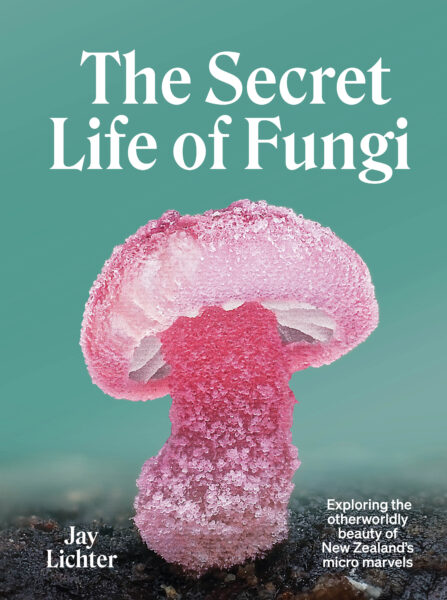
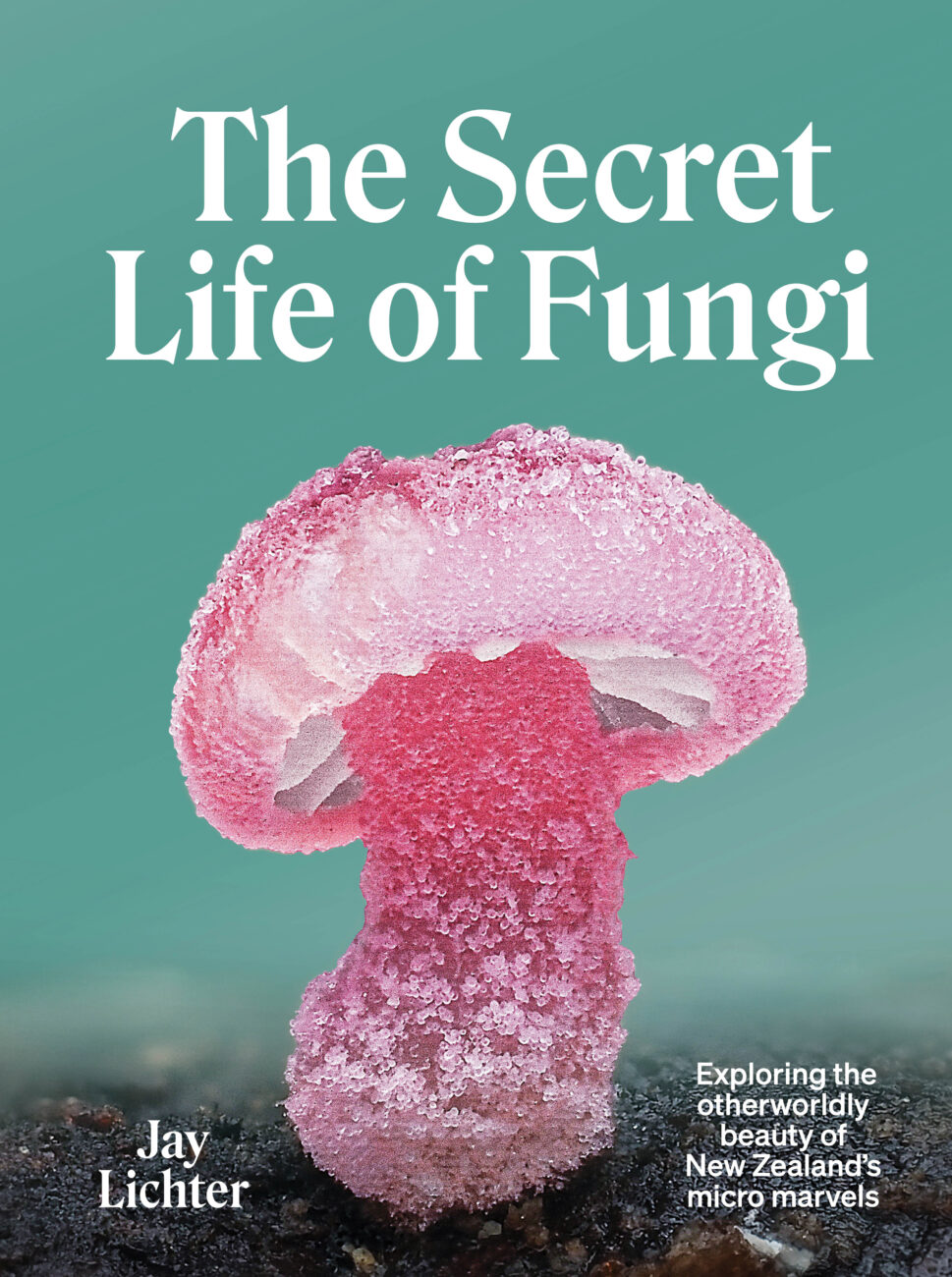
The Secret Life of Fungi
Jay Lichter, Allen & Unwin
Now is the time of mushrooms. In autumn, fungi are a form of wildlife that you barely have to go any distance to see—but you do have to look very carefully. It’s a bit like treasure-hunting, writes photographer Jay Lichter: “Even after a few years of tireless searching, I still find new things in new places all the time,” he writes.
Most of his photographs were made in public parks or on walking tracks around Auckland, where he lives. Lichter is the kind of person who slows down at the sight of rotting wood: who knows what it might contain? Carparks, gardens, and dead trees on empty sections all furnish unusual specimens. Often, his subjects are the size of a pinhead, dwarfed by a fingertip, and his pictures make their details visible. (We published some of his early images as a photo essay in Issue 185.)
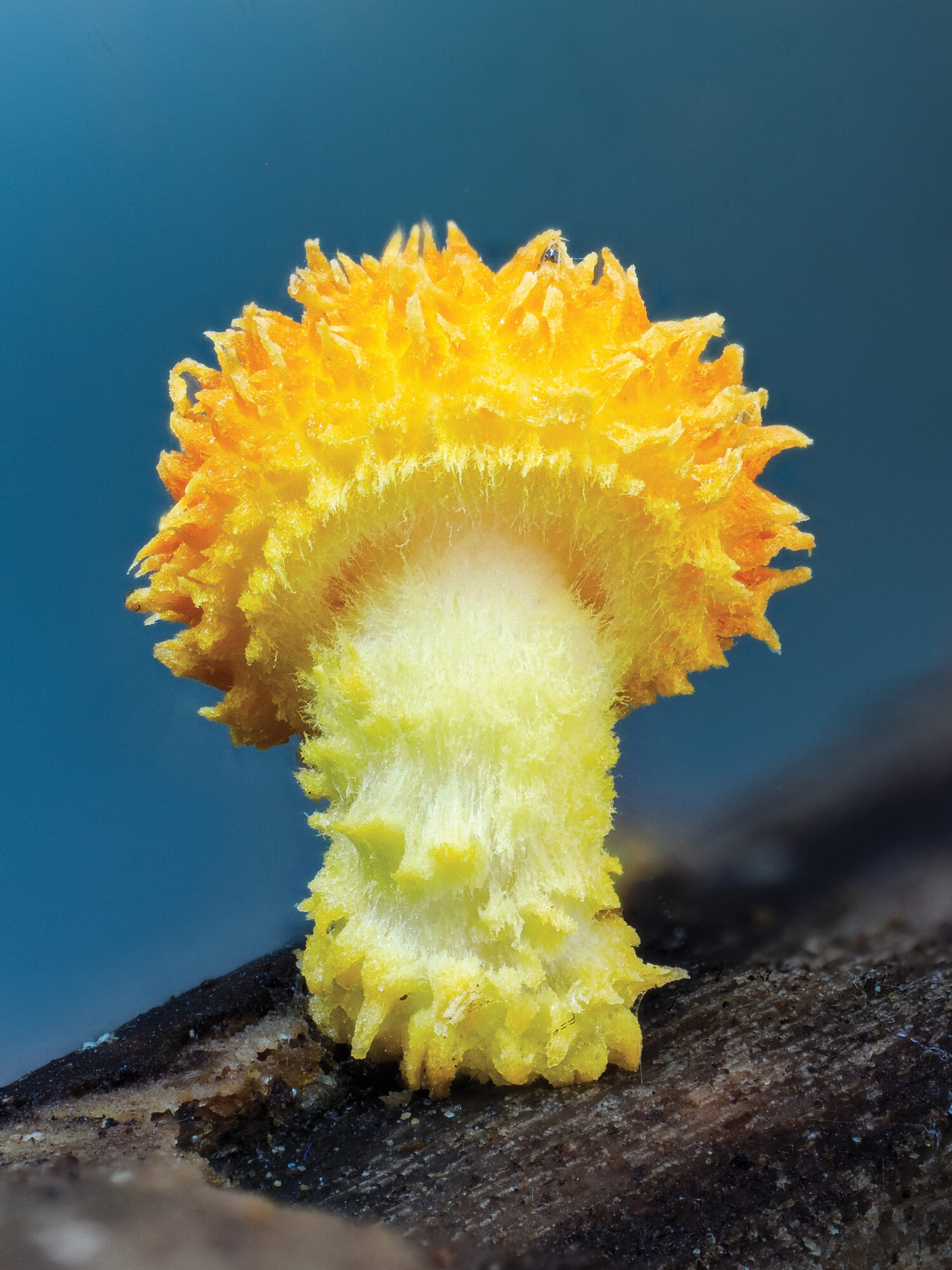
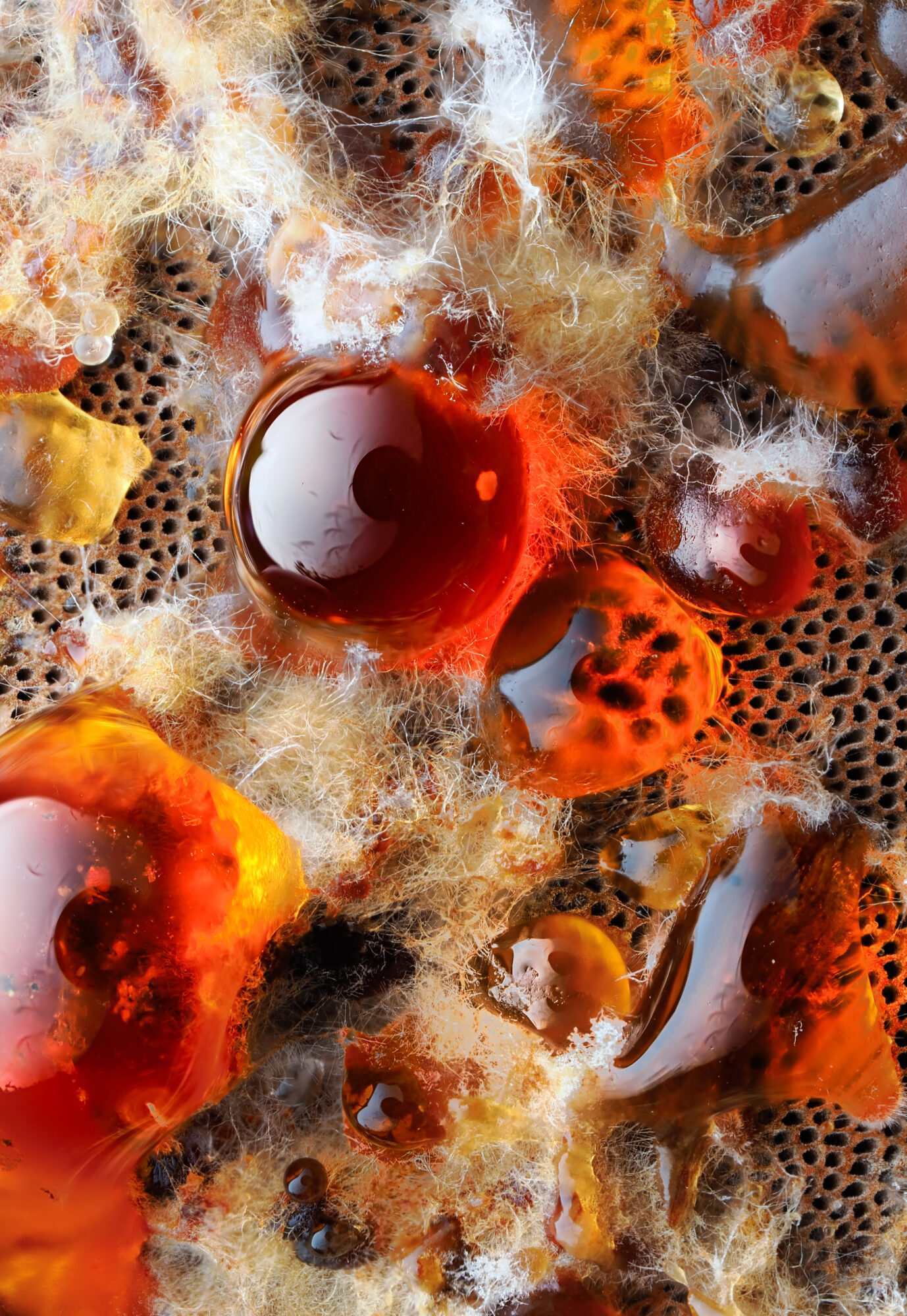
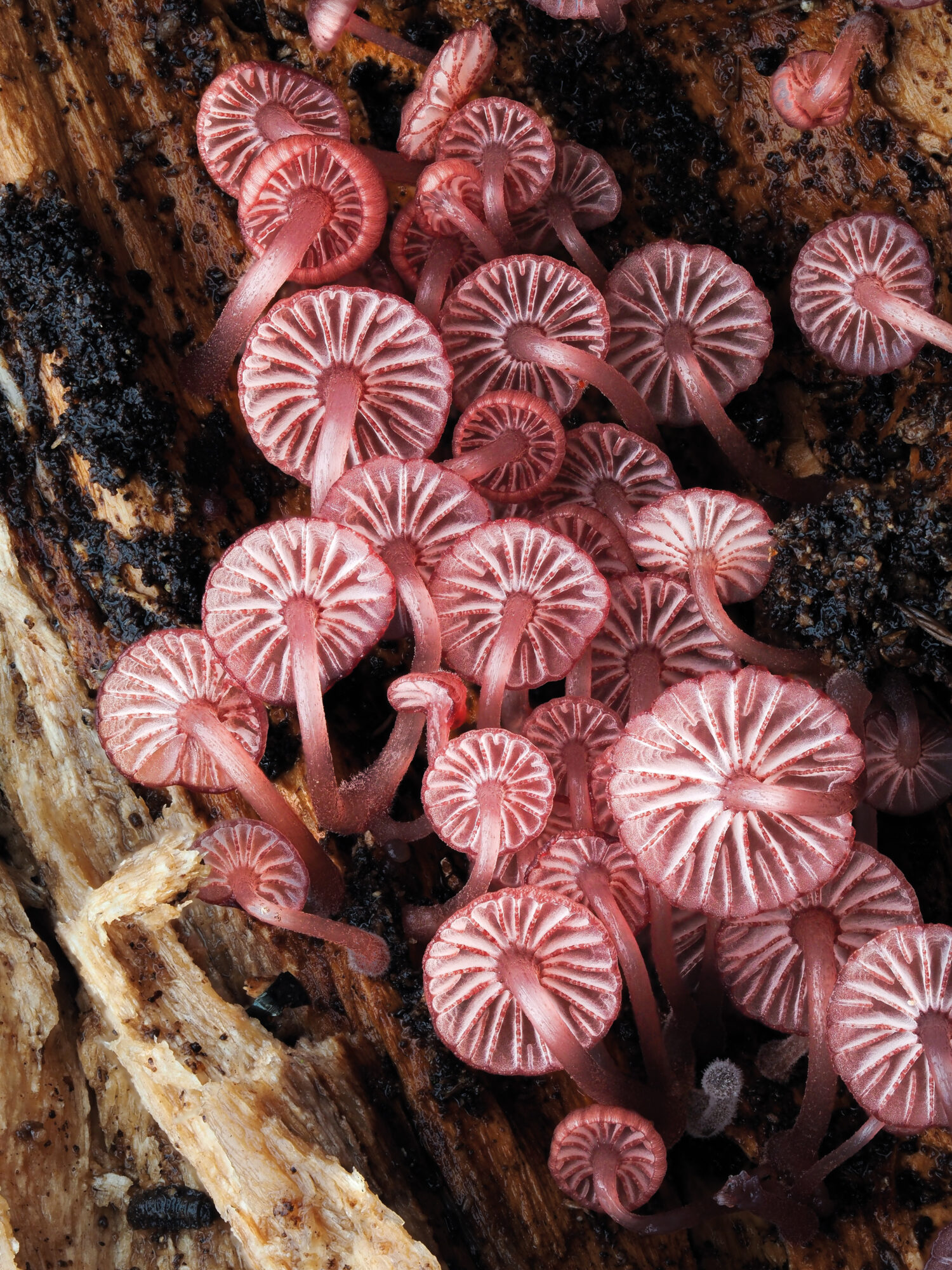
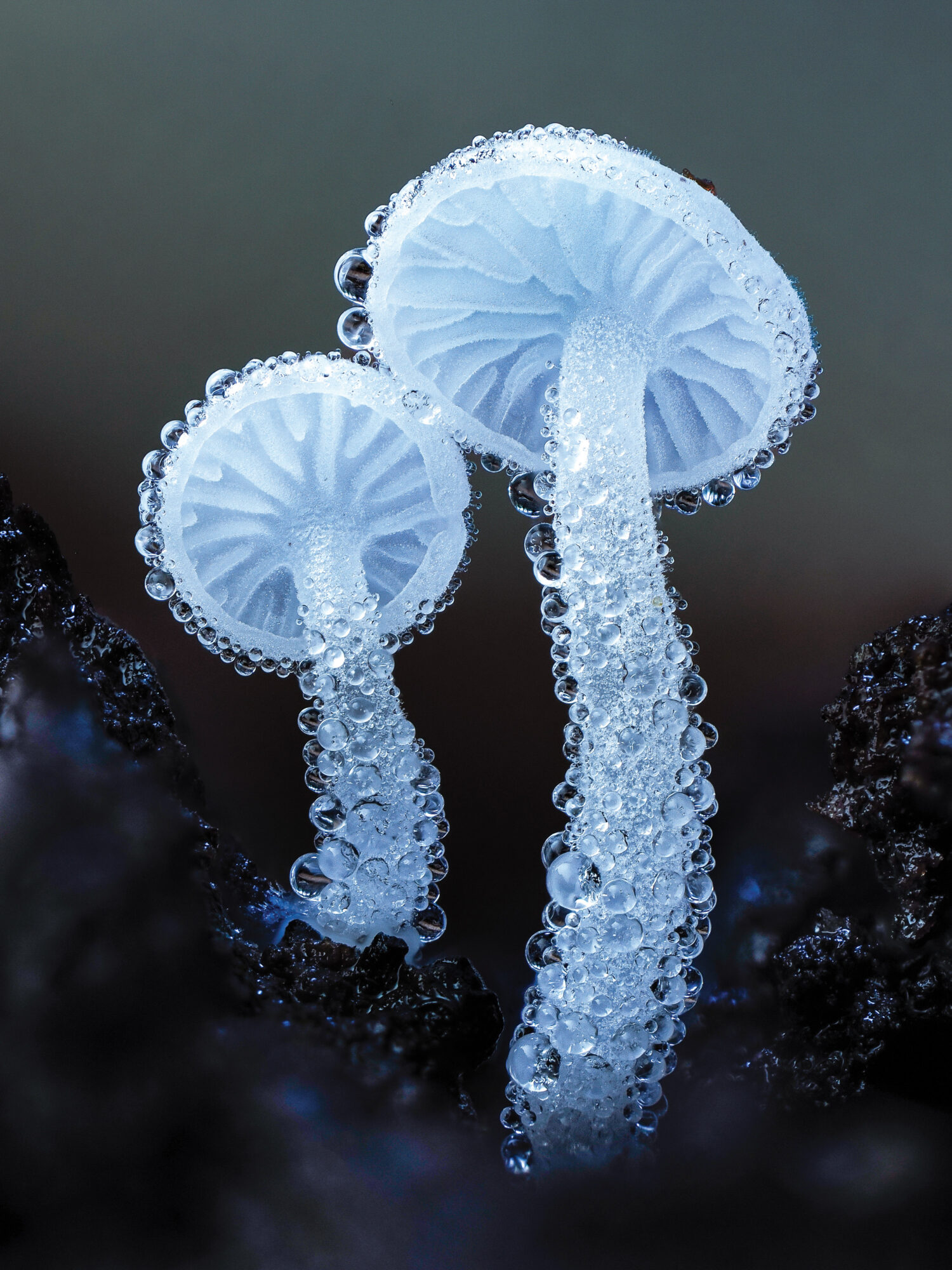
Did you know we had tiny capped mushrooms as bright green and glossy as a banker’s lamp? Or others with rainbow-coloured stems, violet at the base shading to red at the top? Did you know that some mushrooms exude tiny golden droplets that cluster on their caps like jewels? Or that many are covered in translucent, glossy goo? There are purple coral fungi, and purple velvet potato fungi, and eyelash cups, which are all exactly what they sound like, as well as slime moulds—once considered fungi—which produce pink clouds or bright orange glossy globes and can be kept at home, like pets, if you feed them oats and water. All of this astonishing life, right under our feet.