Robot recon
Off the warming northeastern coasts of New Zealand, a spiky problem is snowballing. Centrostephanus rodgersii, the longspined sea urchin, is a native species, but the comparatively balmy winters underwater are supercharging its reproduction. On top of that, we’ve eaten too many of its probable key predators—big crays.
Throngs of these deep-purple urchins can, like kina, demolish kelp forests and create bare underwater barrens—only worse, says the University of Auckland’s Arie Spyksma (who also works with New Zealand Geographic). While kina bottom out around 15 metres below sea level, Centrostephanus thrive from five metres to 50.
“That’s catastrophic,” says Spyksma. “Kelp forests, those deep invertebrate communities, they’re all at risk of just being wiped out. But before we can really manage them, we need to understand the scale of the problem. Where are they occurring? Where are the hotspots?”
Enter the robots. Spyksma and collaborators from Tasmania—where Centrostephanus is predicted to demolish 50 per cent of kelp forests within six years if large-scale control doesn’t happen—are enlisting artificial intelligence to speed up the science and keep pace with rapidly changing ocean ecosystems.
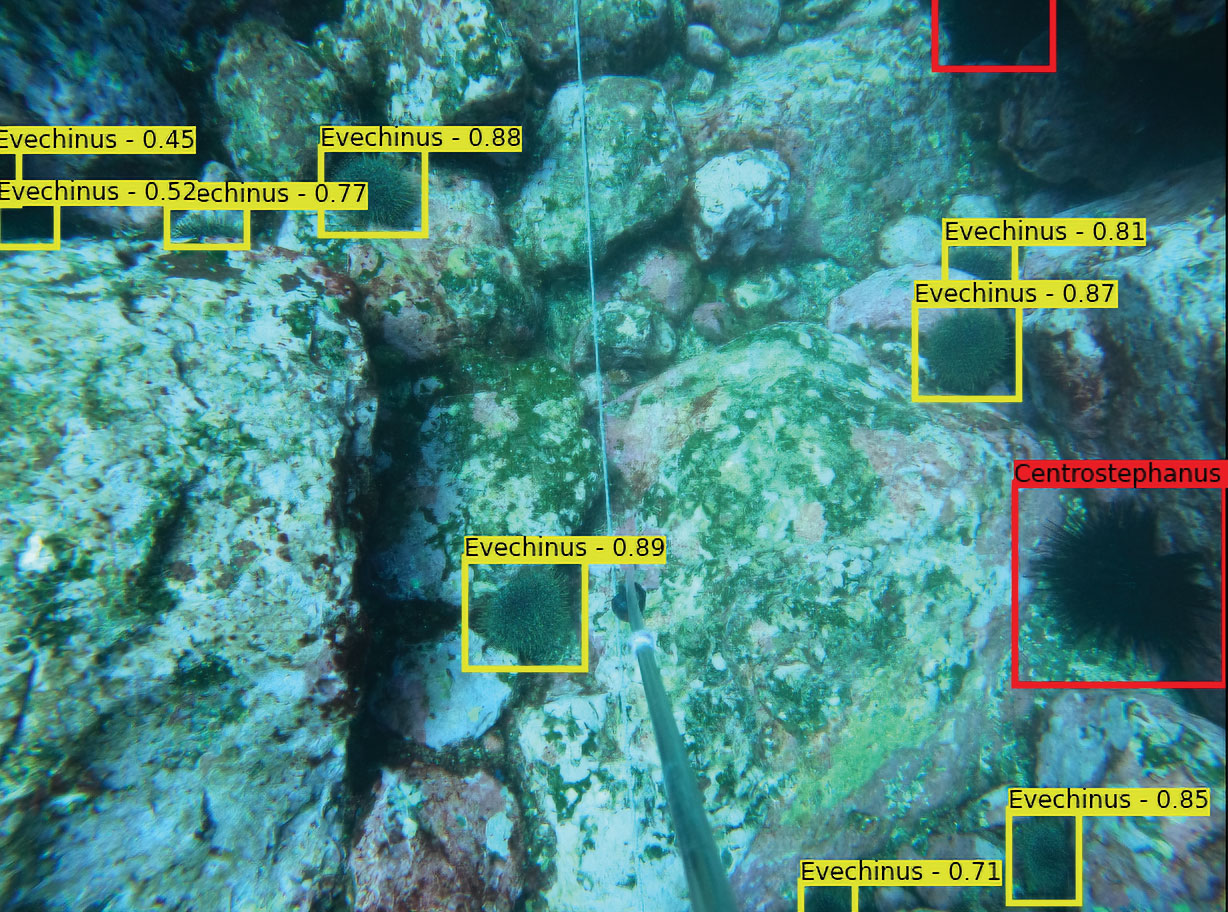
The scientists have developed an “urchinbot”, which can rapidly analyse vast numbers of underwater images and pinpoint sea urchins, labelling each as kina or Centrostephanus (pictured is a scan of the seafloor at Tūhua/Mayor Island). The tech is right about 90 per cent of the time, says Spyksma—a “really good” hit rate that lifts a huge processing load from scientists.
They’ve also created another AI tool to classify seafloor habitat, identifying whether it’s kelp forest or urchin barren.
Researchers still have to go out and collect the images at sea—they can do this fairly quickly, by towing cameras from a boat or remotely operated vehicle. But then the robots will go to work. In Tasmania, they’ll track how well management operations work. In New Zealand, they’ll show us where the urchins have taken hold. Both robots will soon be available to hapū and community groups, pumping out the information we need to plan the best pushback—and protect our precious kelp forests.