Night shift
Talman Madsen fell in love with the stars before photography.


Talman Madsen fell in love with the stars before photography.
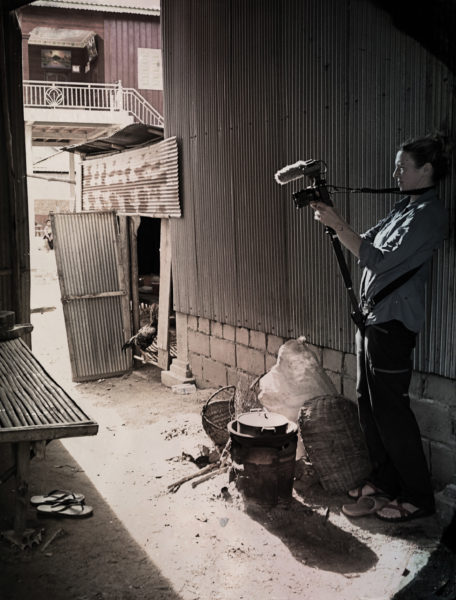
For Melanie Burford, the only New Zealander to win a Pulitzer Prize for photography, the camera is of secondary importance.
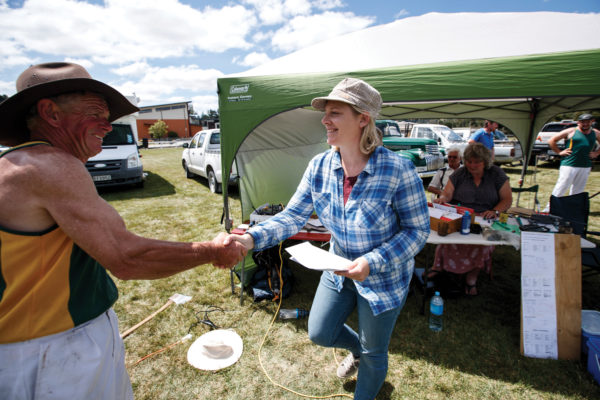
Naomi Arnold takes up timbersports—very briefly.
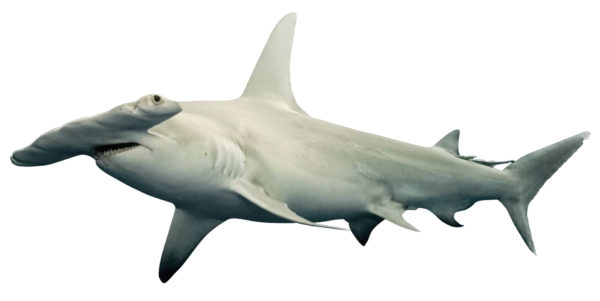
When spider monkeys, honey bees, or sharks are foraging for food, they’ll use a pattern of movement called a Lévy walk—random but correlated steps with no destination in sight, involving many short movements mixed with a few longer ones. The theory goes that this pattern is statistically best for finding randomly distributed objects, such as food. Now, Japanese scientists have shown humans also do the Lévy walk when moving through crowds—the free spaces substituted as the resources being sought. Though people move haphazardly, they naturally choose efficient routes. The study has implications for crowd-behaviour research and urban design.
New Zealand has a national trail because of a story Geoff Chapple wrote 25 years ago.
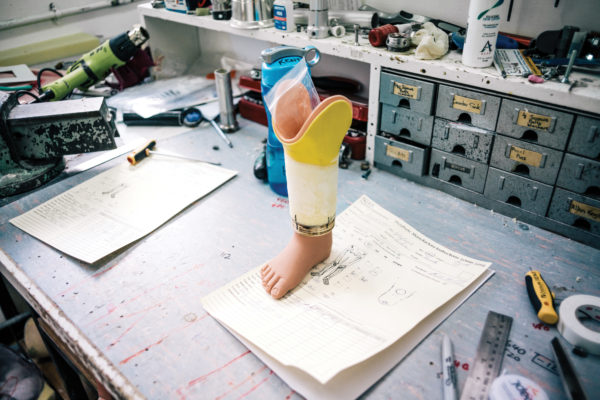
What happens when you lose a limb?
We’re increasingly stressed, and so are our kids. Their rates of anxiety have surged by 875 per cent over the past decade, and that’s just for children under 14. But there’s something that can help, and it’s free. Nature is good for us primarily because it acts on stress. Earlier this year, United States science journalist Aaron Reuben tallied more than 450 studies showing a positive connection between nature and human health. You don’t need a lot of it, either: a recent British study of 20,000 adults found that spending two hours per week in a park provided the same benefits as five. But for those able to devote a weekend to the wilderness, nature appears to act like a deep-clean for the brain: people emerge better able to concentrate, problem-solve, and think creatively. In other words, a research-approved remedy for our increasing rates of depression, anxiety and health problems costs us nothing extra. We simply need to use a resource that we’re already paying to maintain for other purposes. The Department of Conservation is a health provider, and its land—a third of New Zealand—a massive therapeutic facility. So how do we get people there? How do we teach them about it? How do we help them use it? These connections are starting to be made. DOC’s Healthy Nature, Healthy People initiative, a partnership with the Mental Health Foundation, is a step in the right direction—it’s based on the pioneering Parks Australia programme that saw the concept of ‘nature prescriptions’ spread around the world. But it needs to be scaled up a thousand times. It needs funding, support and other partnerships. Then there’s Federated Mountain Clubs, its members overflowing with knowledge and goodwill, but facing an ageing membership and lacking connection with young people. We need better connections between healthcare providers and the people who manage and advocate for our outdoor places. We need better infrastructure to help our diverse population, with its various needs, to access these places. And we need better information about how much our conservation land can help us. Imagine if we designated areas ‘therapy forests’ or ‘therapy beaches’ or ‘therapy valleys’, and there was a subsidised bus that took you there on Saturdays, and once you got there, a track that was good enough for strollers and wheelchairs, too. We can learn from the many successful initiatives overseas. In the United States, the non-profit Park Rx connects healthcare providers with park areas or non-profits that help improve access among groups of people who typically don’t go bushwalking or tramping. Community group Unlikely Hikers provides support for people living with disability to access parks, as well as people who feel they don’t fit in with traditional tramping clubs. Hike It Baby does the same thing for parents with young children. We underestimate what can be learned and gained from time outdoors. On my way to meet the Rapsey family (see page 32), I hitchhiked to Nelson Lakes National Park with an high-school outdoor education instructor (the lack of transport between Nelson and its proximate national park is another story). She told me outdoor education was falling out of favour among students—the subject was perceived as a dead-end, as fun rather than useful, not the kind of thing that smart kids might do. Nature shouldn’t really be an option, but a default, like maths, like English, like eating five fruits or vegetables a day. Nature is the environment that our bodies evolved to fit, not the cities we’ve made for ourselves. Nature activates our parasympathetic nervous system, the ‘rest-and-digest’ process that’s the opposite of the ‘fight-or-flight’ one. Our bodies know it’s home, even if we don’t.
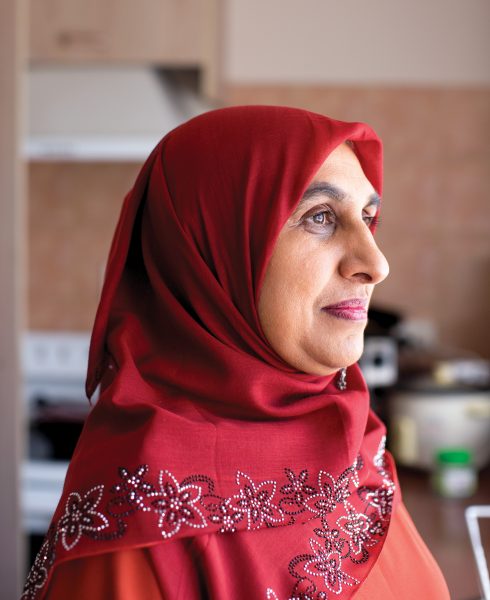
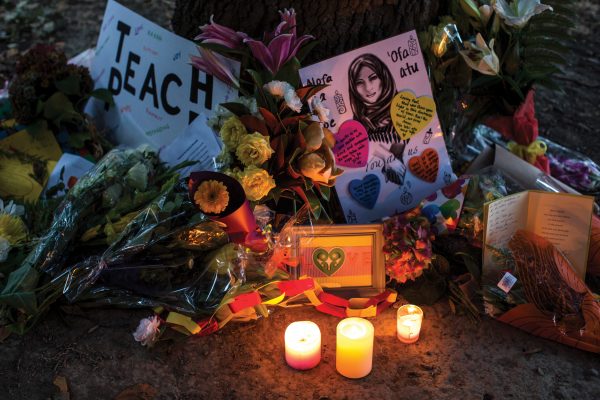
Everything changed on March 15, including the content of this magazine. In the days following the Christchurch terrorist attack, two journalists who contribute to New Zealand Geographic, Anke Richter and Kate Evans, began reporting on the nascent aid response led by members of the country’s Muslim and refugee communities. Photographer Lottie Hedley flew in to spend a week shadowing volunteers and victims’ families. We listened, and we waited. It took us a while to figure out what kind of story New Zealanders ought to hear—what kind of story New Zealand Geographic ought to tell. It was becoming apparent to the nation that the Muslim community was one we had not, collectively, paid much attention to. Muslims are barely represented in newsrooms or boardrooms or council chambers, and we rarely hear their stories. Yet through their actions in the wake of tragedy, the Muslim community has writ large the principles of the religion for all to see: grace, forgiveness, openness, gratitude. Anke, Lottie, Kate and I witnessed how Islam guided people’s responses to an incomprehensible event—just as it had long provided a framework, structure and routine to their lives. Since the attack, New Zealand Muslims have been telling a story about this country that’s jarringly different from the one that the majority of us have been telling ourselves. These are the stories we have focused on in our feature about the Christchurch attack. We set out to learn: how has Islam guided people through life in New Zealand thus far—and now? What would they like to add to the story we’re telling ourselves about who we are? This is us, we heard: well-meaning and friendly, a bit ignorant, not great at reaching out a welcoming hand, sometimes rude to women in hijab. We can’t ignore the negative parts of ‘us’ if we want to turn New Zealand’s outpouring of aroha into genuine acceptance of minority communities. We have to stop confusing unity with homogeneity. We have to recognise that sharing values doesn’t require conformity. “When I hear people talking about New Zealand being unified and one voice for all—all that means is suppression, it means that in order to achieve that, you all have to be the same,” says Anjum Rahman, profiled here, who spends her time combatting discrimination and division, largely on a volunteer basis. “What I don’t understand is why white supremacists are full of so much rage,” says Nada Tawfeek, who has lived in Christchurch for a decade, and lost a family member in the attack. “What happened to them to make them hate others so much? What injustices have they seen in their lives to make them this traumatised? We need to look at what the root cause of white supremacy is rather than just tackling the symptoms.” As many people quoted in the story point out, it isn’t enough to not be racist—inclusion involves effort and discomfort. It involves getting to know people who might choose to exercise their freedom differently. Integration and inclusion are active processes, requiring participation from all. Like Haji-Daoud Nabi, we all have the responsibility to say, “Hello, brother. Hello, sister.” Our refugee community is particularly good at this. In the wake of the tragedy, volunteers flew to Christchurch from other parts of the country to help. Many carried with them a shared understanding of trauma. One person featured in our story, former refugee Yobi Rajaratnam, arrived in Auckland five years ago after fleeing Sri Lanka in a people-smuggler’s boat. “Our dictionary is the longest,” he wrote of his experience as a refugee: the entries for ‘terror’ and ‘loss’ and ‘sadness’ are extensive. He flew to Christchurch to help others navigate their rapidly-expanding dictionaries: new emotions, new grief, new words. By listening, we can tell a story about ourselves that’s truer. A story that doesn’t leave anyone out.
How does a nation create unity, harmony, equal opportunity?
After the attack on two Christchurch mosques, after the number of dead and injured climbed and climbed, New Zealand came to several hard realisations: This is not a peaceful and equitable country. Many people go about their daily lives steeled to hatred. At the same time, people in Christchurch banded together to help the hundreds left bereaved and traumatised by an act of terrorism.
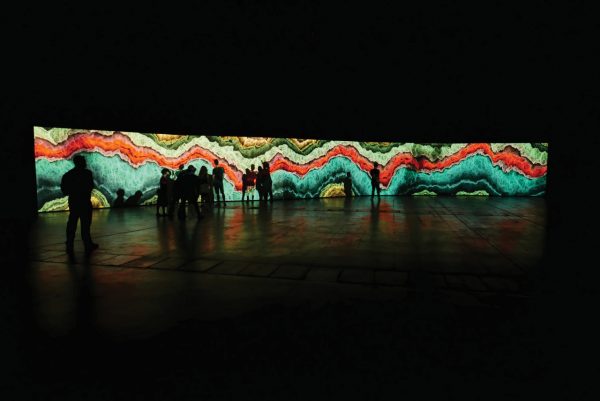
British artists Ruth Jarman and Joe Gerhardt turn data into art. One of the pieces at the duo’s upcoming solo show at City Gallery, Wellington, compiles seismic data from around the world—including the Kaikōura earthquake of 2014—into a dynamic moving picture that condenses eons of tectonic change into minutes. This piece, Earthworks, along with others, will be on display from March 23-July 14.
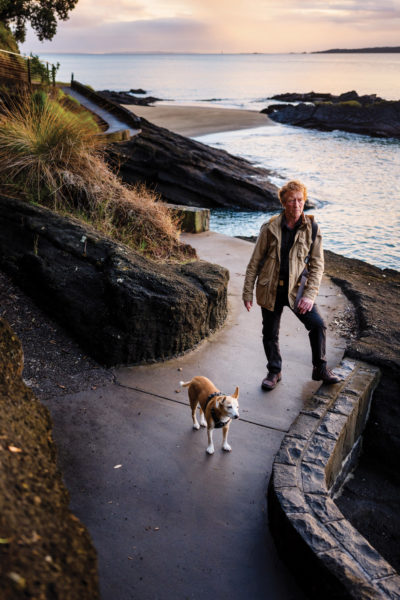
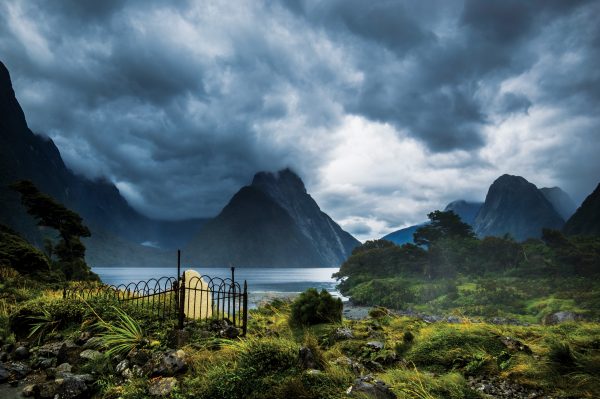
Mary Oliver showed us how to look at what’s around us.
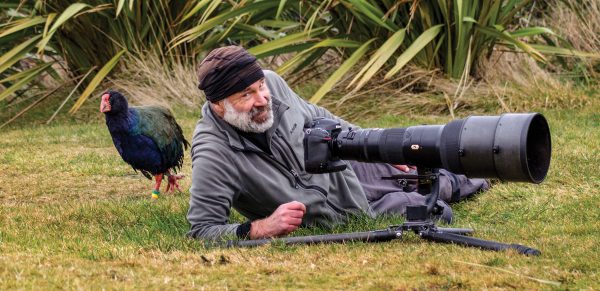
Craig McKenzie stalks takahē in Te Anau.
Death was once a constant presence. People passed away at home, and their bodies remained there until burial. Art was full of reminders of our own mortality, while churchgoers confronted the afterlife every Sunday morning. Today, death has been abstracted—it takes place in hospitals, the deceased are swiftly removed to funeral homes, and we no longer decorate our homes with reminders that, one day, our time will be up. What have we lost?
Here’s a story: a naval vessel arrives in a foreign land, scopes it out, stakes a claim. Its crew is armed. They murder some of the local people and steal their goods. We would usually call this an act of war. In New Zealand, we call it an encounter. On October 6, 2019, it will be 250 years since Royal Navy Lieutenant James Cook first sighted Aotearoa, and commemorations of his visit will be taking place throughout the year. The government will spend $13.5 million on marking this through a program called Tuia Encounters 250, and a further $9 million will be provided for community events through the Lotteries Grants Board. Using the word ‘encounters’ to describe the first meetings of British and Māori is a euphemism—a poor substitute for the enormity of what took place. We need to find better words to describe what happened. We need to be honest about the nature of the Endeavour’s mission—to take possession of land and expand the British Empire—and the impact that it had. We have the text of the secret orders that Cook unsealed in 1769, after observing the transit of Venus near Tahiti. (In summary: “Go find Australia, see if it’s got anything valuable, and claim any islands you stop at on the way.”) This obfuscation discredits New Zealanders. It treats Pākehā as though they are too fragile to cope with remembering the violence that accompanied British migration. Māori don’t have a choice whether to remember this violence or not—the ripples of it are still part of people’s lives. The bloodless word ‘encounter’ turns us away from what we have a duty to face. When I spoke to Tina Ngata about the symbolism of the Endeavour, she pointed out that remembering Cook’s visit in this manner promotes a false sense of reconciliation and unity, and furnishes the idea that we’ve put all those misunderstandings in the past. (We haven’t—just look at the way Pākehā speak about Māori on social media if you’re not sure.) Ngata is Ngāti Porou—her ancestors were among the first Māori to meet the British—and is a lone voice calling for plain speaking. “Those kinds of truths really need to be told,” she says. “It’s not about attacking [Cook], it’s not about attacking anyone—it’s about telling the full truth of the project of imperial expansion.” I’ll admit that it’s uncomfortable to imagine Cook as the tool of a military, to see his visit as the first stage of an invasion. I much prefer the story where he’s a hero—the story that’s all about daring and scientific discovery and exploration. That’s the one I was taught. But this is an opportunity to recognise that we’ve only been recounting the Pākehā story for the last 250 years. I’d like to hear the one told by the descendants of the Māori who met Cook. But we need to quieten down the first one in order to listen. As this issue went to press, Ngata was installing an exhibition at Gisborne’s Tairāwhiti Museum. It’s about Cook’s visit, from the point of view of the people who were already here, and involves art, performances, lectures and workshops. It’s called He Tirohanga ki Tai, A View from the Shore. It wasn’t funded by any of the government-sponsored grants. Many of these event-organising bodies use the word ‘celebration’. But I think that to celebrate this occasion is an insult to the people for whom Cook’s visit was a harbinger of disease, disenfranchisement, and death. We should be clear: the Endeavour is the backdrop for the opening scene of a tragedy. It symbolises something that we, as a people, never want to do again. The words we should use for its 250th anniversary are ‘lest we forget’. Māori have a whakataukī, a proverb, that I think of often: Ka mua, ka muri. ‘Walking backwards into the future.’ We move forward, but the only thing we can see is the past. We are not, as a nation, looking our past in its face. And we cannot take steps towards a unified future until we do.
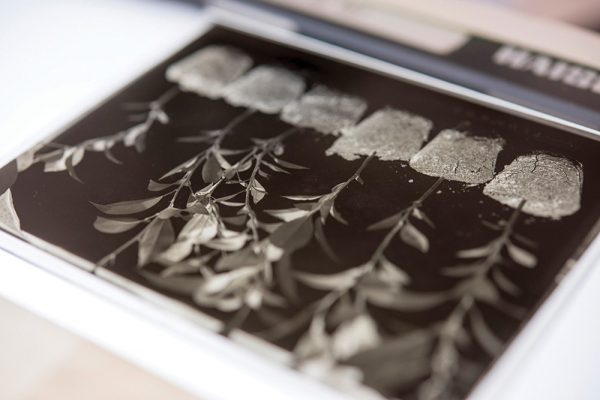
In a storeroom in Mt Albert, Auckland, there stood large steel filing cabinets, which hadn’t been opened for decades. Their drawers were filled with fine sheets of glass, each in its own paper sleeve, filed alphabetically—photo negatives from the 1950s and earlier documenting work of the government research institute that’s now Plant & Food Research. When staff were moving premises in 2018, photographer Wara Bullot discovered the trove of images—documentation made by her science-photography colleagues long ago—and recognised their importance. Many of the glass-plate negatives had hand-written labels detailing the subject, its purpose and location. Others could only be guessed at. Before Kodak revolutionised film in the mid-1950s, glass-plate photography was the go-to process for documenting science, as it was more chemically stable than film available at the time. The glass-plate process was cumbersome and time-consuming, but has a unique finish—a softness and a wide range of tones. “I can only admire the skill of the people who worked in this challenging medium and used it so well to capture images that tell compelling stories,” says Bullot. “Some of these photographers, like Steve Rumsey, were phenomenal at their time. They were highly skilled and had great patience and a deep understanding of their craft.” Bullot has co-curated a selection of photographs, which will be exhibited at Alberton from January 16-27. More details and some of the images can be viewed online at scienceinthedarkroom.nz.
Since 1969, Gloriavale Christian Community has set itself apart from New Zealand society. Over the past six years, nearly 100 people have left or been expelled from the 550-strong group on the South Island’s West Coast. Gloriavale leavers know only the communal lifestyle, religious rules and conformity demanded by their former leaders. For them, Timaru might as well be a foreign country.
The first Europeans to reach Sāmoa—aboard three Dutch vessels in 1722—reported that the locals who paddled out to them were dressed from waist to heel in fringes and “a sort of artistically made silk cloth”. A later visitor, Louis-Antoine, Comte de Bougainville, realised that this “ornament” was actually a series of indelible marks, very likely made permanent by puncturing the skin and applying the juice of herbs, “as I have seen practised by the natives of Canada”. For many years after, these early encounters, explorers, traders, and missionaries struggled to understand the social function of the Sāmoan tatau. One of the world’s most elaborate and richly symbolic systems of body decoration, it was carried out by master tattooists (tufuga), who employed sophisticated tattooing tools of various sizes, tapping them rhythmically with a wooden mallet to apply the designs. The tool itself consisted of a small comb made from pig’s tusk or bone sharpened to needlepoints and attached with coconut fibre to a turtle-shell plate, both of which were lashed to a wooden handle. The tufuga was assisted in his work by helpers (toso), who stretched the skin of the client and administered therapeutic massage. For a young male, getting a tatau, or pe’a, which covers the body from waist to knee, was not to be undertaken lightly (the female malu is lighter and its application less ritualised). Engaging a tufuga was expensive, requiring gifts of food and fine mats, and the procedure, which lasted many weeks, was painful and cloaked in formalities. But pain was more or less the point. It was, after all, a rite of passage; one with deep cultural significance, as Te Papa curator Sean Mallon and French anthropologist Sébastien Galliot make clear in Tatau, their landmark cultural history of the subject. For an individual, the tatau was, in the words of one Sāmoan religious leader they quote, “a literal inscription of his socioreligious identity, beliefs, and duties”. And its formalised patterns and imagery were “a visual depiction of his embodied life... his environment, family and God... cultural pride, beauty, bravery, ability, and potentiality”. Acquiring it created a cohort of young warriors, bonded by the experience, who were ready to fight, and if necessary to die, for their group. Western missionaries took a dim view of such things, and from the 1850s actively suppressed the practice of tā tatau. Where it survived, it was as a private ritual rather than a communal one. But it would be wrong to think of it as a rigid, unchanging cultural expression destined for inevitable extinction. For one thing, it exerted a powerful appeal to Europeans and Americans. The markings were painstakingly documented by foreign scholars and Sāmoan travelling troupes were fêted. The German governor of Sāmoa, along with some of his senior administrators, went so far as to receive the pe’a themselves. Sāmoan independence led to a revival of tā tatau, and in the 1960s and 1970s, Sāmoans arriving in New Zealand in search of work introduced it to this country. As it spread beyond its island shores, it adapted to novel conditions by harnessing new materials. Kerosene soot or Indian ink was substituted for the traditional burned candlenut-soot pigment, turtle shell was replaced by Perspex and other plastics, and sennit by nylon fishing line. In the interests of hygiene, tufuga began to use steel needles that could be sterilised in place of bone, and took to wearing latex gloves and covering pillows with plastic. Yet even as Sāmoan tā tatau became a global cultural phenomenon valued for its authenticity, it embraced new motifs and forms and was taken up by Western tattooists apprenticed in the art. As a result, it began to attract a wider range of interpretations, often loosening its ties with ritual and morphing into an expression of individual identity. Tatau celebrates—or, at least, acknowledges the inevitability of—these evolutionary departures, seeing them as the fruit of an endless search for personal and cultural meaning. Exhaustively researched, and enriched with interviews and striking documentary photography, it is a fitting tribute to a vital 3000-year-old tradition.
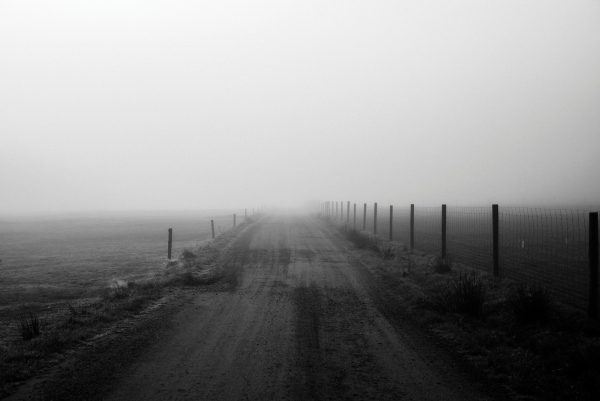
Eugene Smith and the power of photojournalism.
Loading..

3
$1 trial for two weeks, thereafter $8.50 every two months, cancel any time
Already a subscriber? Sign in
Signed in as . Sign out

Ask your librarian to subscribe to this service next year. Alternatively, use a home network and buy a digital subscription—just $1/week...

Subscribe to our free newsletter for news and prizes