Geo News
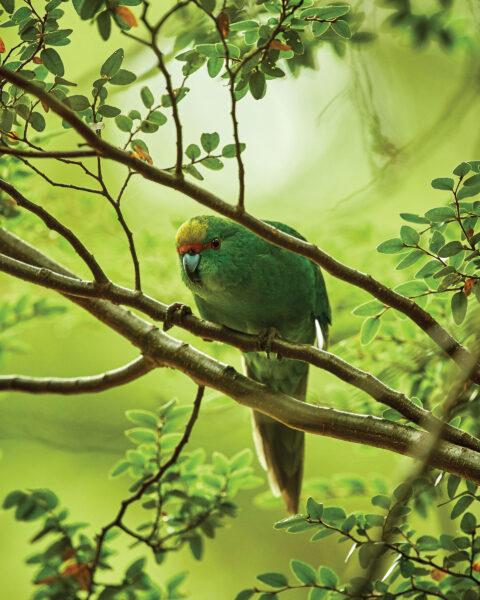
Lead is highly toxic—but to kea, the metal tastes like a sweet treat. So for years, the native parrots have been dying of lead poisoning: enduring vomiting, seizures, cognitive decline, and starving.
Because kea are often seen chewing on lead nails, flashing and paint from backcountry huts and other buildings, there’s been a recent nationwide effort to remove these materials and replace them with non-toxic alternatives.
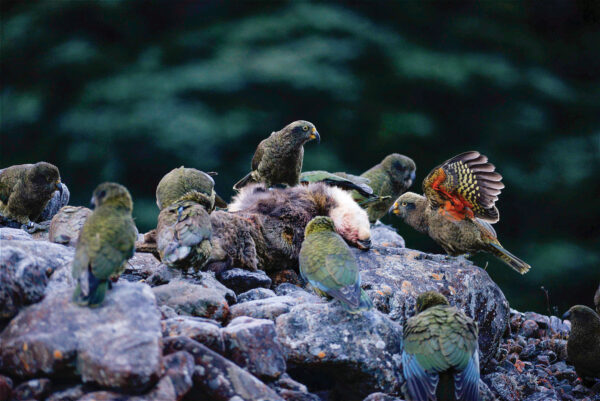
At the same time, though, hunters and cullers—including those from the Department of Conservation (DOC)—are carpeting the backcountry with lead bullets. Of course, lead served up in an animal carcass is even more tempting for our scavenging native birds. Luckily, lead has a different isotopic makeup depending on where it was mined—which means we can figure out what’s really poisoning kea.
The bullets are making kea sick, confirms a study published in October, in the journal Conservation Letters. Scientists from New Zealand, Australia, and the US, in collaboration with Ngāi Tahu and DOC, analysed 91 blood samples from wild kea. Of 69 birds that met the threshold for lead exposure, their blood indicated that one-third were eating ammunition, one-third had been ripping into buildings, and the final third were doing both.
In California, when scientists found dozens of condors were dying because of lead shot in carcasses, the state outlawed lead ammunition. Condor populations are now recovering.
Here, kea numbers are estimated to have fallen between 50 and 80 per cent over the past four decades. Eliminating lead poisoning could be the difference between the birds’ extinction and survival, says study co-author Eric Buenz, from the Nelson Marlborough Institute of Technology and the Mayo Clinic in the US.
“It’s something that is so easy to change, because this is the only source of lead that’s now being deposited into the environment.” The scientists are urging DOC to phase out lead ammunition entirely and use copper instead.
In a statement, DOC says that because of concerns over kea, it has already stopped using lead bullets to cull tahr. It does still use lead ammunition to control deer and goats in kea habitat. “Unfortunately, lead-free ammunition can be more expensive, less available, less effective and require more stringent operational safety precautions than lead-based ammunition.”
Any further change might hamper culling, DOC says—in which case, sticking with lead could work out better for kea and other native species overall. (An evaluation of this strategy is due next year.)
Hunters will need to be convinced, too. But Buenz, a keen hunter himself, says copper bullets cost only slightly more, are just as effective, and come with the added bonus of making wild meat safer for human consumption.