Magic flora
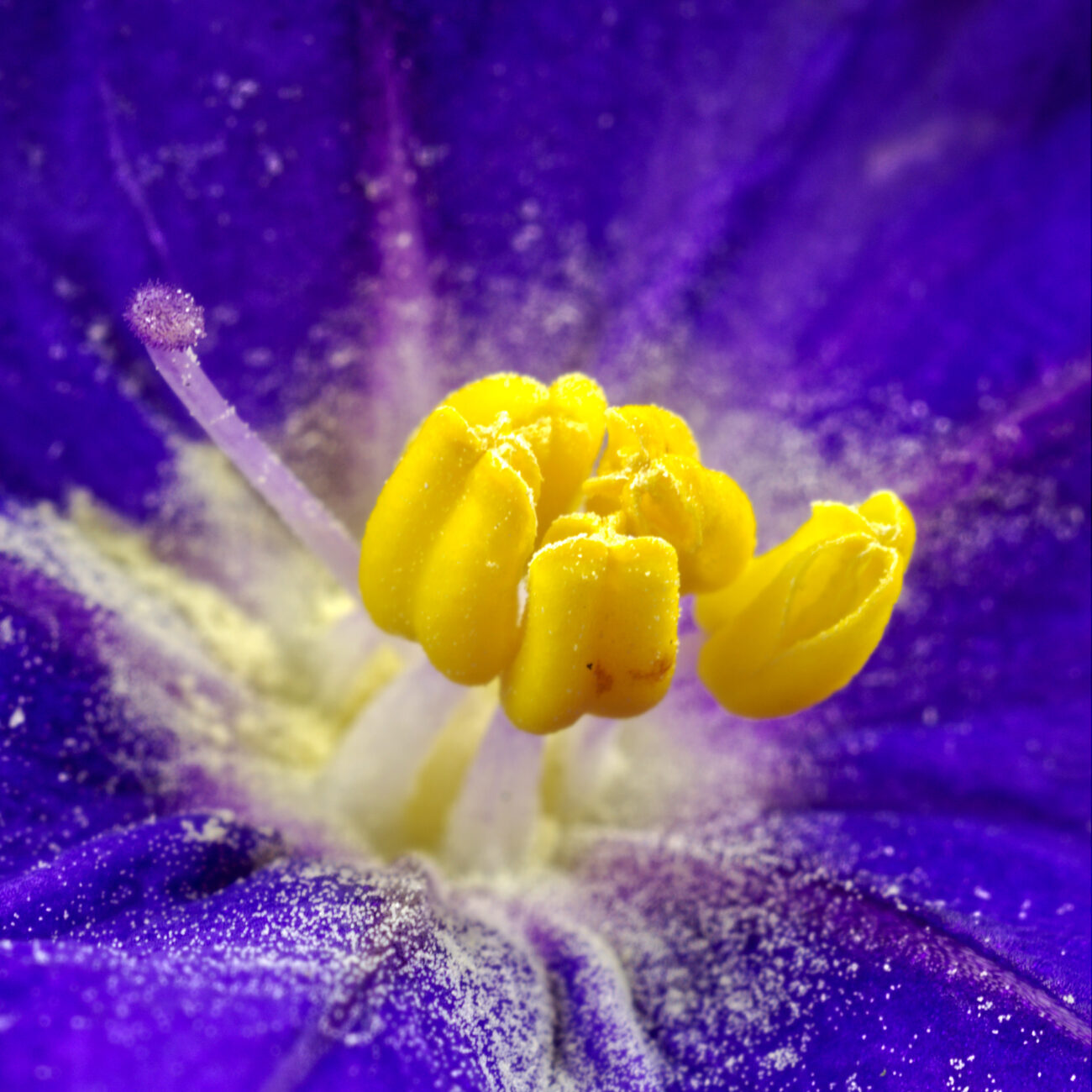
Philip Garnock-Jones has spent more than a decade photographing our native flowers as they’ve never been shown before: in luscious, three-dimensional detail.


Philip Garnock-Jones has spent more than a decade photographing our native flowers as they’ve never been shown before: in luscious, three-dimensional detail.

One in 40,000 snails have the spiral on the left side of the shell, and they can only mate with other lefties. Can you help Ned find true love?
One in 40,000 snails have the spiral on the left side of the shell, and they can only mate with other lefties. Can you help Ned find true love?
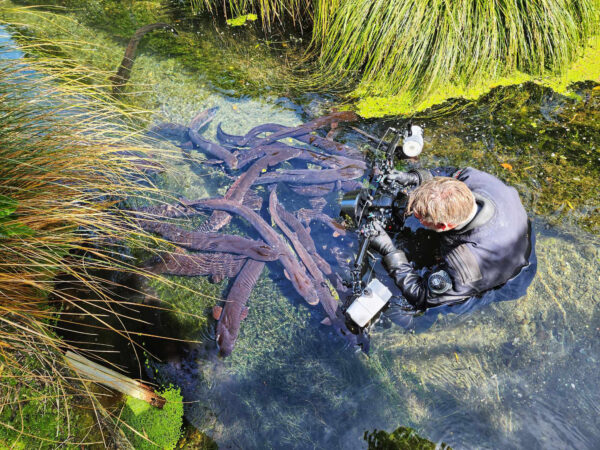
Richard Robinson and Bill Morris threw themselves into reporting their cover story on eels: icy streams, extreme slime, gear that still smells of smoked eel. The big lesson? “Never wear rings while handling eels,” advises Morris. Pictured here helping local iwi wrangle eels into the sea at Te Waihora, the writer didn’t notice until he was driving home that his wedding ring had slipped off in the ooze. He was back first thing in the morning—and there was the ring.
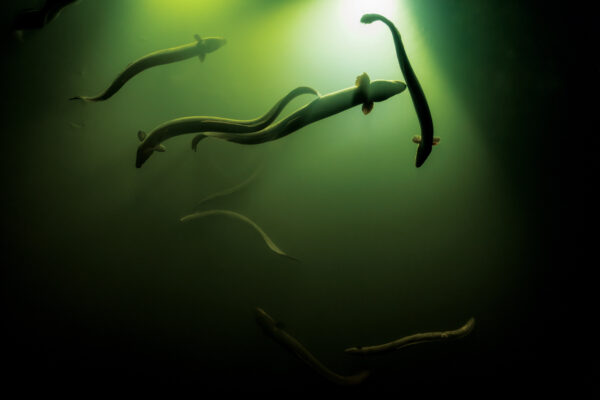
For millions of years, eels moved freely across the waterways of Aotearoa. But now we are strangling their rivers, draining their ancestral wetlands and running turbines that chop their elders to pieces. A few eels are carried around these deadly obstacles in buckets, but many more perish, or spend their lives trapped in backwaters, never breeding. It’s a failure that strikes at the heart of Māoridom, and mana whenua are taking a stand.
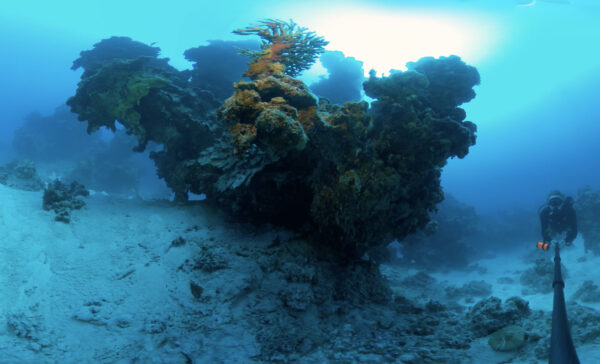
Every year the sea surface temperatures rise in Atafu, leaving behind towering coral structures that couldn't stand the heat.
On the eastern islets of Nununonu's 98-square-kilometre lagoon, petrels have set up camp in greater numbers than ever before. As the local community receives more goods from the outside world, and exercises greater efforts in conservation, hunting these seabirds for food has become increasingly rare. Terrestrial ecologist Moeumu Uili visits the colony to update the count.
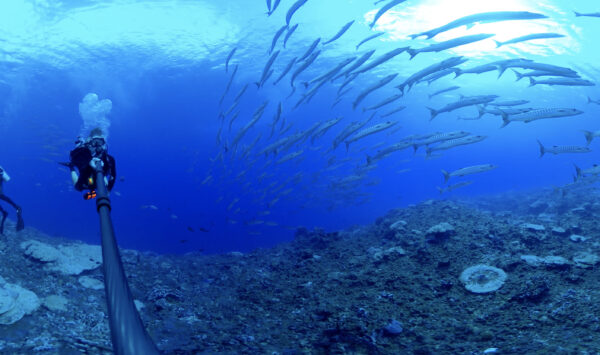
A school of barracuda circle the outer reef at Fenua Loa, Fakaofo, a sign that fish life is in good health, even while corals are recovering from recent heatwaves.
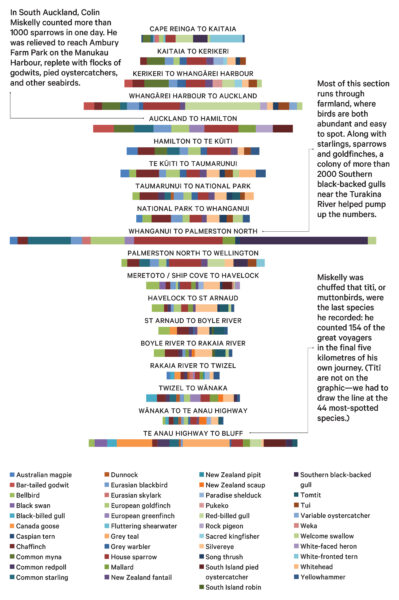
What sorts of birds are you likely to see if you tackle Te Araroa? After walking, as they say, “every f***ing inch” of the famous trail’s 3200 kilometres, methodically counting birds all the way, conservationist Colin Miskelly can tell you that mostly, there will be sparrows. The chirpy imports topped his tally at 12,500, more than double the second-most abundant, chaffinches. Other exotics were plentiful along the trail, too: blackbirds, mynahs, starlings and goldfinches all flocked into the top 10. Miskelly, curator of vertebrates at Te Papa, tackled Te Araroa with his brother the summer before last. Along the way he’d left stashes of counting paraphernalia: pencils, waterproof notebooks, and A3 graph paper. He posted his notes home as he went. All up, he worked out, it was about 24 square metres of paper, “enough to wallpaper a small room”. His GPS-enabled watch buzzed as each kilometre ticked past and at every second buzz, Miskelly jotted down the species he’d seen. After each day’s walk he would stay up late, feeding the data into citizen science project the New Zealand Bird Atlas (see ‘The Great Bird Nerds’, Issue 179), and knocking it into blog posts for Te Papa, and eventually, a paper for the journal Notornis. He’d be up early in the mornings, too, keeping an ear out for ruru, and diligently noting them down. Physically, after a lifetime of tramping, he found the trail “a doddle”. But when he reached the South Island forests he was dismayed by the quiet. It had been 30 or 40 years since he’d walked some of these trails. He especially missed the kākāriki. “It’s just part of that insidious ongoing decline that you don’t really notice year on year,” he says. “But after a gap of several decades, you just realise, ‘Oh, shit, things are going backwards here.” Sometimes, he knew, even birds that seemed to be thriving were in trouble. He saw plenty of tarāpunga, or red-billed gulls, for example—they came in third on his list—because the trail passed by the country’s mainland colonies. But Miskelly points out that two massive colonies offshore have collapsed due to lack of food. (The Kaikōura gulls are in trouble, too—see Issue 187.) Did he get sick of sparrows? Only on one day, he says—trudging through 10 kilometres of light industrial land in South Auckland. “It was more than 1000 sparrows in a day.” He went into the project determined to keep his blog positive, but his post for that section uses the phrase “ornithological tedium”. Miskelly’s now midway through a new mission: continuing the bird count on every track and old forestry route in the Tararua Forest Park. All up it’s about 600 or 700 kilometres, he reckons, and he’s walking it one long weekend at a time. “It’ll keep me out of the house for a bit longer,” he says.
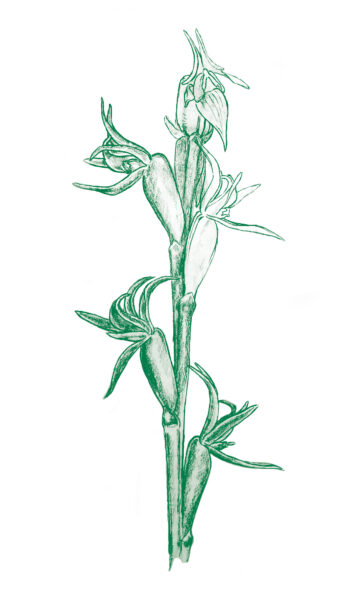
Orchids are everywhere. New Zealand has well over 100 species; worldwide there are tens of thousands. “The only places where you don’t see orchids are in the Earth’s deserts and Antarctica,” says Carlos Lehnebach, an orchid botanist at Te Papa. Also, we’re obsessed with them. “There are a lot of people who are nutty about orchids,” says Lehnebach’s colleague, evolutionary biologist Lara Shepherd. We love their vast range of flower colours and shapes, their collectability, and their bizarre pollination strategies (a whiff of carrion, anyone?) Yet orchids can still surprise us. In December 2020, when Shepherd sent Lehnebach a photo of a common leek orchid she’d found in Taranaki, he thought, “Woah, that’s a weirdo orchid.” Closer inspection—and Shepherd’s DNA analysis of a tiny chunk of leaf—revealed it was an entirely different species. “The sepals and petals are longer and more elegant, and it’s a slender plant,” he says. “The common leek orchid is a little bit chunkier, stockier, and the petals are shorter.” To fully describe the species, the scientists combed through dried herbarium specimens, century-old accounts from naturalists, and the intricate drawings of Bruce Irwin, a botanical illustrator and orchid lover who died in 2012. (His sketch at right was originally made in pencil; we’ve colourised it.) The diversity of the native leek orchids hadn’t escaped Irwin; he described this one as “slender and elegant”. In a nod to him, Lehnebach and Shepherd named their new weirdo Prasophyllum elegantissimum, or the extremely elegant leek orchid. Does that make the common leek orchid graceless, next to its supermodel cousin? Lehnebach is loath to fat-shame any organism, he says. “It does make you think about why thin is associated with elegance.” The new species is widespread—it’s been found from the Central North Island to Otago—but also rare, making up a tiny percentage of leek orchid specimens and iNaturalist records. “It has a preference for wetlands,” says Shepherd, “and New Zealand wetlands are so screwed up.” More discoveries are coming. The pair are working through a list of 20 more potentially new native orchid species. But it’ll take years. “There aren’t enough botanists in the country, and it takes a lot of effort to formally describe a species,” says Lehnebach.
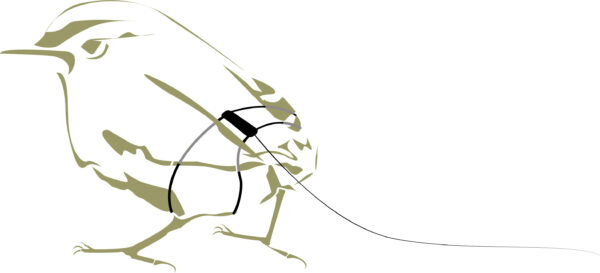
Ten years ago, 22 pīwauwau, or rock wrens, went missing following a 1080 operation in the Southern Alps. For conservationists, it was a worry. The poison was certainly controlling rats and stoats, which had been preying on the pint-sized birds—but were the wrens taking the bait, too? In the summer of 2019, in Kahurangi National Park, 15 pioneering pīwauwau were strapped up with radio-tag backpacks weighing half a jellybean, and given colourful identifying ankle bracelets. Mountain slopes were scattered with 1080. Department of Conservation researchers then kept tabs on the wrens for eight days. All the birds remained safe during this risky period when snacking on the bait would have killed them. Then, nine days of heavy rain washed away the 1080. When the weather cleared, researchers couldn’t find one of the wrens—the battery in his backpack had puttered out. A second had been snaffled by a falcon, leaving behind the tag and a tattered feather-fluff. Another bird had died on her nest. Her wee body was sent to Manaaki Whenua—Landcare Research and tested for the presence of 1080. None was detected. In a recent paper, the researchers conclude that 1080 probably hadn’t infiltrated the wrens’ food chain. Those vanished wrens from 2014 had likely succumbed, instead, to an unseasonable snowstorm.
We thought the giant wētā of the south were doing okay. Now, they are under siege.
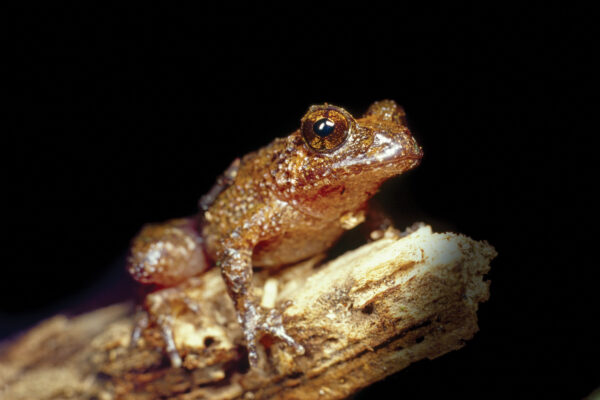
Researchers have long suspected that pigs and other pests were eating our exquisitely rare native frogs. Now, we know for sure—and the scoffing is on an incredible scale.
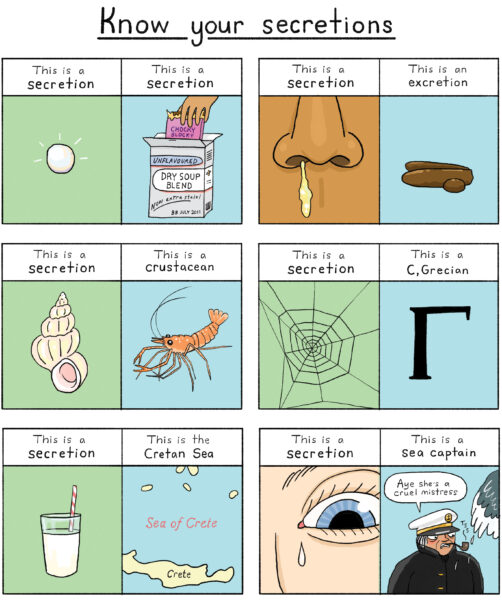
All around us, creatures are quietly getting on with secreting—oozing not just milk and tears, but beautiful homes, musical instruments and shark-fighting devices.
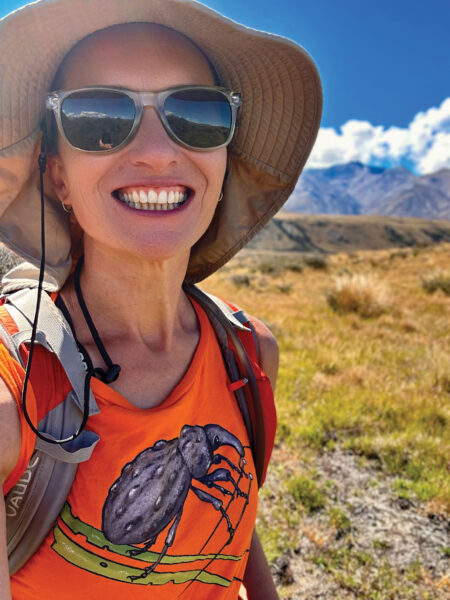
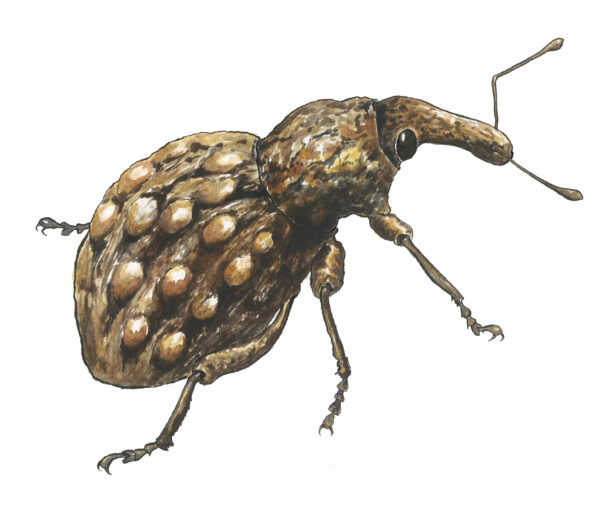
Lily Duval’s first piece for New Zealand Geographic is a news story about the resurgence of the magnificent Canterbury knobbled weevil which bears the delightfully bumpy Latin name Hadramphus tuberculatus (page 19). The artist and critter expert filed straight from the field after a happy day fossicking through speargrass helping Department of Conservation staff count the bugs. Duval also painted the weevil for her 2024 book Six-Legged Ghosts: The insects of Aotearoa—and yep, there it is on her T-shirt. “I’m a bit obsessed with this bug,” she says. “It’s my favourite insect so I’ve been pumped to be out there seeing them in the wild.”
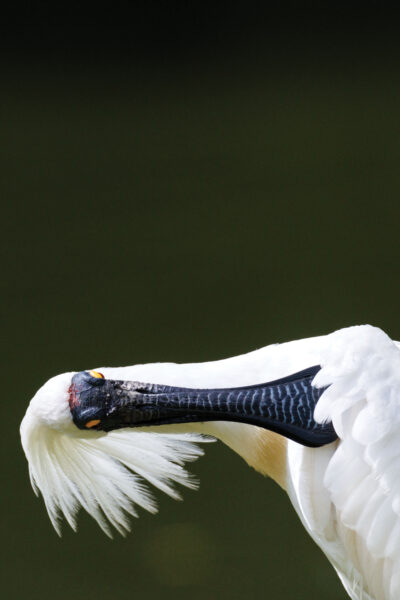
Royal spoonbills are thriving in New Zealand, with birdwatchers spotting their extravagant head feathers in more and more estuaries and lagoons. The population is now growing at a rate of 10 per cent per year, according to the most recent Birds New Zealand census, which recorded 4593 spoonbills nationwide. “Aren’t they amazing to watch when they fly?” says Bernie Kelly, who took part in the census. “I remember looking at them through binoculars and thinking, ‘I’m not in Africa, I live in Clive. And they’re just down in my wetland.’” In 2012, Kelly, along with John Sheen, found the North Island’s first large-scale spoonbill colony at Pōrangahau estuary in Hawke’s Bay. Spoonbills flew over from Australia in the early 1900s, and were first spotted breeding here in 1949. The birds’ te reo name, kōtuku ngutupapa, means “white heron with big lips”.
In November 2024, on the wind-whipped shores of Ōtūwharekai, the Ashburton Lakes, retired farmer John Evans was checking his trapline when he spied three bugs on the speargrass. They looked like “hare turds”, he thought. Sensing they had an audience, the critters started bumbling towards the base of the spiky plant to tuck themselves out of reach. Curious about the unusual, knobbly creatures, Evans snapped a photo to see if anyone could ID them online. Overnight, the entomology community of Aotearoa all but exploded with excitement. Evans had found a new population of the critically endangered Canterbury knobbled weevil, Hadramphus tuberculatus. “All the blimmin' entomologists are just over the moon,” he says. “Someone even tried to say I was like that guy who rediscovered the takahē.” In fact, this was the second big breakthrough on the knobbly-weevil front. For 80 years, despite regular searches by entomologists, the weevil was presumed extinct. Then, in 2004, a single specimen was spotted beside a busy highway in Burkes Pass. The Lazarus emergence of the species was incredible news, but a single, isolated community is a fragile buffer against the ongoing threats these insects face. Drought, fire or a particularly hungry hedgehog could all spell extinction for the weevil—again. In recent years, the Burkes Pass population hasn’t been tracking well. There were never that many weevils there, and numbers have long been in the single digits. “This second population is a game changer,” says Tara Murray, project lead for the species with the Department of Conservation. Unlike their cousins across the divide, the Ōtūwharekai population is pumping. “We counted more weevils in our first few surveys than we have ever seen at Burkes Pass,” says Murray. “Now that we have two populations to study, we can work out what conditions they need to thrive.”
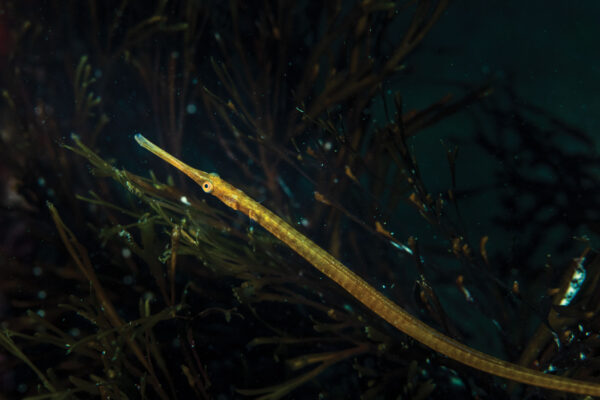
Male and female dusky pipefish look exactly the same in all but one aspect—males have a pouch for incubating eggs when they get pregnant. But it’s hard to spot, says Coley Tosto, author of a new study investigating what a pipefish thinks is sexy. Tosto, a post-doctoral fellow at the University of Canterbury, caught a couple of hundred pipefish by dragging a makeshift comb attached to a net through seagrass beds. Dusky pipefish are maybe the length of your foot, and they look like a seahorse stretched out into a straight line. “Pipefish are weird for many reasons, but one of them is that they don’t have a stomach,” says Tosto. “It’s just a tube from mouth to anus, and it means that in the wild they’re eating constantly.” Feeding them constantly kept Tosto busy—especially because she wanted her matchmaking to succeed. She separated them into groups of 16, eight males and eight females, to see which fish would hook up. “The official term is ‘experimental breeding populations’,” she says, “but the more fun term is ‘pipefish dating pools’.” Many mating rituals involve males competing for the attention of females, but with pipefish, it goes both ways. Getting pregnant is a burden, so males are discerning about their mates. Females, meanwhile, are looking for the fittest male to take on the responsibility of fertilising and carrying their eggs. Tosto’s analysis found that females generally favoured smaller males—which was so counter to expectations that she ran the results twice. She theorises that smaller males may be younger—or look younger—and that females associate youth with good health. Another theory is that smaller males may perform better in the pipefish mating ritual, a display that begins with group twitching and wiggling and culminates with two pipefish twirling upwards through the water in synchronisation. Or, perhaps, there is something invisible taking place: anything from genetic differences Tosto has yet to identify to a certain pipefish je ne sais quoi.
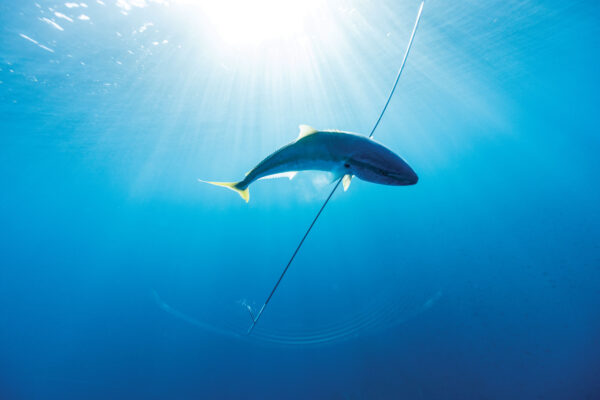
Kingfish are big, and they’re tough, and they fight like hell to stay in the sea. Unfortunately, that just makes us want them more.
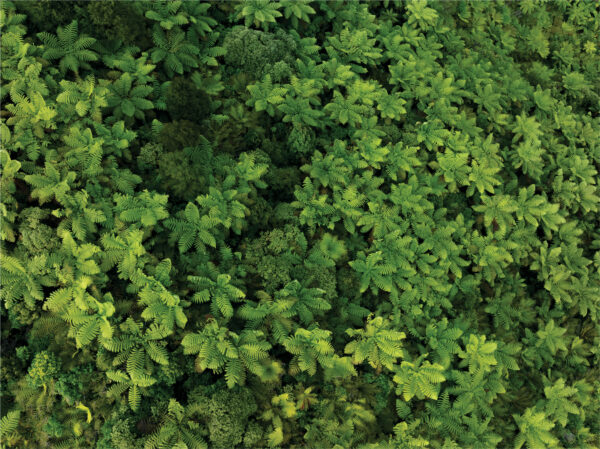
For all their showiness, tree ferns are extraordinary survivors. They hold their secrets close—but now, scientists are finding new ways to unfurl them.
Loading..

3
$1 trial for two weeks, thereafter $8.50 every two months, cancel any time
Already a subscriber? Sign in
Signed in as . Sign out

Ask your librarian to subscribe to this service next year. Alternatively, use a home network and buy a digital subscription—just $1/week...

Subscribe to our free newsletter for news and prizes