


Why you should care about an orange fish at the bottom of the ocean that you will never see
The tragic trajectory of deep sea bottom trawling just got a lot weirder.
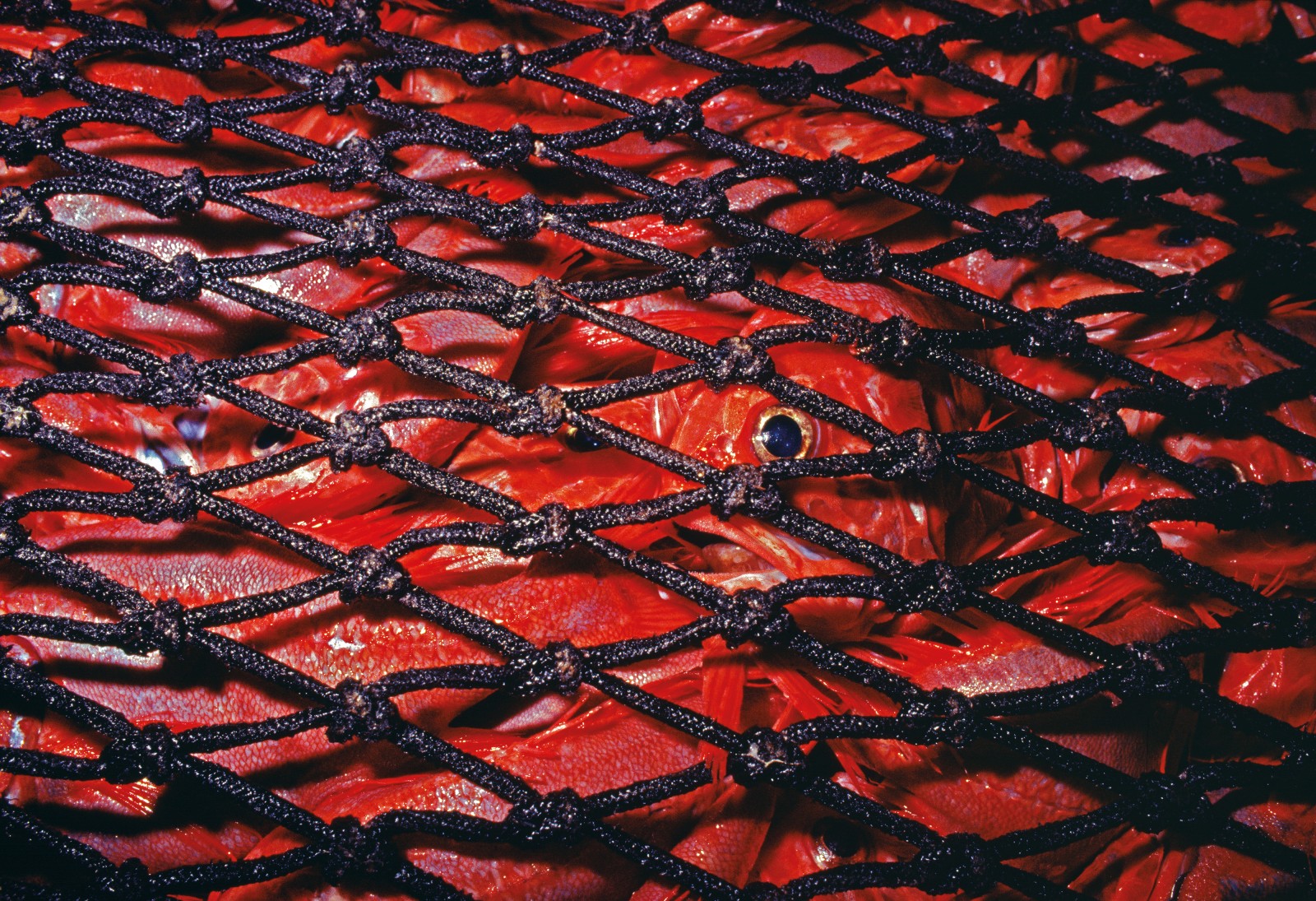
On the cover of issue 4 of New Zealand Geographic is a close up of an orange roughy, eyeballing photographer Kim Westerskov from inside a trawl net. It was dragged up from the rolling shoulder of a seamount, through 1000 metres of dark water to be landed on the roiling deck of a monster fishing trawler, more than 20 tonnes in a single set. On this trip it took just 43 hours to fill the boat—200,000 kilograms of fish, then back to port to unload.
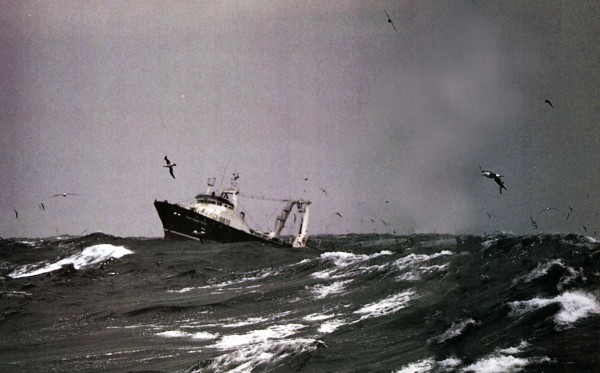
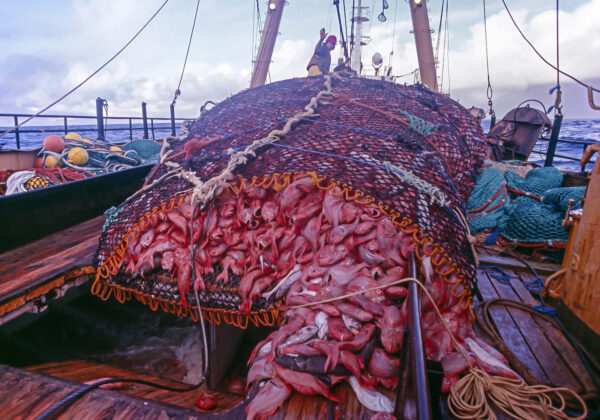
The accompanying cover story, written by Warren Judd in 1989, highlighted rapid industrialisation of the fishery and concerns over its sustainability. It raised a critical eyebrow at gargantuan catches made possible by joint ventures with foreign vessels. Judd, a scientist, noted the common trajectory of fish stocks—the gold rush to catch as much as you can as fast you can, until the quota system kicked in with just 20% of the species remaining… then fishers chip away at the long tail, bound by a total allowable catch that attempts to maintain a fishery teetering on the edge of collapse.
“Industry loves the large hauls of the knock-down phase, but is reluctant to switch to the small catches of sustained yield,” he wrote, “especially if it has invested in plant during the boom.”
The feature also highlighted that orange roughy are a slow-growing species, living longer than humans, and as a result were vulnerable to overfishing. Judd cited Ministry of Agriculture and Fisheries surveys that indicated orange roughy populations had declined by 50% in just a few years. Despite this, fishers insisted that stocks remained abundant, leading to conflicts over quota reductions. The story pointed to significant gaps in knowledge about behaviour of the species, spawning and movements, making management decisions more uncertain. And it issued a grim forecast: that unless strict conservation measures were enforced, the orange roughy fishery risked total depletion.
Check that date again. 1989. A generation ago. And very regrettably, New Zealand Geographic’s long-range forecast has come true.
To summarise the past 36 years of the orange roughy fishery: We fished it hard for nearly four decades, with catches of 50,000 tonnes a year in the late 1980s. Catches declined in the 1990s and 2000s, as did research and stock assessments that would inform decision making. In 2019 we reported that an ear bone from an orange roughy revealed the fish was 230 years old the day it was caught. But in 2021, after stock assessments had shown growing populations the allowable catch was doubled. The following year orange roughy received a ‘sustainable’ certification. Then an acoustic survey showed declining spawning stock. Catch was declining too. Something was wrong. In 2023, New Zealand Geographic revealed that the models used to predict abundance were fundamentally flawed. The smash-and-grab had left the fishery in a dark corner of the abundance curve.
“You’ve got to be precautionary,” said Barry Weeber, co-Chair of the peak body for environmental organisations in New Zealand, ECO, “and in the main, they haven’t been.”
Catches for the past two years have been well south of the allowable catch (last year, fishers couldn’t even catch half of the limit) indicating that the fish are getting hard to find, and that the regulation is no longer limiting fishing pressure, a pattern that presages the twilight of a fishery, and a species.
[chapter-break]
Perhaps the first question to ask is why should we care about an orange fish, at the bottom of the ocean, that you will probably never see?
I would like to propose an answer: Because the orange roughy is a perfect totem for every other species that we extract until its gone, it is a reflection of our relationship with our environment. We need to recognise this pattern, and change it, because it appears to lead to oblivion, every time.
There are two important sidebars to note for context. First, the orange roughy fishery belongs almost exclusively to New Zealand—we haul in some 80% of worldwide catch. Second, orange roughy are fished by bottom-trawling, a highly destructive fishing practice that can disturb or destroy deepwater corals and release organic carbon stored in sediment. Australia stopped bottom-trawling five years ago, making New Zealand the only country in the South Pacific that still allows the practice in the high seas.
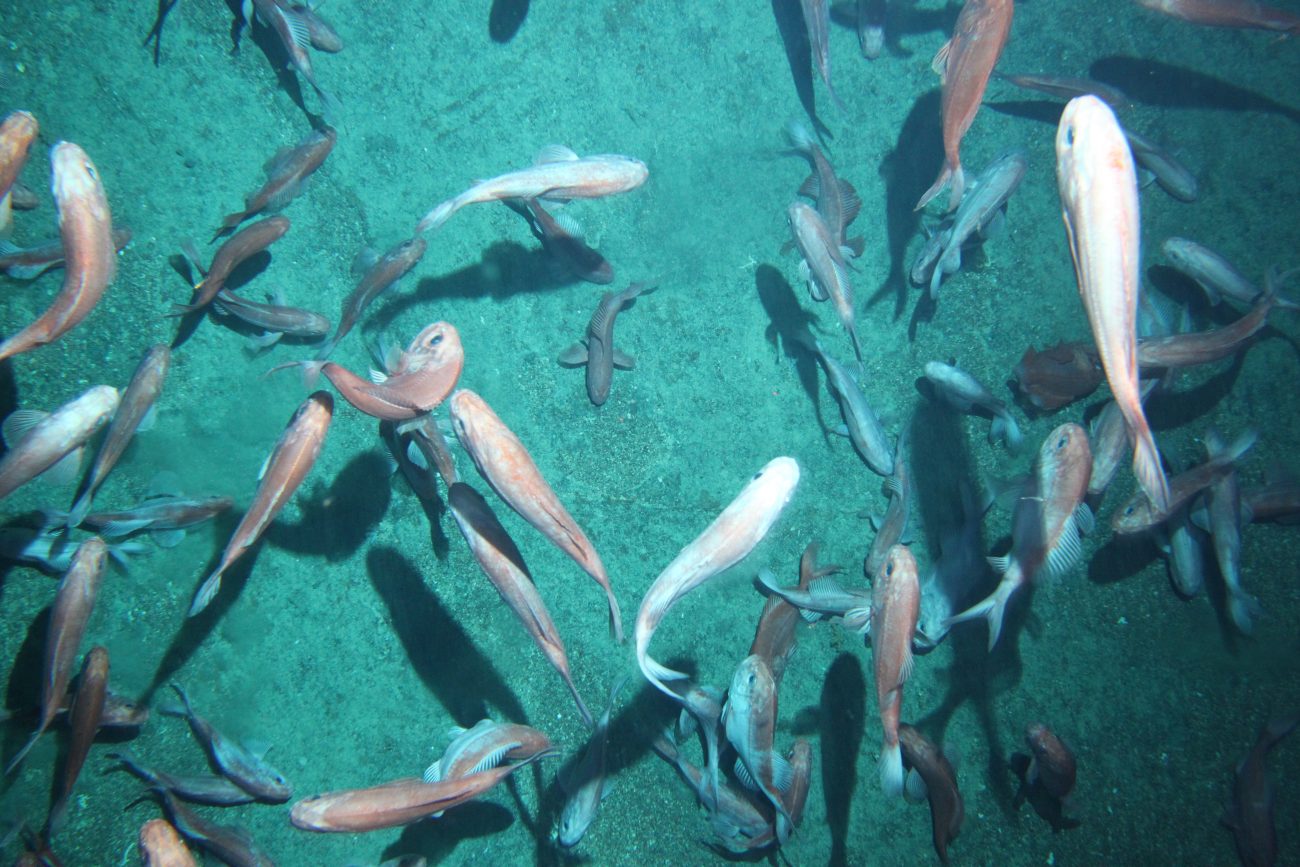
Today, we are at a crossroads. Fisheries scientists worry the species is in total collapse. Seafood New Zealand’s press release maintained “the orange roughy fishery is far from being in trouble… these fish are abundant”.
Recent surveys failed to find populations of the fish, so Government relied on 10-year-old data to make its decision on how much fish could be caught. The total allowable catch was reduced 25% in 2023, and the largest fishery, South East or ORH3B, by 40%. In July last year, the legal charity Environmental Law Initiative filed for judicial review, suggesting that, despite the reduction, the minister failed to take into account the best available information, consider the impact of destructive bottom trawling on the wider ecosystem, protect habitats of significance (such as seamounts) or consider how adverse effects may be mitigated.
Meanwhile, an international forum called the South Pacific Regional Fisheries Management Organisation (SPRFMO)—responsible for a quarter of the world’s international waters—is attempting to get agreement on sustainable practices between countries fishing on the High Seas, those ocean areas beyond each jurisdiction’s 200-mile Exclusive Economic Zone. They had originally proposed a total ban on bottom-trawling ‘vulnerable marine ecosystems’ such as seamounts. But in 2023 New Zealand pushed back on the proposal, tabling an alternative, protecting just 70% of seamounts.
Last year, New Zealand opposed its own proposal.
Last week, at the annual SPRFMO meeting in Santiago, Chile, New Zealand successfully blocked its own proposal a second time. Australia and the United States, traditional allies on the international forum, expressed alarm.
“New Zealand is very much isolated,” says Weeber, who was an official observer at the talks. “We’re burning political capital amongst other countries by the position we’re taking.”
Remarkably, at the same meeting, New Zealand fisheries negotiators managed to push through a carry-over provision that allows the country to bank the fish they were unable to catch in the previous two years, and add it to the quota for the following year. It makes it possible to catch two years-worth of fish in a single year. A last hurrah.
Perhaps more unsettling, is that the New Zealand offshore fleet are “exploring” the possibility of licensing the quota that Australia refuses to catch.
“If we don’t catch it, it won’t be available to the market,” Minister Shane Jones told the NZ Herald. “Do you want the fish harvested or not? As you know, I’m pro-harvest.”
Wild caught protein is arguably one of the most carbon-efficient means of meeting the needs of a growing global population. Does that mean we need to fish more? Or in the context of environmental damage and collapsing fisheries, do we need to fish less?
We need to fish differently, says Weeber. “If we were fishing bigger stocks, the ecosystem values of those stocks would be greater, the cost of fishing would be smaller, they’d be able to catch what they want quicker, and the carbon footprint would be lower. So there are a lot of benefits that are being ignored in the way we are currently managing our fisheries.”


