Think twice before playing in a river in the yellow zones. Or the green.
Splashing around in a New Zealand river?
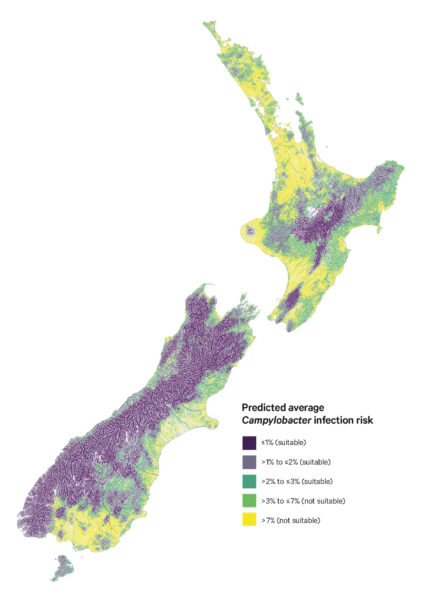
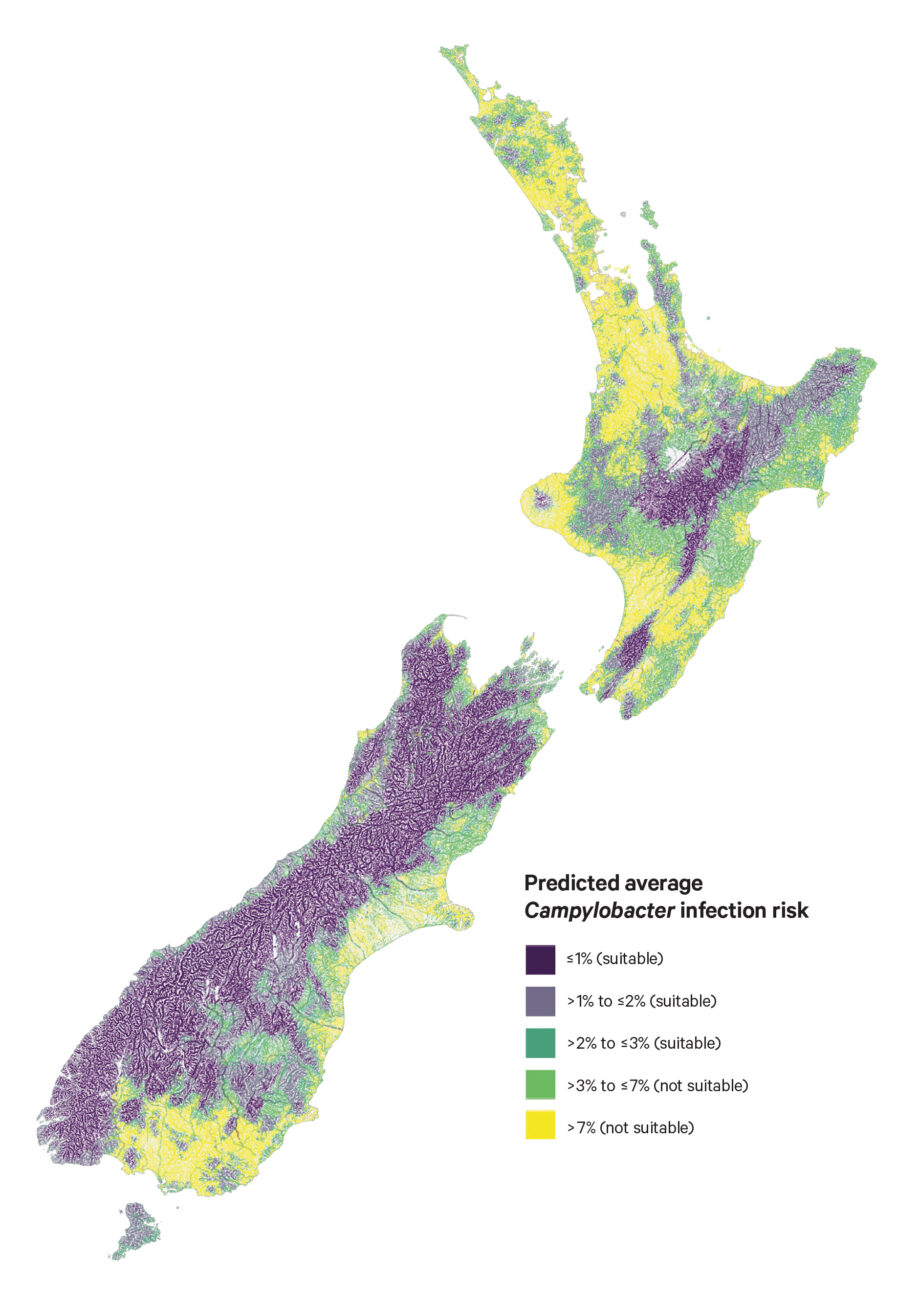
This map shows your risk of coming down with campylobacteriosis, a gastro illness that can cause severe diarrhoea, fever, abdominal pain and vomiting. (Campylobacter is the bacteria that got into Havelock North’s water supply in 2016, infecting thousands of people and causing four deaths.)
The map comes from the new report Our Freshwater 2026; a topline finding is that because of campylobacter, an estimated 44 per cent of the total length of New Zealand’s rivers was unsafe for swimming between 2020 and 2024. Yellow indicates a risk of more than seven per cent—deemed, along with light green, “not suitable”. Darker green hovers right on the safety threshold, while our mountain rivers tend to be a much cleaner dark purple.
Nicholas Ling is an associate professor of biodiversity and ecology at the University of Waikato. “It’s no coincidence,” he says, “that the places where we find those highest risks are all where we have the most issues with groundwater deterioration from intensive agriculture, particularly dairying.”
But the problem is multifaceted, he adds, pointing to longstanding problems with wastewater and stormwater infrastructure, exotic species, and forestry that periodically clears our most erodible land.
Confusingly, some of the “yellow” rivers may in fact be clean enough for swimming now and then. “The problem with these things is you can’t see it so you don’t know when it’s safe and when it’s not.”
Don’t muck around in any waterway after heavy rain or flooding, Ling advises. But between rains, “I do actually swim in the Waikato River,” he says. “I make sure I keep my mouth closed.”