Death
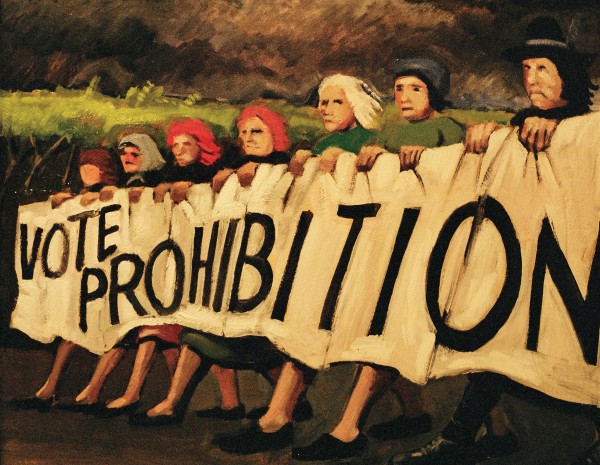
Just when you’ve come to terms with being old, you die! Some claim it a blessed relief, for others it is a valley of shadows. Why do we die? How do we die?


Just when you’ve come to terms with being old, you die! Some claim it a blessed relief, for others it is a valley of shadows. Why do we die? How do we die?
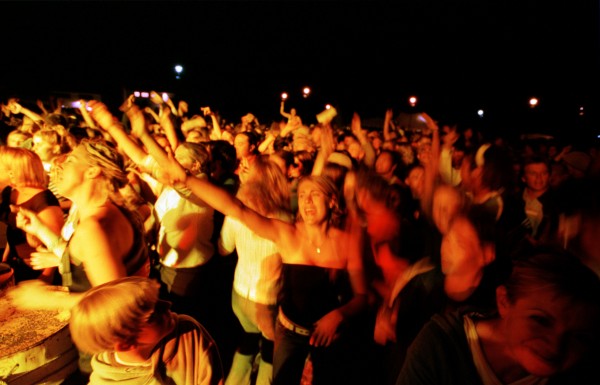
Each summer, tens of thousands of holidaymakers flock to the ocean beaches and saltwater estuaries of Whangamata to enjoy this popular aquatic playground. All the while, tensions, acrimony and debate over the use of those attractions bubble just under the surface.
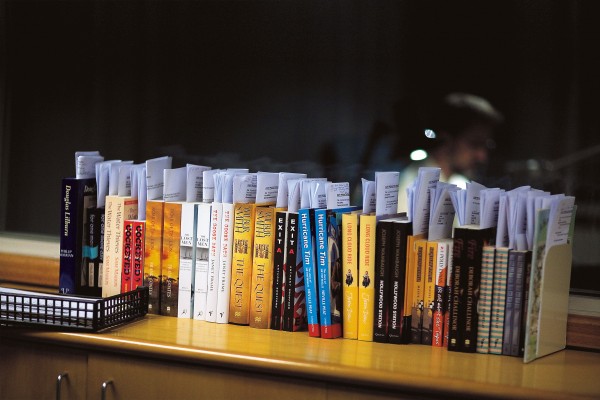
These recent books will be little read but much listened to. Recordings of readings will be distributed by the Royal New Zealand Foundation of the Blind’s talking book service among the 5600 people throughout the country whose eyesight no longer allows them to enjoy a book in the normal way.
What role should government have in providing affordable housing? The issue has been tossed back and forth between rival political parties for a century now, and with housing becoming less affordable for many, it’s likely to be debated for a while yet. Refugees, such as Nay from Myanmar, are among those who benefit from state housing.
A few years ago Auckland made international news—and caused widespread bemusement—when a major motorway rebuilding project was threatened with delay on account of a handful of uncommon shorebirds nesting within the site.
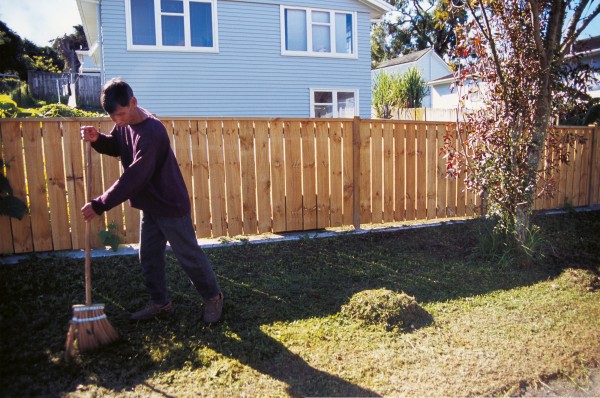
In rural New Zealand, every family has a collection of gumboots. When one boot gets a split, you keep the other in the hope that next time the opposite boot will fail so you’ll be able to reconstitute a pair. As every parent ruefully knows, kids’ feet grow fast, so as autumn beds in, it’s time to see what will fit for the coming winter. Experienced kids, like Max and Sophie Hindley, give the boots a good shake to dislodge spiders and the like before trying them on. These days, you can find a quality, cut and colour of gumboot to satisfy just about any taste.
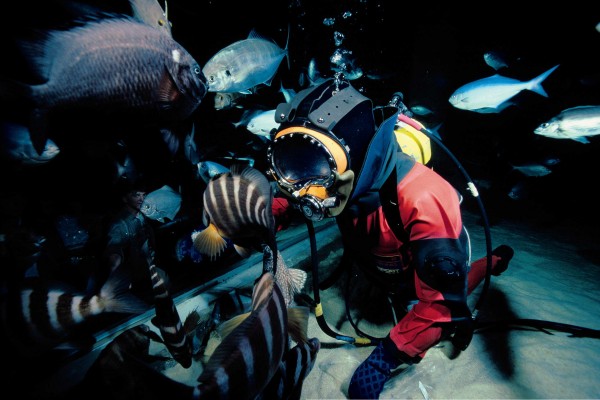
Although he is best remembered for the Underwater World on Auckland's waterfront which still carries his name 22 years after his death, that project was just the last in a life brimming with adventure, discovery, originality and zest.
I Wonder how many New Zealand Geographic readers would recognise these lines: "There are strange things done in the midnight sun By the men who moil for gold; The Arctic trails have their secret tales That would make your blood run cold..." It wouldn't surprise me if some could go on to recite The Cremation of Sam McGee in its entirety. It is 100 years since Sam McGee was published—a ballad that, along with the The Shooting of Dan McGrew and a handful of others in Songs of a Sourdough, earned its author, Robert Service, overnight fortune and fame. My introduction to the Bard of the Yukon came courtesy of Mrs McLeod, my drama teacher in Standard One at Owairaka Primary. (Those were the days of primers and standards—now replaced by the bland "Year X.") She was a formidable presence. From her rouged cheeks to her flamboyant clothing to her sonorous elocution, she was nothing if not dramatic. To a seven-year-old, she was unforgettable. I was fortunate to have many such teachers who thought children should be taught to recite. So we solemnly intoned Kipling's paean to Auckland—"Last, loneliest, loveliest, exquisite, apart"—and declaimed with tragic intensity "The wind was a torrent of darkness among the gusty trees," and feigned mysterious in "Slowly, silently, now the moon / Walks the night in her silver shoon"— amused then, as now, by that archaic word. But it was Service who opened the door to a Boy's Own world of mushing and gold-grubbing, of cold that "stabs like a driven nail" and silence that "bludgeons you dumb." A world in equal parts beautiful and dangerous, savage and free: "The strong life that never knows harness; The wilds where the caribou call; The freshness, the freedom, the farness- O God! How I'm stuck on it all." Canada's vagabond of verse has accompanied me on many a backcountry tramp. My copy of The Spell of the Yukon is permanently warped and watermarked from a drenching in the Makarora. But the grip of the words is potent still: "They have cradled you in custom, they have primed you with their preaching,They have soaked you in convention through and through;They have put you in a showcase; you're a credit to their teaching—But can't you hear the Wild?—it's calling you."Of course, the New Zealand tramper has no need to look to a Canadian for inspiration. There are plenty of poets closer to home to liven the night-time korero in a mountain but or around a driftwood fire. One might quote Glover's "Quardle oodle ardle wardle doodle / The magpies said." Or Baxter: "Upon the upland road Ride easy, stranger: Surrender to the sky Your heart of anger." But balladeers like Service (who never considered himself a real poet, merely a versifier and a rhymester) hold their own in such luminous company. The rhythms suit the hours of uphill trudging and downhill striding, and the stories conjure the pioneering past. In Shining with the Shiner, John A. Lee wrote about one all-night campfire session with a group of swagmen. Each recited, and no one judged the offerings for literary merit, for if a poem "had the flavour did it matter if it was Banjo Bill, Henry Lawson, David McKee Wright?" For his part, Lee's rapscallion hero, Shiner Slattery, dances a jig while singing this ditty: "I picked up my hat, And I spat on my stick, And out on the road Like a deer I did flit; I buttoned my coat, And I kindled my pipe And I off like a hare In the morning." With summer upon us and the backcountry beckoning, don't overlook that book of favourite verses when you pack. The poet Robert Pinsky said: "The longer I live, the more I see there's something about reciting rhythmical words aloud—it's almost biological—that comforts and enlivens human beings." The appeal of Service—a bank manager who "cheerfully exchanged the bondage of a settled existence for vagabondage"—is that he wrote both rollicking bar-room ballads and soul-stirring anthems to what he called "the Vastness", the unfathomable world of nature. Of the two, it was the latter he wanted to be remembered for. Late in his life he wrote: "To see the ordinary with eyes of marvel may be a gift; or it may be there is no ordinary, and wonder is the true vision." Note: There is an excellent reading of The Cremation of Sam McGee on the video site YouTube—go to www.youtube. com/watch?v=61Bkuz1TIVc Kennedy Warne was the founding editor of New Zealand Geographic and served as editor until the end of 2003. He now writes articles for New Zealand Geographic (most recently on moose and the Poor Knights) and the American, National Geographic, but is still awaiting an assignment to the Yukon.
Ben Todhunter farms Cleardale Station in the Rakaia Gorge and is co-chair of the High Country Accord, an advocacy group for high country farmers. He was a 2006 Nuffield scholar and is a former chairman of the South Island High Country Committee of Federated Farmers.
Classical composition arose in New Zealand during the 20th Century—a period when music was undergoing its global post-romantic revolution. Since that time, Kiwi composition has gone from strength to strength.
It is normal for people to think of science and art as pursuits occupying polar extremes, left brain versus right brain, mechanical versus unpredictable, or something along those lines. But I think the plodding unimaginative scientist captures the same space as the dull, self-plagiarising artist. It follows too that the work from a scientist that can inspire a shift in our thinking is equivalent to a masterpiece by a compelling sculptor or original writer. Creativity is the key. And creativity is a strange blend of qualities—so often dismissed as talent, but better thought of as a cocktail of traits: curiosity, wit, thoughtfulness, playfulness, informed scepticism regarding accepted wisdom, and an ability to apprehend deeper truths that lie at the bottom of layers of packaging and conditioning. Before the information age, seemingly opposing interests, science and art, were occasionally seen in the same individuals—Aristotle and Leonardo-style polymaths—who synthesised breadth with depth and eloquently demonstrated that creativity is creativity whatever the application. Today's creatives, working at the disparate frontiers of arcane fields are often out of the public view, but they share another perculiarity. When their work is published, they are often misunderstood and even vilified for spouting uncomfortable ideas or deconstructing comfortable ones. Which brings me in circuitous fashion to where I'm going in this (seemingly directionless) directorial. During my sixth form school year, a biology teacher, Mr Emil Melnichenko, exposed me to music by the polish composer, Krzysztof Penderecki, and showed me a fragment of one of Penderecki's wildly notated scores. I have named Emil in this piece for a reason. He was not an off-the-shelf sort of a science teacher (or these days, librarian). Aside from his excellence as an artist and a musician, he is an internationally top-ranked chess composer, a winner of many titles and tournament prizes. Chess composition? Never heard of it? Hardly surprising—this is a discipline without a profile in New Zealand. It is a well-established artform though, with a large and devoted following, mostly in Eastern and Continental Europe, but in Asia and the Americas too. Chess composers create board positions that are played out following chess convention, merging a grand master's deep knowledge of chess principles with an artist's flair. Such studies—composed usually at the endgame—are a form of kinetic art that can even reveal themes: perhaps a meditation on the movements of a web-spinning spider, a re-enactment of an obscure military engagement, or the realisation of an architectural principle from the Ming Dynasty. Compositions are rated for beauty, economy and originality, and the good ones are truly spellbinding. I invite you to google his name for more information. So getting back to Penderecki. An unworldly lad, there I was hearing this strange, hitherto unsuspected music of a living composer, and right there I had an epiphany. Until that moment, I thought that I had been applying the same sort of yardstick to music that I routinely apply across the arts, and indeed across the whole spectrum of creativity. But I hadn't. Sure, my favourites: Zappa, King Crimson, Hendrix and Miles Davis, were rock/jazz artists with greater substance than most, but that is not the point. We routinely judge art on artistic merit, incorporating ideas like originality, depth, boldness of experiment, finesse; yet even though we call musicians "artists", we mostly judge their work by extremely different criteria. Music for the vast majority of us is a thing of taste and familiarity, which has nothing much to do with art. So what if our favourite bands seldom go beyond a limited range of chord changes, beats and licks, or recycle lyrics in word-order variations on common themes. Who cares if an identical set of recycled jazz chords overlaid with a predictable attack of chromatic fingering is used by Joe Pass as with Pat Methany? We like it and that's enough! Perhaps. Perhaps not. If you call it art, shouldn't you treat it like art? Matsuo Basho, the great Japanese haiku poet, put this thought succinctly: Rhyming imitators—musk melons whacked in halves In this issue we are running a story on New Zealand music and the artists who create it. This issue is also accompanied by a double cd, illustrating the depth and stylistic range of their work. Dave Dobbin and Split Enz don't get a mention here. Nesian Mystic, Scribe and Bic Runga aren't included either. Kiwi rockers and crooners can be seen on TV, heard on the radio, and found in other publications. We are featuring contemporary composers. Some readers will protest at our generosity (and that of NZ composers who have not levied a fee for this exploitation of their work) on the grounds that such a story and its sonic illustration is outside NZ Geographic's proscribed subject matter. Not so! We have made the claim since our inception that we are the Journal of New Zealand, with an interest in the people and the culture of these isles. New Zealand was the last major landmass to receive humans and we are a young country. Elsewhere, nations judge themselves by their artistic legacies. Germans consider Beethoven and Bach to be more important to their sense of identity than Boris Becker or Franz Beckenbauer. For future generations of New Zealanders, a few of the obscure composers in this feature will be far better known and fondly remembered than today's crop of TV celebrities and sporting heroes. Imagine that?
Over the last 30 years shopping has gone from necessity to major recreation, and the venues in which we spend out money and time have changes also. Increasingly we shop in malls, such as the vast and splendid Botany Town Centre in Manukau City seen here, or suburban centres containing clusters of megastores.
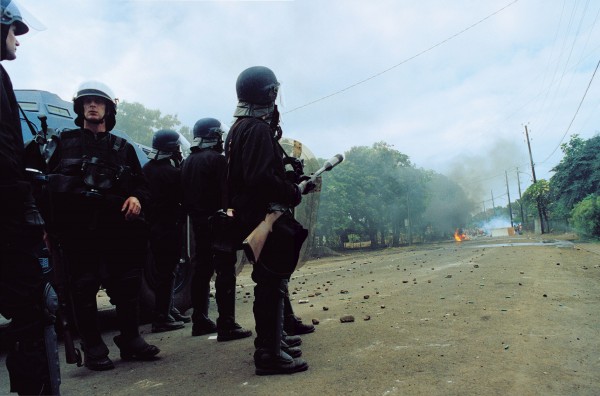
In June 1995, the French government announced it would carry out eight final underground nuclear bomb tests at Moruroa atoll before ratifying the UN’s comprehensive nuclear test ban treaty. The announcement provoked a storm of protest around the Pacific. Greenpeace sent ships to the island, protest marches and riots took place in Papeete (left), and a peace flotilla accompanied by the naval ship Tui headed to Moruroa from New Zealand. Marty Taylor sailed aboard Chimera and relives the protests of 10 years ago.
Born in 1835 to poor parents in Scotland, Andrew Carnegie became the richest man of his age. His family migrated to Al‑legheny, Pennsylvania, in 1848, and he immediately started work, at age 13, in a textile mill, earning $1.20 a week.
In the last century illegal whisky production in Southland's Hokonui Hills was a subject of police investigations. Today that shady past is a cause for celebration.
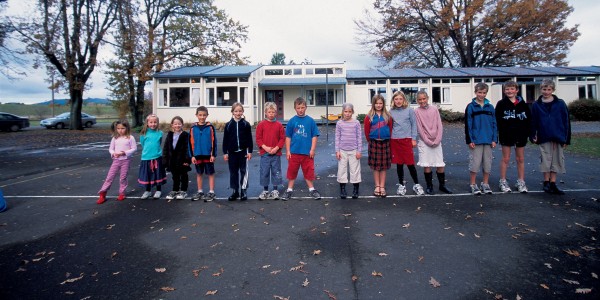
Small class sizes, dedicated teachers, a school backed by willing, committed parents—it’s what every educationalist dreams of—and it’s happening in small rural schools around the country every day. Here all the pupils of Parnassus School in North Canterbury line up on their netball court.
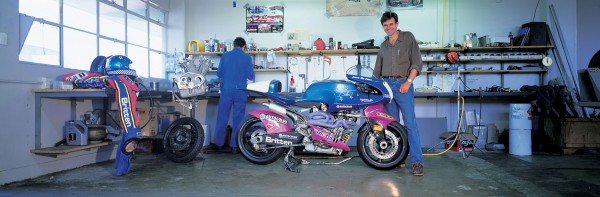
September 5, 2005 is the 10th anniversary of the untimely death of innovative design engineer John Britten, creator of the world-beating Britten V1000 motorcycle and many other visionary items. What is it about John Britten that continues to inspire us today? Why do Kiwis and visitors from around the world continue to flock to and admire the startling pink and blue Britten bike on its pedestal at Te Papa? Felicity Price, author of the 2003 official biography Dare to Dream: The John Britten Story, revisits the legend a decade after his death.
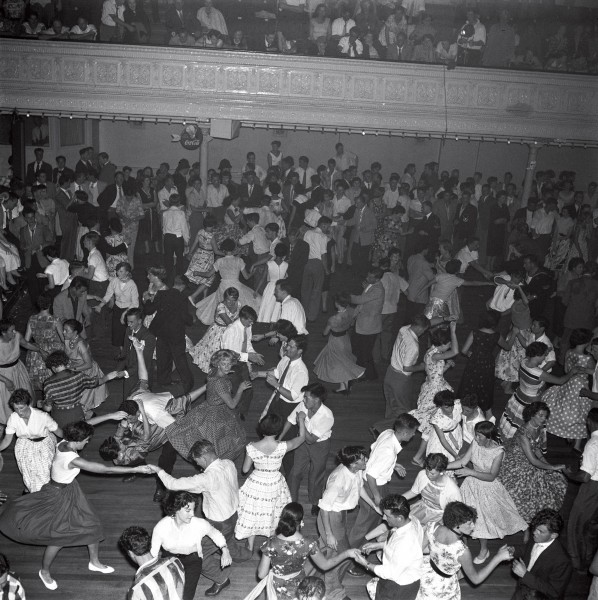
With miniature pencil in hand, a girl hoped to fill her dance card before the band first sounded. A card bereft of names did not bode well for one's evening—or prospects for marriage. But by 1957, for the patrons of Wellington Town Hall's rock 'n' roll dance, cards were ancient history and the music and moves were light years removed from the decorum that had prevailed just 80 years earlier. Although every generation seems compelled to devise its own ways of moving to its music, the popularity of dancing never falters.
In 1901 a little-known German neurologist began attending to a female patient known as Auguste D. At a mere 51 years of age, the woman was unable to remember her name, her husband’s name or how long she had been in hospital.
Loading..

3
$1 trial for two weeks, thereafter $8.50 every two months, cancel any time
Already a subscriber? Sign in
Signed in as . Sign out

Ask your librarian to subscribe to this service next year. Alternatively, use a home network and buy a digital subscription—just $1/week...

Subscribe to our free newsletter for news and prizes