Snorkel with EMR
Experiencing Marine Reserves is a national programme of experiential learning that allows anyone to borrow a mask and wetsuit, take the hand of a guide, and wade into the most pristine sites in New Zealand.


Experiencing Marine Reserves is a national programme of experiential learning that allows anyone to borrow a mask and wetsuit, take the hand of a guide, and wade into the most pristine sites in New Zealand.

Snapper congregate in the shallows of Cape Rodney-Okakari Point Marine Reserve at an abundance and maturity that may closely reflect the original snapper populations of the Hauraki Gulf.
Cape Rodney-Okakari Point Marine Reserve (Goat Island) marked the beginning of an environmental awakening. Established in 1977, it was the country's first no-take marine reserve, and among first in the world too.
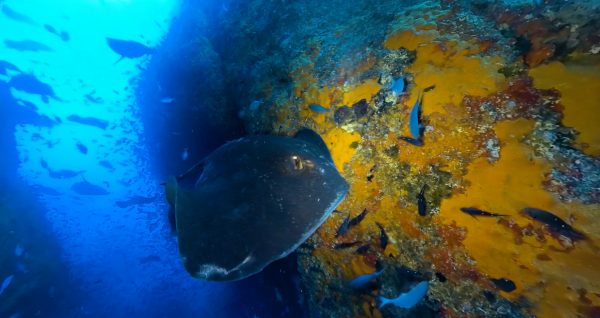
South of the Poor Knights stand a crop of rocky spires called The Pinnacles. Under the largest is a cathedral-like cavern called Tie Dye Arch, named for the kaleidoscope of colours that clad every surface like graffiti.
Marine scientist Lucy van Oosterom wrote her Masters thesis on fish communication. Yes, fish talk, using a range of sounds that include pops, crackles and whistles, depending on the species.
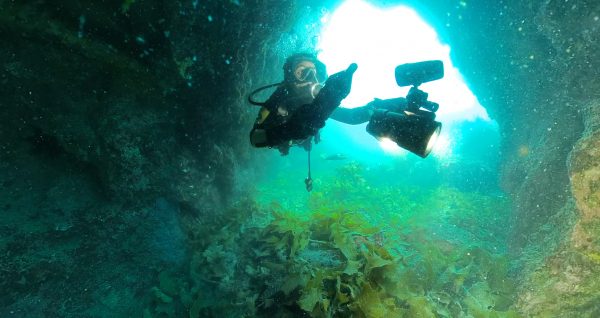
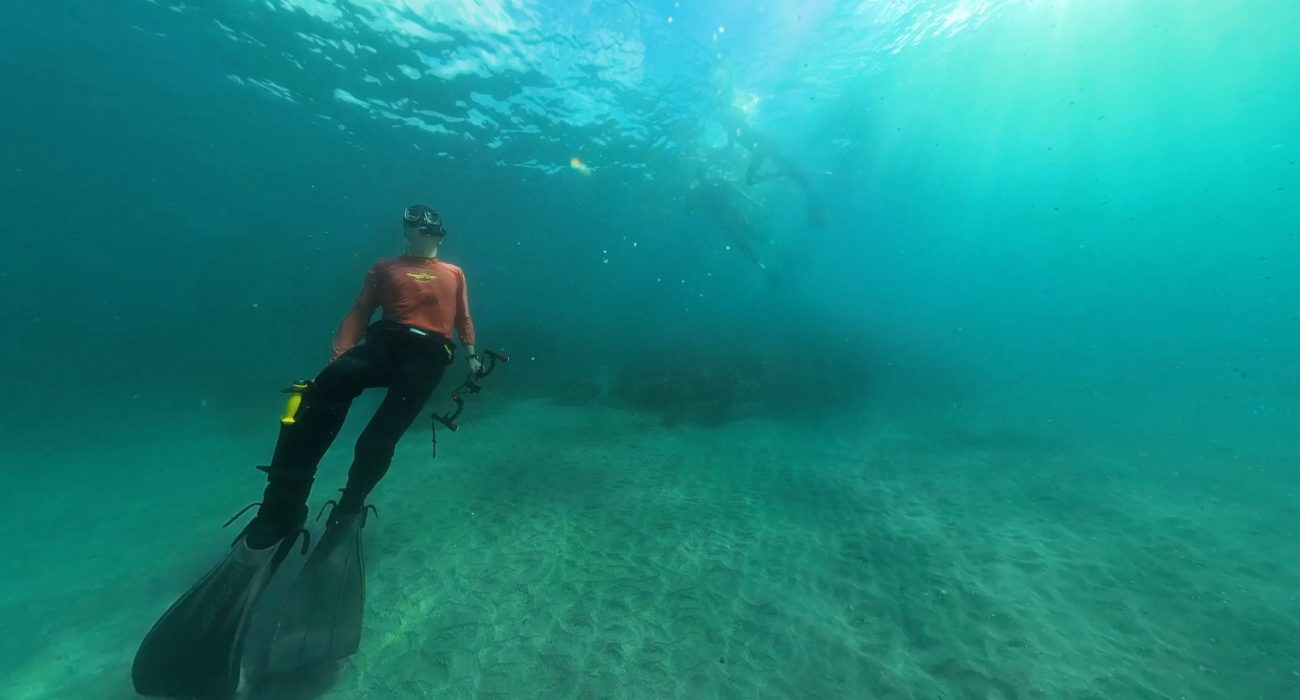
Why swim when you can scoot? Marine biologist Lucy van Oosterom, our VR Producer, hitches a ride through clouds of blue maomao and past swathes of kelp.
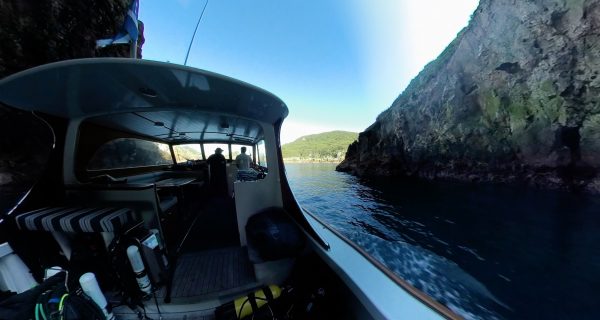
Twenty kilometres off the Tutukaka Coast, the Poor Knights Islands are the remnants of an ancient volcano, shattered and penetrated by the sea.
Snapper congregate in the shallows of Cape Rodney-Okakari Point Marine Reserve at an abundance and maturity that may closely reflect the original snapper populations of the Hauraki Gulf.
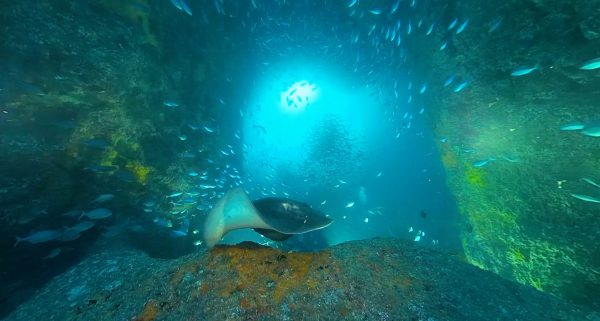
At the northern extent of the Poor Knights Islands is a gash in the rock, cutting through a promontory to a depth of more than 40 metres. Pink maomao and rays parade through it, day in day out.
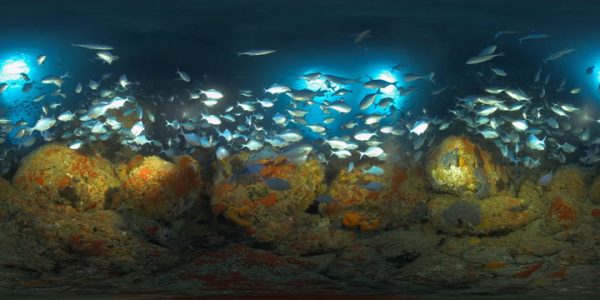
At a group of tall rock stacks south of the Poor Knights is a huge cavern at a depth of 25 metres, choked with fish and rays, and wallpapered in colourful sponges.
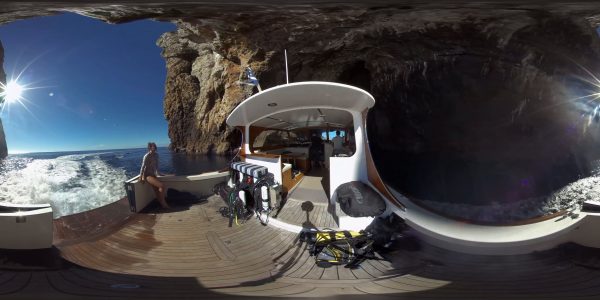
In the underwater labyrinth of the Poor Knights islands are fish that have learned to talk. Dive in with scientist Lucy Van Oosterom, who is trying to figure out what they're saying.
Why swim when you can scoot? Marine biologist Lucy van Oosterom, our VR Producer, hitches a ride through clouds of blue maomao and past swathes of kelp.
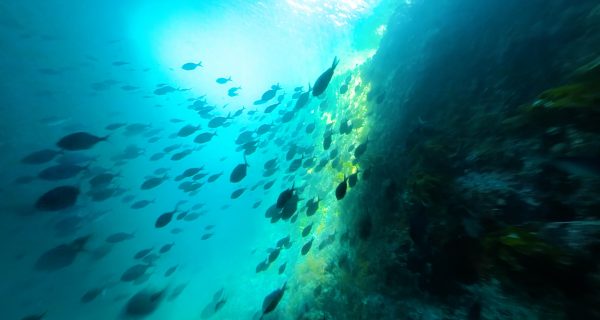
Deep under Archway Island is a cavern swarming with blue maomao—a common schooling fish in New Zealand's north. They seek shelter and protection in these caves, which are wallpapered with vibrant sponges and algae.

3
$1 trial for two weeks, thereafter $8.50 every two months, cancel any time
Already a subscriber? Sign in
Signed in as . Sign out

Ask your librarian to subscribe to this service next year. Alternatively, use a home network and buy a digital subscription—just $1/week...

Subscribe to our free newsletter for news and prizes