What happened at Waitangi
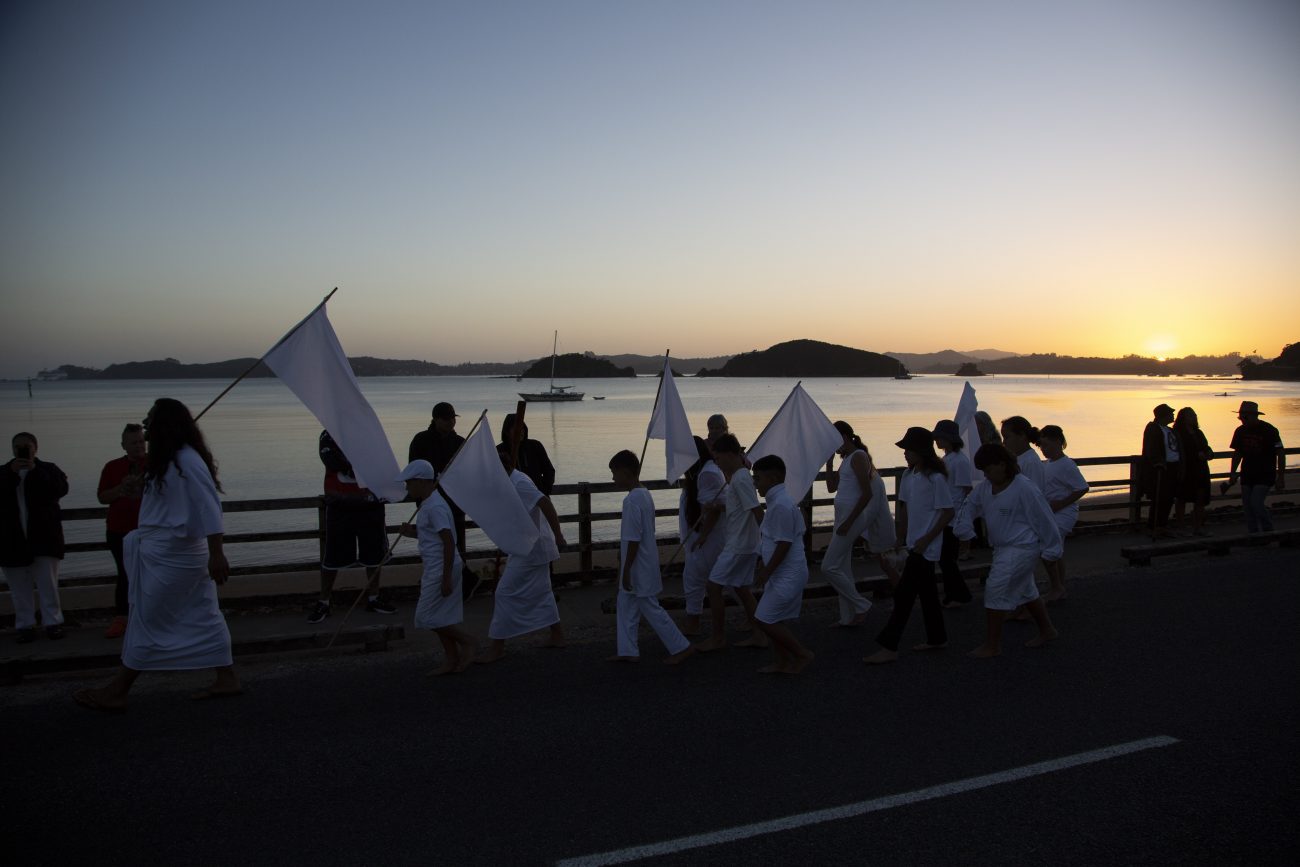
More than 50,000 people gathered at Waitangi on February 6, 2024—one of the largest attendances on record. What brought them?


More than 50,000 people gathered at Waitangi on February 6, 2024—one of the largest attendances on record. What brought them?
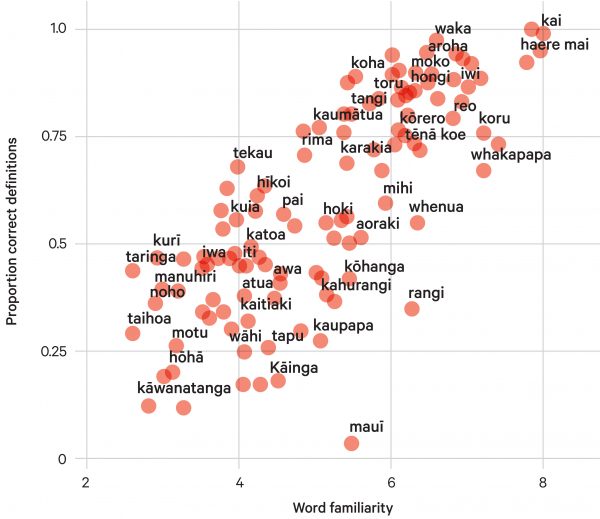
In recent years, as you’ve gone about your life—watching TV, at work or school, listening to the radio, even on your daily commute—your brain has increasingly been exposed to te reo Māori. Which means it’s quietly been building a highly accurate picture of what te reo looks and sounds like—whether or not you speak the language. A new study from the University of Canterbury shows that non-Māori speakers can reliably distinguish Māori words from almost-words—which gives anyone wanting to learn the language a head start. Recognising words as Māori is one thing. The study also asked: how many words can non-speakers understand? Studies in the 1980s and 1990s estimated non-speakers had a typical vocabulary of 40-50 Māori words. By the 2000s the estimate was 70-80 words, though those experiments used multi-choice questions and included flora and fauna terms. The new study required participants to produce their own definitions and skipped the birds and plants. The result? Around 70 words. Most of us know our kai from our koha, our hīkoi from hoki. Though mauī tripped most people up: the Polynesian demigod and explorer is Māui, with a macron on the ā; spelt this way it means “left”. All of this suggests some small progress in core vocab—and that we’ve got a way to go. The good news is that more people engage with the language each year. More than 200,000 kids now learn te reo in English medium schools. Three in five Kiwis want te reo to be a core subject at primary school. And as a nation, we’re working towards the goal of one million speakers by 2040.
The release of Disney’s Moana in te reo was a landmark for Māori language revitalisation. As that rebirth gathers steam, mita, or dialects are returning to the fore. When The Lion King Reo Māori hit cinemas last year, the lions spoke Tainui reo, the hyenas joked with Ngāti Kahungunu accents and Rafiki was clearly from Te Urewera. Mita encompasses pronunciation, distinctive words and sayings, waiata or tikanga that identify a speaker’s origins. If someone uses a soft h for wh, such that whānau sounds like wānau, you know they’re from Whanganui. Ngāpuhi speakers tend to drop the w, leaving a distinctive h: whakarongo becomes hakarongo. And Ngāi Tahu speakers render ng as k, turning whakarongo into whakaroko. The first attempt to record Kāi Tahu mita in English was in 1773, when the crew of Cook’s Resolution were intrigued by the harsh accents of locals in Tamatea/Dusky Sound. For our story on the lost tribe of Fiordland, which begins with this encounter, we’ve used the Kāi Tahu dialect. And if you’d like to hear what it sounds like for yourself, check out the recent release of Frozen Reo Māori, which is entirely in the mita of the freezing south.
Auckland dad Harry Scott (Ngāi Tahu) teaches outdoor ed to young kids—although, really, they’re teaching themselves.
Why have so many Pacific cultures turned to artificial flowers? And what’s lost—or gained—in doing so? In the new botanical ethnography Flora, Nathaniel Lennon Rigler Siguenza writes about plants, and plastic, and the human stories tied into both.
Of all the penguins and forests and fire and ice, the horses and high wires and aerial shots in our Photographer of the Year finalists, my favourite frames are both portraits. First, Joe Harrison’s shot of a boy on a campground seesaw. Just look at the light. Look at that boy, looking straight through you. Expecting better. Then there’s Brian Turner, fading like old tussock, like the light, shot by Alden Williams. A classical portrait through and through. Every time I look at it tears come to my eyes. This is partly because Brian has Alzheimer’s. His brain, he’s said, feels like a shower of asteroids coming at him. My dad had dementia, and he died last year, just after his 65th birthday, and it doesn’t take much to make me cry for him. But when I look at this photograph I’m also deeply moved by the way Brian has lived. He is a poet and an environmental activist—has been since Save Manapouri in the late 60s—and he lives in Central Otago, and it lives in him. “Before the dusk / mellows and fails / the light is like honey / on the stems of tussock grass…” Turner’s partner, fellow activist and writer Jillian Sullivan, puts it this way: “Whether it sang for him or he to it, his words now paint the land and hold it sacrosanct.” This was not a cost of living election, it was a climate election. We just didn’t talk about it. About the fact that Antarctica is melting, corals are cooking, and the world has just experienced the hottest July on record. Also the hottest August. And September. National’s full environmental policy seems to have been quietly published the day before the election. No poetry here, and it’s fairly broad-brush. “New Zealand faces major environmental challenges from climate change and the rapid loss of biodiversity,” the opening pages of the document assert. “A cohesive, integrated approach to environmental regulation is crucial.” Yes and yes, please. Throughout, there is an emphasis on data. Targets. New tech. New wetlands. There are words that let me hope this next government will share my sense of urgency: turbo-charge; unleash; fast-track. But there is a mountain to climb to “get our country back on track”. New Zealand has committed under the Paris Agreement to reduce net greenhouse gas emissions 50 per cent by 2030 to limit warming to less than 1.5ºC. The science is unequivocal: we can’t honour that commitment and restart oil and gas exploration too. Or defer pricing on agricultural emissions. Or prioritise new roads over public transport. And the fiscal penalties for failing to decrease emissions or pulling out of the agreement would be catastrophic for the economy. The new coalition must find a way to rehabilitate both our economy and environment at the same time. As this next government steps from rhetoric to the real-world work of making change, promises may prove very hard to keep. Many of our leading environmental scientists have become accustomed to difficult compromises. Kelsey Miller, who spent days on the bottom of the Hauraki Gulf culling emaciated kina with a hammer, was trying to find a solution to the barrens the urchins are creating. She hated it, cringed every time, but she kept going, trying to strike a balance between our new context and a restored ecology. As with kina, the new government’s approach to our twin crises—climate, biodiversity—needs to evolve as the challenge does (it will). But the science to underpin it is already there for the taking. We just need the will. The political weather. It’s going to be a long, hot summer.
Photographers Chris Hoopmann and Johannes van Kan showcase the meticulously organised chaos of moving a 155-year-old museum.
A tattoo artist traces his history—and his future.
When it comes to investing, time in the market generally beats timing the market.
Bangers get a boost in the summertime, researchers analysing 66 years’ worth of UK weekly pop charts have found. They scored more than 23,000 songs on factors such as tempo, danceability and energy, then compared the songs and their rankings with the weather. The result: songs with high intensity, that spark joy and happiness, soared to the top of the pops when the weather was warmer and less rainy. Loud, fast and energetic songs—the kind boosted by summery climes—included the 80s dance bop ‘Get Loose’ by Evelyn ‘Champagne’ King, the early 2000s banger ‘Temperature’ by Sean Paul, and a cover of ‘Ice Ice Baby’ by the cast of the TV show Glee. Songs in the top 10 showed the strongest associations with weather, fluctuating with the seasons. This suggests that it’s not just the quality of a song that propels it to the top of the charts, but also the prevailing weather. The study authors suggest that sunny weather may make people feel happier, leading them to listen to upbeat music to match their mood—but they can’t say for sure, noting that the study only measures correlation. It’s clear that we do, however, like singin’ in the rain: the popularity of low-intensity sad songs did not appear to change when the weather did.
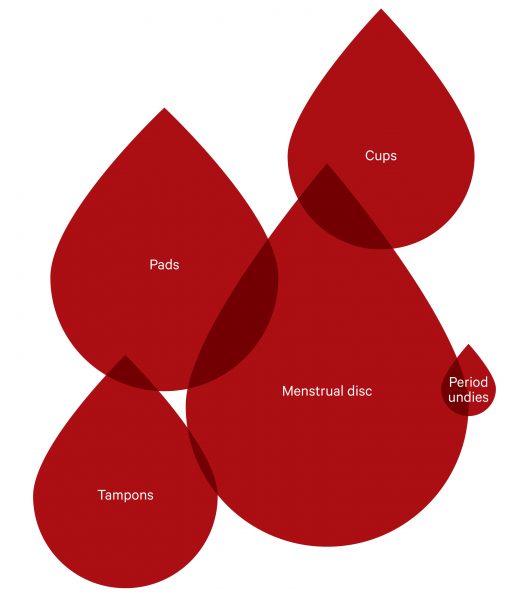
How heavy are your periods? Medically, it’s an important question—one-third of patients bleed heavily, which can cause iron deficiency or anaemia, and occasionally be so severe as to require blood transfusions or surgery. But it’s a very difficult question to answer. Bethany Bannow is an Oregon haematologist with a special interest in bleeding disorders and menstruation. “I see patients in my clinic all the time with terrible periods who have no idea they are heavy,” she says, “because their periods, and often those of their female relatives, have always been heavy.” So doctors tend to ask a second question: how often do you have to change your sanitary product? But here, too, they’ve been flying blind—because they have scant information about the absorbency of those products. The only published studies used saline or water, not menstrual fluid or anything like it. And no one had compared the capacity of more modern products such as menstrual cups and discs, or period underwear. In a study just published in the British Medical Journal, Bannow and her co-authors used blood—expired O+—to soak 21 period products of various types, sizes and brands. The graphic above shows the maximum each type of product could handle. Often, this was much less than advertised. Period underwear absorbed 3mL, “and quite slowly”. A ‘Ziggy’ menstrual disc, meanwhile, held 80mL. That much menstrual fluid, even if it took an entire cycle to accumulate, is enough to diagnose a patient with heavy bleeding.
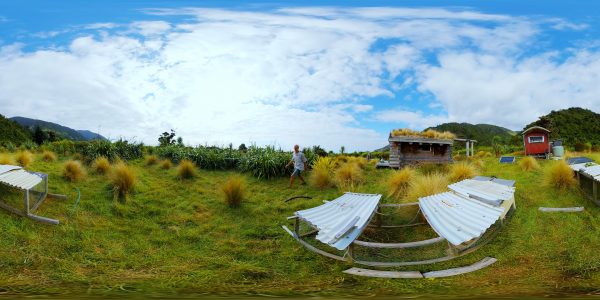
Suzanne Hills and Chris Cromey live in a ‘tiny house’, on wheels and off grid south of Punkaiki. In the past five years she has planted 5000 native trees, set solar and wind power generation and even uses ‘solar cooking’. A large vege patch, two ewes and a small hoard of rabbits provide sustenance, pleasure and fertiliser in equal measure.
Paul works on a front end loader to clear off the overburden and get to the gold-bearing quartz and greywacke which is deposited into the floating gold screen. Gold is heavy, so settles to the bottom while the remaining deposits are spread onto the land. Last year 700 kilograms of gold was mined across the West Coast, worth nearly $75 million.
Visit a kiwi creche—Young kiwis stay in a 12-hectare Atarau Sanctuary creche until they are about a year old—large enough to defend themselves from stoats. Rangers Kristy Owens and Glen Newton check the weight, beak length, body condition and vision. Stoats and rats are controlled in the Paparoa National Park, where some 40 kiwis have been released with high survival rates.
Dave Johanssen and his daughter Olivia milk 320 cows a day on their West Coast farm at Ahaura, each of them producing some 27 litres of milk a day. Johanssen has been milking cows for four decades, and the kids are on a similar path, taking turns with the milking to earn pocket money.
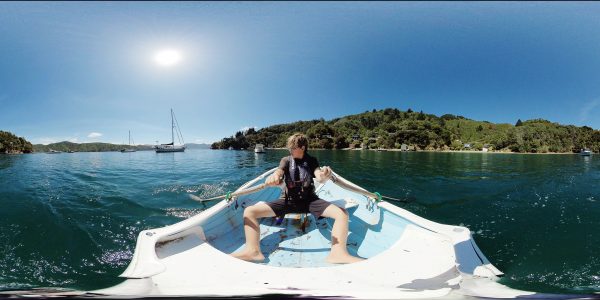
Shacklton ‘Shack’ Scollay is the 13-year-old son of Kina Scollay, fisherman, shark diver and filmmaker. He's a man of the sea too, here rowing around Waikawa Bay.
The Queen Charlotte Track is one of New Zealand's Great Rides with 72 kilometres of continuous single track, undulating up and down the coast between Ship Cove and Anakiwa, through bush and past secluded bays. It’s also part of the 3000-kiometre-long Te Araroa walking trail.
Workers harvest mussels from the lines hung beneath the floats while shags pirouette about hoping to catch a free feed. Waimana Marine, a small family-owned aquaculture company, has been growing mussel farms in the area for more than 30 years—much of it going into health products such as mussel powder to support joint health. The mussel spat comes all the way from Ninety Mile Beach in the Far North.
There are few roads around the rugged coast of the Marlborough Sounds, making the Pelorus Express Mail Boat a critical connection for isolated families for more than 100 years—such as Rangers Emmanuel Oysten, Anna Star and kids Fergus (7) and Quin (4). Mail, groceries and farming supplies are all transported on the boat, as well tourists.
Loading..

3
$1 trial for two weeks, thereafter $8.50 every two months, cancel any time
Already a subscriber? Sign in
Signed in as . Sign out

Ask your librarian to subscribe to this service next year. Alternatively, use a home network and buy a digital subscription—just $1/week...

Subscribe to our free newsletter for news and prizes