|
One in 40,000 snails have the spiral on the left side of the shell, and they can only mate with other lefties. Can you help Ned find true love?
|
The Weekender |

|
|
|
Free newsletter
|
AUGUST 22, 2025
|
|

|
Publisher |
|
This month, a miracle. New Zealand Geographic illustrator Giselle Clarkson found a left-spiralling snail in her garden. Best science puts the chances at 1 in 40,000. But, regrettably for the snail, named Ned, the chances of mating are equally poor—lefties and 'normal' righties just can't get it together. In a bid to find love for a hapless snail, and to tear us all away from the persistent anxiety of current affairs, we're launching a national campaign to find another leftie snail. Maybe an international campaign. We can do this. There are well over 40,000 readers of this newsletter, for a kick off. If every one of you read the story below, share the link with your mates, and venture into your garden with a torch, we can make Ned's dreams come true. Remarkably, it's unseasonably fine over the entire country tonight. It's a great night for finding left-spiralling snails... |
|
|
|
|
|
Have something to say? Feel free to get in touch with me directly. You can support our work with a subscription—either print or digital or both—please check out the options.The more support we have, the more great work we can produce. |
||
|
|
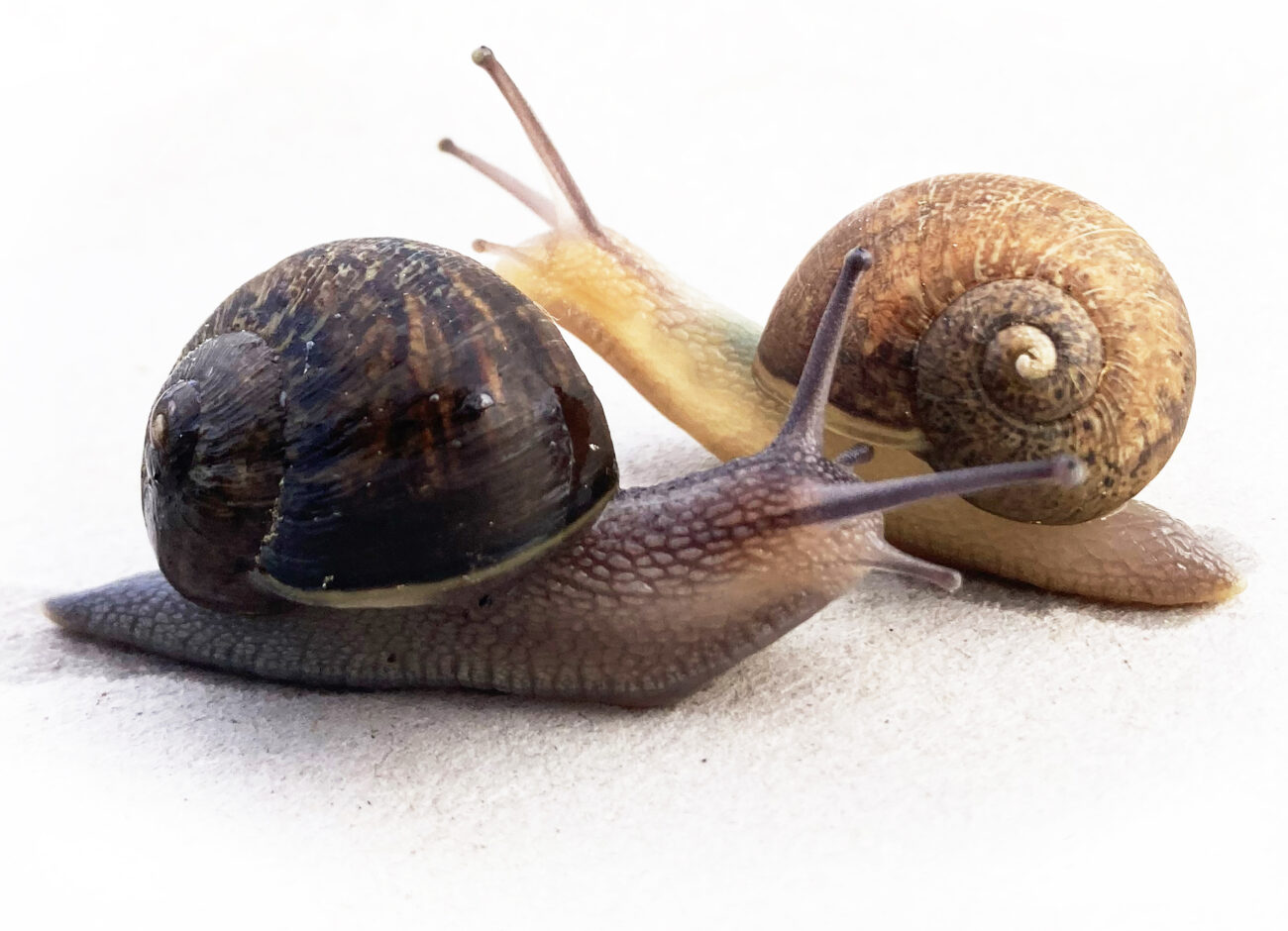
An appeal for ned Let’s find a mate for NedOne ordinary Wednesday afternoon in August, illustrator Giselle Clarkson was weeding in her Wairarapa garden when a snail tumbled into the dirt. Being a softy, she went to move it to another patch of garden. But the most uncanny feeling came over her. “Something looked off. It was weird… For a second, I wondered if it was a different species.” Abruptly, she clicked. This was a chimera, a left-spiralling snail. Clarkson had been looking for one of these little miracles for years. “I was immediately terrified I’d crushed it,” she says. She ripped her gloves off, gave the snail a careful clean-up, and made a home for it in a fishbowl. Eventually, the snail poked its head out of its shell, and Clarkson could breathe again. She named her new friend Ned, after The Simpsons’ guileless lefty Ned Flanders. Clarkson found Ned a companion—a garden-variety right-spiralling snail—took a photo, and burst into NZGeo’s WhatsApp group chat. GUYS she typed, GUYS. Kate Evans, who has written for us about such things as ‘lateralisation’ immediately erupted into exclamation marks. Only one in every 40,000 snails has a spiral on this side of its shell. That makes Clarkson’s snail very cool, but also dooms it to a chaste and sterile life: the position of its reproductive organs means it will only be able to mate if it finds another, super-rare, flipped snail. |
|
|
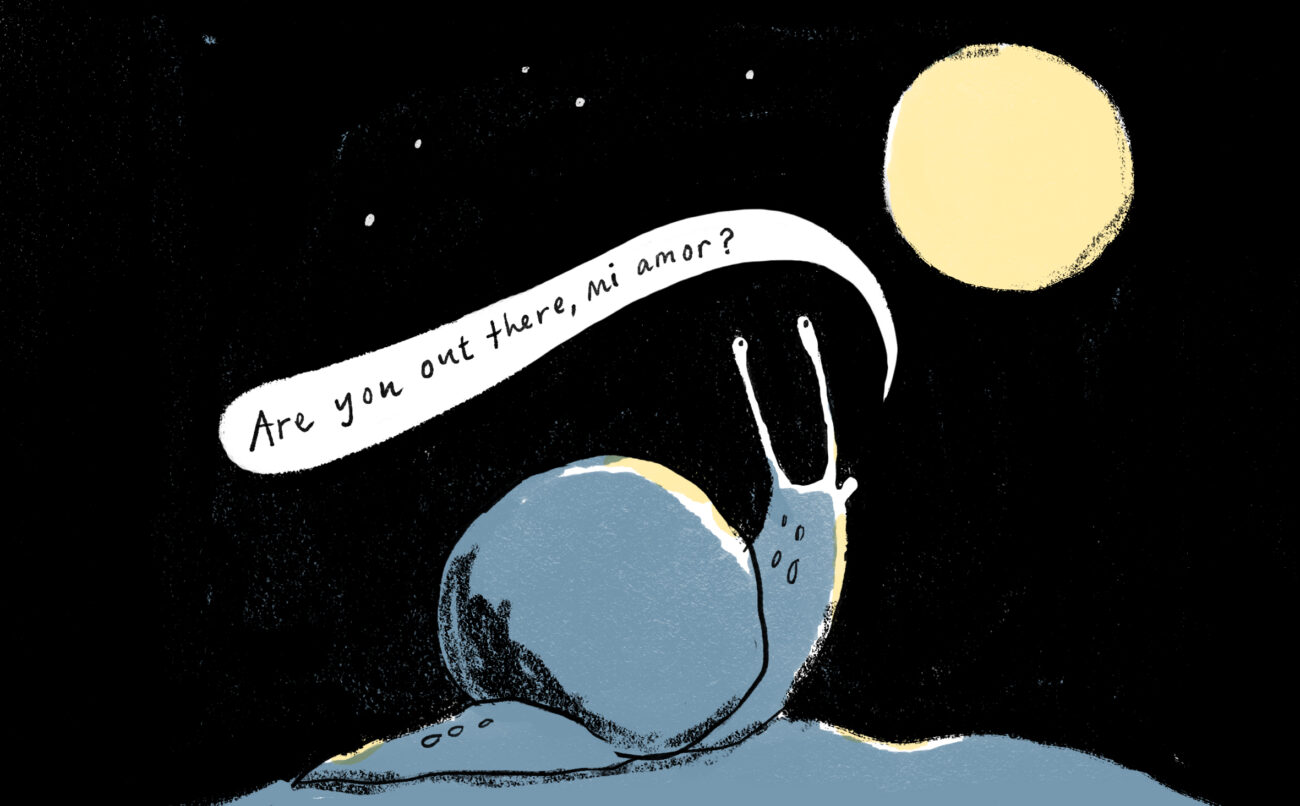
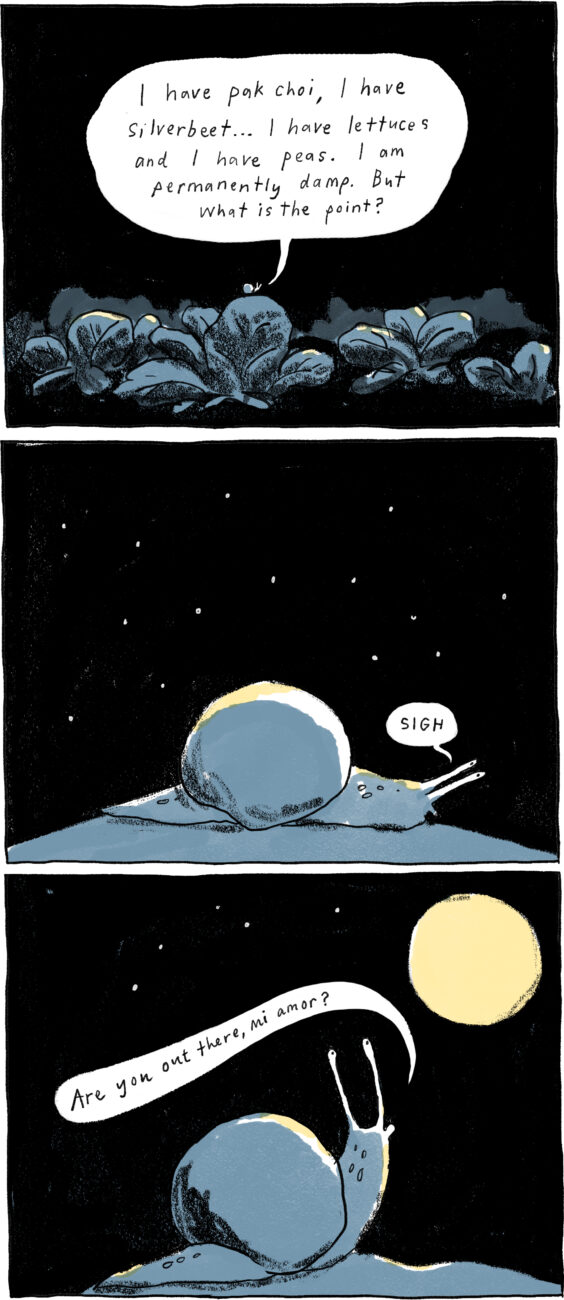
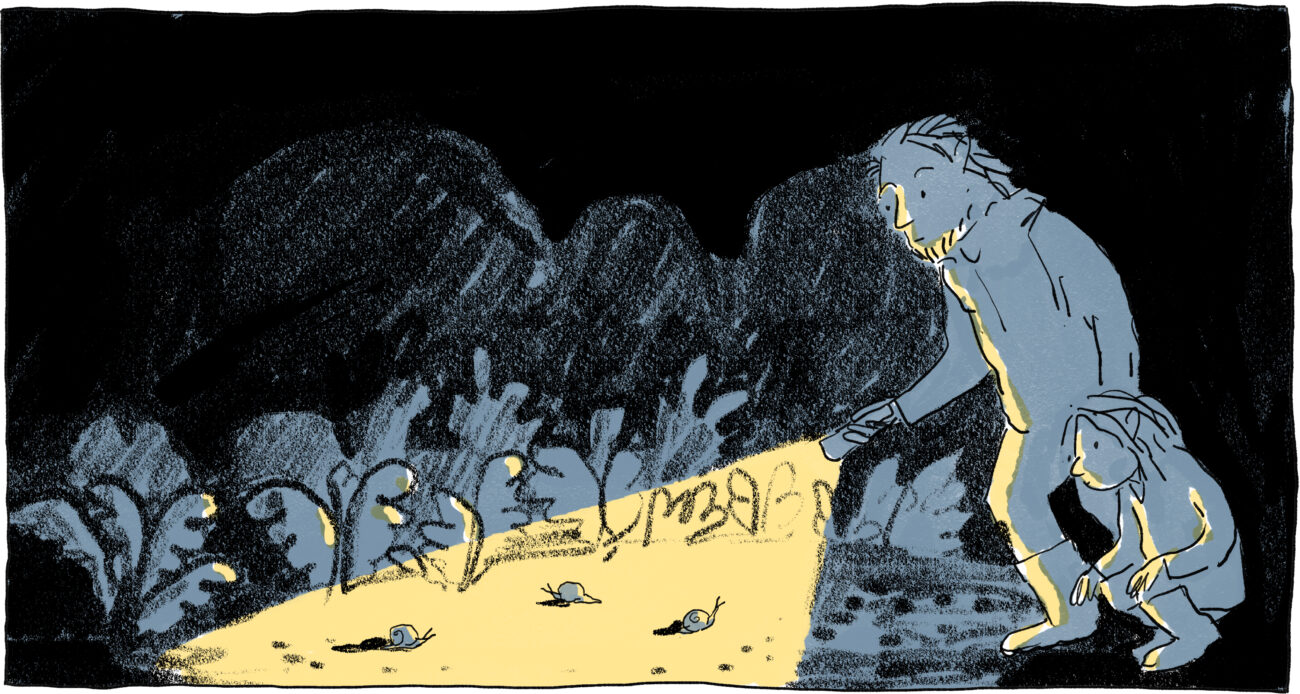
Snails are hermaphrodites—having both male and female sex organs positioned conveniently on the side of their heads. (“It’s neither, it’s both, it’s everything,” says Clarkson.) Hooking up works just fine for right-handed snails, but it appears to be impossible for a righty and a lefty to get it on. This is bad news for Ned, doomed to roam vegetable gardens for a lifetime in search of lefty love. On Ned’s behalf, then, a plea: head out into the garden and have a rummage in your spinach. During the day, snails hide in patches of damp shade—like under the rim of pots, in between rocks, among long weeds or juicy plants like Agapanthus. Better still, grab a hoodie and a torch and pop out on a mild, damp night when you can find them roaming around in the open. |
|
|
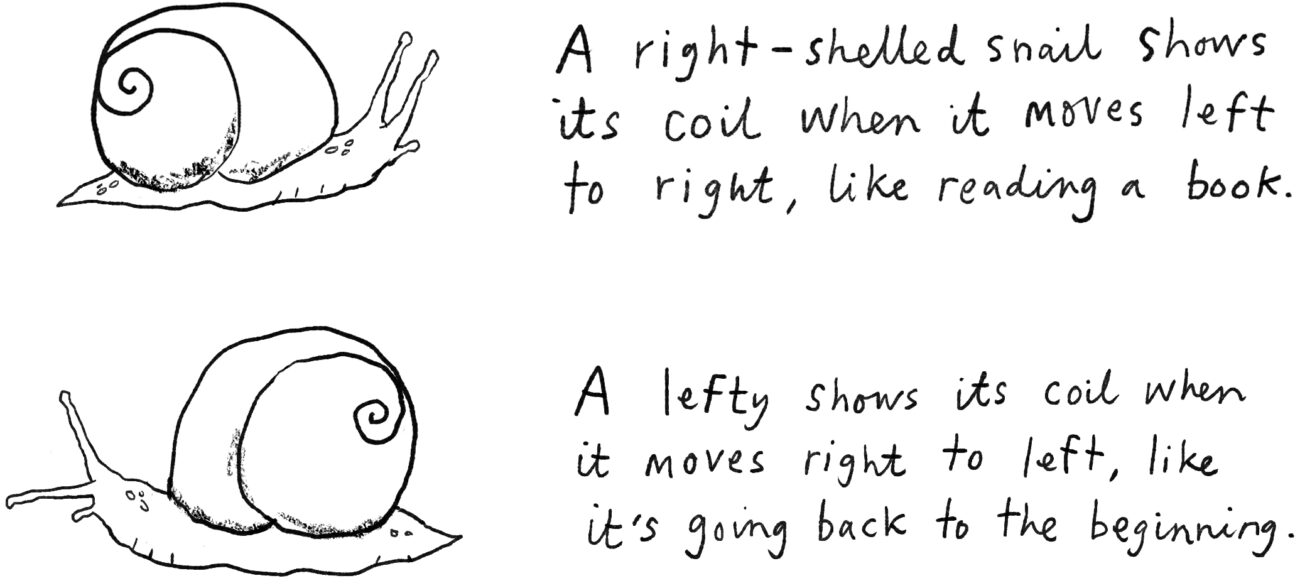
You’re in luck—it’s a good time of the year for snails. “It’s just like maximum snail right now,” says Clarkson. “They’re everywhere. You can basically pick up handfuls of them.” Snails have a pretty whorl on only one side of their shells. Here’s what you’re looking for: |
|
|
If you find some right-coilers, good on you, go back to bed. But if you discover a leftie, please check it half a dozen times, pop it in a container with whatever it was munching on and drop us a line. Then pop out and buy yourself a lotto ticket—like Ned, you’re a bloody legend, and you’re about to make a lonely snail very happy. Let’s remember that this is a numbers game. Share this link everywhere you dare: https://www.nzgeo.com/stories/lets-find-a-mate-for-ned/. If 40,000 people read the story, chances are, Ned’s dreams will come true. |
MORE STORIES ABOUT LATERALITY: |
|

|
|
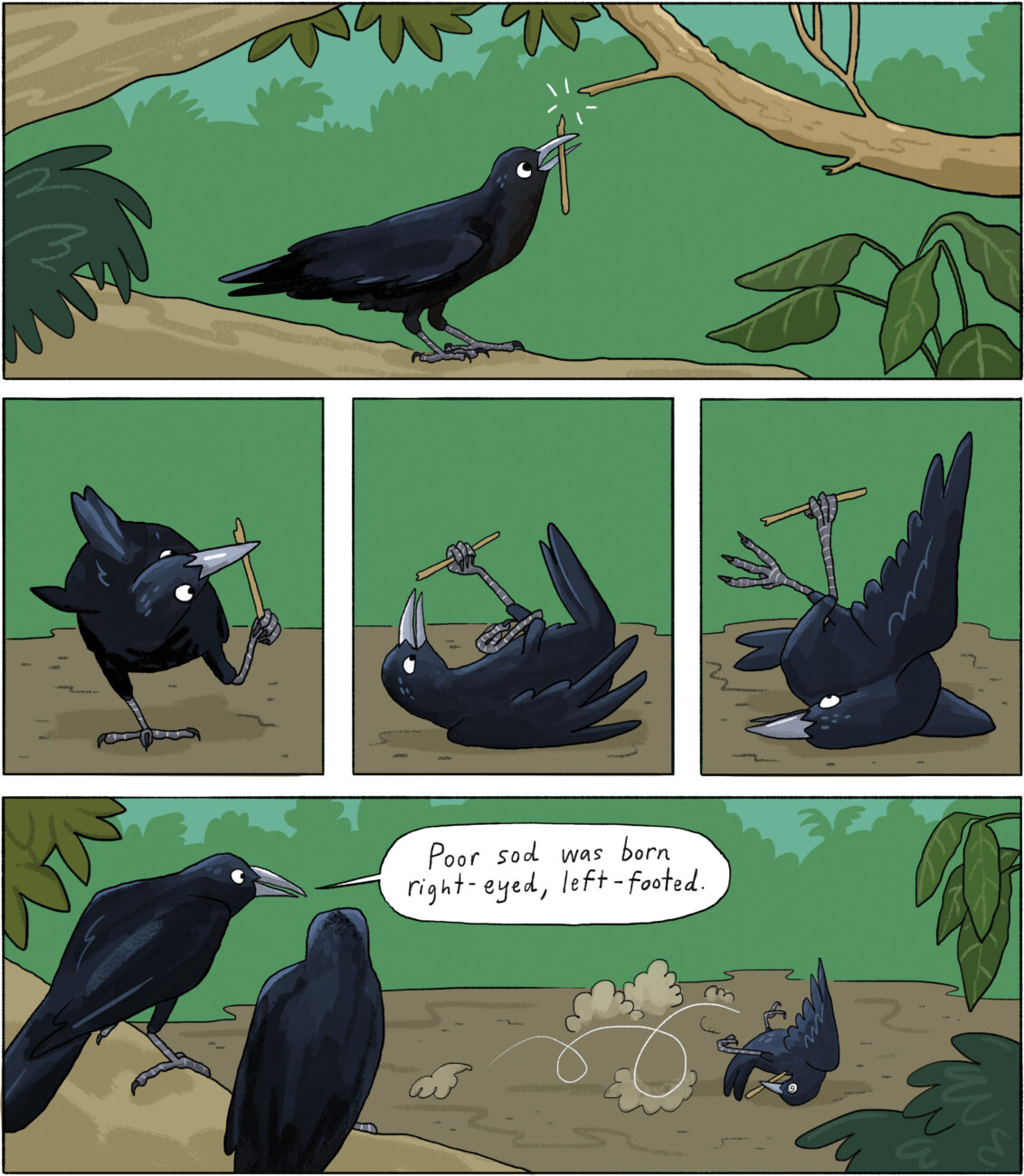
JUST SO Pick a sideRaise a hand if you’re right-handed. Ninety per cent of us are. And while a tiny handful are ambidextrous—equally capable with either hand—most of that remaining 10 per cent are lefties. It’s a pattern that holds across human cultures and countries, despite some historical efforts to convert left-handers to righteousness. Like many minorities, left-handed people have frequently been viewed with suspicion. Left-handers in medieval Europe risked being accused of witchcraft. In French, gauche means left; it also means awkward. Arabic words for left-hander translate as loser, difficult, or insincere, and in many Muslim cultures, using the left hand for eating or shaking hands is a no-no (it’s strictly for wiping your bum). In Irish Gaelic, ciotóg means left-handed, but has echoes of both clumsy and strange—perhaps even touched by the Devil, thought to be a lefty himself. And English has a plethora of derogatory nicknames of its own: cow-pawed, gibble-fisted, mollydooker, goofy. Scientists, on the other hand, call our preference for using one side of the body over the other “lateralisation”. It’s most noticeable when we hold a pen, sword, or cricket bat, but it goes beyond just hands—we also have a preferred foot, eye, or ear for processing certain information, or a preferred direction to spin when dancing or flipping. So do many other species. Walruses are thought to be right-flippered, for instance, while 95 per cent of kangaroos are southpaws—using their left paw for grooming, bringing leaves to their mouth, or leaning on while grazing. Anecdotal reports suggest pūkeko may be lefties, too. Some social insects have a preferred antenna. And since birds’ eyes are located on either side of their heads, for them, foot preference seems to be connected to eye preference. Young sulphur-crested cockatoos experiment with using either foot and eye to pick up and examine food, but all eventually settle down to become left-footed, left-eyed adults. New Caledonian crows, meanwhile, favour their right eye and foot when whittling twigs into fishhooks. Humans are odd in several ways, though. We’re especially strongly lateralised—almost all of us are born with an innate preference for using one hand over the other for complex tasks. One study showed that fetuses that sucked their right thumb in the womb all grew up to be right-handed. And as a population, we are unusually skewed towards the right. In this regard, our species is an “unmatched extreme” among other apes and monkeys, scientists report. So why the 90-10 split? Why don’t we all lean one way, or fall into two roughly equal camps? Why do right-handers rather than lefties dominate? And why does laterality exist at all? |
|