|
|
James Frankham
|
|
|
|
Is journalism about our environment important to you? If so you can support our work with a subscription—either print or digital or both— please check out the options.The more subscribers we have, the more great work we can produce.
|
|
|
|
|
Raymond Ching
|
|
|
WILDLIFE
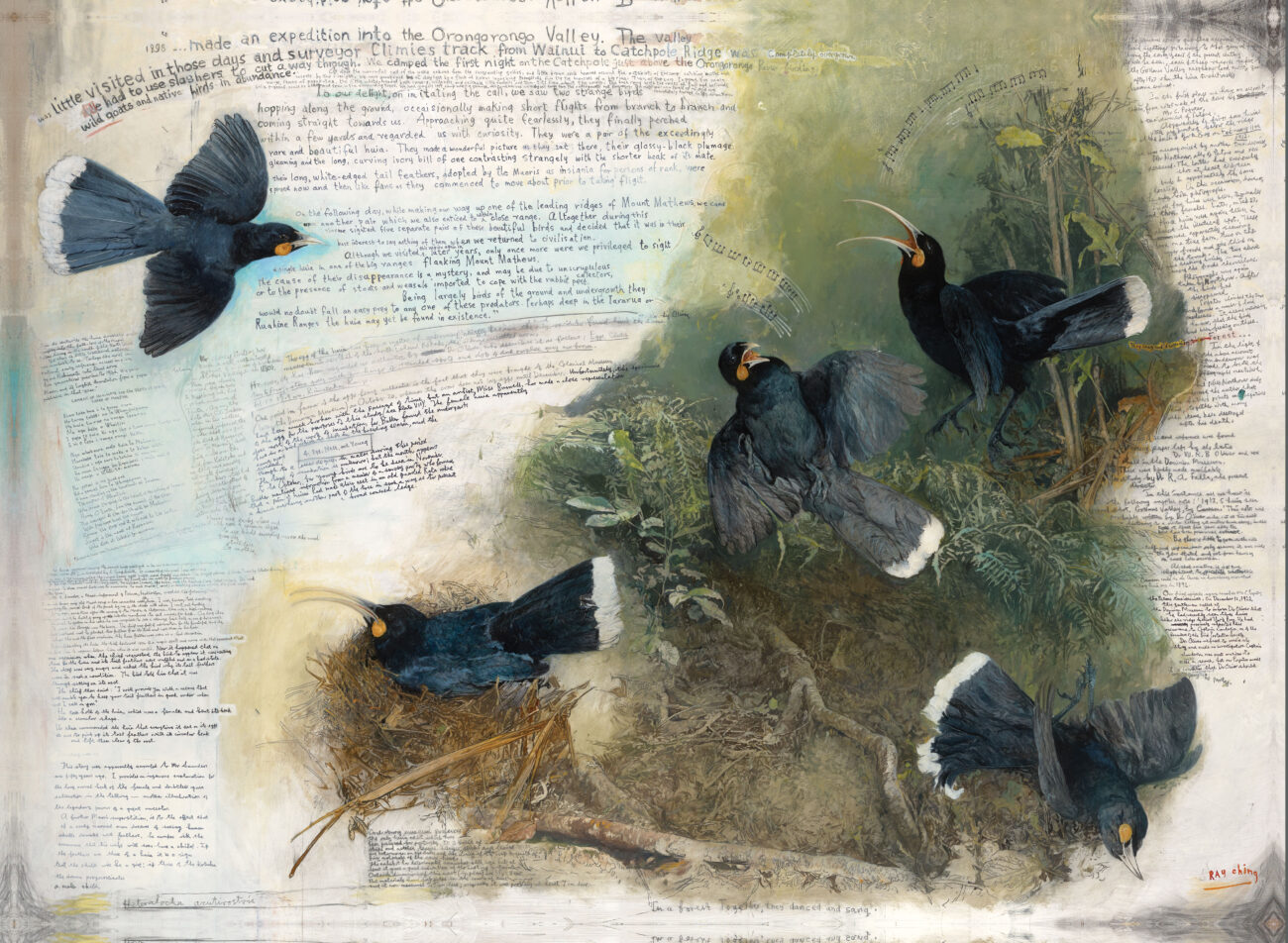
Were the last huia deliberately killed by a collector?
There is a recording of the huia’s song. It captures a series of chirps and trills. It is melodical and, yes, it is haunting. The more so because this recording was made decades after the huia’s extinction and is not of the bird, but of a Ngāti Awa man, Hēnare Hāmana, who had been a part of expeditions to find it in the late 19th century. It is the closest thing to a recording of the huia itself that we have. The last authenticated sighting of a huia alive occurred in 1907. Their extinction was the result of habitat destruction and hunting by both humans and four-legged predators. Hāmana’s recording is an act of memory, like so many other artefacts relating to our extinct species—the artists’ impressions, the dioramas, all with their sense of empty hands. We can now add one more item to this list, The Huia & Our Tears, a book by artist Raymond Ching, which documents in both words and images a life of painting huia. This is an obsession within an obsession. Over a career that began about 60 years ago, Ching’s recurring subject is birds. He has made a study of feathers and flight. His birds are busy, poised for take-off, hopping from branch to branch, calling to each other, ignoring the painter. Keep reading...
|
|
|
ENVIRONMENT
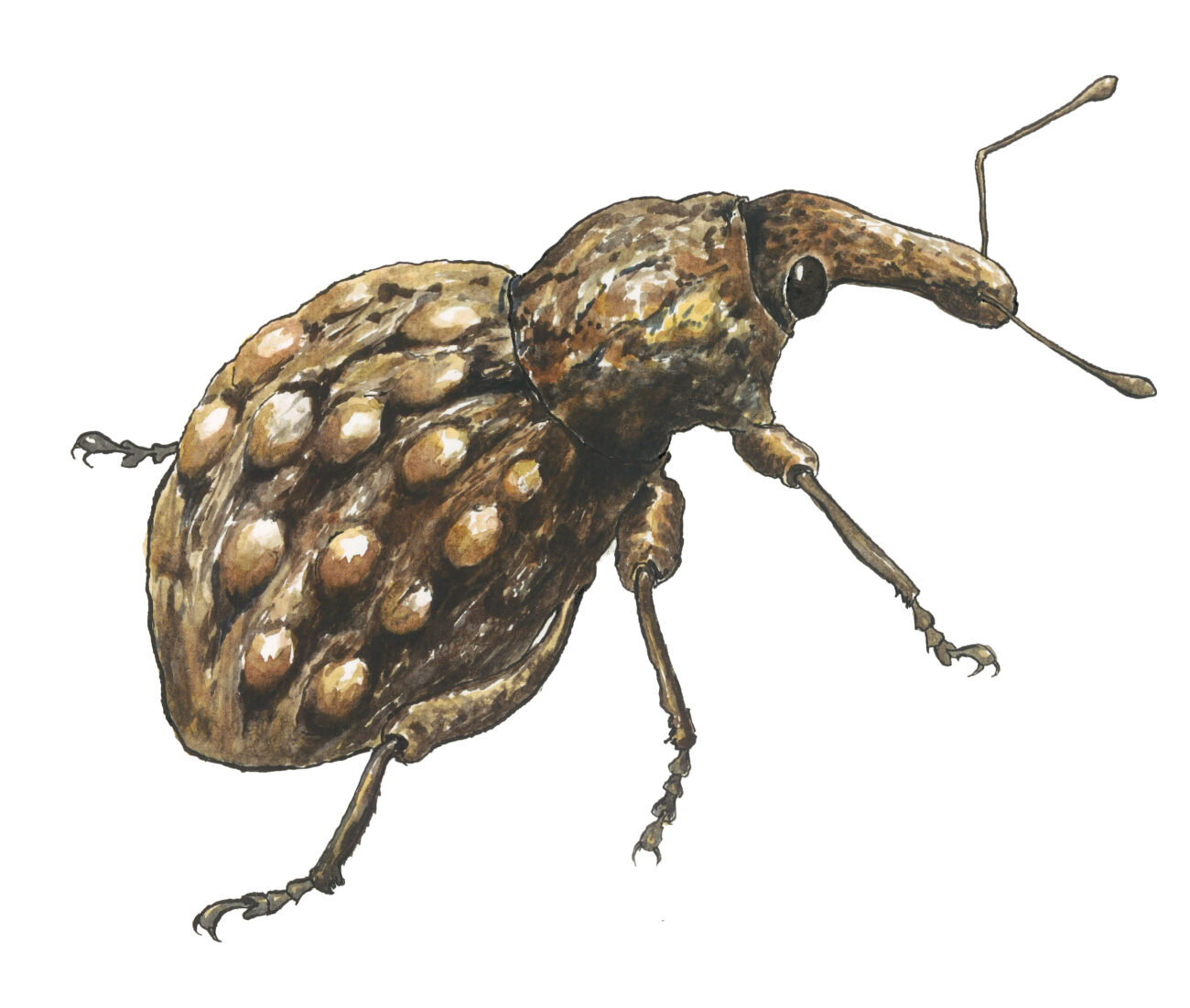
For 80 years, and despite regular searches, this weevil was presumed extinct
In November 2024, on the wind-whipped shores of Ōtūwharekai, the Ashburton Lakes, retired farmer John Evans was checking his trapline when he spied three bugs on the speargrass. They looked like “hare turds”, he thought. Sensing they had an audience, the critters started bumbling towards the base of the spiky plant to tuck themselves out of reach. Curious about the unusual, knobbly creatures, Evans snapped a photo to see if anyone could ID them online. Overnight, the entomology community of Aotearoa all but exploded with excitement. Evans had found a new population of the critically endangered Canterbury knobbled weevil, Hadramphus tuberculatus. “All the blimmin’ entomologists are just over the moon,” he says. “Someone even tried to say I was like that guy who rediscovered the takahē.” In fact, this was the second big breakthrough on the knobbly-weevil front. Keep reading...
|
|
|