|
| |
We know how to fix this, and you can help.
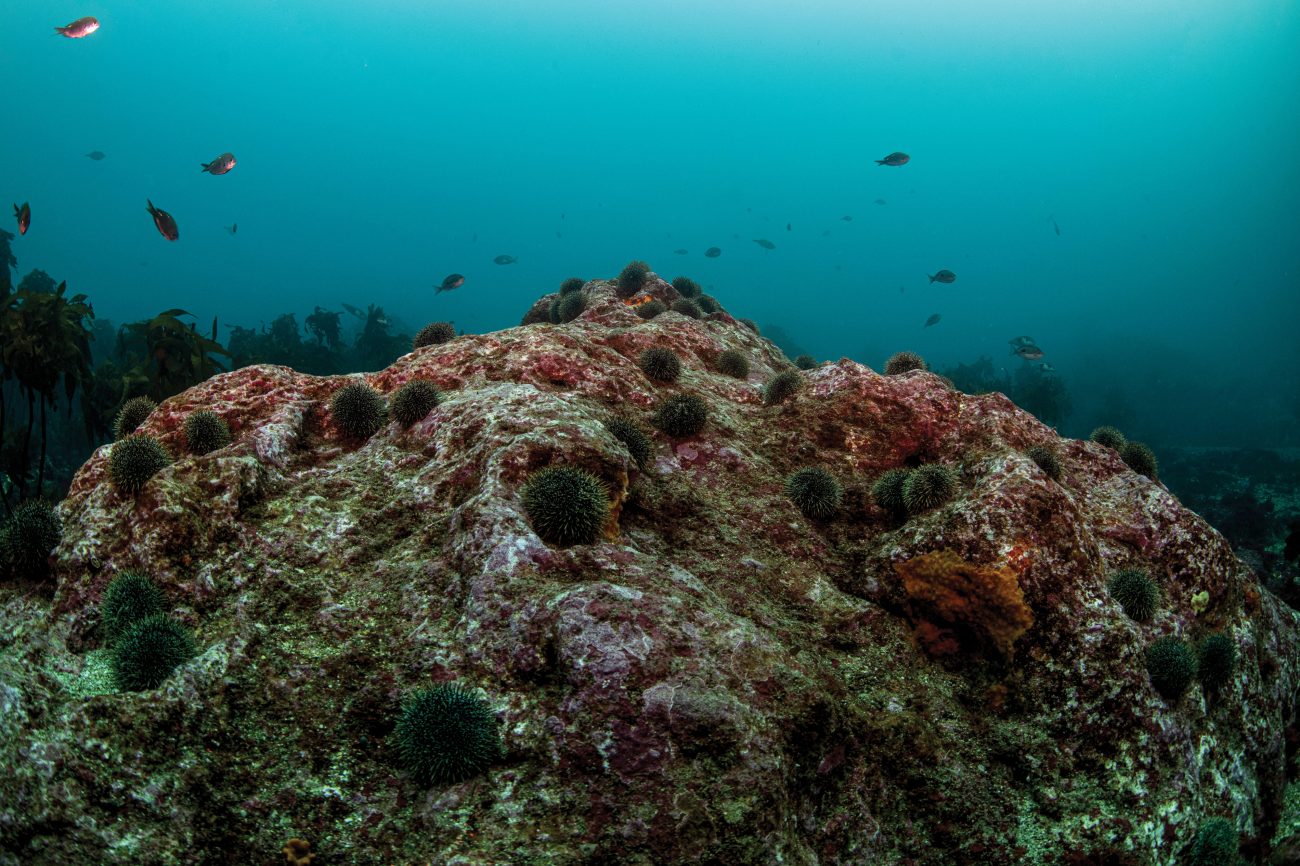
Our first Fixable column focused on the Hauraki Gulf—once one the most productive marine areas on the planet, now withering under fishing pressure, diminished in biodiversity and riddled with urchin barrens; the smoking gun of ecological collapse. The time has come to fix it, and today you can help...
|
|
|
| |
The solution: National parks of the sea...
Ten years ago DOC convened a stakeholder working group called SeaChange, consisting of scientists, fishers, iwi, DOC, councils, industry and stakeholder groups such as Legasea and Forest&Bird. It resulted in a recommendation to establish a network protected areas, like little national parks, each protecting a small area, but all contributing to a more healthy, resilient and abundant Gulf. Today that plan—Revitalising the Gulf—is out for consultation, and it's the best opportunity in a lifetime to protect and restore the Hauraki Gulf. Read more about the proposed solution, below. Or if you're ready to help now, go to the Forest & Bird website to fill in a submission form in support of the proposal by clicking the button below. If you prefer, Revive Our Gulf also has a submission along the same lines.

|
|
|
| |
What is the solution?
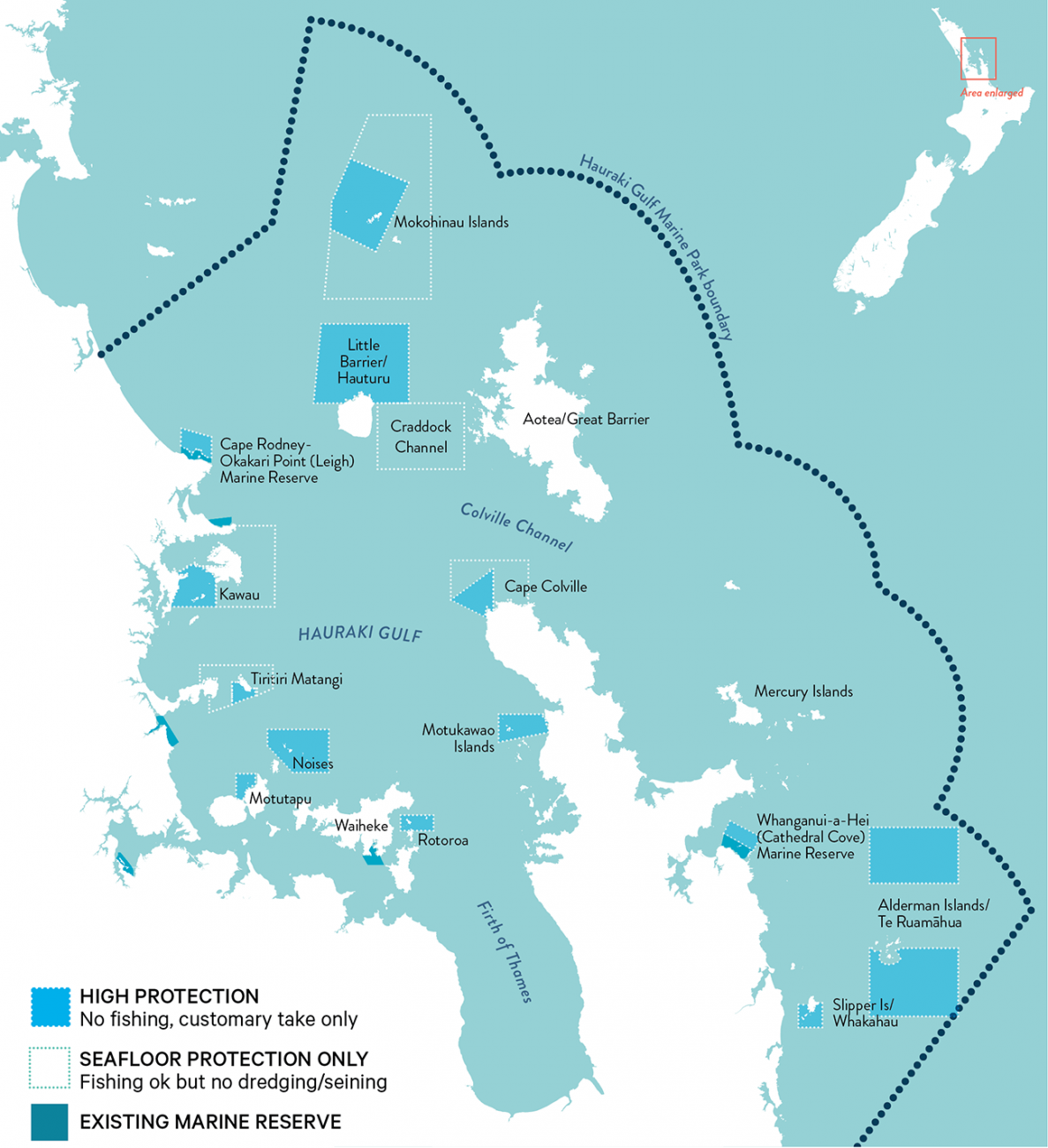
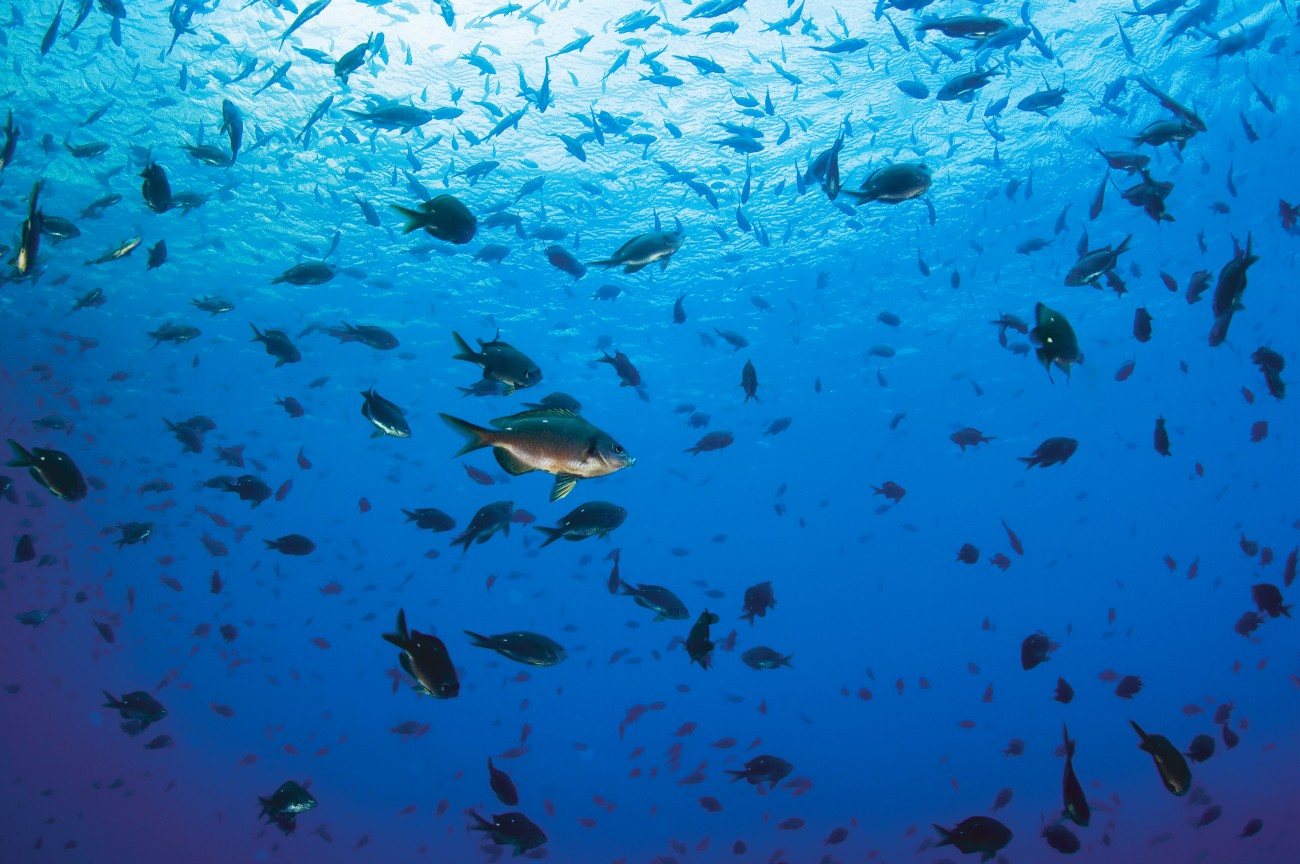
Marine protection is the only proven way to restore an ecosystem to full health. An intact ecosystem is also more resilient to external pressures such as sedimentation, pollution and the impacts of climate change. Inside marine protected areas, fish are around seven times more abundant, with more large snapper and crayfish that maintain lush kelp forests. Those benefits radiate outwards, feeding and replenishing unprotected waters. The Government is seeking feedback on a proposal for establishing 12 High Protection Areas (about 6% of the Gulf) and 5 Seafloor Protection Areas to protect and restore the Hauraki Gulf Marine Park—see map above—plus extensions to the existing Leigh/Goat Island and Cathedral Cove/Hahei marine reserves. You can read more about the proposal by clicking here.
Revitalising the Gulf may be the best opportunity to restore the Hauraki Gulf in a generation.
|
|
|
| |
There are two ways to support:
Public consultation is open now, and Government is weighing up support. The quickest way is to head over the Forest & Bird website and add your name to the submission going to government. If you prefer, Revive Our Gulf also has a submission along the same lines.
Alternatively (or as well) you might like to make your own written submission direct to DOC. There is no particular format, but if sending by email you must include:
- Your name (and/or the name of the group you’re representing)
- Contact details (email is fine)
- Whether you support the Revitalising the Gulf proposal (or not).
- This can be supplemented by your reason—it could be as simple as “My name is Sally Smith. I am a fisher and boatie. I support the Revitalising the Gulf proposal because I want a more healthy and abundant marine environment for my grand-kids.”
To get started, just click here. (Submissions must be sent to seachange@doc.govt.nz before 5pm, 28 October 2022. Any attachments must be in either a PDF or Microsoft Word format.)
|
|
|
| |
What is the Fixable newsletter?
In 2020 New Zealand Geographic committed to report in a more direct and emphatic way on subjects where there was both urgency, and scientific consensus on the solutions. We have reported this way on Covid-19, climate change, pollution, predators, water quality, and in particular, on marine issues. Much of this coverage came under the department Fixable, another section on our seas, another on climate. This new newsletter, Fixable, continues in that vein, but it will be seasonal—sent out whenever a crisis comes to a head, or on the eve of new policymaking when your voice can make a difference on a matter of urgency. This might seem unusual for an independent media outlet, but the stakes are high, and the cost of inaction higher. This is about doing the right thing. Don't want the Fixable newsletter? Please unsubscribe.
|
|
|
| |
A tragedy of The Commons
Marine reserves are a sort of reference text for what a healthy, functioning ecosystem looks like. They demonstrate that when limiting factors are removed, life can return. If we have known for half a century that marine reserves are an effective solution, why haven’t we made greater use of them? Keep reading...
|
|
|
| |
How did we fall so far behind?
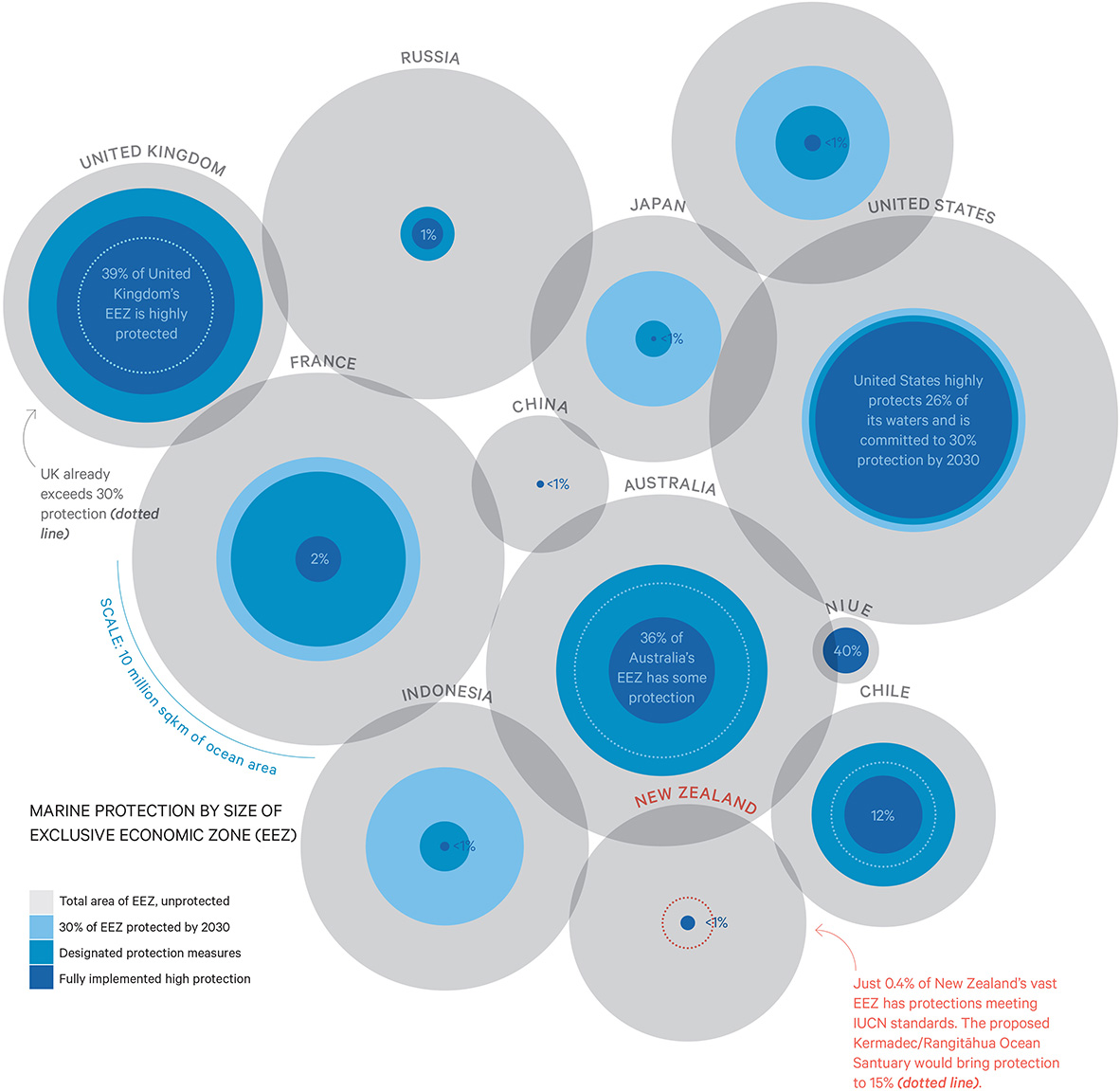
In 1975, New Zealand established the world’s first marine reserves, which became the gold standard for marine conservation and environmental outcomes. Half a century later we lag far behind the rest of the world in protecting our marine estate—an approach more similar to Russia and China than states most Kiwis would consider hold similar environmental values. Keep reading...
|
|
|
| |
Are there plenty more fish in the sea?
The first of the 1800 fish hooks hits the inky water at 4.20am. The stars are masked by cloud, and the orange lights of the oil refinery at Marsden Point loop wildly as the 12-metre Carolyn Marie rides the swell. “Not too bad for a screaming southeasterly,” says the skipper, Adam Kellian, picking up a stack of square trays, each one laden with 50 baited hooks. The nylon longline unspools into the darkness.
Kellian is a third-generation commercial fisherman. He was four or five when his father first took him to sea. As a teenager, he took months off school to go tuna-fishing with his dad. He’s never wanted to do anything else. At first, it was a great career. He loved it so much he got a bluefin tattooed on his bicep. By his early 20s, he had started a crayfish business and was his own boss. He had a boat, and he had the sea in his blood. What he didn’t have was quota—and in this country, that makes all the difference. Keep reading...
|
|
|
| |
"Nothing to do at Goat Island Bay any more"
When New Zealand’s first marine reserve was opened in 1977, the local newspaper ran a story about it with the above headline.
Marine biologist Bill Ballantine had fought for 12 years to protect five square kilometres of marine habitat on the Northland coast. That protection was finally in place. To Ballantine it was the start of a new era. To the newspaper, voicing community opposition, it was the end of one.
At issue was the reserve’s no-take status. This stretch of sea was to be totally free from human interference. That meant no line fishing. No spearfishing. No hooking a lobster out of its lair. No prying off a clump of rock oysters. No reason, as far as the newspaper was concerned, for any red-blooded, outdoors-loving Kiwi man, woman or child to bother coming to Goat Island any more.
“No one predicted what happened here,” says Ballantine. “More than 100,000 people a year coming to look at fish—who saw that coming? Nobody. Fifteen years ago, if you had suggested that entire school classes would be put into wetsuits and taken into the water here you would have been laughed at. Now it’s routine.” Keep reading...
|
|
 |
|