|
| |
A night at the Globe
When a 400-year-old play was brought to life in Auckland with Pasifika costume, dance, language and actors, audience numbers broke records.
Read more...
|
|
|
|
| |

|
Talking points
Discuss the ideas presented in the story with your family—at home or over video conferencing. Find ways to involve as many people as possible, especially those who you know are isolated by the lock-down. - The photos in this story are of the comedy Much Ado About Nothing being performed at the Pop-Up Globe in Ellerslie, Auckland. Can you name any other plays written by Shakespeare? Have you seen any Shakespeare performed live?
- The Pop-Up Globe is an almost exact replica of the original Globe theatre. It is a rounded shape, is three stories high and open to the sky. Audience members stand under the open ceiling, directly in front of the stage. What do you think it would be like to be seated on the third story, looking down on the stage? Would you enjoy standing right in front of the stage or do you think you’d find this too tiring? Do you think they still perform if it rains?
- Māori director Miriama McDowell said “The biggest thing I wanted to achieve was that brown people went to that show and realised, ‘Oh, Shakespeare isn’t just about white people in England 400 years ago, it actually relates to me’.” What are some of the universal human experiences and emotions that you can see being explored in the photos?
- The costume director blended Renaissance silhouettes with the textures of the islands – shells, feathers and tapa cloth. Looking at the photos or doing some research, what do you think Renaissance silhouettes look like? Do you think they blended well with the Pasifika influences?
- “Every time the word ‘yea’ appeared—and Shakespeare uses it a lot—the cast decided to give it a Kiwi inflection and pronounce it ‘yeah’ instead of the traditional ‘yay’.” What did ‘yea’ (pronounced ‘yay’ in Shakespearean times) traditionally mean? How would it sound to have actors pronouncing ‘yea’ as ‘yeah’? From looking at the photos, what mood did the play have?
|
|
|
|
|
|
| |
![145_Viewpoint_shutterstock_227311084-[Converted]](https://cdn.nzgeo.tv/2017/04/145_Viewpoint_shutterstock_227311084-Converted-336x336.jpg)
|
Activity: Ice-cream in a bag
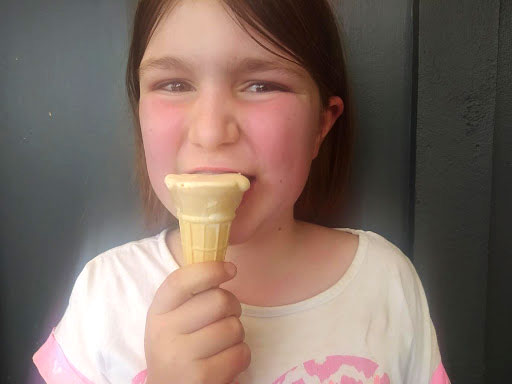
Getting ice-creams at the theatre is always fun. Make your own with this simple method. You can make a dairy-free version by using orange juice instead of cream, to end up with sorbet. You will need: (for one serving) - A small ziplock bag
- A larger plastic bag, either with a ziplock or big enough that you can hold the top in your fist
- ¼ cup of cream
- 1 tsp sugar
- ½ tsp vanilla essence
- Ice
- Salt
Step One: Pour ¼ cup of cream into the small ziplock bag and add the sugar and vanilla essence. (Pour the orange juice in if you are making the dairy-free version.) Close the bag securely. Fill the larger plastic bag with about 5cm of ice and sprinkle salt liberally onto the ice. Place the small bag of cream with the ice in the big bag.
Step Two: Shake it for 10 minutes. Step Three: Remove the small bag and see whether the cream has frozen into a soft solid. If it hasn’t, shake for a bit longer. If it has, you are ready to serve up your ice-cream. Send us a picture of your ice-cream in a bag!
|
|
|
|
|
|
| |
A song for the crayfish
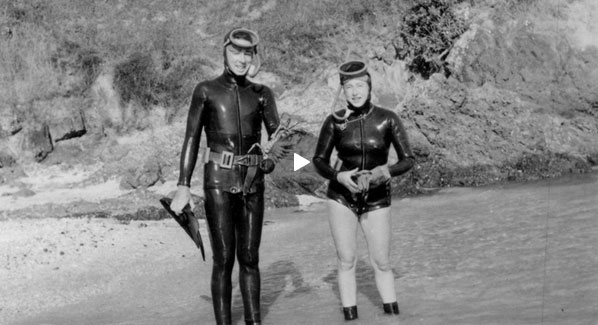
Ailsa Lewis grew up camping at what is now the Tawharanui Peninsula. She reflects on the incredible abundance of crayfish when they became some of the country’s first recreational divers in the 1950’s and 60’s Watch the video, then ask yourself; what was your reaction to hearing Ailsa describe seeing a rock surrounded by crayfish feelers just six feet off the shore at low tide? What must their role in the ecosystem been when they were so abundant?
|
|
|
|
| |
What is Together at Home?
New Zealand Geographic started Together at Home at the beginning of the first lockdown in 2020. It was hit with parents, and also for grandparents who felt isolated and wanted to join in. It also gave parents themselves some welcome escape. If you're not into it, just hit unsubscribe. If you like it, then send us pictures of what you make and encourage others to join the list on the Together at Home hub. It will be coming your way every day of the lockdown.
As the rest of the country is no longer in lockdown we filtered the list to include only email addresses in Auckland, or for which we could not verify the location. If you're not in Auckland or do not want it, no worries, just hit unsubscribe. |
|
|
|
| |
How do NZGeo digital subs work?
You can access three items per month totally free on NZGeo.com, and thereafter it costs $1 per week for a digital subscription. (We bill $8.50 every two months to a credit card, or $50/year if you prefer.) A digital subscription gives you access to more than 10,000 stories and 400 hours of natural history documentaries on-demand, on any device.
|
|
|
|
|
|