|
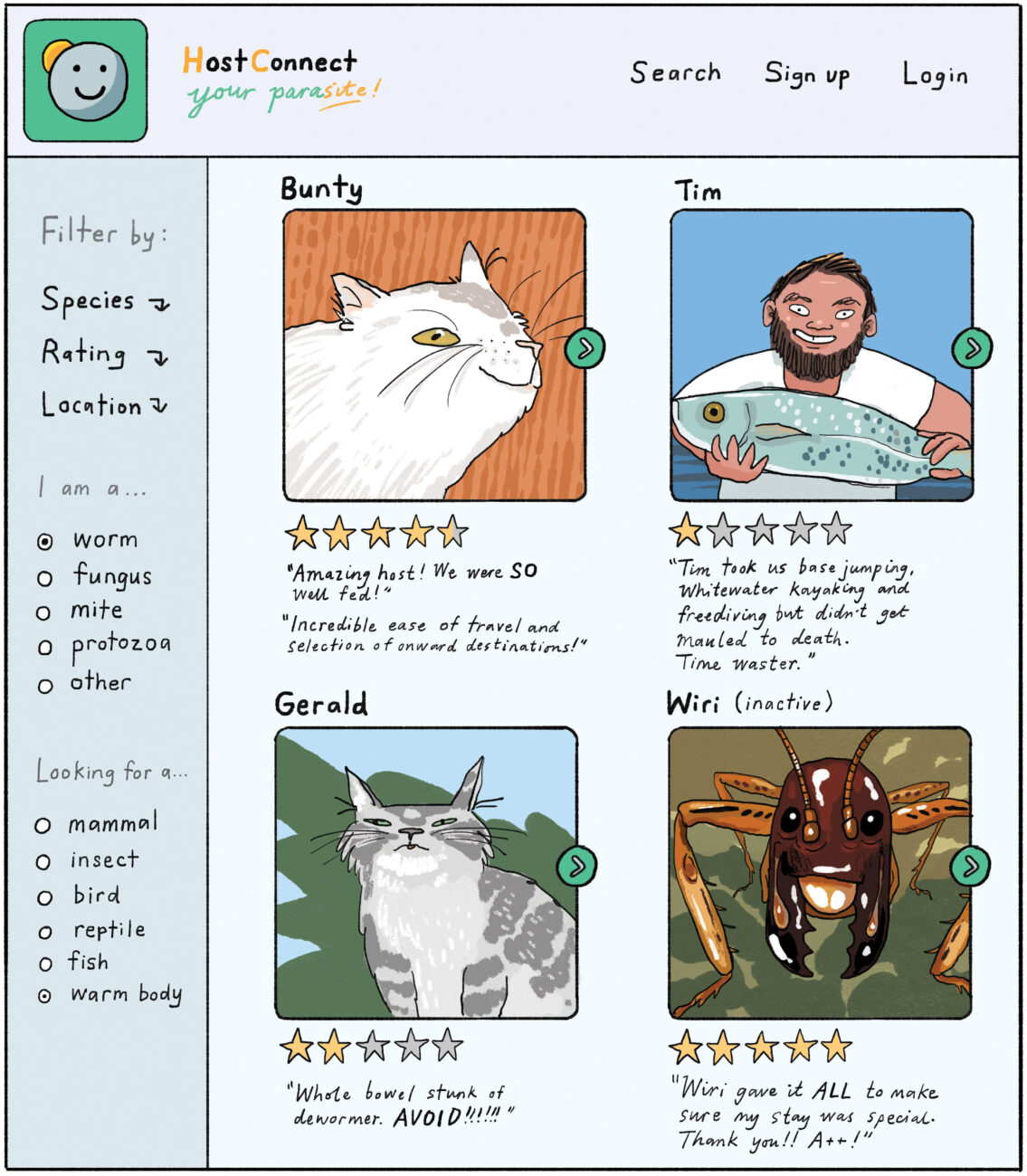
Need a mobile home? An incubation chamber? Dinner? Hundreds of species have hit on an elegant solution: find a nice juicy critter—and turn it into a zombie.
|
The Weekender |

|
|
|
Free newsletter
|
JuLY 25, 2025
|
|

|
Publisher |
|
Yesterday the world's highest court ruled that states are legally obligated to halt the production and use of fossil fuels, and those that fail to prevent climate harm could be held liable for reparations. New Zealand Geographic has reported on recent legal efforts to force accountability on climate change, such as 24-year-old Hamilton law student Sarah Thomson's High Court filing which called the 2015 government's emissions reduction pledge “unreasonable and irrational”. Or last year's effort by Mike Smith to sue seven of New Zealand's most polluting companies. Significantly, however, this ruling by the International Court of Justice in The Hague carries greater weight. In particular it aligns climate change mitigation with the fundamental right to life enshrined in human rights treaties. “It dispels the argument that small states like New Zealand are too small to matter,” says The Environmental Law Initiative's director Matt Hall. “It’s clear, we have obligations, and we need to deliver on them.” While politicians may have varying perspectives on this news, advisory opinions on international law will influence courts the world over. |
|
|
|
|
Have something to say? Feel free to get in touch with me directly. You can support our work with a subscription—either print or digital or both—please check out the options.The more support we have, the more great work we can produce. |
||
|
|
SCIENCE Hundreds of species have hit on a novel approach to life: find a nice juicy critter—and turn it into a zombie.The young hairworm, coiled up in the belly of the wētā, was ready to move out and find a mate. For months, the worm had lived inside the wētā, stealing its resources by simply existing: the worm did not have a mouth for chewing and sucking, but instead absorbed the wētā’s food and flesh via its permeable skin. Now, the parasite took over its host’s mind, too. The wētā started wandering about hyperactively. About an hour later, it marched over the tussock grass of The Remarkables, near Queenstown, and leapt into a pool of snowmelt. The wētā had barely drowned before the 25-centimetre dark-brown worm came wriggling out of its abdomen. University of Otago parasitologist Robert Poulin came across the scene while tramping with his family. The worm, an aquatic species, was still alive, still looking for love, and the wētā’s body lay beside it in the water. Poulin is an expert on parasitism: the many ways in which various viruses, bacteria, fungi, and insects live on or in other organisms, at the hosts’ expense. It’s an incredibly successful evolutionary strategy, Poulin says, that’s thought to have separately evolved more than 200 times—much more often than other brilliant adaptations such as flight or brains—and it’s everywhere, across all branches of the tree of life. Evolution favours parasites for obvious reasons, says Poulin. Get it right, and it’s a cushy ride for the freeloader. “You obtain food for life, and as long as you can cope with the immune system, you’re in a safe place.” Several hundred species of parasites take their dominion to the next level, turning their hosts into living zombies by manipulating their behaviour, appearance, and even their minds. |
MORE STORIES ABOUT ZOMBIES: |
|

|

|
NEWS Top marks, humanChatGPT can certainly spit out an essay in time for a deadline—but, reassuringly for those who write for a living, the results lack a crucial human quality. Researchers at the University of East Anglia compared 145 essays by second-year British university students with 145 churned out by the AI, and found the students’ writing “significantly richer”. The students’ essay topics were all over the show: fox hunting, beef eating, the parliamentary system, Britain’s split from the European Union, transport, computers, the lottery. The researchers prompted ChatGPT to produce similar pieces, then scrutinised them for quirks such as personal asides, using words such as “we” or “our”, and asking questions—all devices that help hook readers in. This line from a student, for example, was deemed powerfully engaging: “We ought to ask ourselves ‘What happens when the computer-orientated world collapses?’ We would then have to use our brains.” Overall, ChatGPT was a flop on engagement. “The program was unable to mirror the engaging tone of the student texts,” the researchers reported, not without a note of relief. |
|