|
If you can survive Future Coasts, a zombie apocalypse will be a walk in the park
|
The Weekender |

|
|
|
Free newsletter
|
AUGUST 15, 2025
|
|

|
Publisher |
|
NIWA scientists have a problem. Their climate data suggests huge challenges for coastal communities in the next century, but humans struggle to understand overlapping hazards, assess complex risks, or making costly changes... until it's too late. How can we paint a picture of what that future looks like when the weather includes natural variability? How can we account for engineering solutions and social choices? We speed up time. Run time at, say, a decade every minute or two, allow the user to make some informed choices, stir in some natural variability and throw it all into a sophisticated climate model. What you have is Future Coasts, a free, online, animated wake-up call. It looks like a game, but being based on the most accurate prediction of the future our climate scientists can summon, it's not a game at all. I gave it a spin, and it was scary as hell, see below... |
|
|
|
|
Have something to say? Feel free to get in touch with me directly. You can support our work with a subscription—either print or digital or both—please check out the options.The more support we have, the more great work we can produce. |
||
|

|
ENVIRONMENT If you can survive Future Coasts, a zombie apocalypse will be a walk in the parkFuture Coasts is set in a cartoonish seaside town, drenched in sun, a river flowing through it. Right from the outset it looks too good to be true, the table set for some kind of serial-killing spree or act of God. First, you meet Dara, a cartoon dotterel with a piercing black eye and abrupt turn of phrase. Then you choose one of five typecast characters—towns person 1, townsperson 2, dairy farmer 1, dairy farmer 2 or kaumatua. Surely townsperson 1 is a safe bet. I'm Ash, a dude with a handsome sweep of lush brown hair and a sweet house a block back from the beach. Not one to be passive in the spectre of climate change, I drop my entire savings on a nature-based solution for the foreshore. It looks lovely, and with some confidence I ‘roll the dice’ on the first decade of my future. My house is immediately swamped in a flood, and disappears. Dara the dotterel points out that I was unprotected from this event and tells me I will be living in a caravan from now on. I decide to repair my house, blowing half my savings, and gamble on the next ten years. I get off lucky, no big weather events, but Dara informs me that my property will be swamped in the next round and is now worth $0—I should have sold when I had the chance. My only option: spend my remaining cash to raise the house on to piles. Roll again. What do you know, a biblical flood. The town is wiped out. I don’t like the way Dara is looking at me. Forty years in and the mangroves are swallowing my pile house. The sea is licking at the boundary. The river looks menacing. I should have moved years ago—it all just came sooner than expected. I have $250k savings and my hair still looks fabulous, but Dara says my only option is to move and stay with family in town, but there’s no button for that. I spend on a sea wall instead. Another decade, another layer on the seawall, but I’m out of engineering options—money can't buy safety any more. My seaside paradise has turned against me. Maybe I should have stayed in my caravan, saved enough to move, but it didn't seem like a good idea at the time. I definitely should have sold earlier. Dara's know-it-all attitude is really starting to piss me off. Build another stopbank. By the time the game times out at 80 years I feel exposed and, frankly, trapped by my first choice to stay and buy time. I survived on my hastily constructed piles, dodged the bullet on a couple of bad storms, copped a couple too, but that two-layer seawall started to feel more like a prison than a fort. I need to make smarter choices. I have another crack at the game. This time I’m Trev, a solid looking chap with a dairy farm and a reliable looking blue cap. Dara warns me on day one that my farm is exposed to the river and gives me three options: move my buildings around, sell up and head to the city (you must be joking Dara), or sell the farm and buy a safer one. This is a no-brainer—I’m selling and moving. A good thing too—the first decade brings a 4-level cyclone. High and dry on my new farm my property is unaffected, but the event totals the town. I don’t even feel smug—it's a disaster. By the final round, even my ‘safe’ property is under threat from the sea. In reality none of this is bad luck. The Future Coasts game is powered by NIWA's climate modelling 80 years into the future. This, says best available science, is the future baked into the atmosphere for every seaside or riverside town in New Zealand. It's not pretty. “People don’t act on information, they act on what they can see. So the game provides the ability to be in the future and experience what it's like,” says Scott Stephens, chief scientist at NIWA for coasts and estuaries. The message from the scientific modelling is that in a world of multiple hazards, they can overlap in unexpected ways. And moving before you're forced to may be important—adaptations can buy you time, but behind every engineering solution is a sinister narrowing of options that can leave you trapped by your choices. “I’ve worked in the field a long time, I’ve done the science, I’ve calculated the risks, but it was the same for me when I played the game; I felt under pressure,” says Stephens. “You can understand the theory, you can model it, you can give advice, but action is hard.” While the player is having their virtual house virtually washed away, NIWA's scientists are sitting at real computers and analysing player behaviour. Like Squid Game. A machine-learning algorithm called ‘K-means clustering’ has shown that players tend to lean on their preferences in early rounds—one cohort prefers nature-based solutions, some prefer engineered solutions, another group are more likely just to move away. But after the first round, those pre-formed ideas break down rapidly. “Rather than planning, people just start responding to events as they arise,” says Stephens, “which is an interesting finding in itself.” |
MORE STORIES ABOUT CLIMATE: |
|

|
|
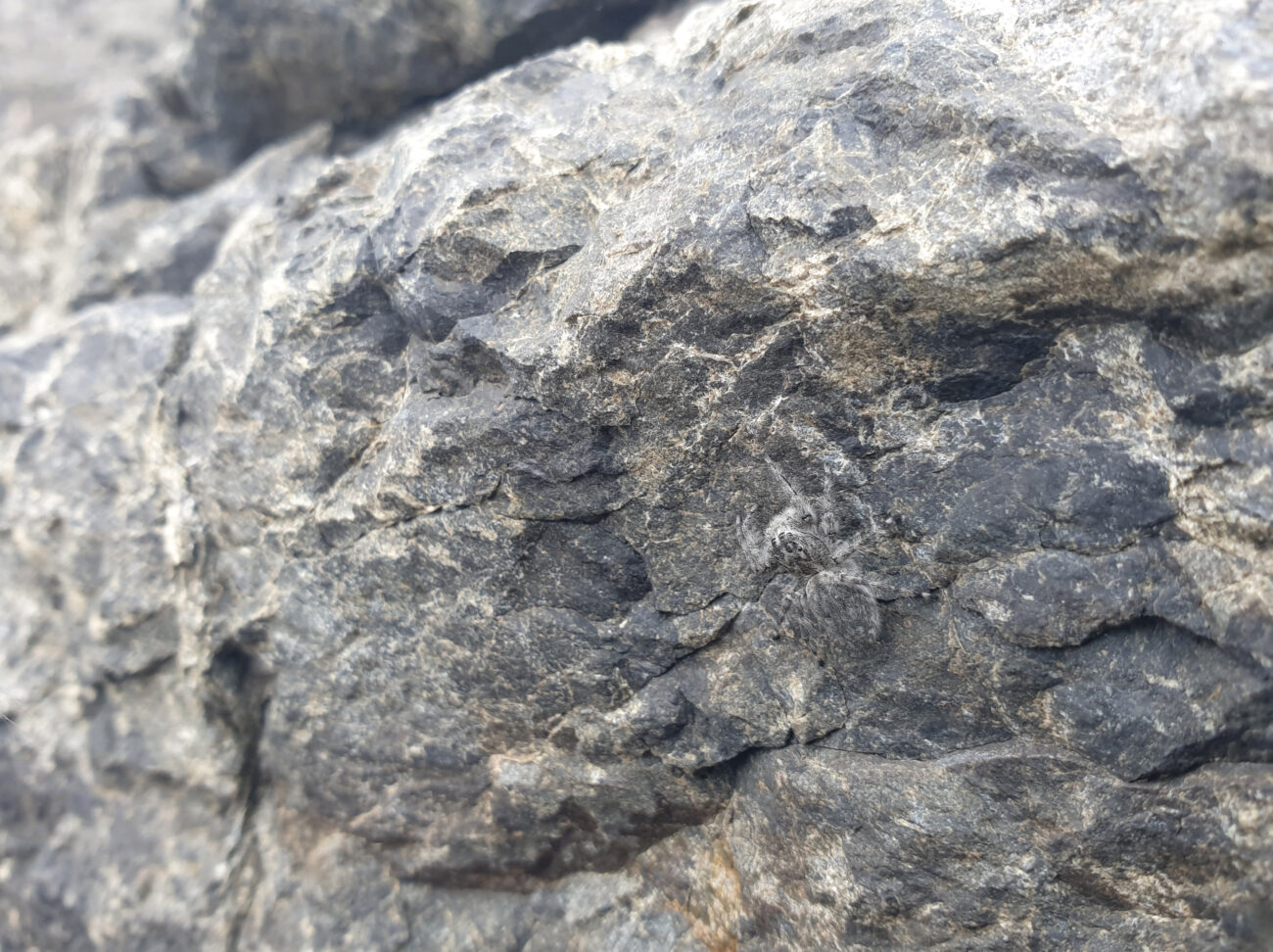
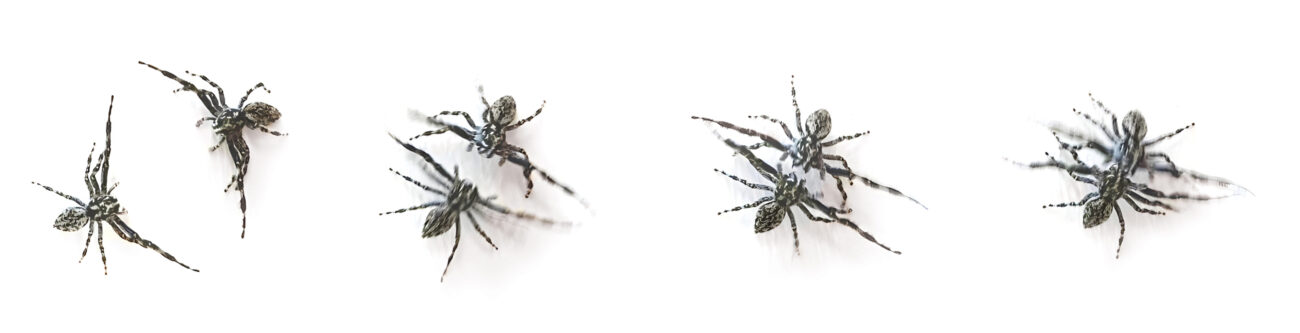
Wildlife Can you spot the spider?Look at the centre of the image above. Now slightly to the right. That’s a New Zealand jumping spider—one of a whole new genus discovered by Lincoln University master’s student Robin Long. Her extraordinary spider hunt spanned two years and 19 alpine areas across the South Island. Spotting these camo-masters was one thing, Long says. Jumping spiders are also like birds or cats, in that they’re highly visual and very fast. And, she says dryly, “they also jump”. She learned not to try to catch them in the open, instead turning over rocks. There, she found many more spiders, hunkered down in silken “tents”. Under a microscope, subtle differences became apparent. Certain females had a fringe of orange hairs on their clypeal setae—think bristly moustache—and Long named that species saffroclypeus, for saffron. The master of disguise pictured above and below is petroides, named for the rock it mimics; another is kowhai, because its abdomen turns yellow in ethanol. “That one, I was scraping the barrel a bit,” Long says. She identified 12 new species in all, naming the genus Ourea, for deities linked with mountains in Greek mythology. Long was also interested to know how these spiders mated, and what would happen if she put two of the same sex together. Cue tiny, fast fights. |
|
|
|
|
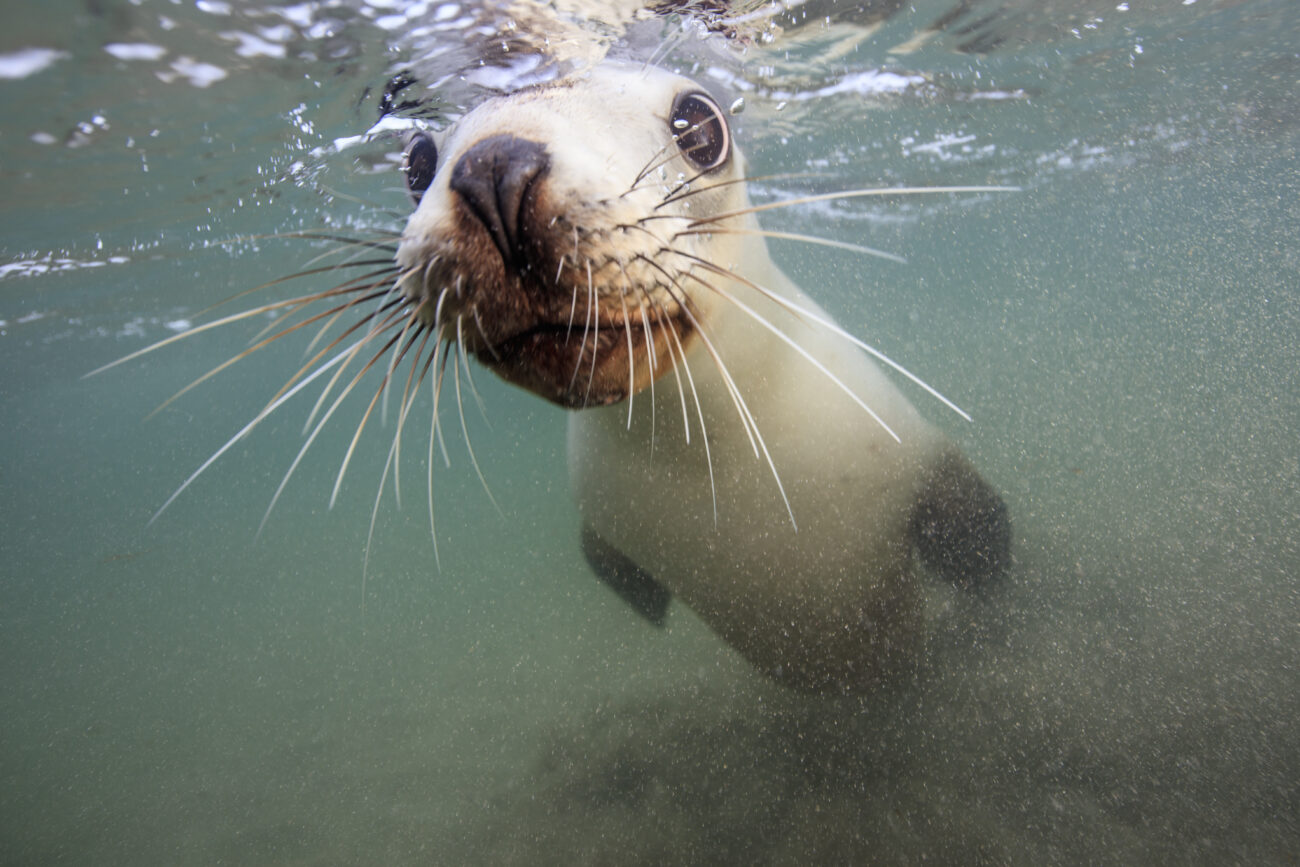
There are fewer than 5000 adult New Zealand sea lions left, according to the Department of Conservation, and that number is set to drop by 50 to 70 per cent over the next 30 years. The new data shunts the species into the “nationally endangered” category, officially just two steps from extinction. |