|
| |
The ocean's cradle of life
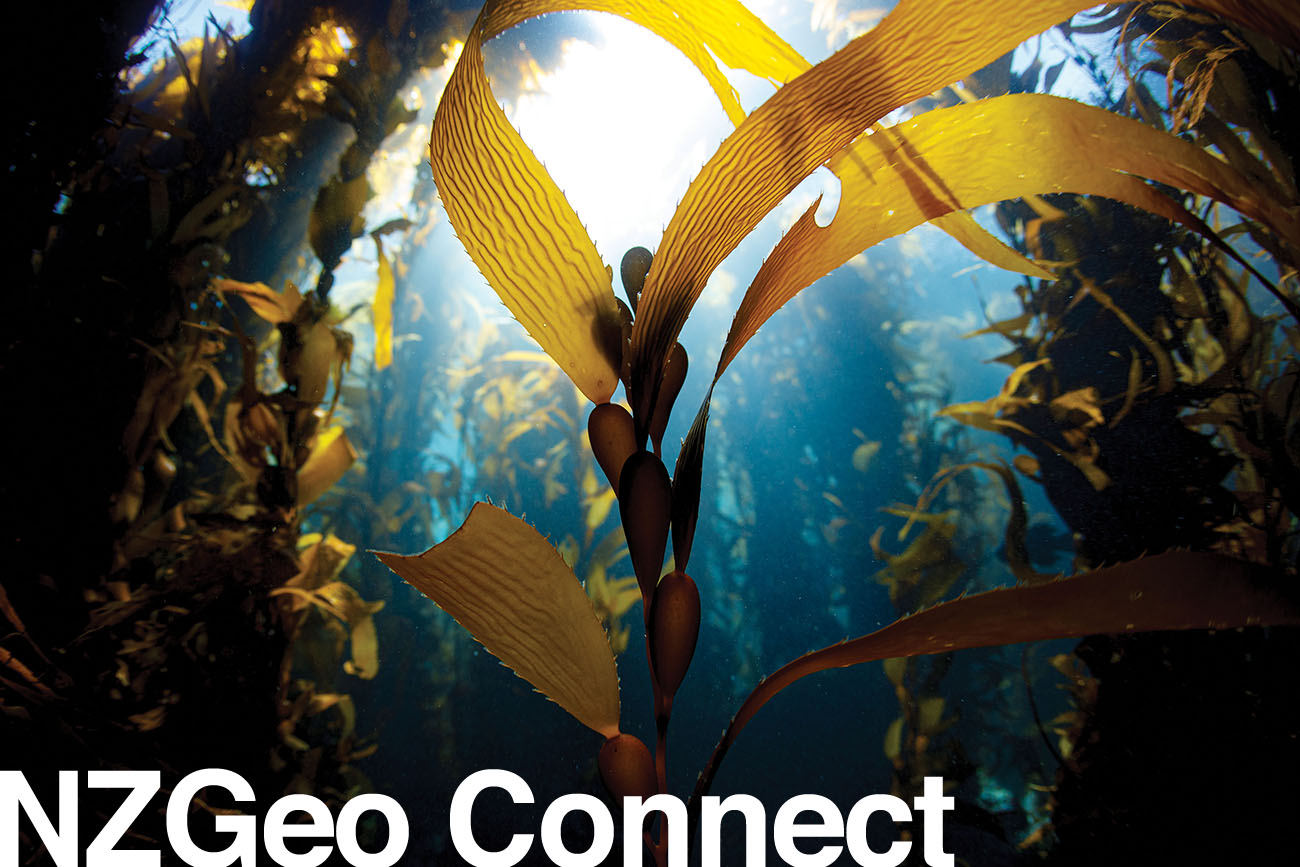
Where do young sea creatures spend their first weeks? What’s at the root of oceanic food chains? Kelp forests are to Aotearoa what coral reefs are to other marine ecosystems. Or they used to be.
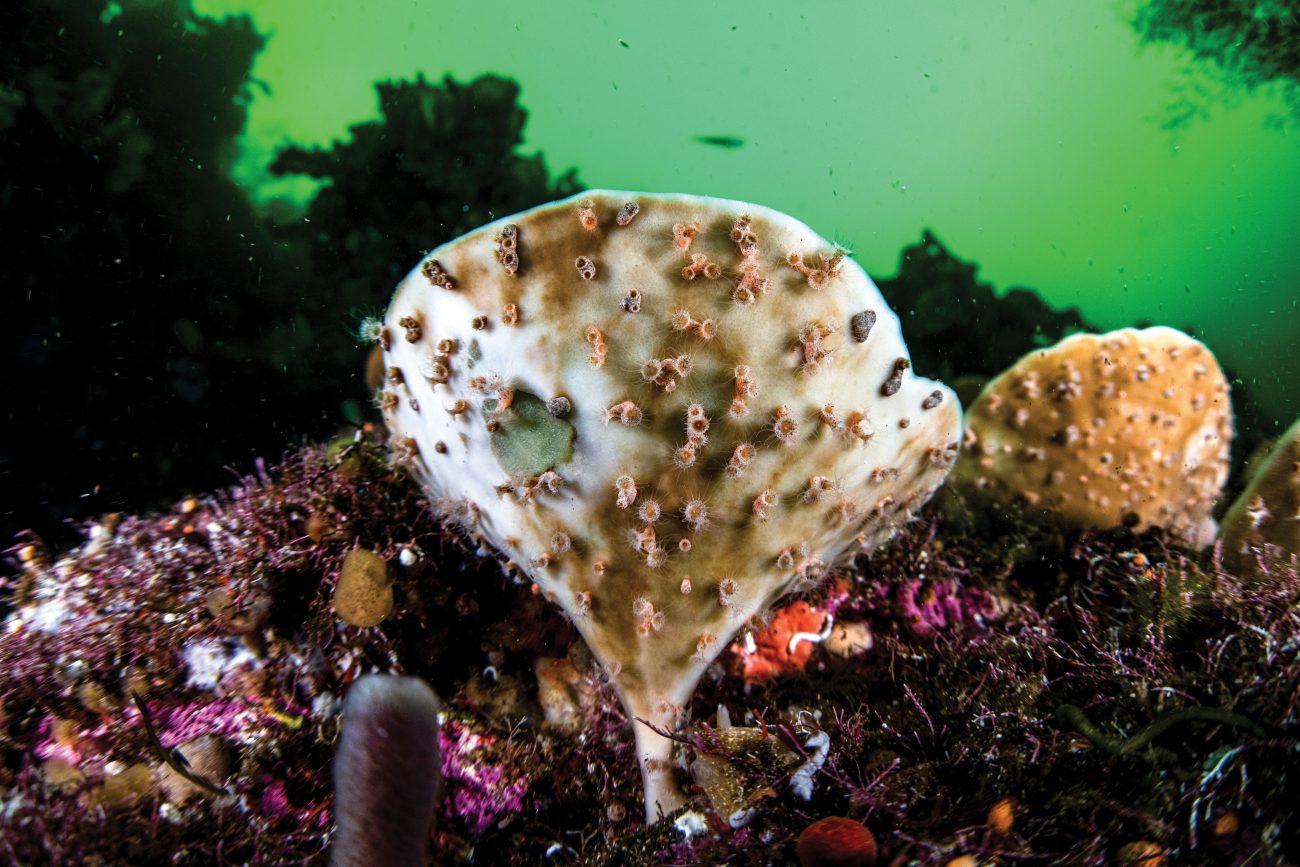
Now, warming waters are devastating kelp forests. Over the summer, ocean temperatures rose up to five degrees above normal, bleaching sea sponges around the country and killing 1300 tonnes of salmon in aquaculture farms in Marlborough.
Meanwhile, scientists are trying to find kelp strains resilient to warmer waters in an attempt to reforest our coasts. Keep reading...
|
|
|
| |
"We were really worried they would all die."
Last summer, divers in Te Puaitaha/Breaksea Sound working to control the spread of the invasive seaweed Undaria noticed something unusual: the Cymbastela lamellata sponges dotted all over the cliffs were bleached a bright white. “Once you see one, you just see them everywhere—as far as you can see,” says diver Millie Mannering. It’s the first time sponge bleaching has been observed in New Zealand, affecting millions or even tens of millions of individual animals. Keep reading...
|
|
|
| |
The long voyages of blue sharks
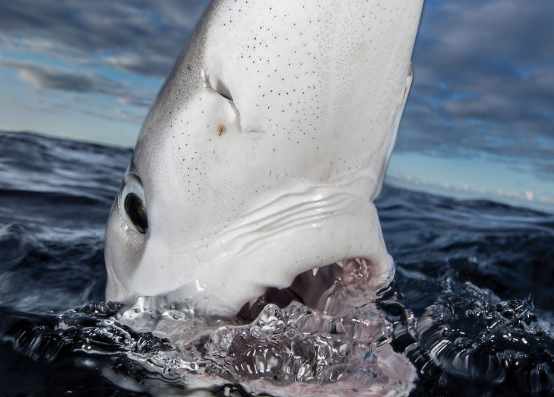
Blue sharks swim in all the world’s oceans, and a new study reveals surprising stories about their migrations and behaviour. For his doctoral research at the University of Auckland, Riley Elliott carefully attached satellite tags to 15 blue sharks—11 males and four females—in the waters off northeastern New Zealand between 2012 and 2015.
One shark travelled more than 14,000 kilometres from New Zealand to the Pacific Islands and Indonesia and back. Another dived to more than 1364 metres below the surface—a record at the time for blue sharks—and a third swam all the way to the equator. “We were all kind of cheering for him,” says Elliott. “The scientific theory is they don’t cross the equator.” Keep reading...
|
|
|