|
| |
Track and trace
Most introduced mammals have had a devastating effect on native wildlife, but one species is bucking the trend. About 80 conservation dogs are deployed around the country, helping to protect vulnerable native species by leaping into action at a single command: Seek!
Read more...
|
|
|
|
| |

|
Talking points
Discuss the ideas presented in the story with your family—at home or over video conferencing. Find ways to involve as many people as possible, especially those who you know are isolated by the lock-down. - One of the first images shows a dog called Piri sniffing at the outside of a large truck. The caption tells us that Piri detected a mouse in a truck bound for predator-free Motuihe Island. Are you impressed by Piri’s ability to sniff out rodents in these huge trucks? Where might a mouse hide inside a truck to escape being noticed by a human?
- Dogs are trained to seek different species and can even differentiate between different reptile species. How do you think they manage to get the dogs to learn this skill?
- We learn that conservation dogs are a New Zealand invention and that they are now used around the world. Why might it have taken humans a while to think of using dogs in conservation work?
- Dogs form “a scent picture of the world that is composed of chemicals rather than sight.” Using this idea, can you describe what a dog might perceive when they walk down the street?
- While we can smell foot odour if someone takes off their shoes in the living room, a dog can smell foot odour if someone takes off their shoes in a large shopping mall. How does this make life very different for a dog? Does this help you understand dog behaviour in any way?
|
|
|
|
|
|
| |
Activity: Make a Fairy Door
Bring some magic to a garden or a park near you with a homemade fairy door. You will need: - Ice-block sticks or twigs snapped to a similar length
- Paint
- Buttons, pebbles, clay or other small decorative items
- Hot glue, or another kind of glue
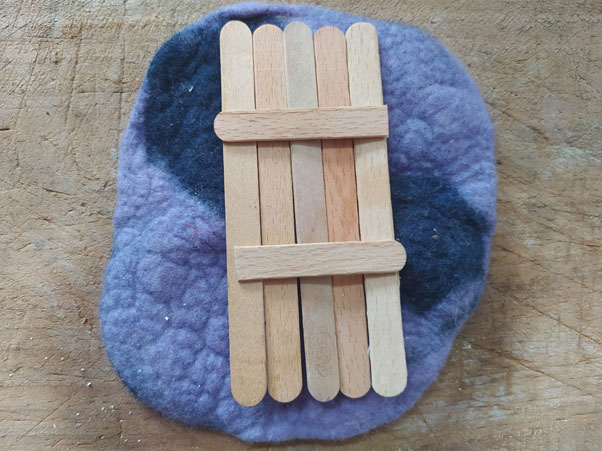
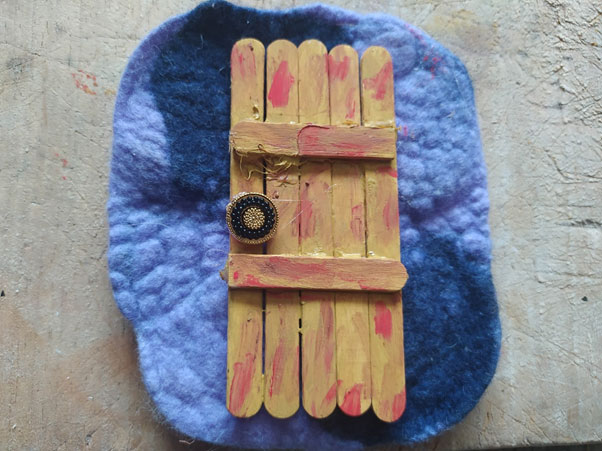
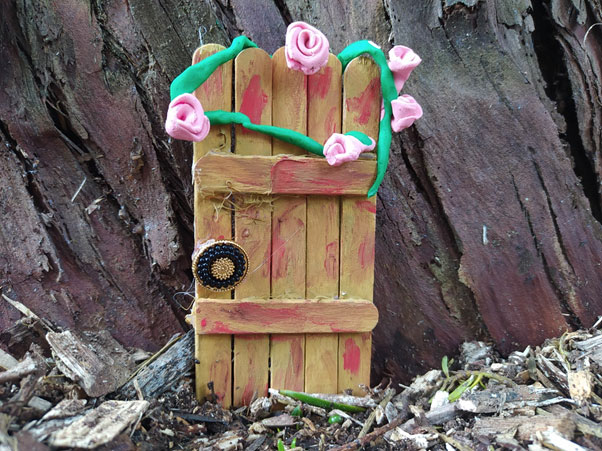
Step One: Line up the ice-block sticks to look like a door. Glue two sticks across the back to hold them together and trim them to size. Step Two: Decorate the sticks with paint and add a doorknob made from a button, pebble or clay. Add any other decorations you want to – moss, feathers, sparkles or something similar. Step Three: Put your fairy door against the trunk of a tree in a place where other people will see it and smile! Send us a picture of your fairy door!
|
|
|
|
|
|
| |
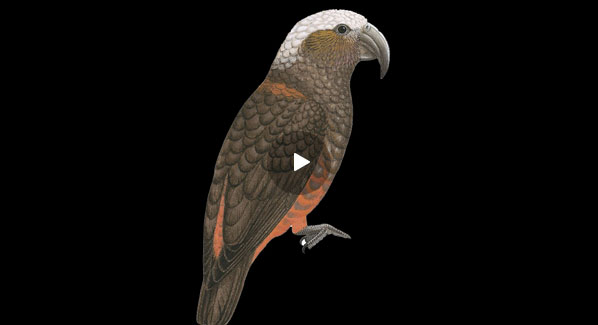
Spotting Kākā
Tim Lovegrove explains how to identify the glossy starling’s call, its smooth blue eggs and grass-sourced nest as well as describing its ability to mimic sounds from the human world. Watch the video, then ask yourself; is the starling’s call familiar, after hearing it on this video? How is the starling similar and also different from the blackbird?
|
|
|
|
| |
What is Together at Home?
New Zealand Geographic started Together at Home at the beginning of the first lockdown in 2020. It was hit with parents, and also for grandparents who felt isolated and wanted to join in. It also gave parents themselves some welcome escape. If you're not into it, just hit unsubscribe. If you like it, then send us pictures of what you make and encourage others to join the list on the Together at Home hub. It will be coming your way every day of the lockdown.
As the rest of the country is no longer in lockdown we filtered the list to include only email addresses in Auckland, or for which we could not verify the location. If you're not in Auckland or do not want it, no worries, just hit unsubscribe. |
|
|
|
| |
How do NZGeo digital subs work?
You can access three items per month totally free on NZGeo.com, and thereafter it costs $1 per week for a digital subscription. (We bill $8.50 every two months to a credit card, or $50/year if you prefer.) A digital subscription gives you access to more than 10,000 stories and 400 hours of natural history documentaries on-demand, on any device.
|
|
|
|
|
|


![145_Viewpoint_shutterstock_227311084-[Converted]](https://cdn.nzgeo.tv/2017/04/145_Viewpoint_shutterstock_227311084-Converted-336x336.jpg)