|
| |
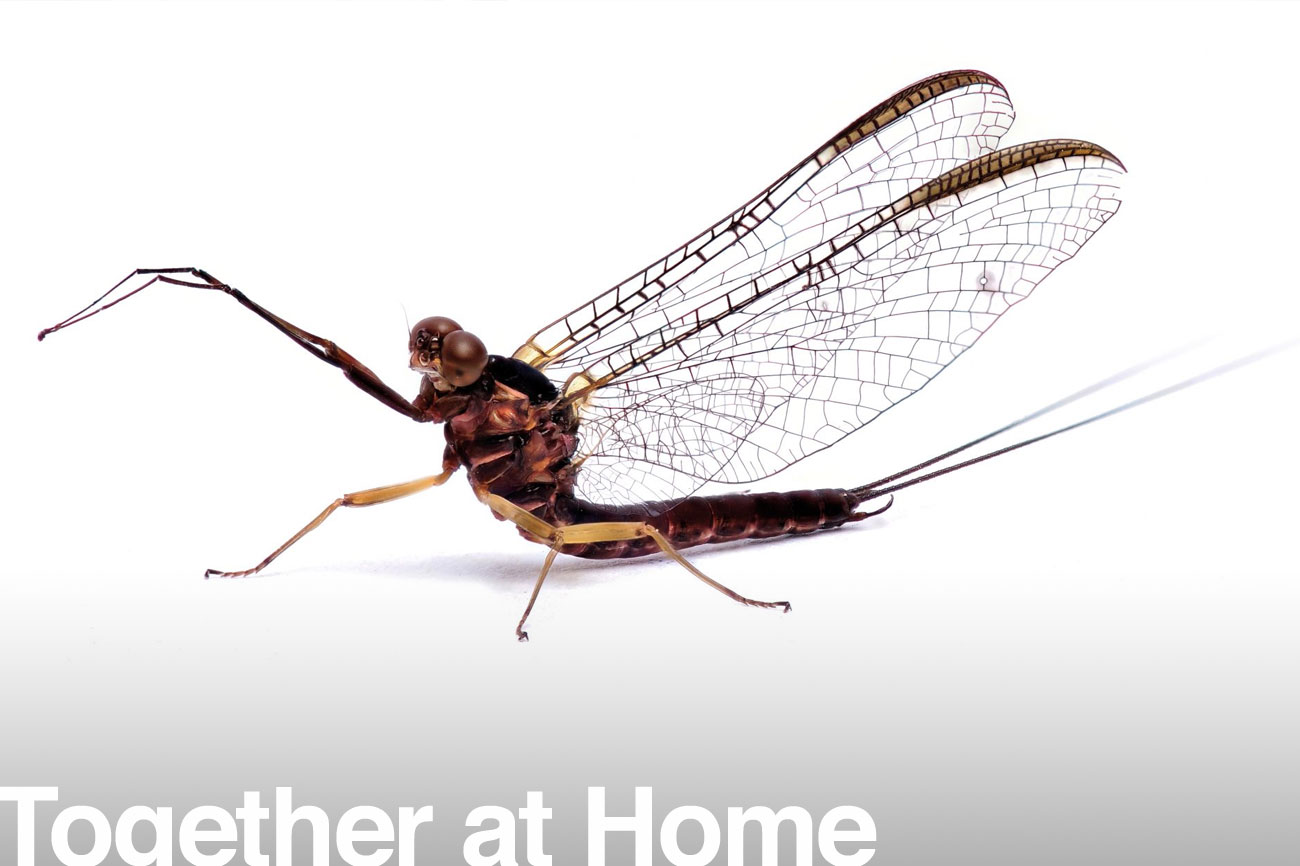
Between two worlds
Hatched in rivers, mayflies rise to the surface and unfurl new wings, the final phase of their precarious and astonishing lifecycle.
Read more...
|
|
|
|
| |

|
Talking points
Discuss the ideas presented in the story with your family—at home or over video conferencing. Find ways to involve as many people as possible, especially those who you know are isolated by the lock-down. - Mayflies look similar to dragonflies and damselflies. (One of the differences between them is the mayfly’s mass-hatching.) What are your experiences seeing dragonflies, damselflies and mayflies? Can you tell them apart?
- Mayflies are described as “the link between algae and fish.” Could you draw a diagram that shows how algae, fish and mayflies are connected?
- Mayflies (and their relatives, the dragonflies and damselflies) offer “a reasonably accurate representation of the health of a particular waterway.” What do you think this means? In the stream or waterway nearest to where you live, are there any mayflies, dragonflies or damselflies, and what does that tell you about the health of that waterway?
- A fossil imprint of Bojophlebia prokopi, the world’s largest mayfly, was found in the Carpathian Mountains and dates back about 300 million years. Its wingspan was 450mm. Measure this out to see how big it was. What might it have been like to see? Do you think those large wings made any noise? Which creatures do you think might have preyed on them?
- When they hatch, mayflies “struggle through the viscous membrane” of the water’s surface. What do the words “viscous” and “membrane” mean? What are the “two worlds” that are separated by the viscous membrane of the water’s surface?
|
|
|
|
|
|
| |
![145_Viewpoint_shutterstock_227311084-[Converted]](https://cdn.nzgeo.tv/2017/04/145_Viewpoint_shutterstock_227311084-Converted-336x336.jpg)
|
Activity: Surface Tension Experiment
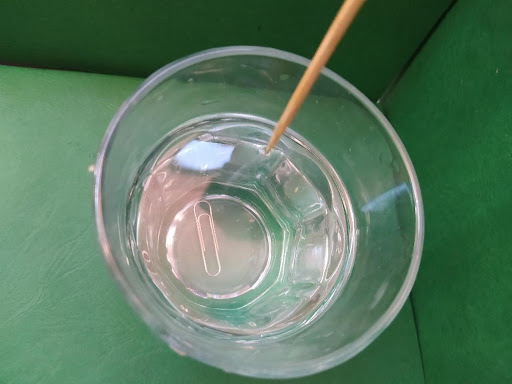
Hatching mayflies must struggle to fly upwards from the water’s surface. Explore the concept of surface tension with this simple paperclip experiment. You will need: - A magazine picture
- Medium-weight cardboard
- Scissors or craft knife
- Glue
- Pencil
- Eraser
Step One: Your first challenge is to get one paperclip floating on the water. This is not easy – if you just put a paperclip into the water you’ll find it sinks straightaway. A good technique to get your paperclip floating is to lower it in, balanced on another paperclip which “cradles” the second. To make your cradle paperclip, bend one arm upwards and use this as a handle. Step Two: Once the paperclip is floating, gently remove the “cradle” paperclip. What is keeping your paperclip afloat? (The water molecules are tightly bunched together forming a dense surface that can support the weight of the paperclip.) Step Three: Dip the toothpick into dishwashing liquid. Allow a drop of dishwashing liquid to fall onto the water. (It doesn’t need to be near the paperclip for this to work.) What happens? Does the paperclip instantly sink? Why does it do this? (As a surfactant, the dishwashing liquid pulls apart the water molecules so the surface tension is interrupted and stops supporting the paperclip.) Send us a picture of you and your paperclip floating!
|
|
|
|
|
|
| |
Greening the concrete jungle
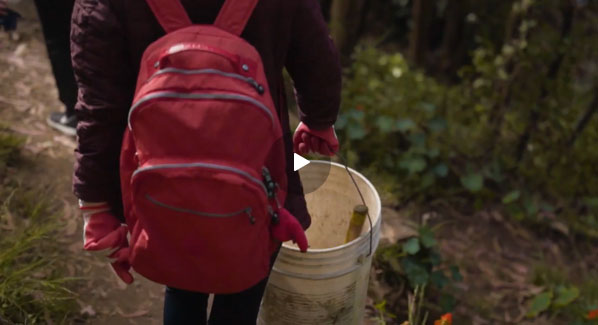
This video explores habitat restoration work being done in the hills near San Francisco. Ildiko Polony of Sutro Stewards explores her journey from being a city dweller who grew up without a backyard and thought the answers to climate change were technological, to realising that the answers were also in connecting people with nature. Her work with Sutro Stewards demonstrates the ripple effect of that connection. Watch the video, then ask yourself; how does Ildiko Polony see habitat restoration as addressing both the biodiversity crisis and the climate change crisis? Do you feel like you are seeing increased local action to restore rural and/or urban habitats in Aotearoa New Zealand? Do you feel like there is genuine engagement at local or national governmental level?
|
|
|
|
| |
What is Together at Home?
New Zealand Geographic started Together at Home at the beginning of the first lockdown in 2020. It was hit with parents, and also for grandparents who felt isolated and wanted to join in. It also gave parents themselves some welcome escape. If you're not into it, just hit unsubscribe. If you like it, then send us pictures of what you make and encourage others to join the list on the Together at Home hub. It will be coming your way every day of the lockdown.
As the rest of the country is no longer in lockdown we filtered the list to include only email addresses in Auckland, or for which we could not verify the location. If you're not in Auckland or do not want it, no worries, just hit unsubscribe. |
|
|
|
| |
How do NZGeo digital subs work?
You can access three items per month totally free on NZGeo.com, and thereafter it costs $1 per week for a digital subscription. (We bill $8.50 every two months to a credit card, or $50/year if you prefer.) A digital subscription gives you access to more than 10,000 stories and 400 hours of natural history documentaries on-demand, on any device.
|
|
|
|
|
|