|
| |
When worlds collide
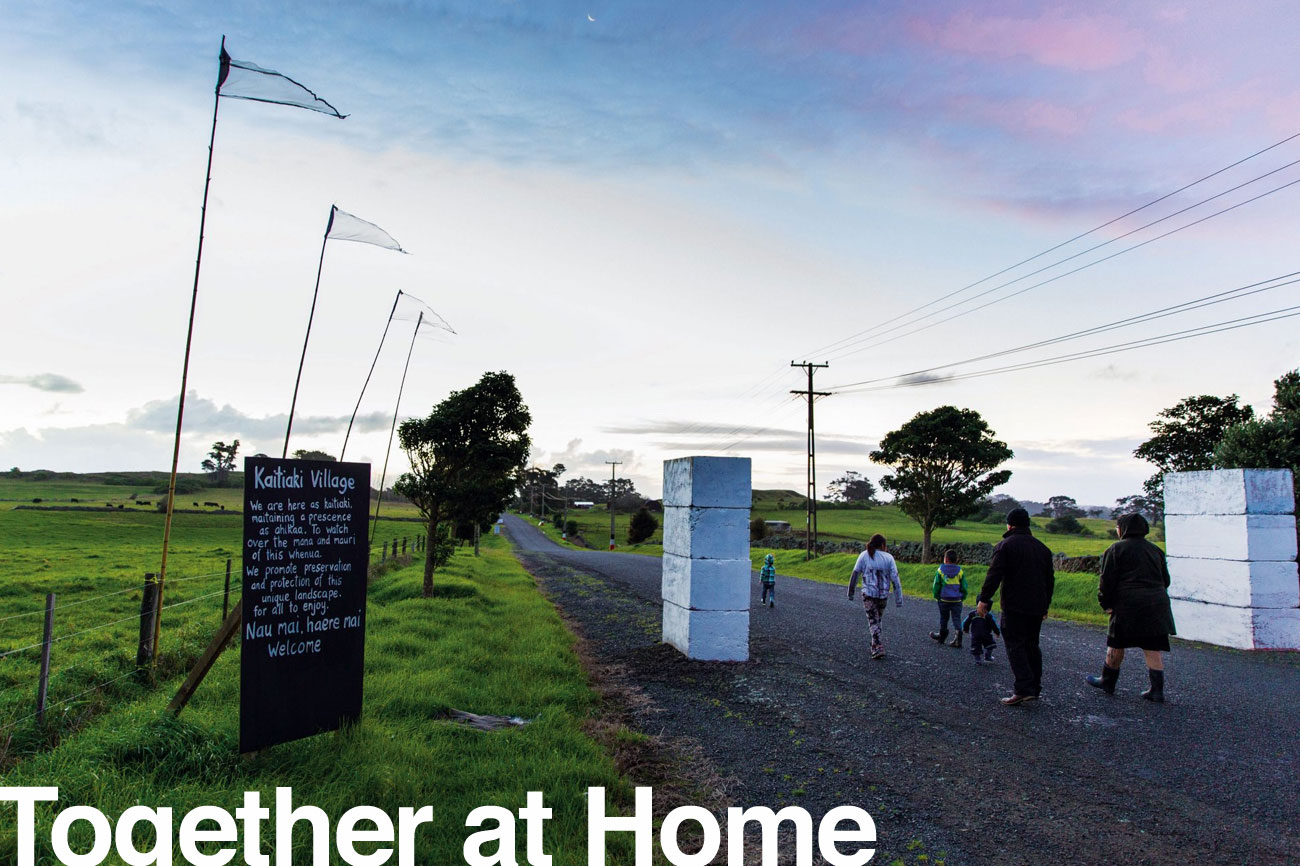
Ihumātao, a west-facing peninsula on the shore of Auckland’s Manukau Harbour, is the city’s oldest settlement. In 1863, the land was illegally confiscated from Māori. Sacred hills were quarried, 800-year-old burial sites were demolished, archaeological remains were destroyed, a sewage-treatment plant was built over traditional fishing grounds, and a dye spill killed the local creek. Now Ihumātao has been designated a Special Housing Area, without public consultation, and a development of nearly 500 houses is in progress. But for some tangata whenua, enough is enough.
Read more...
|
|
|
|
| |

|
Talking points
Discuss the ideas presented in the story with your family—at home or over video conferencing. Find ways to involve as many people as possible, especially those who you know are isolated by the lock-down. - Do you know how to locate Auckland’s two harbours – the Waitemata and the Manukau? Which is on which side of Auckland? Which of these well-known places near the Manukau have you been to or heard of: Auckland Airport, Ambury Farm Park, Butterfly Creek, Rainbow’s End?
- The article talks about the Ōtuataua Stonefields and in the pictures you can see low stone walls. How are these stones, used to partition the land, connected to the volcanic landscape? What else do you know about features of volcanic landscapes – for example the soil?
- What would have been an advantage of pā built on volcanic cones? Can you think of any disadvantages?
- “The volcanic cone of Ōtuatauais an ancestral maunga—a mountain viewed by iwi as both a defining landmark and the physical embodiment of their connection to the land. In the 1950s, it was quarried until nothing but a hole remained.” What does the quarrying of sacred sites show us about the dominant worldview in the 1950s? Do you know of any other volcanic cones that were quarried across Auckland?
- Did you know about the story of Hape, who managed to get to Aotearoa before the others on the Tainui Waka and called to them from the ridge which we now call K’Rd – the road where Hape made his karanga? What would make a good sculpture to commemorate this event, if you were commissioned to create something on K’Rd or a nearby Auckland lookout point?
|
|
|
|
|
|
| |
Activity: Print-making
You will need: - Foam or similar packing materials
- Paint and paintbrush
- Scissors
- Paper or card to print on
- Scrap paper for practicing
- Newspaper to lay under your work
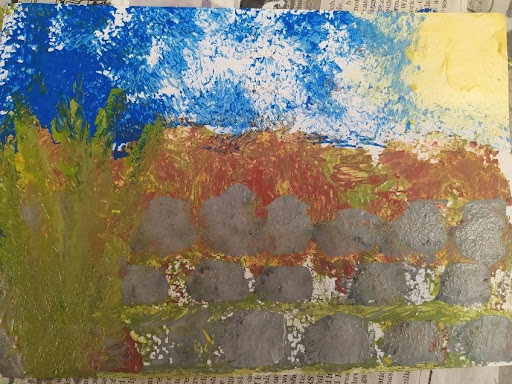
Step One: Look through your cupboards and recycling/rubbish bins for any scraps of foam that might work to make a print with. Try cutting any foam that can be easily cut, to make simple shapes. Other items such as bottle corks or old cotton spools also work well. Step Two: Coat one side of each scrap with paint and press it firmly onto paper to see what shape print it makes. Play around with different scraps until you find some you could use to make a picture with. Step Three: Print repeatedly with your scrap blocks, re-applying paint as you need to, to create a picture. You could try printing a picture of a stone wall in a field, like this one. Send us a picture of your print using foam or polystyrene!
|
|
|
|
|
|
| |
Candid camera
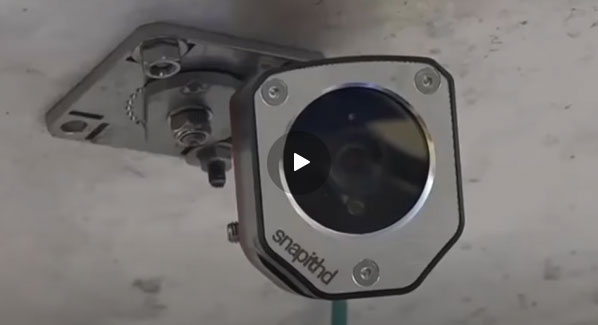
New Zealand is the only serious fishing nation not to embrace the now-common practice of cameras on fishing vessels. As a result, massive-scale fish dumping is common. What will it take for government to take decisive action on this issue, rather than allowing the fishing industry to “referee” its own game? Watch the video, then ask yourself; what spoke to you in this video – the image of applying sunscreen to 1/3 of your face and calling it protected? The sight of fish and chips being thrown into the sea? Dead fish floating in the water? The huge tube nets that process thousands of fish at once - or some other image?
|
|
|
|
| |
What is Together at Home?
New Zealand Geographic started Together at Home at the beginning of the first lockdown in 2020. It was hit with parents, and also for grandparents who felt isolated and wanted to join in. It also gave parents themselves some welcome escape. If you're not into it, just hit unsubscribe. If you like it, then send us pictures of what you make and encourage others to join the list on the Together at Home hub. It will be coming your way every day of the lockdown.
As the rest of the country is no longer in lockdown we filtered the list to include only email addresses in Auckland, or for which we could not verify the location. If you're not in Auckland or do not want it, no worries, just hit unsubscribe. |
|
|
|
| |
How do NZGeo digital subs work?
You can access three items per month totally free on NZGeo.com, and thereafter it costs $1 per week for a digital subscription. (We bill $8.50 every two months to a credit card, or $50/year if you prefer.) A digital subscription gives you access to more than 10,000 stories and 400 hours of natural history documentaries on-demand, on any device.
|
|
|
|
|
|

![145_Viewpoint_shutterstock_227311084-[Converted]](https://cdn.nzgeo.tv/2017/04/145_Viewpoint_shutterstock_227311084-Converted-336x336.jpg)