nz-geo-logos
October 15, 2021
 
147_kakariki_header-1600x866
 

Last chance to see

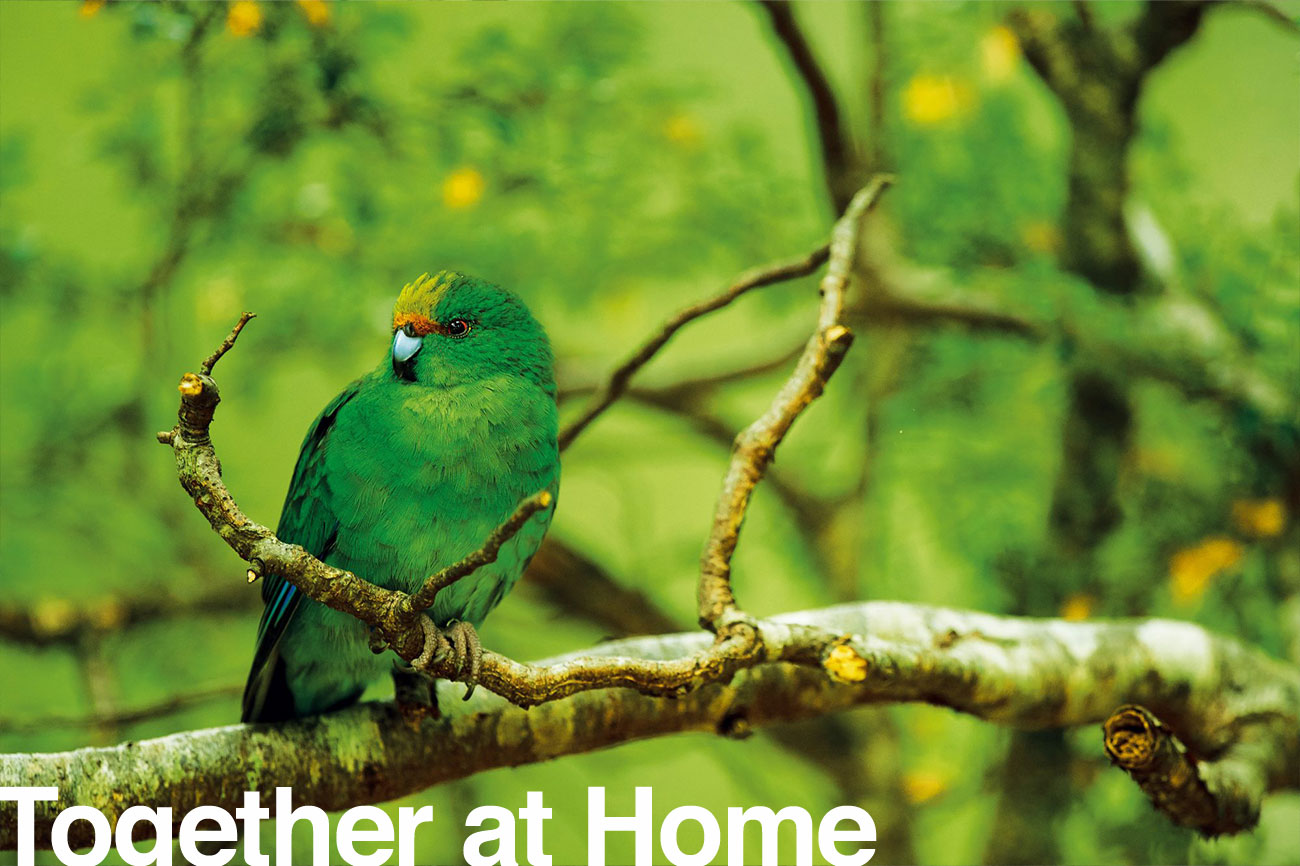
Twice the kākāriki karaka has returned from the dead. Orange-fronted parakeets were declared extinct in 1919 and again in 1965, but each time, the birds were concealed deep in the beech-forested valleys of Nelson and Canterbury. Now, the bird is approaching its third extinction, and this time, rangers have already scoured the valleys for hidden strongholds. This time, there isn’t a secret population waiting in the wings.

Read more...


Talking points

Discuss the ideas presented in the story with your family—at home or over video conferencing. Find ways to involve as many people as possible, especially those who you know are isolated by the lock-down.

  • The second photo shows orange-fronted parakeet habitat – a Canterbury beech forest. How would you describe the beech trees we see in this photo? How does beech forest look different to other types of New Zealand forest you have seen? What would it be like to see parakeets flying around in this forest? 
  • “The red-crowns used to occupy the forest floor and lower canopy, the yellow-crowns were in the high canopy, while the orange-fronts, we think, were mid-canopy, understorey feeders.
  • “For Andrew Legault, science adviser to the recovery programme, it’s a heavy responsibility. This quiet-spoken, pensive Canadian must somehow wrest the kākāriki karaka from the teeth of oblivion—and every now and again, you get an inkling of the weight upon him.” Have you ever thought about how stressful it must be to be responsible for looking after an endangered species?
  • In 2014-15, the Hawdon valley parakeet population almost collapsed – only three pairs of birds remained while the rest were eaten by hungry rats and stoats after a “mast year” in the beech forest. If you don’t already know, find out about what a mast year means and why it can be bad news for birds.
  • In one of the pictures, sheets of aluminium foil are wrapped around the trunk of beech trees. This is to stop rats and stoats climbing the trees and taking bird’s eggs. (This technique is also used to stop possums climbing trees.) Have you ever seen this in the bush before? What else could be used to deter pests from climbing trees?


145_Viewpoint_shutterstock_227311084-[Converted]

Activity: Make a Collage

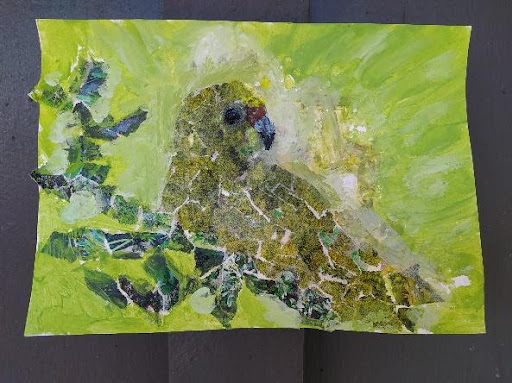
Kākāriki karaka (Orange-fronted parakeets) are a beautiful bright green. Use the photo of a parakeet sitting on a branch against a light green background as inspiration to create a green collage from old magazines.

You will need:

  • Heavier-weight paper (A5 is a good size so it doesn’t take too long to do this activity)
  • Old magazines
  • Glue
  • A pencil
  • Paint

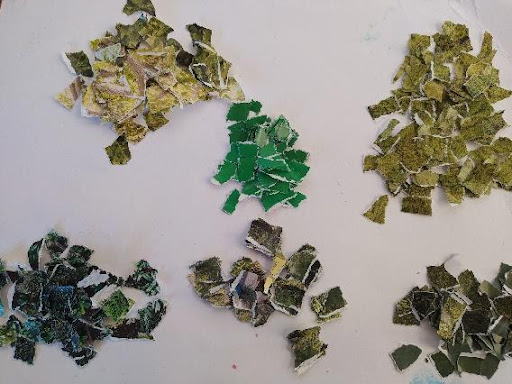
Step One: Find some old magazines. Look through them and tear out any pages that have some green on them. All shades of green are useful. Grass is good because it looks a bit like feathers.

Once you have a few pages, start tearing the green patches into small pieces. Around 1cm square will work well. Try to keep the different greens in piles so they don’t get mixed up.

Step Two: Find a picture in the article that you think would work to copy for your picture. Decide whether your paper should be placed in portrait or landscape.

Use the pictures in the article to help you draw an outline of a parakeet sitting on a branch (or anything else you’d like.)

Place glue on the parakeet’s body. Decide on a green that will look good for the parakeet and stick pieces of that green on its body. 

Step Three: Use a different green to cover the shape of the branch and light greens for the background.

You may like to mix paint with your collage to make filling in the background a bit quicker.

Now you can have a look through the magazines again and select a small amount of red, orange, yellow, blue (for the beak) and black (for the eye) to finish off the face or use paint for these features (as it is detailed, it is a little frustrating – do your best!) A permanent marker may also be useful to fill in the beak and eye.

Send us a picture of your collage!

 
collage-1
collage-2
collage-3
collage-4
collage-5


a_song_for_pakiri
 

A song for Pakiri

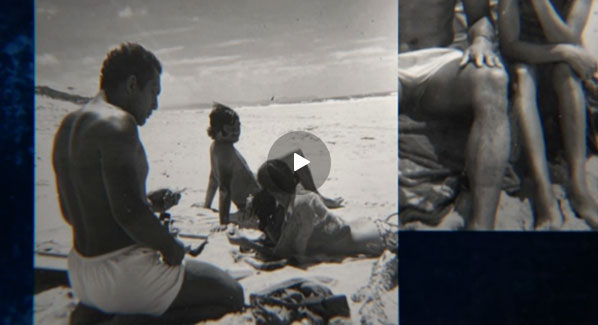
The Haddon family has links to Pakiri that go back 600 years. In this video, archival material from an interview with Laly Haddon (now deceased) describes the astounding fish life that was in his younger years normal at Pakiri.

Watch the video, then ask yourself; Laly Haddon mentions freezers as a technological change that impacted fishing habits. “We’d never catch too much because they’d go rotten. We never had freezers. You’d just catch enough to come home and feed your family.” How would fishing without freezing change the mindset of the average Kiwi fisherperson? Would it be enough to reverse the decline of species in the Hauraki Gulf and other places?


What is Together at Home?

New Zealand Geographic started Together at Home at the beginning of the first lockdown in 2020. It was hit with parents, and also for grandparents who felt isolated and wanted to join in. It also gave parents themselves some welcome escape. If you're not into it, just hit unsubscribe. If you like it, then send us pictures of what you make and encourage others to join the list on the Together at Home hub. It will be coming your way every day of the lockdown. 

As the rest of the country is no longer in lockdown we filtered the list to include only email addresses in Auckland, or for which we could not verify the location. If you're not in Auckland or do not want it, no worries, just hit unsubscribe.
 
 
offering30

How do NZGeo digital subs work?

You can access three items per month totally free on NZGeo.com, and thereafter it costs $1 per week for a digital subscription. (We bill $8.50 every two months to a credit card, or $50/year if you prefer.) A digital subscription gives you access to more than 10,000 stories and 400 hours of natural history documentaries on-demand, on any device.