|
| |
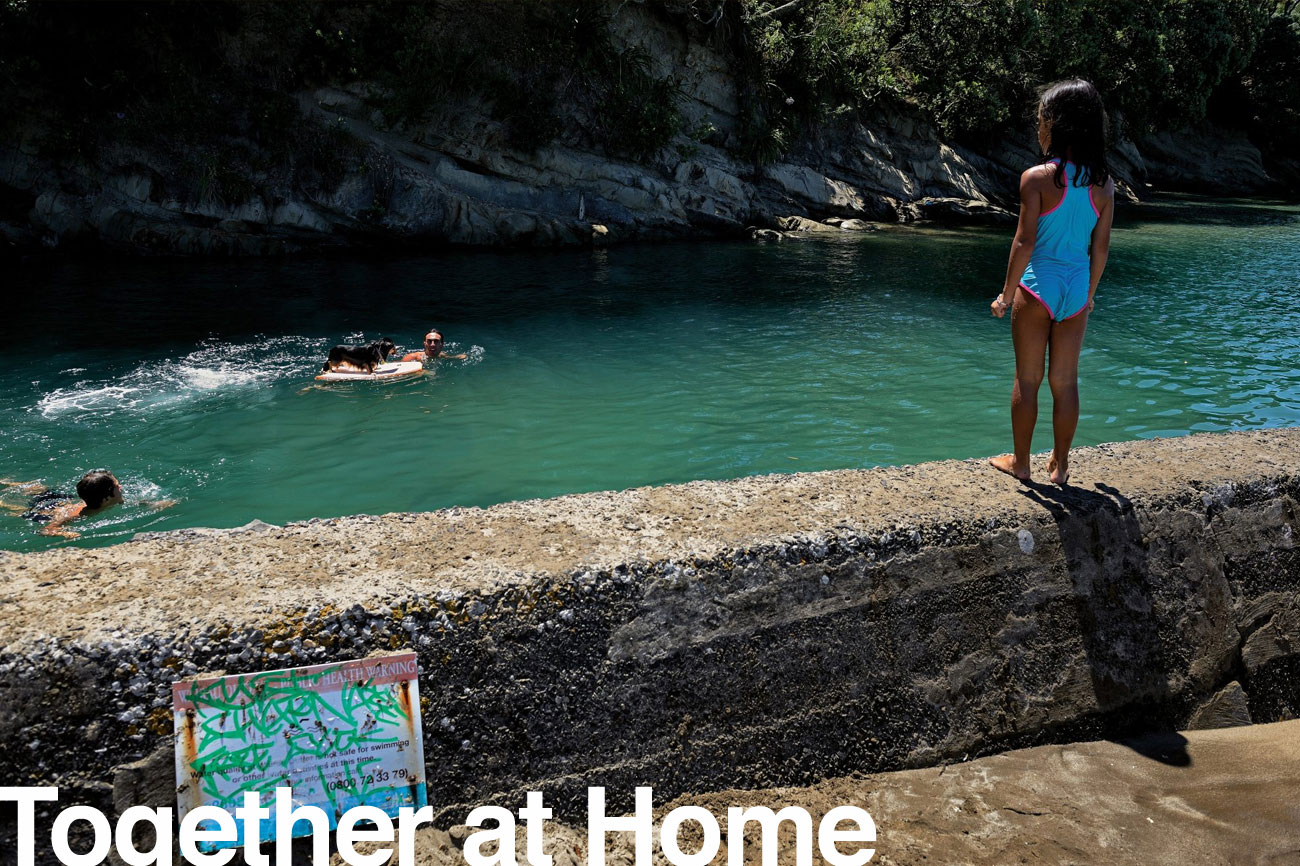
No swimming
Five millimetres of rain in a day is not uncommon in Auckland, but it is enough to cause parts of the city’s wastewater network to overflow, spilling raw sewage into the sea and making beaches unsafe for swimming. This summer, permanent warning signs were posted at 10 locations where water quality is so bad that Auckland Council no longer monitors it. Why are Auckland’s beaches so frequently unswimmable? Is the solution better plumbing—or more enlightened thinking?
Read more...
|
|
|
|
| |

|
Talking points
Discuss the ideas presented in the story with your family—at home or over video conferencing. Find ways to involve as many people as possible, especially those who you know are isolated by the lock-down. - Do you know the difference between freshwater, wastewater and stormwater – all of which are connected to where you live?
- “Today the creek is a torrent, the waterfall is brown thunder—a Huka Falls of sediment-filled water.” Have you ever seen a creek rise suddenly in heavy rain? What did you see? Is “brown thunder” a good description?
- Have you seen a sign saying “Dump no waste, flows to sea” on a stormwater drain? Do you think most people know that stormwater drains carry water (and anything else that goes into them) into streams that flow out to sea? What kinds of things do you see in or near stormwater drains?
- Are you surprised to read that Meola Creek in central Auckland has 450 times the recommended limit of Enterococcus bacteria? What effect might this bacteria have on plant and wildlife? Do you think humans can tell that a creek is ‘sick’ even though we can’t see bacteria? What makes a creek seem sick or healthy?
- Have you seen any projects or places which show that either citizens or local government are trying to become more water-sensitive? If you could do one thing to awhi or care for a creek or estuary near you, what would you do?
|
|
|
|
|
|
| |
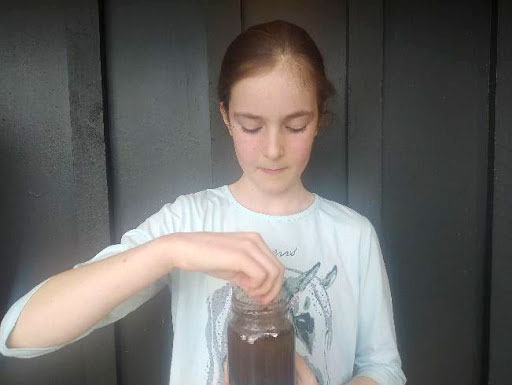
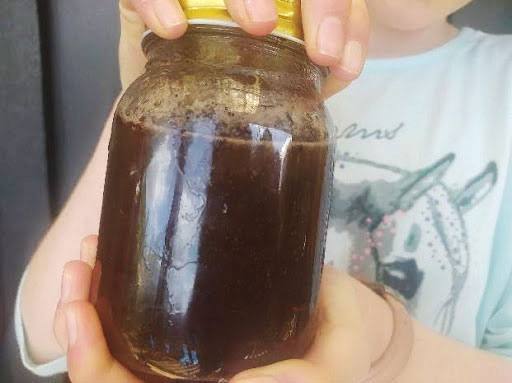
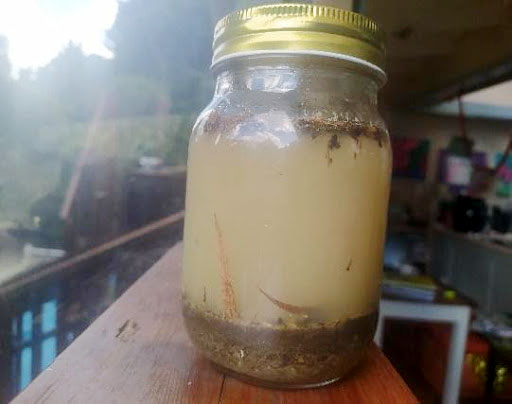
Activity: Make a Sediment Jar
When water flows in torrents, everything gets mixed up. Once the heavy flow settles, a creek or river becomes clear again, with layers of material. Make this sediment jar to explore what happens!
You will need: - A jar with a lid
- Water
- A range of materials from outside – pebbles, soil, potting mix, rocks, grass, dead leaves
Step One: Fill your jar up about ¾ of the way with water. Add your materials.
Step Two: Screw the lid on the jar and give It a good shake.
Step Three: Leave the jar on a flat surface such as a windowsill and watch it for a few minutes to see what happens. Check again in about an hour. What do you notice? What has floated to the top and what has settled at the bottom? Are the contents of the jar similar to a stream in any way?
Send us a picture of your sediment in a jar!
|
|
|
|
|
|
| |
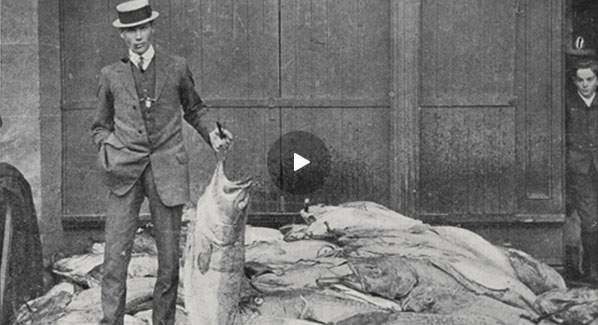
A song for the hāpuku
Wade Doak talks about his encounters with hāpuku, common in coastal waters in the 1960’s. He explains that when a hāpuku is brought to the surface its swim bladder remains expanded, making it impossible to return live undersized catch. Really large marine reserves are necessary to prevent their hastening extinction. Watch the video, then ask yourself; what is your reaction to the images of hāpuku the size of children? What would it be like to snorkel with hāpuku just off our coasts?
|
|
|
|
| |
What is Together at Home?
New Zealand Geographic started Together at Home at the beginning of the first lockdown in 2020. It was hit with parents, and also for grandparents who felt isolated and wanted to join in. It also gave parents themselves some welcome escape. If you're not into it, just hit unsubscribe. If you like it, then send us pictures of what you make and encourage others to join the list on the Together at Home hub. It will be coming your way every day of the lockdown.
As the rest of the country is no longer in lockdown we filtered the list to include only email addresses in Auckland, or for which we could not verify the location. If you're not in Auckland or do not want it, no worries, just hit unsubscribe. |
|
|
|
| |
How do NZGeo digital subs work?
You can access three items per month totally free on NZGeo.com, and thereafter it costs $1 per week for a digital subscription. (We bill $8.50 every two months to a credit card, or $50/year if you prefer.) A digital subscription gives you access to more than 10,000 stories and 400 hours of natural history documentaries on-demand, on any device.
|
|
|
|
|
|

![145_Viewpoint_shutterstock_227311084-[Converted]](https://cdn.nzgeo.tv/2017/04/145_Viewpoint_shutterstock_227311084-Converted-336x336.jpg)