|
| |
Street wise
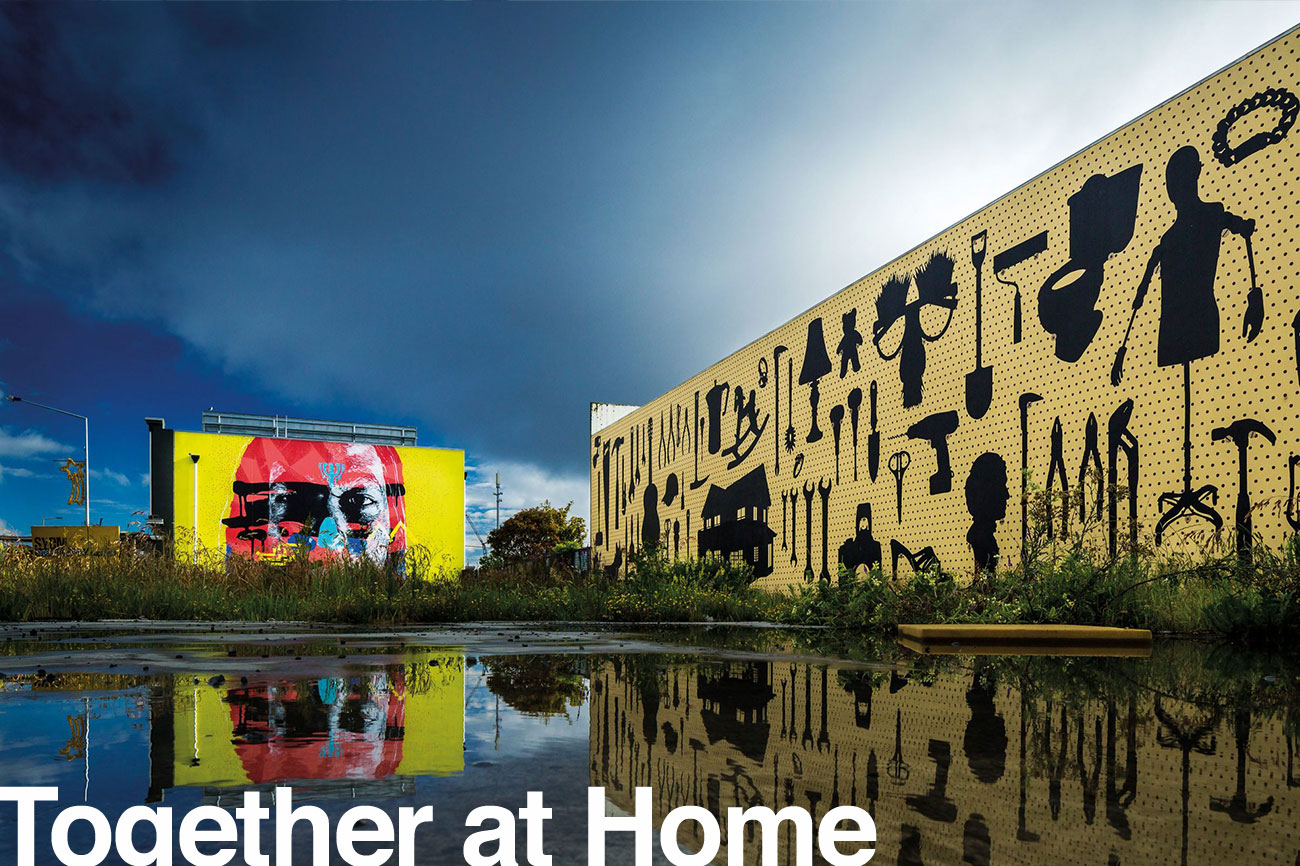
Graffiti or street art? Virtuosity or urban menace? While arguments rage over the definition, clandestine art of every colour is changing the face of the Christchurch CBD.
Read more...
|
|
|
|
| |

|
Talking points
Discuss the ideas presented in the story with your family—at home or over video conferencing. Find ways to involve as many people as possible, especially those who you know are isolated by the lock-down. - Looking through the pictures, near the top there is a picture of street artist Wongi Wilson perched up on a cherry picker, painting a gigantic mural with the help of a four-metre pole. What might it be like to try to paint this way? What would be the challenges and limitations? How might it feel to see your enormous artwork once it was finished?
- Did you know that early forms of graffiti go back to ancient times, such as those mentioned that were found among the ruins of the buried city of Pompeii? Have you seen any of the early cave art that is mentioned in the article? Did you know there is cave art in New Zealand?
- In your opinion, does the “retired railway turntable” that is pictured, covered with graffiti, look better or worse with tagging on it? What kinds of feelings does graffiti arouse in you?
- Graffiti is described as a way for street artists to “insert themselves” into public spaces where those with power (companies who can pay for advertising) dominate what we see. Have you given any thought to the extent to which our lives are affected by advertising in public spaces? Do you find billboards intrusive or exhausting, or do they make life more interesting? Are billboards and graffiti both forms of visual pollution or does one have more validity than another?
- Christchurch’s CBD has become home to a “city-wide grass roots arts movement” in which murals distract from the destruction of the earthquakes and other memories. Looking at the photos, what can you see that would uplift, enrich or unify? Do these images challenge your concepts of what is and isn’t art, or enhance your ideas about the purpose of art?
|
|
|
|
|
|
| |
Activity: Make a magazine-strip collage
Use strips of magazine photos to create an eclectic and playful collage. You will need: - Magazine images
- Scissors
- Glue
- Backing paper
Step One: Select some images that contrast to one another – for example a person, a car and a landscape. Cut each image lengthways into narrow strips.
Step Two: Play around with arranging the strips next to one another, such as a strip of person next to a strip of car. Vary the heights so they create a jagged top and bottom.
Step Three: When you are happy with your arrangement, glue the pieces down onto a sheet of backing paper. Paint on a clear gloss if you have one and add a border if you want to.
Send us a picture of your magazine-strip collage!
|
|
|
|
|
|
| |
Scorpions Cure Cancer
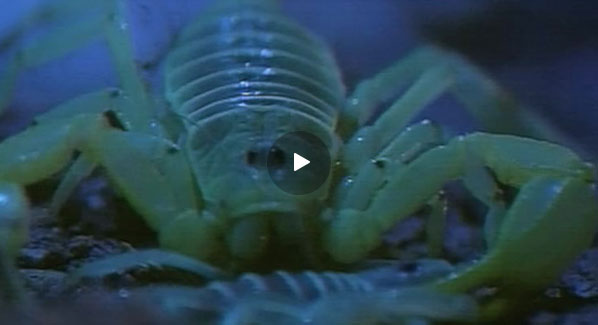
After a grisly opening in which a ghostly-pale scorpion paralyses and kills prey, we learn that a protein in scorpion poison can target cancer-afflicted cells in human brains, while healthy brain cells remain unaffected.
Watch the video, then ask yourself; What ideas do you have about how this unique property of the poison came to be discovered?
|
|
|
|
| |
What is Together at Home?
New Zealand Geographic started Together at Home at the beginning of the first lockdown in 2020. It was hit with parents, and also for grandparents who felt isolated and wanted to join in. It also gave parents themselves some welcome escape. If you're not into it, just hit unsubscribe. If you like it, then send us pictures of what you make and encourage others to join the list on the Together at Home hub. It will be coming your way every day of the lockdown.
As the rest of the country is no longer in lockdown we filtered the list to include only email addresses in Auckland, or for which we could not verify the location. If you're not in Auckland or do not want it, no worries, just hit unsubscribe. |
|
|
|
| |
How do NZGeo digital subs work?
You can access three items per month totally free on NZGeo.com, and thereafter it costs $1 per week for a digital subscription. (We bill $8.50 every two months to a credit card, or $50/year if you prefer.) A digital subscription gives you access to more than 10,000 stories and 400 hours of natural history documentaries on-demand, on any device.
|
|
|
|
|
|

![145_Viewpoint_shutterstock_227311084-[Converted]](https://cdn.nzgeo.tv/2017/04/145_Viewpoint_shutterstock_227311084-Converted-336x336.jpg)